Sources: Chinese AI Firm MiniMax to Launch Hong Kong IPO in Early January

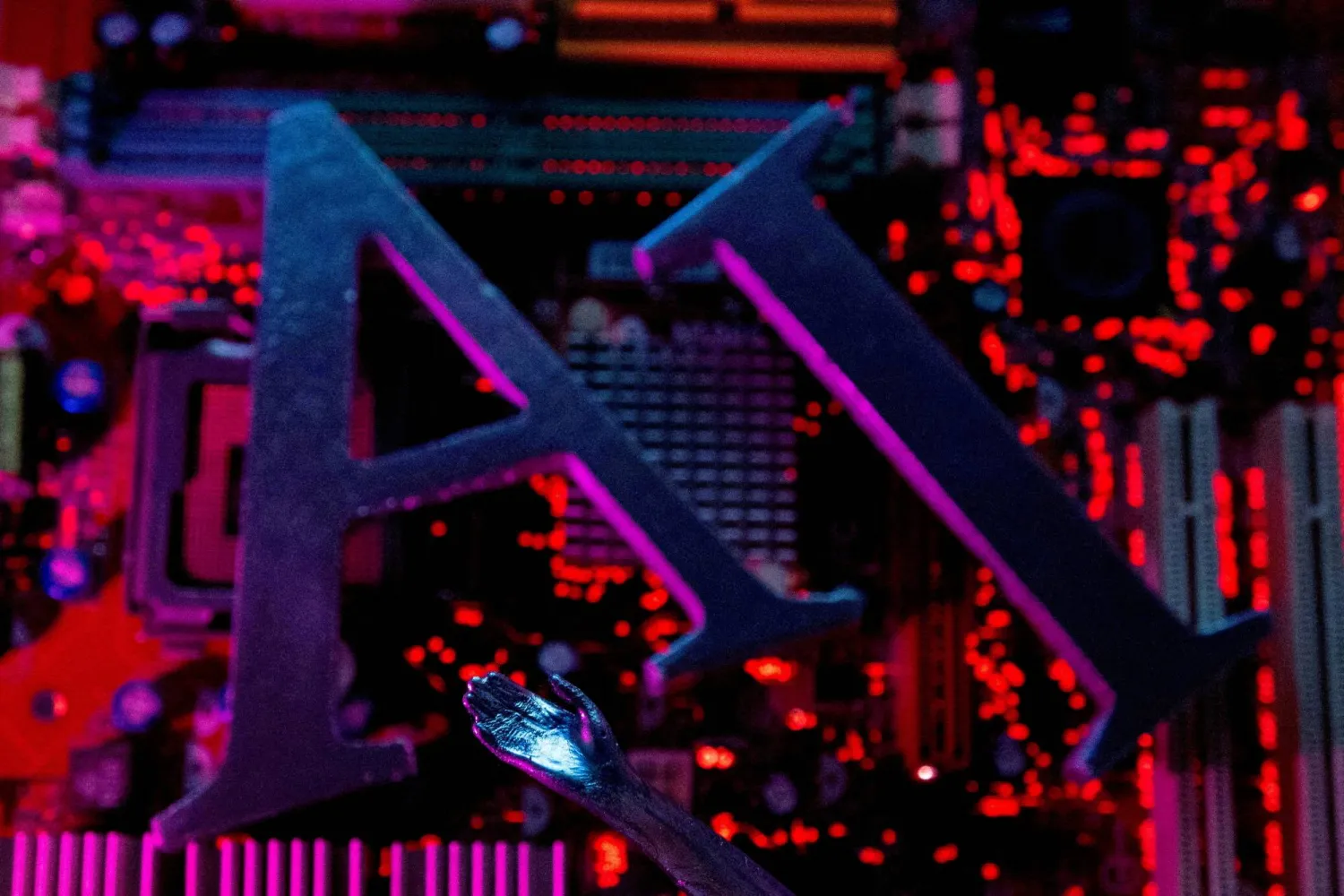
FILE PHOTO: AI (Artificial Intelligence) letters and robot hand are placed on computer motherboard in this illustration created on June 23, 2023. REUTERS/Dado Ruvic/Illustration/File Photo
TT

Sources: Chinese AI Firm MiniMax to Launch Hong Kong IPO in Early January

FILE PHOTO: AI (Artificial Intelligence) letters and robot hand are placed on computer motherboard in this illustration created on June 23, 2023. REUTERS/Dado Ruvic/Illustration/File Photo

Chinese AI firm MiniMax is seeking to launch a Hong Kong initial public offering in early January, which could raise as much as $700 million, two sources with direct knowledge of the matter said on Monday.

MiniMax said in a Hong Kong Stock Exchange filing on Sunday it had passed the bourse's listing hearing.

The offering size is not finalized however, one of the sources said, as it would depend on market conditions and investor interest. Sources expect it to be at least $500 million.

MiniMax declined to comment. The sources declined to be named as the information was confidential.

The company ⁠would be targeting a valuation of over $4 billion in the float, sources had told Reuters in July.

IFR first reported on Monday the company would launch its IPO in the week of January 5 and raise around $600 million.

MiniMax is among the first batch of Chinese artificial intelligence companies to seek a public listing in Hong Kong.

Other companies ⁠including Biren Technology, Shanghai Iluvatar CoreX Semiconductor Co and Zhipu AI could also be launching their offerings in the coming weeks, after securing a green light from regulators.

The rise of DeepSeek, China's answer to ChatGPT, this year has boosted investor interest in domestic AI products and in the sector.

Earlier this month, the IPOs of AI chip firms Moore Thread and MetaX were thousands of times oversubscribed. Share prices of both companies surged multiple times on their debut.

Founded in early 2022 by former SenseTime executive Yan Junjie, MiniMax has emerged as one of ⁠China's prominent AI companies during the generative AI boom.

The company, backed by the Alibaba Group, develops multimodal AI models including MiniMax M1, Hailuo-02, Speech-02 and Music-01, which can process text, audio, images, video and music.

The firm said in the Sunday stock exchange filing that monthly active user figures for its products had risen from 3.1 million in 2023 to 19.1 million in 2024, and to 27.6 million by the end of September 2025.

It posted an unaudited adjusted loss of $186 million for the first nine months of 2025, compared with $170 million for the same period last year, the filing showed.


Uber, Lyft to Test Baidu Robotaxis in UK from Next Year 

A sign of Baidu is pictured at the company's headquarters in Beijing, China March 16, 2023. (Reuters)
TT

Uber, Lyft to Test Baidu Robotaxis in UK from Next Year 

A sign of Baidu is pictured at the company's headquarters in Beijing, China March 16, 2023. (Reuters)

Uber Technologies and Lyft are teaming up with Chinese tech giant Baidu to try out driverless taxis in the UK next year, marking a major step in the global race to commercialize robotaxis.

It highlights how ride-hailing platforms are accelerating autonomous rollout through partnerships, positioning London as an early proving ground for large-scale robotaxi services ‌in Europe.

Lyft, meanwhile, plans ‌to deploy Baidu's ‌autonomous ⁠vehicles in Germany ‌and the UK under its platform, pending regulatory approval. Both companies have abandoned in-house development of autonomous vehicles and now rely on alliances to accelerate adoption.

The partnerships underscore how global robotaxi rollouts are gaining momentum. ⁠Alphabet's Waymo said in October it would start ‌tests in London this ‍month, while Baidu ‍and WeRide have launched operations in the ‍Middle East and Switzerland.

Robotaxis promise safer, greener and more cost-efficient rides, but profitability remains uncertain. Public companies like Pony.ai and WeRide are still loss-making, and analysts warn the economics of expensive fleets could pressure margins ⁠for platforms such as Uber and Lyft.

Analysts have said hybrid networks, mixing robotaxis with human drivers, may be the most viable model to manage demand peaks and pricing.

Lyft completed its $200 million acquisition of European taxi app FreeNow from BMW and Mercedes-Benz in July, marking its first major expansion beyond North America and ‌giving the US ride-hailing firm access to nine countries across Europe.


Italy Fines Apple Nearly 100m Euros over App Privacy Feature

An Apple logo hangs above the entrance to the Apple store on 5th Avenue in the Manhattan borough of New York City, July 21, 2015. REUTERS/Mike Segar/File Photo Purchase Licensing Rights
TT

Italy Fines Apple Nearly 100m Euros over App Privacy Feature

An Apple logo hangs above the entrance to the Apple store on 5th Avenue in the Manhattan borough of New York City, July 21, 2015. REUTERS/Mike Segar/File Photo Purchase Licensing Rights

Italy's competition authority said Monday it had fined US tech giant Apple 98 million euros ($115 million) for allegedly abusing its dominant position in the mobile app market.

According to AFP, the AGCM said in a statement that Apple had violated privacy regulations for third-party developers in a market where it "holds a super-dominant position through its App Store".

The body said its investigation had established the "restrictive nature" of the "privacy rules imposed by Apple... on third-party developers of apps distributed through the App Store".

The rules of Apple's App Tracking Transparency (ATT) "are imposed unilaterally and harm the interests of Apple's commercial partners", according to the AGCM statement.

French antitrust authorities earlier this year handed Apple a 150-million euro fine over its app tracking privacy feature.

Authorities elsewhere in Europe have also opened similar probes over ATT, which Apple promotes as a privacy safeguard.

The feature, introduced by Apple in 2021, requires apps to obtain user consent through a pop-up window before tracking their activity across other apps and websites.

If they decline, the app loses access to information on that user which enables ad targeting.

Critics have accused Apple of using the system to promote its own advertising services while restricting competitors.


Swiss Interior Minister Open to Social Media Ban for Children

A teenager poses holding a mobile phone displaying a message from TikTok as law banning social media for users under 16 in Australia takes effect, in Sydney, Australia, December 10, 2025. (Reuters)
TT

Swiss Interior Minister Open to Social Media Ban for Children

A teenager poses holding a mobile phone displaying a message from TikTok as law banning social media for users under 16 in Australia takes effect, in Sydney, Australia, December 10, 2025. (Reuters)

Switzerland must do more to shield children from social media risks, Interior Minister Elisabeth Baume-Schneider was quoted as saying on Sunday, signaling she was open to a potential ban on the platforms for youngsters.

Following Australia's recent ban on social media for under-16s, Baume-Schneider told SonntagsBlick newspaper that Switzerland should examine similar measures.

"The debate in Australia and the ‌EU is ‌important. It must also ‌be ⁠conducted in Switzerland. ‌I am open to a social media ban," said the minister, a member of the center-left Social Democrats. "We must better protect our children."

She said authorities needed to look at what should be restricted, listing options ⁠such as banning social media use by children, ‌curbing harmful content, and addressing ‍algorithms that prey on ‍young people's vulnerabilities.

Detailed discussions will begin ‍in the new year, supported by a report on the issue, Baume-Schneider said, adding: "We mustn't forget social media platforms themselves: they must take responsibility for what children and young people consume."

Australia's ban has won praise ⁠from many parents and groups advocating for the welfare of children, and drawn criticism from major technology companies and defenders of free speech.

Earlier this month, the parliament of the Swiss canton of Fribourg voted to prohibit children from using mobile phones at school until they are about 15, the latest step taken at ‌a local level in Switzerland to curb their use in schools.