Uber, Lyft to Test Baidu Robotaxis in UK from Next Year 

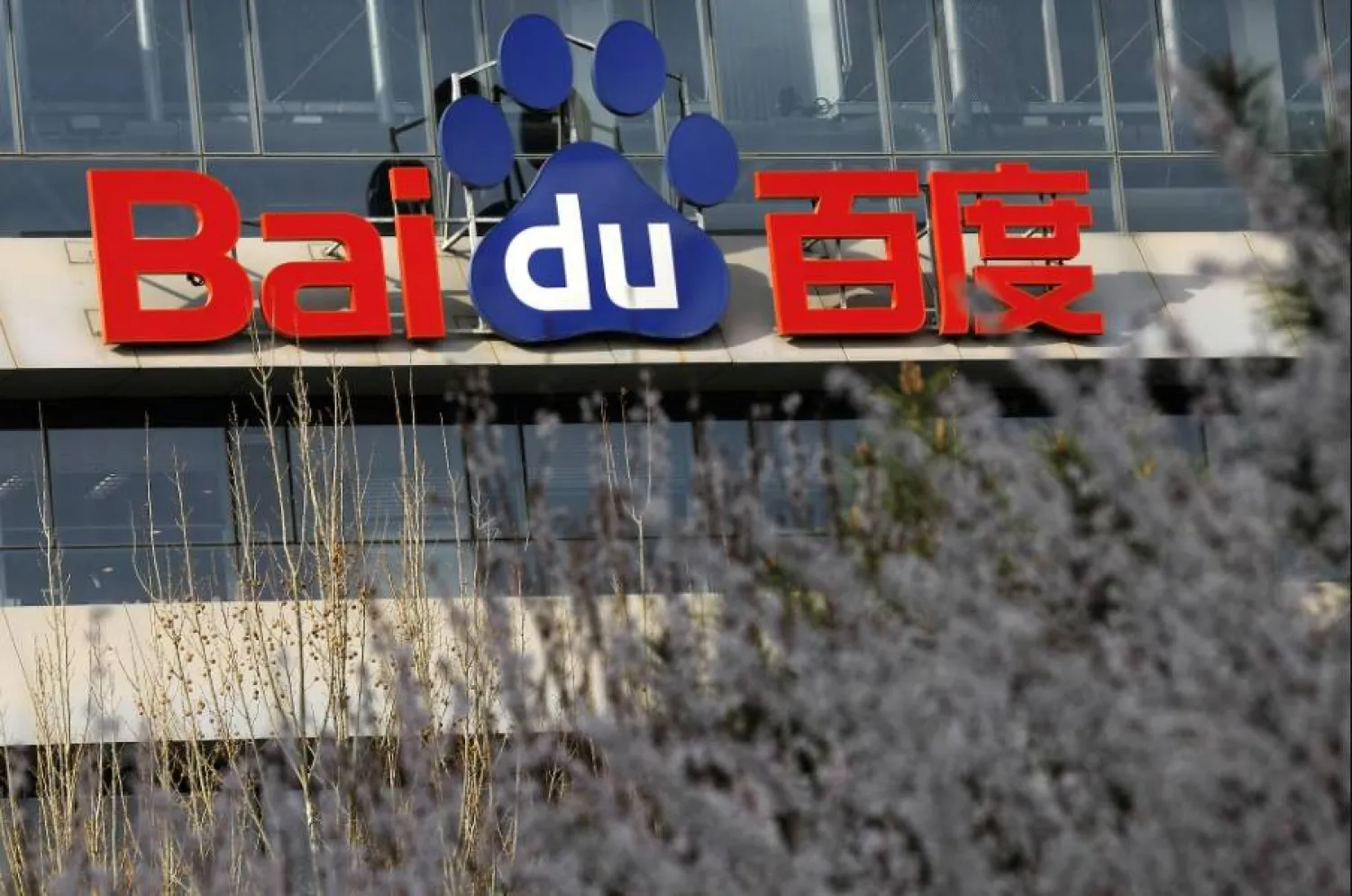
A sign of Baidu is pictured at the company's headquarters in Beijing, China March 16, 2023. (Reuters)
TT

Uber, Lyft to Test Baidu Robotaxis in UK from Next Year 

A sign of Baidu is pictured at the company's headquarters in Beijing, China March 16, 2023. (Reuters)

Uber Technologies and Lyft are teaming up with Chinese tech giant Baidu to try out driverless taxis in the UK next year, marking a major step in the global race to commercialize robotaxis.

It highlights how ride-hailing platforms are accelerating autonomous rollout through partnerships, positioning London as an early proving ground for large-scale robotaxi services ‌in Europe.

Lyft, meanwhile, plans ‌to deploy Baidu's ‌autonomous ⁠vehicles in Germany ‌and the UK under its platform, pending regulatory approval. Both companies have abandoned in-house development of autonomous vehicles and now rely on alliances to accelerate adoption.

The partnerships underscore how global robotaxi rollouts are gaining momentum. ⁠Alphabet's Waymo said in October it would start ‌tests in London this ‍month, while Baidu ‍and WeRide have launched operations in the ‍Middle East and Switzerland.

Robotaxis promise safer, greener and more cost-efficient rides, but profitability remains uncertain. Public companies like Pony.ai and WeRide are still loss-making, and analysts warn the economics of expensive fleets could pressure margins ⁠for platforms such as Uber and Lyft.

Analysts have said hybrid networks, mixing robotaxis with human drivers, may be the most viable model to manage demand peaks and pricing.

Lyft completed its $200 million acquisition of European taxi app FreeNow from BMW and Mercedes-Benz in July, marking its first major expansion beyond North America and ‌giving the US ride-hailing firm access to nine countries across Europe.


India Plans AI 'Data City' on Staggering Scale

As India races to narrow the AI gap with the US and China, it is planning a vast new "data city" to power digital growth on a staggering scale. Arun SANKAR / AFP
TT

India Plans AI 'Data City' on Staggering Scale

As India races to narrow the AI gap with the US and China, it is planning a vast new "data city" to power digital growth on a staggering scale. Arun SANKAR / AFP

As India races to narrow the artificial intelligence gap with the United States and China, it is planning a vast new "data city" to power digital growth on a staggering scale, the man spearheading the project says.
"The AI revolution is here, no second thoughts about it," said Nara Lokesh, information technology minister for Andhra Pradesh state, which is positioning the city of Visakhapatnam as a cornerstone of India's AI push.
"And as a nation... we have taken a stand that we've got to embrace it," he told AFP ahead of an international AI summit next week in New Delhi.
Lokesh boasts the state has secured investment agreements of $175 billion involving 760 projects, including a $15 billion investment by Google for its largest AI infrastructure hub outside the United States.
And a joint venture between India's Reliance Industries, Canada's Brookfield and US firm Digital Realty is investing $11 billion to develop an AI data center in the same city.
Visakhapatnam -- home to around two million people and popularly known as "Vizag" -- is better known for its cricket ground that hosts international matches than cutting-edge technology.
But the southeastern port city is now being pitched as a landing point for submarine internet cables linking India to Singapore.
"The data city is going to come in one ecosystem... with a 100 kilometer (60 mile) radius," Lokesh said. For comparison, Taiwan is roughly 100 kilometers wide.
- 'Whole nine yards' -
Lokesh said the plan goes far beyond data connectivity, adding that his state had "received close to 25 percent of all foreign direct investments" to India in 2025.
"It's not just about the data centers," he explained while outlining a sweeping vision of change, with Andhra Pradesh offering land at one US cent per acre (three per hectare) for major investors.
"I'm chasing the companies that make those servers that go sit in those data centers, the companies that make the entire air conditioning, the water-cooling system -- the whole nine yards."
The 43-year-old, Stanford-educated minister is the son of Andhra Pradesh Chief Minister N. Chandrababu Naidu, who helped turn Hyderabad into a major technology hub that is dubbed "Cyberabad".
They are allies of Prime Minister Narendra Modi, who will host the AI Impact Summit from Monday.
India is now third in a global AI power ranking -- sitting above South Korea and Japan -- based on more than 40 indicators from patents to private funding calculated by Stanford University's Institute for Human-Centered AI.
With more than a billion internet users, India has seen a surge of investment as generative AI players seek inroads to the world's most populous country.
Microsoft said in December it will invest $17.5 billion to help build the country's artificial intelligence infrastructure, with CEO Satya Nadella calling it the firm's "largest investment ever in Asia".
But critics say India lags in access to high-end computing power or commercial AI deployment, and remains more a consumer than creator of the cutting-edge technology.
Some question whether data centers will create meaningful employment when up and running, but Lokesh rejects that.
"Every industrial revolution has always created more jobs than it has displaced," he said.
"But it has created those jobs in countries that have embraced the industrial revolution."
- 'Learned from China' -
Lokesh argues that the jobs and economic benefits would more than compensate for the giveaway cost of land.
He said the state government had accounted for the vast electricity and water demands for the energy-hungry industry, and would tap "surplus water" that drains into the Bay of Bengal to cool the massive data centers.
"It's a crime that so much water during monsoons goes into our oceans," he said.
He cited China as an inspiration -- admiring how India's rival had "been able to systematically bring people out of poverty" at speed.
The state's plan to create industrial clusters was something he had "learned from China".
With a target of six gigawatts of data center capacity -- three already signed and another three in the pipeline -- Andhra Pradesh is betting that speed and scale will give it an edge.
New Delhi last year agreed to "in-principle approval" for six 1.2 GW nuclear power plants at Kovvada in Andhra Pradesh.
"We are on a journey," Lokesh said. "We will execute these projects at a pace that the country has never seen".


SDAIA President Leads Saudi Delegation to India AI Impact Summit 2026

File photo of the Saudi flag/AAWSAT
TT

SDAIA President Leads Saudi Delegation to India AI Impact Summit 2026

File photo of the Saudi flag/AAWSAT

The Kingdom of Saudi Arabia, represented by the Saudi Data and Artificial Intelligence Authority (SDAIA), is participating in the India AI Impact Summit 2026 in New Delhi on February 19 and 20.

Held under the theme "People, Planet, and Progress," the summit brings together global leaders to discuss the developmental impact of artificial intelligence, focusing on social empowerment, AI safety, and inclusive access to resources, SPA reported.

The Saudi delegation, led by SDAIA President Dr. Abdullah Alghamdi, aims to highlight Vision 2030 initiatives that leverage advanced technologies for both humanitarian and economic benefits.

By engaging in this international dialogue, Saudi Arabia reaffirms its commitment to strengthening strategic ties with India and supporting the United Nations Sustainable Development Goals through responsible AI innovation and global cooperation.


China’s ByteDance Releases Doubao 2.0 AI Model for 'Agent Era’

This picture taken on February 5, 2026 shows advertising promoting ByteDance's cloud and AI service platform 'Volcano Engine' and chatbot 'Doubao' at the Beijing Capital International airport in Beijing. (Photo by Adek BERRY / AFP)
TT

China’s ByteDance Releases Doubao 2.0 AI Model for 'Agent Era’

This picture taken on February 5, 2026 shows advertising promoting ByteDance's cloud and AI service platform 'Volcano Engine' and chatbot 'Doubao' at the Beijing Capital International airport in Beijing. (Photo by Adek BERRY / AFP)

China's ByteDance has rolled out its Doubao 2.0 model, an upgrade of the country's most widely used artificial-intelligence app, the company said on Saturday.

ByteDance is one of several Chinese firms hoping to generate overseas and domestic buzz around its new AI models during the Lunar New Year holiday, which starts on Sunday, when hundreds of millions of Chinese partake in family gatherings in their hometowns.

The company, like rival Alibaba, was caught off-guard by DeepSeek's meteoric rise to global fame during last year's Spring Festival, when Silicon Valley and investors worldwide were ⁠shocked by how ⁠a Chinese firm had come up with a model comparable to OpenAI's best but seemingly developed at a fraction of the cost.

The release of Doubao 2.0, ahead of a highly anticipated new DeepSeek model, is likely aimed at preventing such a scenario from repeating itself, Reuters reported.

A video-generation AI model that ByteDance released on Thursday, Seedance 2.0, has already drawn comparisons with DeepSeek's success last year after going ⁠viral on Chinese social media and drawing praise overseas on platforms like X, including from its owner Elon Musk.

Doubao 2.0 is positioned for the "agent era", where AI models are expected to execute complex real-world tasks rather than only answer questions, ByteDance said in a statement.

The model's pro version includes complex reasoning and multi-step task execution capabilities that match OpenAI's GPT 5.2 and Google's Gemini 3 Pro, while reducing usage costs by roughly an order of magnitude, according to the company.

"This cost advantage will become even more crucial as real-world, complex tasks involve large-scale inference and multi-step generation that will expend a huge amount of ⁠tokens," ByteDance said, ⁠referring to the unit of data processed by an AI model.

Doubao leads all AI chatbot apps in China with 155 million weekly active users, with DeepSeek second at 81.6 million, according to information provider QuestMobile's most recent data, published in late December.

But Doubao 2.0's release could help ByteDance fend off recent pressure from domestic competitors. Alibaba on February 6 announced it was spending 3 billion yuan ($400 million) on a coupon giveaway campaign to attract more users to its Qwen AI app, allowing them to use the incentives to purchase food and drink directly in the chatbot.

This led daily active users on Qwen to skyrocket from 7 million to 58 million, just 23 million shy of Doubao's figures on the same day, according to QuestMobile.