


Musk Expects Europe, China to Approve Tesla’s Full Self-Driving System Soon

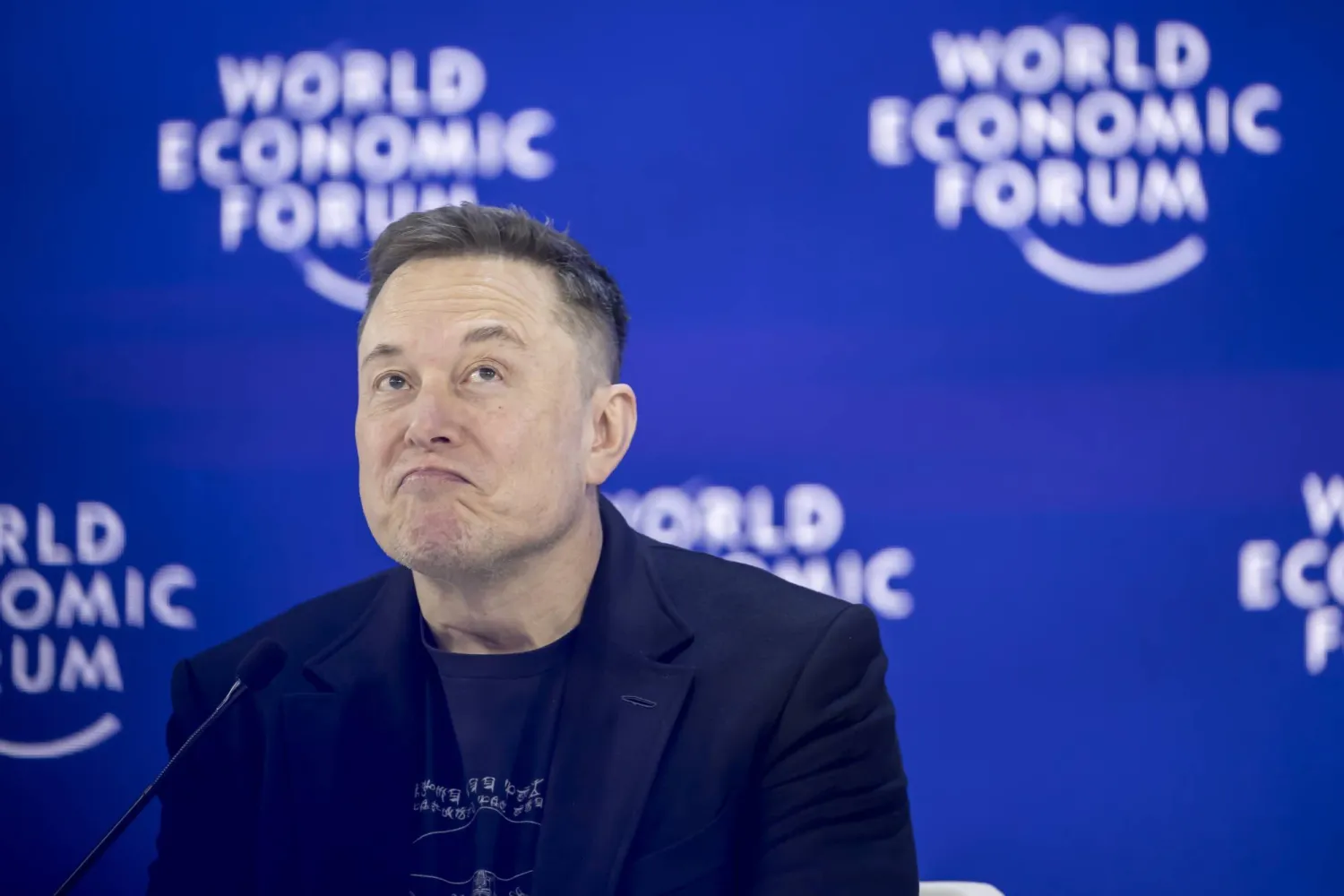
SpaceX and xAI CEO Elon Musk speaks during a panel discussion during the 56th annual meeting of the World Economic Forum (WEF), in Davos, Switzerland, 22 January 2026. (EPA)
TT

Musk Expects Europe, China to Approve Tesla’s Full Self-Driving System Soon

SpaceX and xAI CEO Elon Musk speaks during a panel discussion during the 56th annual meeting of the World Economic Forum (WEF), in Davos, Switzerland, 22 January 2026. (EPA)

Tesla is likely to win regulatory approval in Europe and China for ​its driver-supervised Full Self-Driving (FSD) system as early as next month, CEO Elon Musk said on Thursday, as the electric automaker looks to boost software revenue amid slowing vehicle sales.

While regulatory progress on FSD and early robotaxi deployments point to momentum in Tesla's AI ambitions, the technology remains nascent relative to a valuation that far outstrips those of many technology and automotive companies.

"We hope to get Supervised Full Self-Driving approval in Europe, hopefully next month, and then maybe a similar timing for China," Musk said at his first appearance at the World Economic Forum in Davos.

Tesla has been seeking approval for the system in Europe, where tougher vehicle safety ‌rules and a ‌fragmented regulatory framework have slowed deployment compared with the US
Dutch vehicle authority ‌RDW ⁠said ​in November ‌it expected to decide on FSD in February.

Tesla had said once it secures approval in the Netherlands, other EU countries can recognize the exemption and allow a rollout ahead of a formal EU approval.

In China, the smart features similar to FSD remain restricted to a limited number of vehicles as the US automaker had to halt the software update deliveries last March, citing the need for additional regulatory approval.

Tesla made a long-awaited update to its autopilot software in China last February. But some owners expressed disappointment that the system for which they paid ⁠more than $9,000 came with operational restrictions.

FSD is classified as an advanced driver assistance feature that requires drivers to remain attentive, and regulators have scrutinized it ‌amid concerns over the safety and oversight of automated driving technologies.

ROBOTAXI ‍UPDATE BOOSTS SHARES

Separately, Musk said Tesla has started ‍robotaxi rides in Austin, Texas, without safety monitors. The service started in June with a Tesla employee ‍in the front passenger seat overseeing the car's behavior.

Shares of the automaker closed 4.2% higher on Thursday after social media posts about the driverless robotaxi rides circulated. Tesla operates a ride-hailing service in California and has received permits to test and deploy its robotaxis in Texas, Arizona and Nevada.

While the deployment in Austin without safety monitors represents progress, Tesla's robotaxi ambitions ​remain well short of earlier targets to operate in several major US cities, highlighting the regulatory and safety hurdles that hinder rapid rollouts.

Registration of Tesla's vehicles fell 11.4% in California last ⁠year, with its market share of new cars in the US state slipping below 10%, according to a report by the California New Car Dealers Association.

The company reported a second consecutive drop in vehicle deliveries in 2025, ceding its position as the largest electric vehicle maker in the world to China's BYD.

HUMANOID ROBOT AMBITIONS

Musk has repeatedly said much of the artificial intelligence developed for autonomous vehicles will also underpin Tesla's planned humanoid robots. Musk said on Thursday that he expects robots to outnumber humans.

He said on Thursday that Tesla expects to sell its Optimus humanoid robots to the public by the end of next year, later than the timeline he had previously outlined.

Industry experts and executives have said scaling humanoid robots for real-world use is technically complex, in part because of a lack of data needed to train the AI models that underpin robot behavior.

"For Optimus, what they (the market) need ‌is credible evidence of scalable manufacturing, a regulatory path, and unit economics if possible," said Ken Mahoney, CEO of Mahoney Asset Management, a Tesla shareholder.



TikTok Establishes Joint Venture to End US Ban Threat

(FILES) A photo taken on April 10, 2025 shows the Chinese social networking service TikTok's logo on a smartphone screen (L) and US and China flags combo illustration on a laptop screen in Frankfurt am Main, western Germany.  (Photo by Kirill KUDRYAVTSEV / AFP)
(FILES) A photo taken on April 10, 2025 shows the Chinese social networking service TikTok's logo on a smartphone screen (L) and US and China flags combo illustration on a laptop screen in Frankfurt am Main, western Germany. (Photo by Kirill KUDRYAVTSEV / AFP)
TT

TikTok Establishes Joint Venture to End US Ban Threat

(FILES) A photo taken on April 10, 2025 shows the Chinese social networking service TikTok's logo on a smartphone screen (L) and US and China flags combo illustration on a laptop screen in Frankfurt am Main, western Germany.  (Photo by Kirill KUDRYAVTSEV / AFP)
(FILES) A photo taken on April 10, 2025 shows the Chinese social networking service TikTok's logo on a smartphone screen (L) and US and China flags combo illustration on a laptop screen in Frankfurt am Main, western Germany. (Photo by Kirill KUDRYAVTSEV / AFP)

TikTok announced Thursday it has established a majority American-owned joint venture to operate its US business, allowing the company to avoid a ban over its Chinese ownership.

The video-sharing app is a global digital entertainment powerhouse but its mass appeal and links to China have raised concerns over privacy and national security.

The TikTok USDS Joint Venture LLC will serve more than 200 million users and 7.5 million businesses while implementing strict safeguards for data protection and content moderation, the company said.

The new structure responds to a law passed under US President Donald Trump's predecessor Joe Biden that forced Chinese-owned ByteDance to sell TikTok's US operations or face a ban in its biggest market, said AFP.

Trump welcomed and claimed credit for the deal, but also thanked Chinese President Xi Jinping for approving it.

"I am so happy to have helped in saving TikTok!" Trump said in a post on Truth Social late Thursday.

"It will now be owned by a group of Great American Patriots and Investors, the Biggest in the World, and will be an important Voice."

"I would also like to thank President Xi, of China, for working with us and, ultimately, approving the Deal," he added.

- Cybersecurity audit -

ByteDance retains a 19.9 percent stake in the joint venture -- keeping its ownership below the 20 percent threshold stipulated by the law.

Three investors -- Silver Lake, Oracle and Abu Dhabi-based AI investment fund MGX -- each hold 15 percent stakes. Oracle's executive chairman Larry Ellison is a longtime Trump ally.

Other investors include Dell Family Office, affiliates of Susquehanna International Group and General Atlantic.

The joint venture will retain decision-making authority over trust and safety policies and content moderation for US users.

But TikTok's global entities will manage international product integration and commercial activities including e-commerce and advertising.

Under the arrangement, US user data will be stored in Oracle's secure cloud environment, with cybersecurity audited by third-party experts and adhering to federal standards, TikTok said.

Jasmine Enberg, co-CEO of Scalable, a media company focused on the creator economy, said TikTok users would be relieved by the deal but that there were "still big questions about how this will all play out."

"Behind the scenes, TikTok is likely working hard to assure advertisers it will remain business as normal," she told AFP.

"While the need for users to download a new app seems unlikely, brand partners will want to know that their TikTok strategies won't be disrupted."

- Ellison in spotlight -

The joint venture will be governed by a seven-member, majority-American board including TikTok CEO Shou Chew and executives from investment firms.

TikTok executive Adam Presser was appointed CEO of the new entity, with Will Farrell serving as chief security officer.

The 2024 law came as US policymakers, including Trump in his first presidency, warned that China could use TikTok to mine Americans' data or exert influence through its algorithm.

But Trump, crediting the app for his appeal with young voters, delayed enforcement through successive executive orders, most recently extending the deadline to January 22.

The deal largely confirms an outline announced to staff by Chew last month.

In September, one-time venture capitalist and Vice President JD Vance said the US entity would be valued at about $14 billion but it would ultimately be up to investors to determine pricing.

That month, Trump said a new venture had been agreed with China and would meet the law's requirements.

Trump specifically named Ellison, one of the world's richest men, as a major player in the arrangement.

Ellison has returned to the spotlight through his dealings with Trump, who has brought his old friend into major AI partnerships with OpenAI.


Ubisoft Unveils Sweeping Restructuring, Updates Targets

The Ubisoft logo is seen at the Paris Games Week (PGW), a trade fair for video games in Paris, France, October 27, 2024. (Reuters)
TT

Ubisoft Unveils Sweeping Restructuring, Updates Targets

The Ubisoft logo is seen at the Paris Games Week (PGW), a trade fair for video games in Paris, France, October 27, 2024. (Reuters)

French video game publisher Ubisoft will undergo a reorganization, splitting the company into five creative divisions, it said on Wednesday while also revising its financial outlook.

The revamp, set to commence in early April, divides Ubisoft into five units focusing on specific game genres. The company also announced the cancellation of six games, including a "Prince of Persia" remake and three unannounced titles, alongside delays to seven other projects.

INTERNAL REORGANIZATION

Under the new structure, Ubisoft's five "Creative Houses" will oversee their ‌portfolios from ‌brand development to sales and be ‌responsible ⁠for their own ‌budget.

Each division will have separate management teams. Their pay will be tied to metrics like player engagement and value creation, the company said.

The first unit, Vantage Studios, established in November with a 1.16-billion-euro investment from China's Tencent, will manage Ubisoft's biggest franchises, including "Assassin's Creed". ⁠The four other units will respectively focus on multiplayer shooters, live services, ‌narrative-driven games, and casual and family games.

FINANCIAL ‍TARGETS UPDATED

For 2026, Ubisoft ‍now forecasts net bookings of around 1.5 billion euros ‍and an operating loss of roughly 1 billion euros. This includes a 650 million euros hit from game cancellations and delays. It previously expected net bookings of around 1.9 billion euros and to break even at operating level.

Ubisoft anticipates net debt of 150-250 million euros ⁠by the end of 2026, with cash reserves of 1.25-1.35 billion euros. Free cash flow is projected to be negative 400-500 million euros.

The company's cost reduction program of 100 million euros is expected to be fully achieved by March, one year after its initial target. It is also setting a new cost savings target of an additional 200 million euros over the next two years and will continue to consider potential asset sales.

The company withdrew ‌its prior fiscal 2026-27 guidance and plans to outline medium-term projections in May 2026.


OpenAI Seeks to Increase Global AI Use in Everyday Life

The OpenAI logo is seen in this illustration taken May 20, 2024. (Reuters)
TT

OpenAI Seeks to Increase Global AI Use in Everyday Life

The OpenAI logo is seen in this illustration taken May 20, 2024. (Reuters)

OpenAI is expanding its efforts to convince global governments to build more data centers and encourage greater usage of artificial intelligence in areas such as education, health ​and disaster preparedness.

The initiative – called OpenAI for Countries – will expand the reach of its products and help close the gap between countries with broad access to AI technology and nations that do not yet have the capacity, the company said.

OpenAI also hopes to encourage deeper usage of its tools, adding that AI systems are capable of more complex tasks than many ‌people realize.

“Most ‌countries are still operating far short ‌of ⁠what today’s ​AI ‌systems make possible,” the company said in a report shared with Reuters.

OpenAI started the international initiative last year and appointed former British finance minister George Osborne to oversee the project in December. Osborne and Chris Lehane, OpenAI chief global affairs officer, are pitching government officials on the project this week in Davos.

The initiative is part of ⁠a broader strategy that has helped cement ChatGPT creator OpenAI at the vanguard of ‌the modern AI boom. The company was ‍most recently worth $500 billion ‍and is exploring a public offering that could be worth as ‍much as $1 trillion.

Eleven countries have signed up for OpenAI for Countries. Each deal is structured differently.
Estonia, for example, is embedding OpenAI's education tool, ChatGPT Edu, into secondary schools across the country. In Norway, OpenAI is working with other companies to build data centers and become their first customer.

On Wednesday, OpenAI ⁠executives said they were hoping to work with governments in other areas, like disaster planning. In South Korea, OpenAI is exploring a deal with the government’s water authority to build a real-time, water-disaster warning and defense system against water problems driven by climate change.

In its report, OpenAI said its typical “power user” - or those in the 95th percentile - reaches for OpenAI’s advanced reasoning capabilities seven times more often than a typical user. There are also big gaps within countries.

For example, in Singapore, which has broad access to ‌AI tools, people send more than three times more messages about coding than average, the report said.