


Life With AI Causing Human Brain 'Fry'

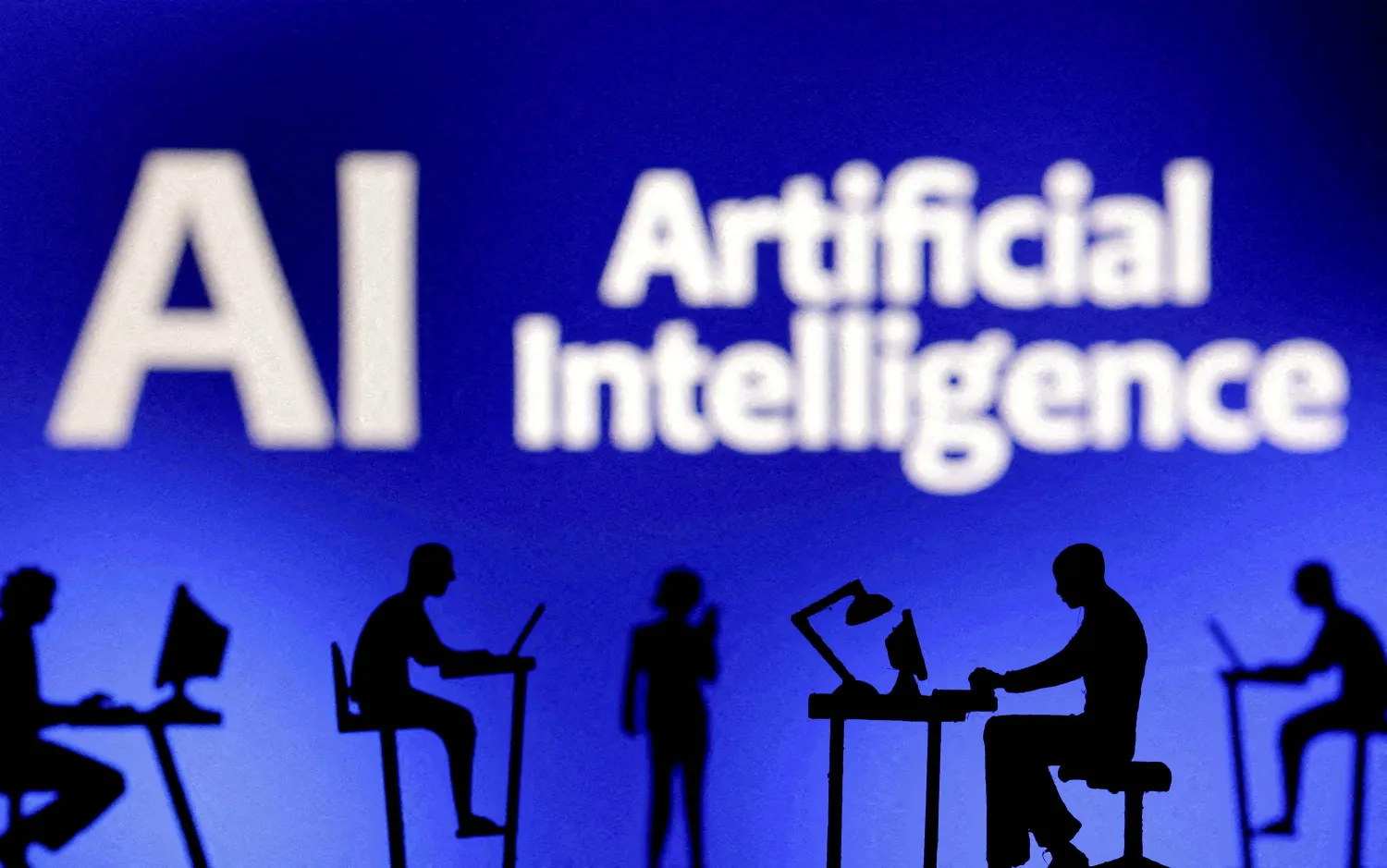
FILE PHOTO: Figurines with computers and smartphones are seen in front of the words "Artificial Intelligence AI" in this illustration created on February 19, 2024. REUTERS/Dado Ruvic/Illustration/File Photo
TT

Life With AI Causing Human Brain 'Fry'

FILE PHOTO: Figurines with computers and smartphones are seen in front of the words "Artificial Intelligence AI" in this illustration created on February 19, 2024. REUTERS/Dado Ruvic/Illustration/File Photo

Heavy users of artificial intelligence report being overwhelmed by trying to keep up with and on top of the technology designed to make their lives easier.

Too many lines of code to analyze, armies of AI assistants to wrangle, and lengthy prompts to draft are among the laments by hard-core AI adopters, said AFP.

Consultants at Boston Consulting Group (BCG) have dubbed the phenomenon "AI brain fry," a state of mental exhaustion stemming "from the excessive use or supervision of artificial intelligence tools, pushed beyond our cognitive limits."

The rise of AI agents that tend to computer tasks on demand has put users in the position of managing smart, fast digital workers rather than having to grind through jobs themselves.

"It's a brand-new kind of cognitive load," said Ben Wigler, co-founder of the start-up LoveMind AI. "You have to really babysit these models."

People experiencing AI burnout are not casually dabbling with the technology -- They are creating legions of agents that need to be constantly managed, according to Tim Norton, founder of the AI integration consultancy nouvreLabs.

"That's what's causing the burnout," Norton wrote in an X post.

However, BCG and others do not see it as a case of AI causing people to get burned out on their jobs.

A BCG study of 1,488 professionals in the United States actually found a decline in burnout rates when AI took over repetitive work tasks.

Coding vigilance

For now, "brain fry" is primarily a bane for software developers given that AI agents have excelled quickly at writing computer code.

"The cruel irony is that AI-generated code requires more careful review than human-written code," software engineer Siddhant Khare wrote in a blog post.

"It is very scary to commit to hundreds of lines of AI-written code because there is a risk of security flaws or simply not understanding the entire codebase," added Adam Mackintosh, a programmer for a Canadian company.

And if AI agents are not kept on course by a human, they could misunderstand an instruction and wander down an errant processing path, resulting in a business paying for wasted computing power.

'Irritable'

Wigler noted that the promise of hitting goals fast with AI tempts tech start-up teams already prone to long workdays to lose track of time and stay on the job even deeper into the night.

"There is a unique kind of reward hacking that can go on when you have productivity at the scale that encourages even later hours," Wigler said.

Mackintosh recalled spending 15 consecutive hours fine-tuning around 25,000 lines of code in an application.

"At the end, I felt like I couldn't code anymore," he recalled.

"I could tell my dopamine was shot because I was irritable and didn't want to answer basic questions about my day."

A musician and teacher who asked to remain anonymous spoke of struggling to put his brain "on pause", instead spending evenings experimenting with AI.

Nonetheless, everyone interviewed for this story expressed overall positive views of AI despite the downsides.

BCG recommends in a recently published study that company leaders establish clear limits regarding employee use and supervision of AI.

However, "That self-care piece is not really an America workplace value," Wigler said.

"So, I am very skeptical as to whether or not its going to be healthy or even high quality in the long term."



China's DeepSeek AI Chatbot Suffers Longest Outage since Viral Rise in Early 2025

DeepSeek app logo (Reuters)
TT

China's DeepSeek AI Chatbot Suffers Longest Outage since Viral Rise in Early 2025

DeepSeek app logo (Reuters)

China's ‌popular DeepSeek artificial intelligence chatbot suffered on Monday its longest outage since the viral rise of its flagship R1 and V3 models early last year.

DeepSeek's status website showed that the chatbot suffered a "major outage" lasting 7 hours and 13 minutes, from the ‌early hours of Monday ‌morning until 10:33 ‌a.m. ⁠local time (0233 GMT), when ⁠the incident was marked as resolved.

As per company protocol, no reason was given for the outage. Such incidents can be caused by a wide range ⁠of issues, from malfunctioning servers to ‌bugs ‌stemming from an update to the AI chatbot, said Reuters.

DeepSeek ‌data shows that its ‌API service, a function mostly used by developers to integrate the chatbot into custom applications, saw consecutive day-long outages ‌in late January 2025, at the height of its viral ⁠moment.

But ⁠its webpage where ordinary users can ask the chatbot questions directly had not experienced a major outage longer than two hours until Monday, according to the startup's status website.

The global AI industry is eagerly awaiting the release of DeepSeek's next-generation model, but the company has given no indication of a timeline.


Five Apple Anecdotes as iPhone Maker Marks 50 Years

A fan takes photos at an event in London to mark the 50th birthday of US tech giant Apple. JUSTIN TALLIS / AFP
TT

Five Apple Anecdotes as iPhone Maker Marks 50 Years

A fan takes photos at an event in London to mark the 50th birthday of US tech giant Apple. JUSTIN TALLIS / AFP

iPhone maker Apple celebrates its 50th anniversary on April 1, having marked pop culture and the tech industry like few other firms since its beginnings in 1976.

Here are five things you may not know about the history of the California giant.

Apple logo

Designer Rob Janoff said that Apple cofounder Steve Jobs gave him one terse instruction when he commissioned a new logo in January 1977: "don't make it cute".

"I just wanted to make the computer easy and fun to be around," Janoff told Forbes in 2018.

He included the bite mark for scale to set the apple apart from similar round fruit like cherries -- learning only later it was a homonym for the computer term "byte".

And belying urban legends, there was no link to the Biblical story of Adam and Eve or the death of computing pioneer Alan Turing.

Janoff added that the Apple job was "the only time in my entire career where I presented only one solution" to a client.

"But it was just so right".

'1984' ad

In a totalitarian sci-fi world, a hammer thrown by a young athlete smashes a "Big Brother" figure declaiming to brainwashed citizens from a vast screen.

Tens of millions of Americans saw director Ridley Scott's one-minute Apple advert during the Super Bowl on January 22, 1984.

Broadcast with an announcement of the release of the Apple computer, it was more than a little inspired by George Orwell's dystopian novel named for the year.

The ad's originality lay in the fact it did not directly show off the product, but instead promised a new world of emancipation for consumers thanks to home computers.

Bold colors

Apple's devices have over the years played with color to set themselves apart from more staid competitors.

Its first-generation iMacs, released in 1998, offered transparent shells in candy-like blue, green and more -- combining a pop of visual interest with a glimpse at the high tech workings within.

The iPod music player, at first available in metallic grey, quickly diversified into a whole spectrum of bright colors.

Later, the "rose gold" variant of the iPhone 6S in 2015, spawned many copycats, surfing a years-long trend dubbed "millennial pink".

09:41 photos

Anyone who has watched more than one Apple product announcement or browsed its website will see a remarkable coincidence: almost every screen appears to show the time as 9:41 am.

Australian game developer Jon Manning said he asked Scott Forstall, then-head of Apple's mobile operating system iOS, about the phenomenon when he bumped into him in California in 2010.

Forstall explained that the timing was down to Steve Jobs' preferred structure for announcements.

"We design the keynotes so that the big reveal of the product happens around 40 minutes into the presentation," Forstall said.

"When the big image of the product appears on screen, we want the time shown to be close to the actual time on the audience's watches. But we know we won't hit 40 minutes exactly".

Apple's third man

Steve Jobs and Steve Wozniak have gone down in history as the Apple co-founders.

In fact, a third man also signed the three-page contract that launched the company on April 1, 1976: Ronald Wayne.

According to Walter Isaacson's biography of Jobs, Wayne, an engineer at the Atari video game company, was in charge of hardware engineering and documentation in the fledgling business.

But while his two co-founders were throwing themselves into the business, Wayne feared losing what little savings he had if Apple failed.

Just 11 days later, he gave up his co-founder status, selling his 10 percent stake for two instalments of $800 and $1,500.

That 10-percent share of Apple would have been worth around $370 billion by 2026.


Huawei's New AI Chip Finds Favor with ByteDance, Alibaba Which Plan to Place Orders

FILE PHOTO: The logo of Huawei is seen at the Viva Technology conference dedicated to innovation and startups at Porte de Versailles exhibition center in Paris, France, June 12, 2025. REUTERS/Benoit Tessier/File Photo
TT

Huawei's New AI Chip Finds Favor with ByteDance, Alibaba Which Plan to Place Orders

FILE PHOTO: The logo of Huawei is seen at the Viva Technology conference dedicated to innovation and startups at Porte de Versailles exhibition center in Paris, France, June 12, 2025. REUTERS/Benoit Tessier/File Photo

Customer testing of Huawei's new AI chip, designed to challenge Nvidia in the China market, has gone well and big tech giants including ByteDance and Alibaba plan to place orders, two people familiar with the matter said.

The development marks a milestone for Huawei, said Reuters.

Despite a government campaign to encourage the use of domestic semiconductors, the Shenzhen-based firm struggled to persuade big tech firms in the private sector to adopt its current flagship chip, the Ascend 910C, in large quantities, industry sources have previously said.

This ‌time around, tech ‌firms intend to use the new 950PR more extensively, much happier ‌now ⁠that the chip ⁠is more compatible with Nvidia's CUDA software system and has better response speeds, said the two people and a third person with knowledge of those plans.

Huawei plans to ship around 750,000 950PRs this year, according to two of the people. They said samples were sent to customers in January, and that mass production should begin next month, setting the stage for fully fledged shipments to start in the second half of the year.

The sources were not authorized to speak ⁠to media and declined to be identified. Huawei, ByteDance, Alibaba did not reply ‌to Reuters requests for comments.

RESTRICTIONS ON NVIDIA CHIPS

A ‌launch of the 950PR comes at a difficult time for Nvidia in China. Many of its ‌artificial intelligence chips have been banned from sale in China by Washington on worries ‌that the technology could boost the capabilities of the Chinese military.

The Trump administration last year greenlighted the sale of Nvidia's H200 chips - more powerful than currently restricted products - albeit with a number of conditions that could limit amounts sold.

The H200 has also recently received approval from Chinese authorities, but it remains unclear ‌when they will be allowed into the country.

Huawei mentioned its new chip last September when it outlined its long-term semiconductor plans for ⁠the first time and ⁠said it would be launching some of the world's most powerful computing systems.

The 950PR, which uses traditional DDR memory, will be priced at around 50,000 yuan ($6,900) per card, while a premium version with faster HBM memory will sell for around 70,000 yuan, the sources said.

Where previously Huawei had stuck to its proprietary CANN software system, the new chips will allow developers at Chinese tech firms, which have generally used Nvidia's software system thus far, to migrate those models more easily.

The sources said that compared to the 910C, the chip only offers a small improvement in raw computing power, but it is designed to excel in handling inference workloads - the process of running trained AI models to answer queries or execute tasks.

Demand for AI inference computing in China is surging as the country's tech sector shifts its focus from model development to real-world deployment, a trend turbocharged by the rapid adoption of open-source AI agent OpenClaw.