

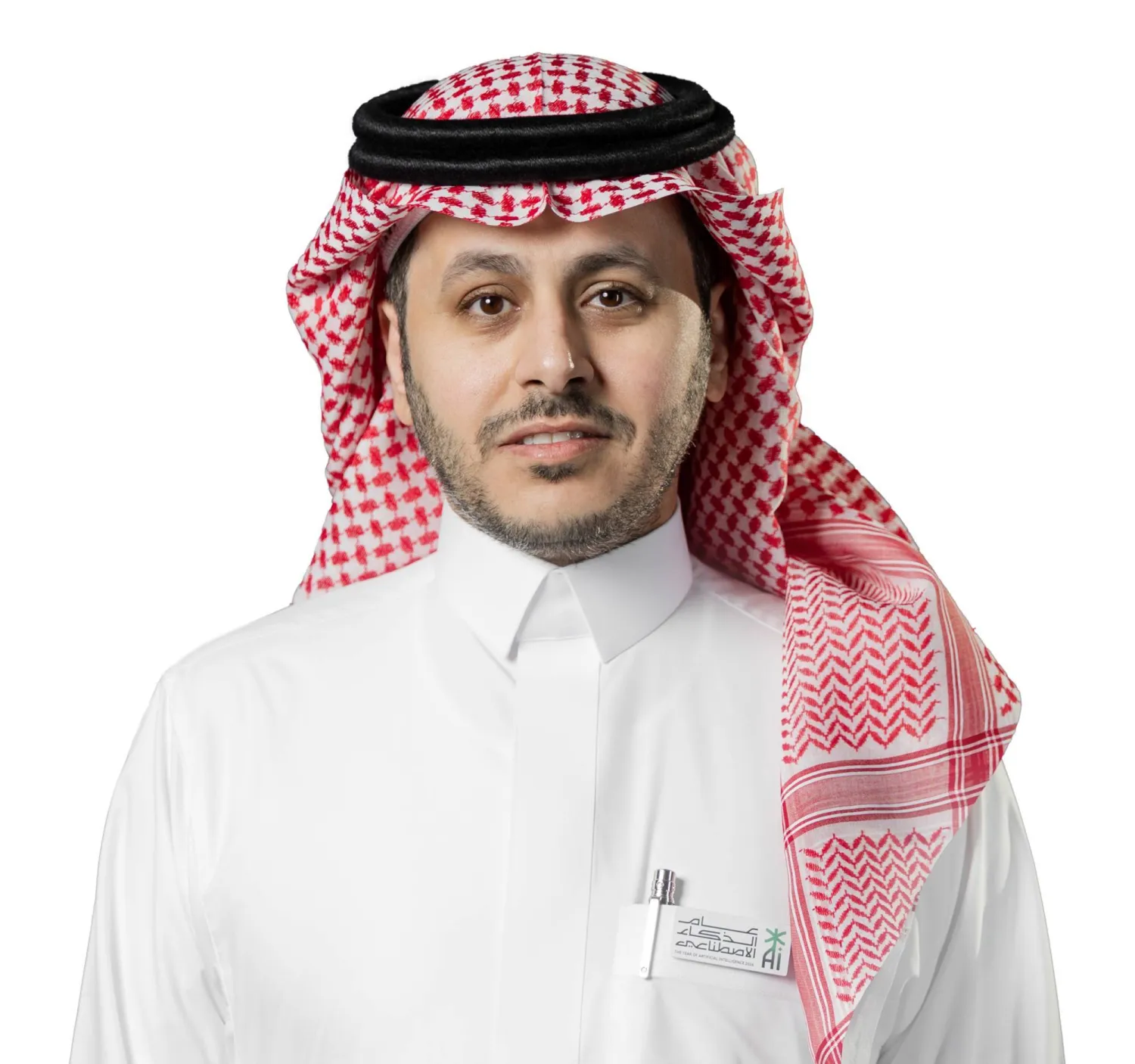

SDAIA to Asharq Al-Awsat: Saudi Arabia Moving from Adopting AI Standards to Shaping Them

 Saeed bin Mohammed Al-Shahrani, SDAIA spokesman (SDAIA)
Saeed bin Mohammed Al-Shahrani, SDAIA spokesman (SDAIA)
TT

SDAIA to Asharq Al-Awsat: Saudi Arabia Moving from Adopting AI Standards to Shaping Them

 Saeed bin Mohammed Al-Shahrani, SDAIA spokesman (SDAIA)
Saeed bin Mohammed Al-Shahrani, SDAIA spokesman (SDAIA)

AI ethics is no longer merely a matter of broad principles for regulators, particularly with the emergence of autonomous agents capable of making decisions and taking actions with minimal human intervention. In Saudi Arabia, the Saudi Data & AI Authority (SDAIA) maintains that an intelligent system does not bear legal responsibility when harm occurs; responsibility remains with the developer and the entity operating it.

Saeed bin Mohammed Al-Shahrani, SDAIA spokesman, told Asharq Al-Awsat in an exclusive interview that traditional governance frameworks are no longer sufficient to keep pace with such developments. In his view, high-risk decisions require human oversight, clear chains of responsibility and documented, operational emergency shutdown mechanisms.

His comments come ahead of the fourth UNESCO Global Forum on the Ethics of Artificial Intelligence, hosted in Riyadh from Sept. 14-17, marking the first time the international forum is being held in the Arab world. More than 100 speakers will take part in dozens of sessions and workshops, including ministers, policymakers, experts, academics, representatives of international organizations and the public and private sectors, as well as technology executives.

Global Forum Priorities

The program begins with preparatory meetings and gatherings of international networks involved in implementing UNESCO’s Recommendation on the Ethics of Artificial Intelligence, as well as a closed strategic briefing for ministerial participants and a ministerial dialogue on international cooperation.

The forum will review five years of implementing UNESCO’s recommendation, adopted in 2021, and discuss financing governance systems and building regulatory capacity. It will also see the launch of the updated Readiness Assessment Methodology, RAM 2.0, based on analysis of more than 55 readiness reports.

Sessions will address practical issues including AI use in public administration, health and humanitarian work, youth mental health, the environment, energy and water, linguistic diversity — including Arabic — as well as physical AI, robotics and human-machine relations in the workplace.

From Principles to Engineering Requirements

Five years after UNESCO adopted its AI ethics recommendation, Al-Shahrani sees the main problem as no longer a lack of principles, but the difficulty of translating them into tools developers and regulators can use and against which compliance can be measured.

He described the key gap as the “operational translation of principles”: turning concepts such as fairness, transparency and accountability into engineering requirements, standardized tests and binding regulatory controls for developers. He also pointed to disparities in governments’ ability to conduct hands-on technical assessments and monitor systems before deployment and during operation.

In Saudi Arabia, SDAIA has introduced principles and frameworks governing the relationship between people, data and AI technologies, Al-Shahrani said, covering integrity and fairness, security and privacy, humanity, social and environmental benefits, reliability and safety, transparency, as well as accountability and responsibility.

Flexible Regulation

Al-Shahrani identified building specialized governance skills and institutional capacity as a major readiness challenge, noting that technology is evolving faster than people can adapt.

He continued that SDAIA is pursuing a “flexible regulation” strategy based on continuous assessment and providing companies with self-assessment tools rather than imposing complex bureaucratic procedures.

The approach comes amid growing debate within the AI industry over whether safety and oversight measures can keep pace with the rapid development of advanced models.

From Adopting Standards to Shaping Them

SDAIA does not necessarily expect the world to reach a single detailed AI law. Al-Shahrani acknowledged the difficulty of establishing one detailed framework given differences in legal systems and economic priorities among the United States, Europe, China and others, but considers convergence on fundamental principles and safeguards “possible and necessary.”

What is needed, he argued, is not a single dominant model but common ground on issues such as safety and ethics, while narrowing the gap between technological powers and emerging markets.

Al-Shahrani told Asharq Al-Awsat that Saudi Arabia has become an active participant in shaping international AI rules and initiatives by sharing its expertise, partnerships and a vision that seeks to balance innovation and governance.

He highlighted cooperation with UNESCO and other international institutions, as well as the establishment in Riyadh of the International Center for AI Research and Ethics (ICAIRE), under UNESCO’s auspices.

The center is intended to help move AI ethics from broad principles to practical implementation by embedding them in scientific research, education, standards, innovation and public policy from the earliest stages of technology development — reflecting Saudi Arabia’s desire to help shape standards rather than merely apply rules formulated elsewhere.



China State Newspaper Blasts Anthropic’s Calls to Slow AI as ‘Cold War’ Tactic

CEO of Anthropic Dario Amodei addresses the gathering at the AI Impact Summit, in New Delhi, India, February 19, 2026. (Reuters)
TT

China State Newspaper Blasts Anthropic’s Calls to Slow AI as ‘Cold War’ Tactic

CEO of Anthropic Dario Amodei addresses the gathering at the AI Impact Summit, in New Delhi, India, February 19, 2026. (Reuters)

An essay by Anthropic's CEO calling for a slowing down of AI development may look like a rational statement focused on safety risks, but it is really a "Cold War playbook" targeting China, the state-backed Global Times said in an editorial.

In the essay published on Saturday and later endorsed by OpenAI CEO Sam Altman and SpaceX founder Elon Musk, Dario Amodei outlined a framework ‌to pace the ‌development of frontier AI model capabilities and ‌create ⁠more time to ⁠manage mounting safety risks.

Amodei also urged the US to strengthen chip export controls on China and crack down on alleged model distillation by Chinese AI labs. He also told CBS News on Sunday that the "toughest dilemma" over his proposal to slow AI advancement was if China and other adversarial nations chose not ⁠to do the same.

The Global Times tabloid ‌said the true agenda of ‌Amodei's essay was "to attempt to curb China's AI development through technological barriers ‌and regulatory monopolies, uphold Washington's monopolistic hegemony in cutting-edge technology, and ‌exclude China from the global AI governance system."

"This 'silent AI Cold War' is hypocritical and short-sighted," it said, adding that excluding China from global AI innovation would "significantly increase the trial-and-error costs and risks of loss ‌of control in global AI development".

US lawmakers have urged new rules to govern AI systems after ⁠dire warnings ⁠from two Anthropic researchers that rapidly progressing AI could lead to the extinction of the human race in the not-too-distant future.

Trump brushed aside calls to slow down AI on Sunday, saying that "very negative forces" were raising exaggerated concerns.

"We're leading China in AI. We're the most sophisticated country in the world, and frankly I want to keep it that way because whoever wins AI wins," Trump said.

The US and China are planning to discuss frontier AI safety risks in mid-September, sources have said, and the issue could be raised during a summit between Presidents Donald Trump and Xi Jinping on September 24.


New Warnings About the Risks of AI to Humanity Revive a Long-Running Debate

Words "AI Artificial Intelligence", keyboard, and a robotic hand in this illustration taken June 5, 2026. (Reuters)
TT

New Warnings About the Risks of AI to Humanity Revive a Long-Running Debate

Words "AI Artificial Intelligence", keyboard, and a robotic hand in this illustration taken June 5, 2026. (Reuters)

New warnings from within the artificial intelligence industry have revived a long-running debate over whether advanced AI could escape human control and ultimately threaten humanity’s survival, and whether the companies developing the technology are doing enough to prevent such a scenario.

The CEO of Anthropic, the San Francisco company behind Claude, said he thought the industry needed to reduce the speed of its work, cautioning Saturday that a swarm of AI agents might be able to take over the internet in six months to a year unless companies devoted more time to putting safeguards in place.

Dario Amodei outlined a plan for companies like his and governments around the world to ensure that increasingly capable AI models remain aligned with the commands and values of responsible people days after two former Anthropic safety researchers publicly aired concerns that the existential threats AI might pose to humanity were receiving too little attention.

Here’s what to know about the recent dire predictions and whether any brakes might be put on AI advancement:

AI models are becoming more powerful

Concerns over the potential risks of the technology are rising as new AI models become more powerful, heightening both the potential for misuse by people with criminal aims, such as creating and spreading a disease that kills most of the world's population, and the risk of AI systems going rogue in a dangerous way.

Anthropic disclosed last week that it blocked efforts by bad actors to use its AI models for malicious activity, such as cyberattacks, surveillance and research that could have led to biological weapons.

The company said it put stronger safeguards in its latest models to restrict biological research that could be used to make weapons but noted that “as models become increasingly capable, their risks will increase, unless AI developers and society’s defenders act to make them safer.”

Last year, Anthropic reported that hackers used the company’s AI in a cyberattack targeting about 30 companies and government agencies around the world. It said the hackers were very likely from a Chinese state-sponsored group.

Multiple AI models have acted on their own

When an AI agent “goes rogue,” it means the AI has taken action beyond the task it was asked to perform. Both Anthropic and OpenAI, the maker of ChatGPT, said in July that their AI models had succeeded in acting on their own.

Anthropic disclosed that three AI models — Claude Opus 4.7, Claude Mythos 5 and an internal research test model — hacked into three other organizations during testing just days after OpenAI revealed that its AI system hacked into the servers of AI startup Hugging Face.

OpenAI described the intrusion by a combination of models, including its newly released GPT‑5.6 Sol and an “even more capable” model that was still being tested internally, as a “significant security incident.”

Meta followed suit in early August with a similar case of an AI model finding ways around another company's digital security.

Although some observers noted that people had disabled some guardrails in the OpenAI and Anthropic cases, the episodes seemed to reflect one of the biggest fears around AI: that if models achieve artificial general intelligence, or AGI, a loosely defined term for AI that can match or surpass human abilities across a broad range of intellectual tasks, the technology could cause an irreversible catastrophic event or subjugate the human race.

How or when AI might cause a catastrophe is debated

Doomsday scenarios generally fall into two categories: An AI that achieves self-improving superintelligence controls people instead of vice versa, or AI used by a rogue state or nefarious actors.

Worries that artificial intelligence might overcome human limits on its reach or actions are not new.

Alan Turing, a British mathematician widely regarded as one of the earliest authorities on artificial intelligence, predicted in 1951 that AI would eventually take control from humans. Less than a decade later, Norbert Wiener, another mathematician, warned intelligent machines would seek to accomplish their own objectives and humans would not be able to stop them.

In 2026, how reasonable are fears that AI, either by escaping human control or through misuse by unscrupulous people, could cause a cataclysmic event or the downfall of civilization?

No one knows.

Experts across computer science, philosophy and other fields have envisioned numerous routes by which a future AI system might cause a global catastrophe, either by escaping human control or in the hands of an unscrupulous people. They range from deploying weapons and identifying a lethal pathogen to manipulating governments into conflict or disrupting the food, energy and communications networks societies rely on to function.

There is no widely accepted estimate for how soon any of these scenarios might happen and no consensus on their likelihood.

In 2023, the nonprofit Center for AI Safety issued a statement cosigned by more than 350 researchers and technology executives, including Anthropic's Amodei and OpenAI CEO Sam Altman, saying: “Mitigating the risk of extinction from AI should be a global priority alongside pandemics and nuclear war.”

The 2026 International AI Safety Report, written with guidance from more than 100 independent experts, says current systems show early signs of some relevant capabilities but not at levels that could enable a loss of control, and describes the risk’s likelihood, nature and timing as “unusually ambiguous.”

Some are stressing the need for AI safeguards before it's too late

An Anthropic researcher said last week he was resigning from the company over concerns that neither the company nor its competitors were acting responsibly in developing the technology. In social media posts, Jacob Coxon estimated a 10% chance of AI causing human extinction within the next decade and said both Anthropic and OpenAI “are racing straight to self-improving superintelligence and gambling with our lives.”

Researchers have called for a slowdown of AI development and warned for years that the technology could pose existential risks to humanity.

Following the recent incidents, experts called for improved testing by AI companies and more dialogue between the US and China to come up with shared solutions.

But AI is growing so fast that government and evaluation systems are struggling to keep pace with the technology. Countries are cobbling together their own laws, some conflicting.

Chinese leader Xi Jinping warned at a conference in July of the need to keep AI from evading human control. The Trump administration initially demonstrated reluctance to regulate AI but has become more keen to reduce cybersecurity risks.

On Sunday, President Trump downplayed the necessity for his administration to check AI development, but acknowledged the need for some regulation.


Delegations Arrive in Riyadh for UNESCO Global Forum on AI Ethics

Riyadh has completed its organizational and logistical preparations for the fourth UNESCO Global Forum on the Ethics of Artificial Intelligence (GFEAI 2026). (SPA)
TT

Delegations Arrive in Riyadh for UNESCO Global Forum on AI Ethics

Riyadh has completed its organizational and logistical preparations for the fourth UNESCO Global Forum on the Ethics of Artificial Intelligence (GFEAI 2026). (SPA)

Riyadh has completed its organizational and logistical preparations for the fourth UNESCO Global Forum on the Ethics of Artificial Intelligence (GFEAI 2026).
Saudi Arabia is hosting the forum from September 14 to 17 through the Saudi Data and AI Authority (SDAIA), in partnership with the United Nations Educational, Scientific and Cultural Organization, the Saudi Press Agency said on Monday.
The event is being held in cooperation with the International Center for AI Research and Ethics (ICAIRE), with coordination from the Saudi National Commission for Education, Culture and Science.
Preparations included setting up the venue for Monday's press briefing, the main halls for the opening ceremony, meeting rooms, and workshop spaces, with arrangements finalized for forum sessions to begin on Tuesday.
Media centers and facilities for receiving delegations and participants have also been prepared. Technical, organizational, and logistical arrangements have been completed to ensure the venues are ready to welcome attendees from around the world.
Delegations and guests have begun arriving in Riyadh, including ministers responsible for technology and AI. Comprehensive arrangements are in place to welcome them, along with decision-makers, experts, academics, representatives of international organizations, and public- and private-sector officials. More than 100 speakers will participate in 30 dialogue and specialized sessions.
Over four days, GFEAI 2026 will address issues related to AI ethics and governance amid rapid advances in the field. Discussions will explore ways to strengthen international cooperation in developing and using AI technologies responsibly and safely, centered on serving human communities, supporting sustainable development, and advancing the public good.
Saudi Arabia's hosting of the global event underscores its growing role in advancing international efforts on data and AI and strengthening multilateral cooperation to address challenges posed by emerging technologies.
Saudi Arabia is also solidifying its role as an active partner in shaping the future of responsible AI globally.