
Apple Launches into Foldable Market as iPhone Duo Sales Begin

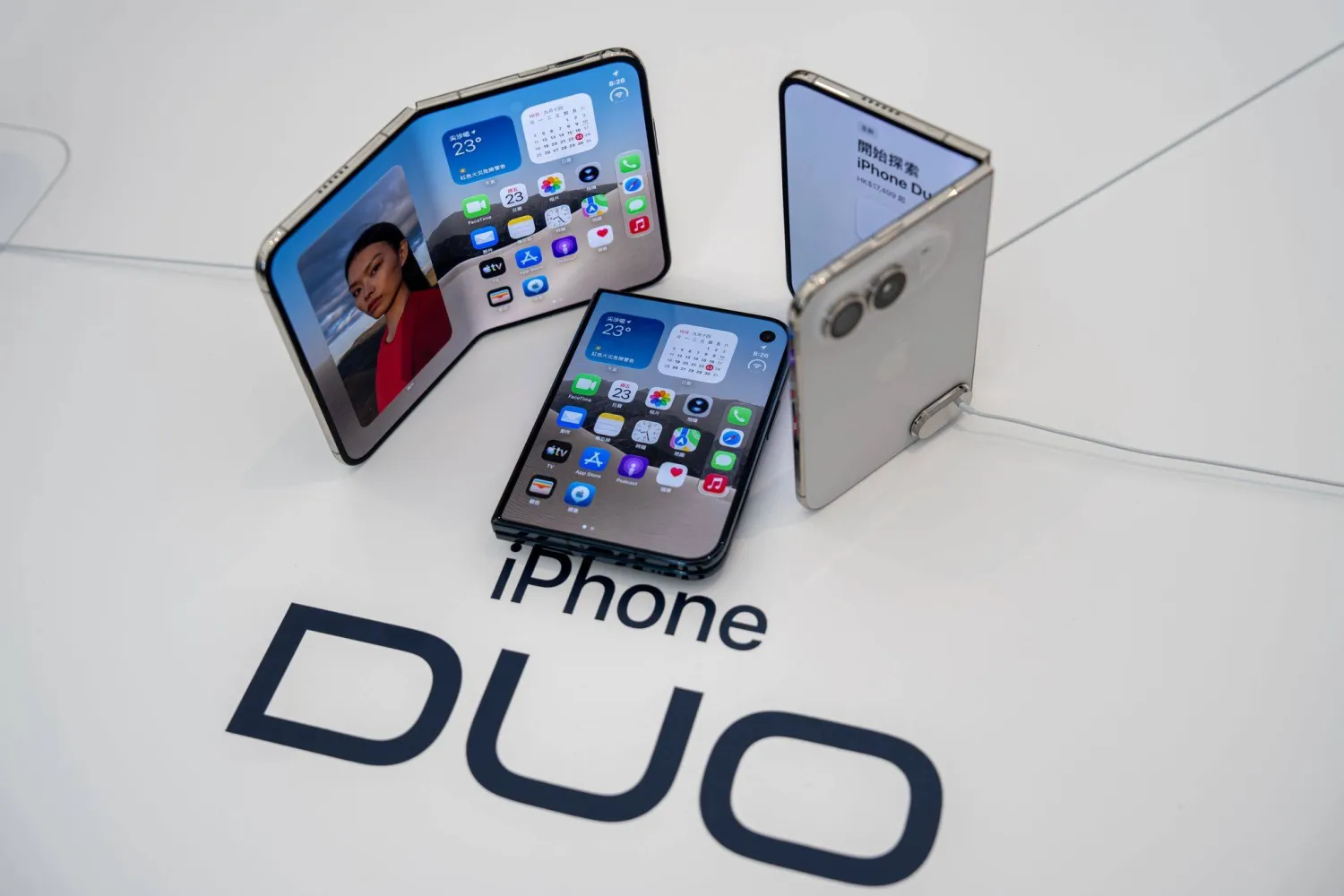
 23 October 2026, China, Hong Kong: The iPhone Duo, Apple's first foldable smartphone, is displayed at an Apple Store. (dpa)
23 October 2026, China, Hong Kong: The iPhone Duo, Apple's first foldable smartphone, is displayed at an Apple Store. (dpa)
TT

Apple Launches into Foldable Market as iPhone Duo Sales Begin

 23 October 2026, China, Hong Kong: The iPhone Duo, Apple's first foldable smartphone, is displayed at an Apple Store. (dpa)
23 October 2026, China, Hong Kong: The iPhone Duo, Apple's first foldable smartphone, is displayed at an Apple Store. (dpa)

Sales of Apple's first folding phone, the iPhone Duo, began on Friday, with market watchers betting on whether the device can reinvent the small foldables market in the same way the iPhone did for smartphones.

The Duo's reception could prove an early test for new CEO John Ternus, the former hardware chief who unveiled the phone barely a week after taking charge in September.

It could also have large implications for a niche category in which rivals such as Samsung Electronics and Huawei Technologies have sold premium offerings for several years.

Within minutes of pre-orders opening last Friday, Apple's estimated delivery dates for the Duo had slipped to late January as demand outpaced supply. The US company called the response from customers "nothing short of extraordinary."

In Sydney, the first Apple store to sell the phones on Friday, a queue of customers formed outside before opening at 8 a.m. local time (2100 GMT).

Simon Krishnan, a 48-year-old engineer, paid A$3,899 ($2,734) for a Duo with 512GB memory.

"This is a bit of a luxury item ‌for me, because ‌it's so expensive, but I just think, you know what? Life's too short," he said.

In China, a soft ‌consumer ⁠market combined with ⁠memory costs pushing prices higher has led to six straight quarters of declines in smartphone shipments. Apple's market share, however, has rebounded as some phone buyers trade up to premium devices while others seek value at the lower end of the market, putting pressure on mid-range brands.

Liu Wei, a 26-year-old healthcare professional, already has a foldable phone from Xiaomi, but still queued outside a central Shanghai Apple store from 6 a.m. to get his hands on Apple's first foldable.

"I've used Apple products for many years and I have more trust (in the brand), so I bought one on launch day to try it out," he said.

In Hong Kong, May, 38, who declined to give his full name for privacy reasons, secured a 256GB iPhone Duo, which retails for HK$17,499 ($2,231.73), ⁠during an online pre-sale and aimed to resell the handset for a profit of around HK$4,000: “A few meals' ‌worth of money,” he joked.

MIXED REVIEWS

Early reviews have praised the Duo's design as ‌well as its sturdy and barely visible hinge, a major feat for phones whose prominent creased screen has long been a drawback and potential deterrent for buyers.

But ‌reviewers have said camera compromises, including the absence of a telephoto lens and third-party apps that still need to be reworked for the ‌new display size could disappoint some buyers.

They have also said the Duo in its smaller, folded state is less handy for the litany of quick tasks that most users carry out each day on standard iPhones, with several prominent reviewers recommending against the Duo for many Apple customers.

"It's been a lot of fun trying the Duo out for a week, but it feels like I've gotten to use an extraordinarily polished prototype — not a finished product that I'd ‌want to buy and carry," longtime Apple commentator John Gruber, author of the blog Daring Fireball, wrote in a review.

Tech commentator Marques Brownlee, popularly known as MKBHD, said in a YouTube review that "if you're ⁠just a regular person who doesn't ⁠do much more than texting, social media and browsing here and there, then it is probably a no. But if the $2,000 doesn't mean much to you, and you like the idea, after the learning curve and getting used to not having facial identification, it is a really fun phone."

TOUGH TO FIND

The limited supplies could disappoint Apple fans lining up in front of stores to buy the Duo. Apple told Reuters that walk-in availability would vary by country, with limited stocks in the US, Australia, Canada, Mexico and much of Britain and Europe. In China, France, Hong Kong, India and Japan, units would be available only for customers who had ordered online.

"Foldables have been an established category for years, but adoption has remained relatively limited compared with conventional smartphones. Apple's entry could bring the format to a much broader audience," said Francisco Jeronimo, vice president at market researcher IDC.

IDC expects Apple will take 44% of the foldable value in 2026 on 31% of foldable units. By 2027, it will become the market leader in the category both in value and units shipped, IDC forecast.

"Apple has made a convincing case for this form factor," Jeronimo said after spending a week with the passport-shaped Duo.

"Now comes the next test: turning excitement into availability, adoption and a lasting new chapter for the smartphone market," Jeronimo said.


Tech Stocks Under Pressure as AI Jitters Persist

An electronic billboard displays messages supporting Nvidia CEO Jensen Huang in Taipei, Taiwan, November 25, 2026. REUTERS/Ann Wang
TT

Tech Stocks Under Pressure as AI Jitters Persist

An electronic billboard displays messages supporting Nvidia CEO Jensen Huang in Taipei, Taiwan, November 25, 2026. REUTERS/Ann Wang

Global technology stocks tumbled Wednesday as renewed concerns over the AI boom washed away the euphoria that greeted the return of Jensen Huang to the scandal-hit chip giant Nvidia.

News that Huang, one of the most prominent proponents of the artificial intelligence explosion, had returned as CEO less than two weeks after resigning over extramarital affairs -- including with an alleged Chinese spy -- had sent markets soaring after weeks of heavy selling.

But sentiment soured on renewed fears about the colossal sums pumped into the AI build-out and when investors would see returns.

The prospect of higher US interest rates amid high inflation has also sparked fears about the infrastructure investment costs.

"The sell-off in tech stocks continues, as market skepticism is driving price action," said Kathleen Brooks, research director at the trading group XTB.

Taipei, Tokyo and Seoul -- home of most of Asia's key AI-linked firms -- sank 4.8 percent, 2.8 percent and 6.2 percent, respectively.

Losses were led by Taiwan's TSMC and MediaTek, Japanese chip giants Kioxia and Advantest, and South Korean titans SK hynix and Samsung.

Hong Kong and Shanghai stock markets also fell.

"The continued slump in the AI trade in Asia and the US is helping the rotation into European indices," Brooks said.

London, Paris and Frankfurt were all higher in morning deals, with carmakers and the luxury sector leading the way.

The tech rout followed a return to selling on Wall Street on Tuesday after Monday's surge, with Nvidia shedding almost six percent.

Nvidia remains under scrutiny from investigators including the FBI and on Capitol Hill for allegedly helping Chinese firms gain access to the firm's most advanced chips.

And Anthropic, maker of the AI chatbot Claude, slumped 6.5 percent to fall below the $83 price for its massive IPO last week, the largest ever.

Investors will be keeping an eye on the release of the US Federal Reserve's preferred gauge of inflation later in the day, which could play a role in its interest rate decisions.

Due to stubbornly high inflation, Fed officials are widely expected to raise rates next month.

In company news, Chinese electronics giant Xiaomi rose in Hong Kong on optimism for the performance of the company's higher-end smartphones, even as an AI-driven memory chip supply crunch hits profits.


Fake Gifts, Real Losses as AI Ads Proliferate

(FILES) Trolleys piled high for delivery are seen as shoppers queue at the checkout of a supermarket in London on March 14, 2020. (Photo by JUSTIN TALLIS / AFP)
TT

Fake Gifts, Real Losses as AI Ads Proliferate

(FILES) Trolleys piled high for delivery are seen as shoppers queue at the checkout of a supermarket in London on March 14, 2020. (Photo by JUSTIN TALLIS / AFP)

Online shoppers endlessly scrolling through gift suggestions this holiday season risk being duped by a blizzard of AI-generated scams touting nonexistent products.

Vertical video advertisements, pulling millions of views ahead of Black Friday, are using artificial intelligence to hawk items such as themed advent calendars, heated robes and pet accessories.

Holiday gift scams are not new, but experts warn that AI has lowered the cost required to create a convincing product demonstration.

Some 43 percent of Americans told an October 2026 shopping survey they had been duped by ads generated by the technology.

"It's been surprising how susceptible all ages are to buying these products," said Dallas-based content creator Maggie McGaugh.

She fronts a popular Instagram series of unboxing videos dedicated to exposing AI-advertised items.

Packages that she receives -- purchased primarily through Chinese-owned e-commerce company Temu because it refunds customers if items are not delivered -- fail to resemble the slickly marketed items seen on social media.

"Most of the items are very poor quality," she said. "The size is much smaller, the fabric is like a cheap costume, the lights are dimmer or you have to build it yourself."

Heated, excessively decorated robes are particularly viral this holiday season. Some are styled after the gowns of popular Disney characters that often retail for over $100.

The ads suggest that the item is stocked in physical stores, including H&M.

The global fashion retailer told AFP it had received requests from customers in search of the apparel, but that its name and branding were falsely used to "promote products that are not sold by H&M."

Michelle Richard, known for her "Disney Fashionista" blog, told AFP she was quick to purchase the plush-looking item, but it has yet to be shipped.

"It wasn't until I reported it to my credit card company that I received a lengthy email and more reliable tracking," Richard said. "I am keeping my fingers crossed that the product comes soon and is of the quality it appeared in the ads."

Avid online shopper Tia Evans ordered a similar product in early October after repeatedly seeing ads for it across Facebook, Instagram and TikTok.

"I took a risk on the ad specifically because I had seen it so many times," she told AFP.

She purchased four robes, from a store that catered to African American culture, for more than $200.

Soon after, the website she shopped from went dark, with no reliable tracking information on her order and messages left unanswered by the vendor.

Her bank sent a notification asking if she recognized the purchase. She left the case open in the hopes she "can refer back to it and say: 'Hey, I never got this.'"

Other shoppers reported to AFP that their credit card information had been compromised, used for unauthorized purchases on gambling websites.

Digital media expert Christina Inge said the AI products add to "the perfect storm" of impulse buys around the holidays.
The promotions are tested through "hundreds of ad variations to find the audience for the fake," she said.

But similar to Evans, consumers on Reddit are flagging void tracking numbers and disappearing product listings.

One user told AFP about the purchase of a $280 "smart" Christmas tree gone wrong: "The website vanished after payment, and the only proof of purchase was a fake invoice."


China’s Used Phones Find New Homes from Karachi to Algiers

Used smartphones are seen at ATRenew Dongguan Automation Operations Center, which recycles and processes used smartphones in Dongguan, in southern China's Guangdong province on November 3, 2026. (AFP)
TT

China’s Used Phones Find New Homes from Karachi to Algiers

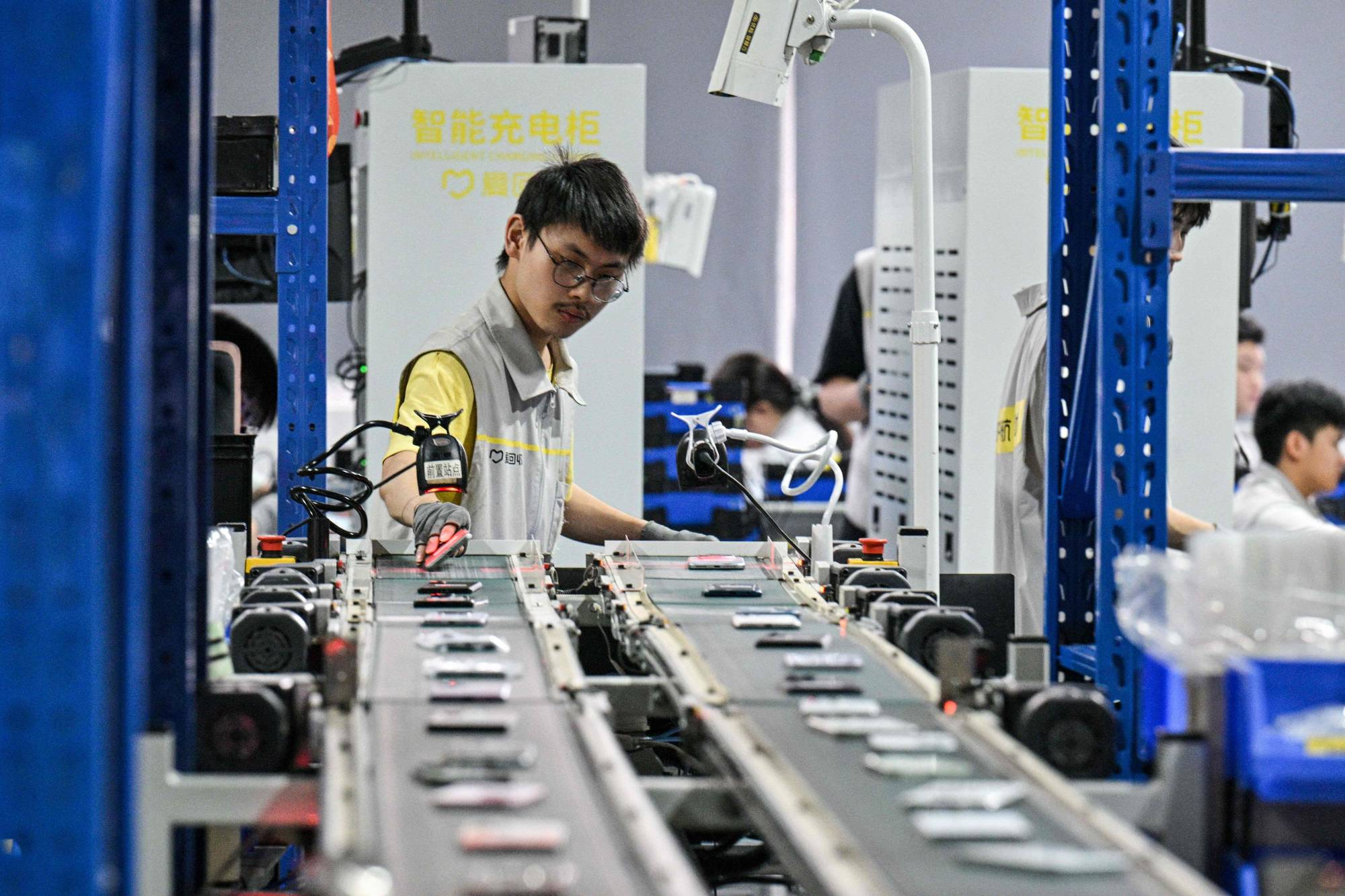
Used smartphones are seen at ATRenew Dongguan Automation Operations Center, which recycles and processes used smartphones in Dongguan, in southern China's Guangdong province on November 3, 2026. (AFP)

In the maze of Shenzhen's neon-lit Huaqiangbei electronics market, buyers from Africa to Bangladesh buy dozens of used phones at a time -- even with cracked screens -- to sell back home.

"From all China, the broken mobile phones come here," Akhtar Muhammad, 38, a Pakistani businessman, told AFP as he browsed the stacks of devices in the southern Chinese city.

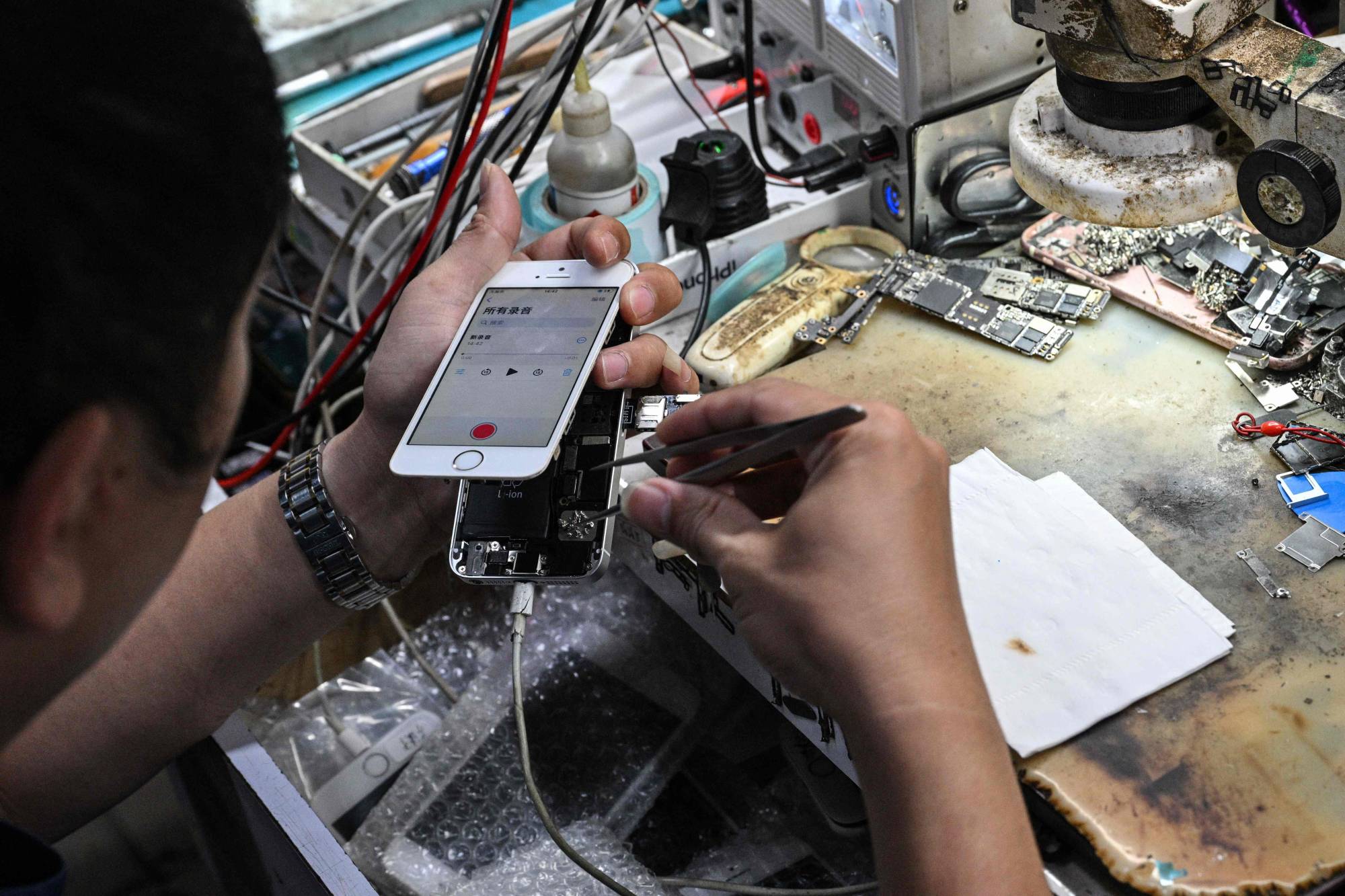
"We will fix them in Pakistan."

The supply is mind-boggling. As the world's largest smartphone producer, China discards over 400 million devices annually, the China Association of Circular Economy estimates.

As chip shortages and rising prices around the world make new devices harder to afford, so the demand for pre-owned phones is also soaring.

Mama, a 24-year-old Nigerian buyer, said he had bought around 40 used phones in one day in Shenzhen, which hosted leaders including US President Donald Trump last week.

"They are more expensive in Africa because we don't have big suppliers or markets like this one," Mama told AFP. "If I buy and send them to my country, I get profit."

Nearby, another Nigerian buyer haggled with a stall owner. His haul included damaged iPhone 13 Pro and 14 Pro models bought for 1,000 to 2,000 yuan ($150 to $300) each.

He plans to repair their screens locally before shipping them home for a lucrative resale.

A worker is seen at ATRenew Dongguan Automation Operations Center, which recycles and processes used smartphones in Dongguan, in southern China's Guangdong province on November 3, 2026. (AFP)

- Repair not replace -

In particular, people in emerging markets such as South Asia and Africa, where there is less purchasing power, are turning to used models, Counterpoint Research analyst Ivan Lam told AFP.

The global secondary smartphone market grew 13 percent year-on-year in the first half of 2026 to 150 million units, according to Counterpoint.

In Pakistan, people often opt to repair rather than replace broken devices, said Muhammad, who has been coming to China since 2007.

"Maybe people use one mobile phone for four or five years. It's not the same like the US or Europe. They change every year or every six months," he said.

But outside Huaqiangbei's crowded stalls, a more formalized alternative is taking root: PaiJiTang Mall, a self-service second-hand marketplace run by Chinese recycling company ATRenew.

Inside, rows of over 20,000 used phones are on display. Buyers scan QR codes for instant inspection reports and pricing, test the units and purchase in bulk.

The shop draws up to 1,000 visitors daily, with international traders making up about a third, said store manager Zhang Xiaoming.

Abdul Rahim, a 20-year-old shopkeeper who flies to China up to three times a month to stock his phone and accessory store in Algeria, capitalizes on a price gap of 100 to 120 euros ($110 to $132) per device.

"It's very easy for Algerians to get the visa to China. You put in your papers and in two or three days you have the visa in your passport," he told AFP.

"For Europe, there just aren't visas... So we come here."

A technician repairs a smarthphone in a shopping mall dedicated to the sale of smartphones in Shenzhen, Guangdong Province, on November 2, 2026. (AFP)

- 'Buy, buy, buy' -

Apple devices account for 70 to 80 percent of sales, with the rest split among Chinese brands such as Huawei, Xiaomi, Oppo and Vivo, Zhang noted.

Older models like the iPhone 11, 12 and 13 -- losing ground to cheap Androids in China -- retain strong brand power overseas, where they find a second life, explained Jeremy Ji, ATRenew's head of corporate strategy and overseas business.

At ATRenew's massive processing hub in Dongguan, north of Shenzhen, roughly 30,000 second-hand gadgets arrive daily and are inspected and packed by over 300 technicians.

Rising prices are also changing buying habits in China itself with consumers opting increasingly for pre-owned models, particularly nearly new premium models, said Arthur Guo, an analyst at IDC China.

Most phones discarded in China are still sold domestically, and bulk exports via official channels have not increased significantly, Lam, of Counterpoint, told AFP.

For Mama, sourcing phones is still a hands-on process.

"If I come, I spend a month checking (phones). I buy, buy, buy," he said. "After I have finished, I go back to my country."