CEO: Amazon Cloud Capacity Sold Out Through 2027

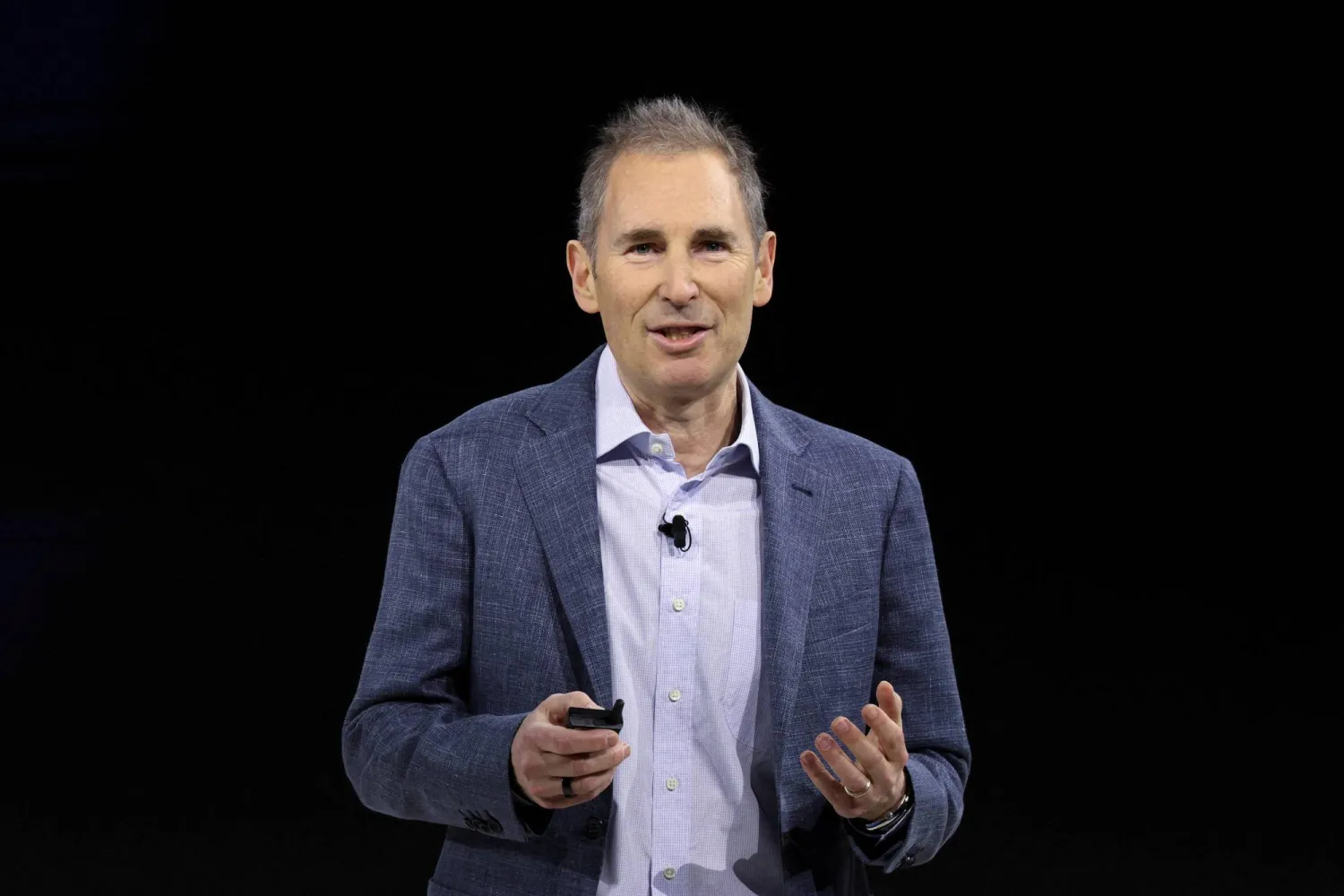
FILE PHOTO: Amazon CEO Andy Jassy speaks during an Amazon Devices launch event in New York City, US, February 26, 2025. REUTERS/Brendan McDermid/File Photo
TT

CEO: Amazon Cloud Capacity Sold Out Through 2027

FILE PHOTO: Amazon CEO Andy Jassy speaks during an Amazon Devices launch event in New York City, US, February 26, 2025. REUTERS/Brendan McDermid/File Photo

Amazon CEO Andy Jassy said on Friday that Amazon Web Services' cloud computing capacity is largely sold out through 2027, with significant commitments extending into 2028, on growing demand for AI infrastructure.

In a video podcast with Andreessen Horowitz co-founder Ben Horowitz and general partner Erik Torenberg, Jassy said Amazon is struggling to keep pace ⁠with the insatiable ⁠demand from AI labs and enterprises.

Earlier this year, Amazon had said it would spend about $220 billion in capital expenditure for 2026.

According to Reuters, Jassy said the ⁠company "could invest a lot more and it wouldn't be a bad use of capital," considering cloud-computing capacity for 2026 is already sold out.

"2027 is largely sold out. We always leave a certain amount for on demand and our inference service bedrock, or EC2, but largely sold out ⁠all ⁠the big chunks. A good chunk of 2028 is sold out," he said.

EC2 is an AWS service that provides cloud servers for running applications, while Bedrock gives customers access to AI models to build generative AI applications.

Amazon is scheduled to report third quarter results on October 29.


Popular Websites Subverted in Bid to Steal Crypto, Target iPhone Users

Apple's new iPhone 11 phones are displayed at the Apple Store in IFC, Central district, Hong Kong, China October 10, 2019. (Reuters)
TT

Popular Websites Subverted in Bid to Steal Crypto, Target iPhone Users

Apple's new iPhone 11 phones are displayed at the Apple Store in IFC, Central district, Hong Kong, China October 10, 2019. (Reuters)

Some of the world's most visited websites, including those belonging to Zoom, HSBC, Equifax, CNN, Salesforce and IKEA, were subverted in an effort to steal cryptocurrency and infect iPhones, a security researcher said on Monday.

Malicious JavaScript was aimed at visitors to the ‌websites of 178 ‌organizations across various sectors ‌through ⁠Optimizely, a website optimization ⁠platform, according to researcher Scott Helme.

The scripts attempted to replace cryptocurrency payment addresses with the attacker's wallet, skim card numbers as users entered credit card details, steal cookies and ⁠screenshots, and plant exploit code on ‌iOS devices.

Cybersecurity ‌firm HudsonRock also said it had found evidence ‌that the sites had served ‌malicious code to their visitors.

Reuters could not immediately ascertain whether the code was successfully used in each case, or the ‌extent of any resulting hacks.

Salesforce said it was investigating unauthorized Optimizely script ⁠changes, ⁠and had disabled them as a precaution.

Equifax also investigated the issue and ceased using Optimizely. The company said it did not find evidence of any compromise to its systems.

Optimizely, Apple, Zoom, HSBC, CNN and IKEA did not immediately respond to Reuters' requests for comment.


US Closes Loophole on China’s Access to AI Chips After Nvidia Scandal

Semiconductor chips are seen on a printed circuit board in this illustration picture taken February 17, 2023. (Reuters)
TT

US Closes Loophole on China’s Access to AI Chips After Nvidia Scandal

Semiconductor chips are seen on a printed circuit board in this illustration picture taken February 17, 2023. (Reuters)

The US Commerce Department on Monday issued a rule aimed at stopping Chinese companies from using advanced American AI chips housed in data centers in other countries.

The move comes days after a spy scandal forced Jensen Huang to step down as head of Nvidia, amid widening suspicions that he may have helped Chinese companies gain access to his company's most powerful AI chips in violation of US rules.

The Commerce Department, led by Howard Lutnick, has been accused by other voices inside the Trump White House of failing to properly enforce export controls that bar sales of Nvidia's most powerful AI chips to China.

One loophole allowed Chinese firms to rent AI computing power from data centers in Southeast Asia and elsewhere that run on US hardware not available for export to China.

Scrutiny of that loophole grew after Huang resigned last week over his relationship with Alice Huang, a former executive at Singapore-based Megaspeed.

US investigators suspect the Nvidia customer of illegally channeling the company's technology to China.

She is also suspected by some in US government to be an asset for Chinese secret services, according to The New York Times.

Megaspeed is under US investigation for possible export control violations and has denied wrongdoing. Alice Huang, who is not related to Jensen Huang, has not been charged, and Beijing has rejected the espionage allegations.

Treasury Secretary Scott Bessent on Friday blamed the Commerce Department for failing to blacklist Megaspeed over the alleged violations.

Under the new rule, data centers anywhere in the world will need a US license to provide large volumes of computing power from advanced chips to companies headquartered in China, Macau or other countries under US arms embargoes.

The rule also requires licenses to ship advanced chips to Singapore, Malaysia, Thailand, Indonesia and Brazil, which it says present a "higher-than-normal risk of diversion."

The rule "is designed to ensure that existing restrictions on access to sensitive American technology cannot be circumvented through remote computing arrangements involving data centers in third countries," the department's Bureau of Industry and Security (BIS) said in a statement.

BIS said the rule was "written by and at the direction of" the Treasury Department and the National Security Council.

The rule also formally rescinds the AI Diffusion Rule issued under former president Joe Biden. That rule set up a global licensing system for AI chips, and the Trump administration said in May 2025 that it would scrap it.


Tesla Invites Select Customers to Buy Cybercab for Personal Use

A passenger waves from a Tesla Cybercab driverless taxi as it travels through downtown Austin, Texas, US, October 27, 2026. (Reuters)
TT

Tesla Invites Select Customers to Buy Cybercab for Personal Use

A passenger waves from a Tesla Cybercab driverless taxi as it travels through downtown Austin, Texas, US, October 27, 2026. (Reuters)

Tesla said on Friday it was inviting select customers to buy the Cybercab for personal use, marking a push towards delivering fully designed autonomous vehicles to customers.

Tesla posted the announcement on X ‌with an ‌image of the golden butterfly door ‌two-seater, ⁠priced at $29,990 with ⁠an “Autonomy Subscription” of $299 a month.

Chief Executive Elon Musk said in a post on X that the offering would be available nationwide as Tesla receives regulatory approval.

"The monthly fee is too ⁠high," Musk said, adding that ‌it should match the ‌cost of Tesla Full Self Driving and connectivity ‌for other models, which is about $115 ‌per month.

The EV maker aims to start selling its Cybercab robotaxis to the public by the end of this year, ‌Lars Moravy, Tesla's vice president of vehicle engineering, said last month.

The ⁠Cybercab will work unsupervised in all the same geo locations as the robotaxi, Tesla’s head of artificial intelligence, Ashok Elluswamy, said in a separate X post.

Tesla launched its unsupervised robotaxi service in Austin, Texas, in June 2025, expanded the offering to Dallas and Houston in April 2026 and rolled it out in Miami in July 2026.