India Launches Lander, Rover to Explore Moon’s South Pole

In this photo released by the Indian Space Research Organisation (ISRO), Indian spacecraft Chandrayaan-3, the word for “moon craft” in Sanskrit, stands in preparation for its launch in Sriharikota, India. (Indian Space Research Organisation via AP)
TT

India Launches Lander, Rover to Explore Moon’s South Pole

In this photo released by the Indian Space Research Organisation (ISRO), Indian spacecraft Chandrayaan-3, the word for “moon craft” in Sanskrit, stands in preparation for its launch in Sriharikota, India. (Indian Space Research Organisation via AP)

An Indian spacecraft blazed its way to the far side of the moon Friday in a follow-up mission to its failed effort nearly four years ago to land a rover softly on the lunar surface, the country’s space agency said.
Chandrayaan-3, the word for “moon craft” in Sanskrit, took off from a launch pad in Sriharikota in southern India with an orbiter, a lander and a rover, in a demonstration of India’s emerging space technology. The spacecraft is set to embark on a journey lasting slightly over a month before landing on the moon’s surface later in August.
Applause and cheers swept through mission control at Satish Dhawan Space Center, where the Indian Space Research Organization’s engineers and scientists celebrated as they monitored the launch of the spacecraft. Thousands of Indians cheered outside the mission control center and waved the national flag as they watched the spacecraft rise into the sky, The Associated Press reported.
“Congratulations India. Chandrayaan-3 has started its journey towards the moon,” ISRO Director Sreedhara Panicker Somanath said shortly after the launch.
A successful landing would make India the fourth country — after the United States, the Soviet Union, and China — to achieve the feat.
The six-wheeled lander and rover module of Chandrayaan-3 is configured with payloads that would provide data to the scientific community on the properties of lunar soil and rocks, including chemical and elemental compositions, said Dr. Jitendra Singh, junior minister for Science and Technology.
India’s previous attempt to land a robotic spacecraft near the moon’s little-explored south pole ended in failure in 2019. It entered the lunar orbit but lost touch with its lander that crashed while making its final descent to deploy a rover to search for signs of water. According to a failure analysis report submitted to the ISRO, the crash was caused by a software glitch.
The $140-million mission in 2019 was intended to study permanently shadowed moon craters that are thought to contain water deposits and were confirmed by India’s Chandrayaan-1 mission in 2008.
Somanath said the main objective of the mission this time was a safe and soft landing on the moon. He said the Indian space agency has perfected the art of reaching up to the moon, “but it is the landing that the agency is working on.”



Saudi Arabia Advances Global Environmental Leadership with IUCN Green List Milestone

Several of the Kingdom's reserves have earned certification on the International Union for Conservation of Nature (IUCN) Green list - SPA
TT

Saudi Arabia Advances Global Environmental Leadership with IUCN Green List Milestone

Several of the Kingdom's reserves have earned certification on the International Union for Conservation of Nature (IUCN) Green list - SPA

Saudi Arabia Advances Global Environmental Leadership with IUCN Green List MilestoneThe Kingdom of Saudi Arabia continues to strengthen its international standing in environmental protection and sustainability, underpinned by the wise leadership’s prioritization of environmental affairs within national development priorities, in line with Saudi Vision 2030, SPA reported.

These efforts are reinforced by the Saudi Green Initiative, which targets the protection of 30% of the Kingdom's terrestrial and marine areas by 2030.

In a milestone reflecting effective natural resource management, several of the Kingdom's reserves have earned certification on the International Union for Conservation of Nature (IUCN) Green List following a rigorous evaluation process, demonstrating the Kingdom's sound governance, effective management, and measurable conservation outcomes.

Saudi Arabia's environmental achievements represent a comprehensive institutional framework that has transformed natural reserves from restricted geographical zones into an integrated national system balancing environmental stewardship with development imperatives, serving as a model for future generations.


KFSH Performs World First Single-Port Robotic Living Donor Liver Resection

‏The achievement further reinforces KFSH’s position as a global leader in robotic surgery - SPA
TT

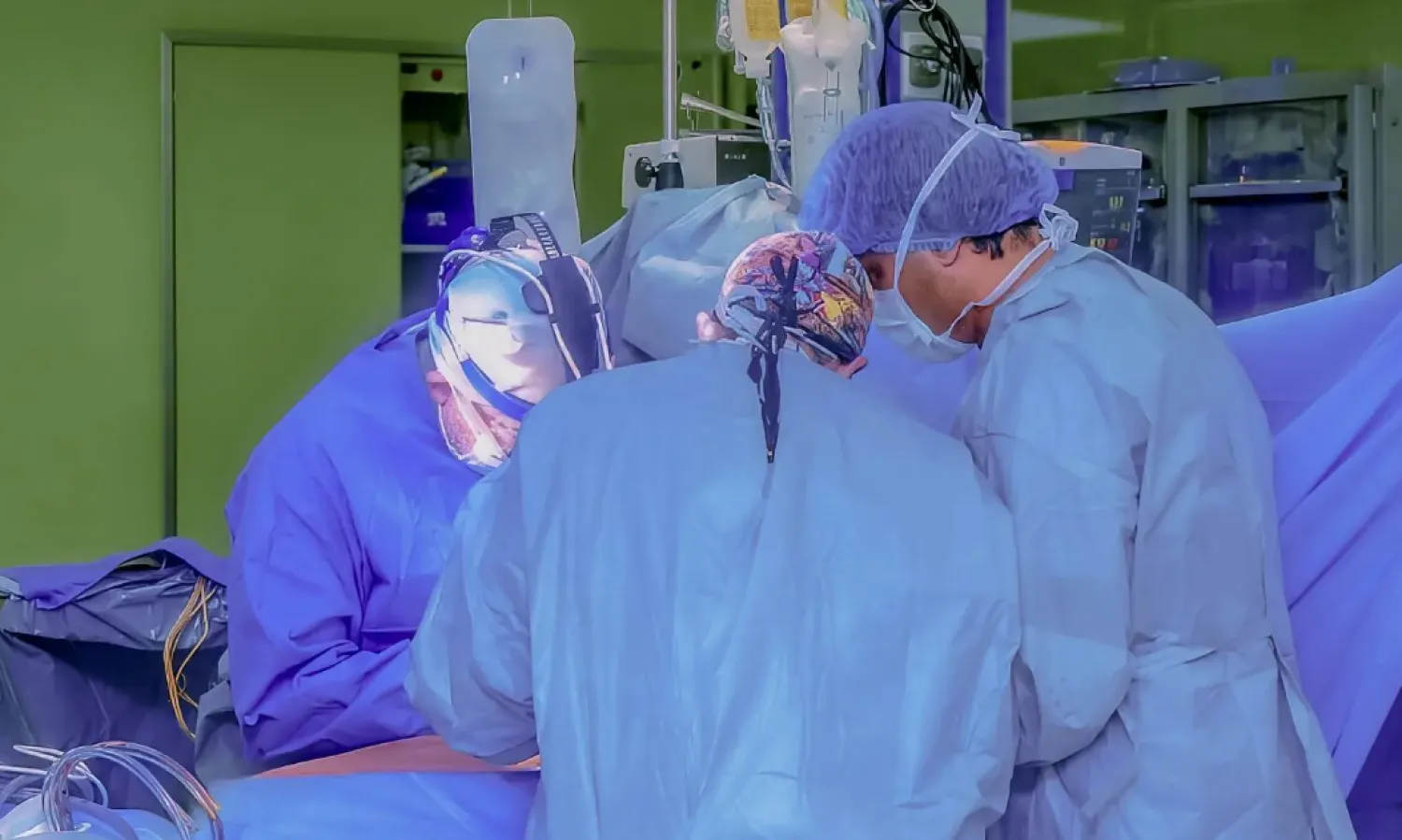
KFSH Performs World First Single-Port Robotic Living Donor Liver Resection

‏The achievement further reinforces KFSH’s position as a global leader in robotic surgery - SPA

King Faisal Specialist Hospital and Research Center (KFSH) has performed the world’s first series of single-port robotic liver resections from living donors, marking a major advancement in organ transplantation.

The procedures were conducted through a single incision not exceeding 3.5 cm, replacing the multiple incisions required in conventional robotic surgery, reducing surgical pain and accelerating recovery while maintaining high safety standards, SPA reported.

‏The milestone, said a KFSH press release issued today, is particularly significant for donor safety, as living donors are healthy individuals undergoing surgery for the benefit of others. Procedures performed on six donors resulted in minimal blood loss without complications, with low pain levels and discharge within two to three days.

‏The approach also makes liver donation safer for pediatric recipients, as it typically involves the left lateral segment, which represents around 20% of total liver volume, making it well suited for single-port access while minimizing surgical burden on the donor.

Executive Director of the Organ Transplant Center of Excellence ‏Prof. Dieter Broering said the development reflects a structured expansion of robotic liver surgery built on extensive experience.


He noted that KFSH has performed more than 1,600 robotic living donor liver resections, the highest volume globally, supported by a progressive model integrating training, simulation, and phased clinical implementation.

‏The achievement, added the release, further reinforces KFSH’s position as a global leader in robotic surgery and organ transplantation, advancing care models that balance innovation with patient and donor safety, in line with the Health Sector Transformation Program and the hospital’s vision to deliver world-class specialized care.

‏King Faisal Specialist Hospital and Research Center ranks first in the Middle East and North Africa and 12th globally among the world’s top 250 Academic Medical Centers in 2026, and is the most valuable healthcare brand in Saudi Arabia and the Middle East according to Brand Finance 2025.


It is also listed by Newsweek among the World’s Best Hospitals 2026, World’s Best Smart Hospitals 2026, and World’s Best Specialized Hospitals 2026.


Saudi Arabia Launches ‘Shams,’ 1st Arab Satellite to Monitor Space Weather from Distant Orbit

The satellite represents a milestone in Saudi innovation (Saudi Space Agency)
TT

Saudi Arabia Launches ‘Shams,’ 1st Arab Satellite to Monitor Space Weather from Distant Orbit

The satellite represents a milestone in Saudi innovation (Saudi Space Agency)

The Saudi Space Agency announced the successful launch of its new satellite, Shams, and established contact with it as part of the Artemis II mission, marking the Kingdom’s emergence as both the leading Arab partner in the program and the first to deploy a dedicated national mission to study space weather.

The satellite represents a milestone in Saudi innovation. Developed domestically by Saudi engineers, Shams has evolved from a national ambition into a scientific platform designed to monitor solar activity and radiation and their effects on Earth, with implications for safeguarding global communications and navigation systems.

The Artemis program, led by NASA in partnership with dozens of countries, aims to return humans to lunar orbit for the first time in more than 50 years, paving the way for future missions to Mars. Saudi Arabia joined the Artemis Accords in 2022 alongside more than 60 nations to help establish a framework for space exploration and strengthen its role in the sector.

The Artemis II mission will carry four astronauts on the first crewed flight to orbit the Moon aboard the Orion spacecraft, launched by the Space Launch System (SLS), the most powerful rocket ever operated. Shams is included as one of the mission’s scientific payloads.

The satellite will operate in a highly elliptical orbit (HEO), ranging from approximately 500 km to 70,000 km above Earth. This trajectory enables broad monitoring of solar and radiation activity, advancing space weather research and supporting critical applications.

Space laboratory to tackle radiation and solar activity challenges

Shams is designed to study space weather through four scientific areas: space radiation, solar X-rays, Earth’s magnetic field and high-energy solar particles. It will also collect data to support the development of protection technologies for future human spaceflight and improve understanding of solar particle behavior and magnetic fields.

The mission is expected to enhance the reliability and sustainability of key sectors such as communications, aviation and navigation by providing data that improves operational readiness and strengthens the security of critical infrastructure.

The Saudi Space Agency said the project aims to boost scientific research, develop future solutions and support a knowledge-based economy through the localization of advanced technologies, in line with Saudi Vision 2030. It also seeks to reinforce Saudi Arabia’s global standing in the space sector and empower national talent in space science and technology.

Data from Shams is expected to improve early warning systems for solar storms that can disrupt internet services, telecommunications and navigation signals. The findings could also help protect power grids and energy infrastructure from severe solar activity that can cause outages or damage.

By improving monitoring of radiation and solar winds, the mission may contribute to safer air travel and future crewed missions to the Moon and Mars, while opening new avenues in medicine, energy and science.