


As Price of Olive Oil Soars, Chainsaw-Wielding Thieves Target Mediterranean’s Century-Old Trees 

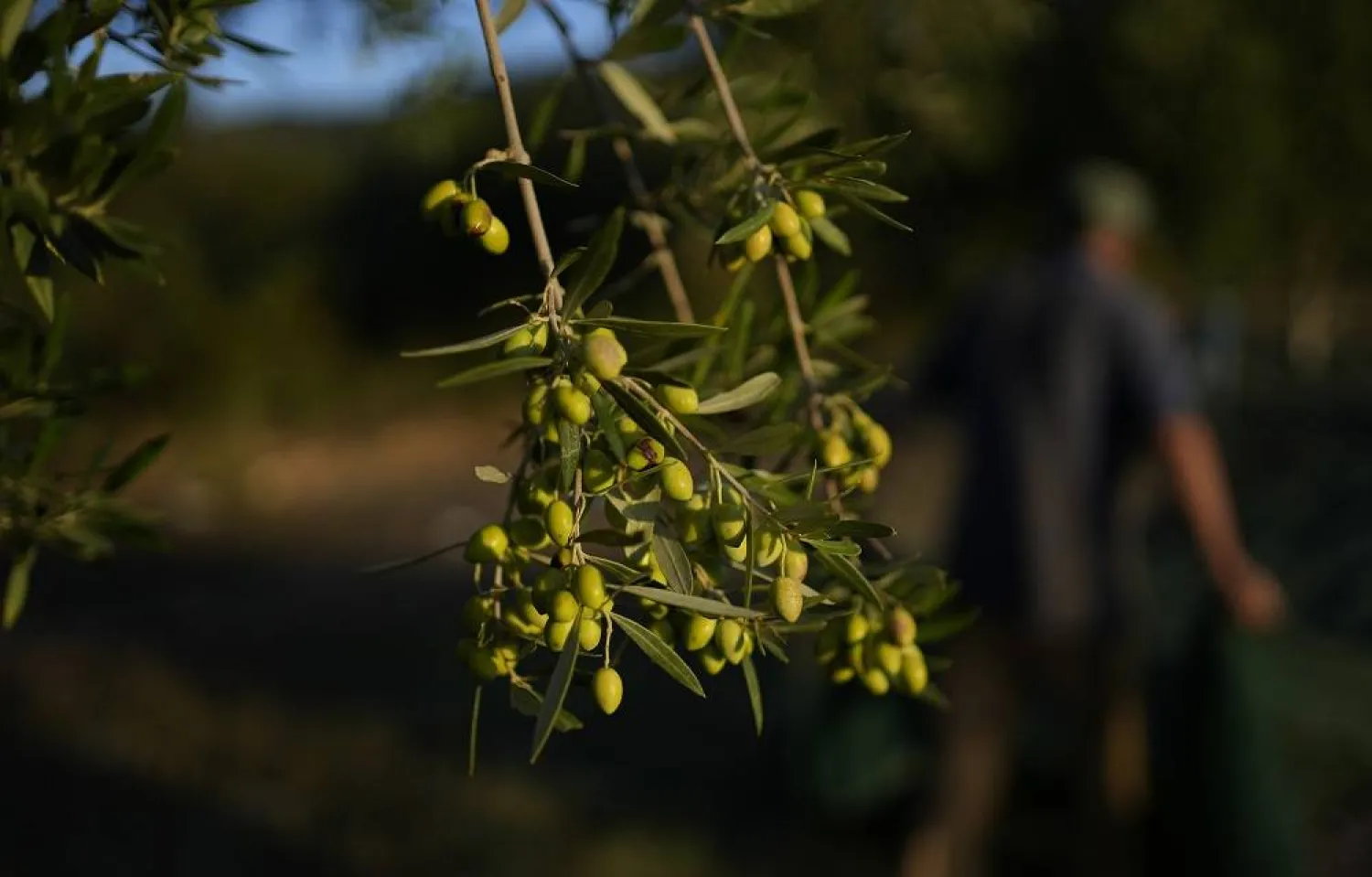
Olives hang on a tree during the harvest period in Spata suburb, east of Athens, Greece, Monday, Oct. 30, 2023. (AP)
TT

As Price of Olive Oil Soars, Chainsaw-Wielding Thieves Target Mediterranean’s Century-Old Trees 

Olives hang on a tree during the harvest period in Spata suburb, east of Athens, Greece, Monday, Oct. 30, 2023. (AP)

In an olive grove on the outskirts of Athens, grower Konstantinos Markou pushes aside the shoots of new growth to reveal the stump of a tree — a roughly 150-year-old specimen, he said, that was among 15 cut down on his neighbor's land by thieves eager to turn it into money.

Surging olive oil prices, driven in part by two years of drought in Spain, has meant opportunity for criminals across the Mediterranean. Warehouse break-ins, dilution of premium oil with inferior product, and falsification of shipping data are on the rise in olive-growing heartlands of Greece, Spain and Italy. And perhaps worst of all: Gangs using chainsaws to steal heavily laden branches and even entire trees from unguarded groves.

“The olive robbers can sometimes produce more oil than the owners themselves – seriously,” Markou said, before heading off to patrol his own grove at nightfall.

The crimes mean fewer olives for growers already contending with high production costs and climate change that has brought warmer winters, major flooding and more intense forest fires. In Italy’s southern Puglia region, growers are pleading with police to form an agriculture division. Greek farmers want to bring back a rural police division that was phased out in 2010. In Spain, a company has developed tracking devices that look like olives to try and catch thieves.

The olive groves outside Athens are part of a tradition that stretches back to antiquity, on plains that now surround the city’s international airport. Some trees are centuries old.

Most of the thefts are branches. When an entire tree is cut down, the thieves typically cut it up and load the pieces into a pickup truck, selling the wood to lumber yards or firewood vendors and taking the olives to an oil mill.

“The (robbers) look for heavily loaded branches and they cut them," said Neilos Papachristou, who runs an olive mill and nearby grove in a fourth-generation family business. “So, not only do they steal our olives, but they cause the tree serious harm. It takes 4-5 years for it to return to normal.”

The thefts are driving some growers to harvest early, which means accepting lower yields to avoid long-term damage to their trees. That includes Christos Bekas, who was among the farmers at Papachristou's mill who were dumping their crop into stainless steel loading bins, untying sacks and tipping over tall wicker baskets from the back of their pickup trucks.

Bekas, who owns 5,000 olive trees, suffered repeated raids by thieves before deciding to take an early harvest. That has required more than 2 1/2 times as much olives by weight to produce a kilogram of oil as last year, he said.

“And all this after we’ve been spending nights guarding our fields,” he said. “The situation is appalling."

After decades of growth, the global olive oil market has been disrupted by a nearly two-year drought in Spain, which typically accounts for about 40% of world supply. It's expected to shrink global production to 2.5 million metric tons this crop year, down from 3.4 million a year earlier.

Benchmark prices in Spain, Greece and Italy for extra virgin oil reached 9 euros ($4.35 per pound) in September, more than tripling from their level in 2019.

That's translated to higher prices for consumers. In Greece, a 1-liter bottle of extra virgin oil jumped from $8 to $9 last year to as much as $15 this year.

Spanish police said in October they had retrieved 91 tons of stolen olives in recent weeks. In February, six people were arrested in southern Greece for the theft of 8 tons of olive oil in a series of warehouse break-ins over several weeks.

Farmers around Italy's southwestern port city of Bari say thieves have become increasingly brazen, snatching tractors and expensive equipment along with olives.

The regional agricultural association issued a plea for police assistance following reports that 100 olive trees were destroyed or seriously damaged in a single incident last month. Gennaro Sicolo, the association's leader, called the economic damage “enormous” and said “farmers must be protected.”

“This is a felony,” Markou, the Greece grower, said of the tree-cutting. “You kill your own history here.”



Heavy Snow in Poland Leaves Drivers Stranded in Tailbacks of up to 20 Km

Cars drive on a road during heavy snowfall in central Warsaw, Poland, 30 December 2025. (EPA)
TT

Heavy Snow in Poland Leaves Drivers Stranded in Tailbacks of up to 20 Km

Cars drive on a road during heavy snowfall in central Warsaw, Poland, 30 December 2025. (EPA)

Heavy snowfall in Poland caused tailbacks stretching as far as 20 km (12.43 miles) on a motorway between ​the capital Warsaw and the Baltic port city of Gdansk during the night, police said on Wednesday.

While the situation left hundreds of people trapped in their cars in freezing conditions, by the early hours of ‌Wednesday morning traffic ‌was moving again, ‌according ⁠to ​police.

"The ‌difficult situation began yesterday after 4 p.m., when the first trucks on the S7 route... began having trouble approaching the slopes," said Tomasz Markowski, a spokesperson for police in the northern city of ⁠Olsztyn.

"This led to a traffic jam stretching approximately ‌20 kilometers overnight." Deputy Infrastructure Minister ‍Stanislaw Bukowiec ‍told a press conference that nobody had ‍been hurt as a result of the difficult situation on the roads.

Anna Karczewska, a spokesperson for police in Ostroda, said officers had ​tried to help drivers who found themselves stuck. Ostroda lies on ⁠the highway about 40 km west of Olsztyn.

"We helped as much as we could, and we had coffee and hot tea for the drivers, which the Ostroda City Hall had prepared for us," she said.

State news agency PAP reported that there had also been some disruption to railways and airports, ‌but that services were returning to normal.


Infant Screen Exposure Shapes Long-Term Brain Changes and Teen Anxiety, Study Finds  

The study concluded that children exposed to high levels of screen time before age two are exposed to endure adolescent mental health. (The University of Queensland)
TT

Infant Screen Exposure Shapes Long-Term Brain Changes and Teen Anxiety, Study Finds  

The study concluded that children exposed to high levels of screen time before age two are exposed to endure adolescent mental health. (The University of Queensland)

Children exposed to high levels of screen time before age two showed changes in brain development that were linked to slower decision-making and increased anxiety by their teenage years, according to new study released by the Agency for Science, Technology and Research in Singapore.

Prepared in collaboration with the National University of Singapore (NUS) Yong Loo Lin School of Medicine, the study focuses on infancy, a period when brain development is most rapid and especially sensitive to environmental influences.

The amount and type of screen exposure in infancy are largely determined by parental and caregiver awareness and parenting practices, highlighting a critical window for early guidance and intervention, showed the study, published in eBioMedicine on Tuesday.

It said the researchers followed 168 children before age two and conducted brain scans at three time points (ages 4.5, 6, and 7.5), which allowed them to track how brain networks developed over time rather than relying on a single snapshot.

Children with higher infant screen time showed an accelerated maturation of brain networks responsible for visual processing and cognitive control.

The researchers suggest this may result from the intense sensory stimulation that screens provide. Notably, screen time measured at ages three and four did not show the same effects, underscoring why infancy is a particularly sensitive period.

The study showed that children with high screen exposure, the networks controlling vision and cognition specialized faster, before they had developed the efficient connections needed for complex thinking. This can limit flexibility and resilience, leaving the child less able to adapt later in life.

It said this premature specialization came at a cost: children with these altered brain networks took longer to make decisions during a cognitive task at age 8.5, suggesting reduced cognitive efficiency or flexibility.

Those with slower decision-making, in turn, reported higher anxiety symptoms at age 13. These findings suggest that screen exposure in infancy may have effects that extend well beyond early childhood, shaping brain development and behavior years later.

In a related study, the same team found that infant screen time is also associated with alterations in brain networks that govern emotional regulation — but that parent-child reading could counteract some of these brain changes.

Researchers found that their results give a biological explanation for why limiting screen time in the first two years is crucial.

“But it also highlights the importance of parental engagement, showing that parent-child activities, like reading together, can make a real difference,” said Asst Prof Tan Ai Peng, Clinician-Scientist at NUS, and the study's senior author.

The study concluded that children exposed to high levels of screen time before age two are exposed to endure adolescent mental health, particularly on cognitive performance and anxiety levels.


Indonesia Raises Alert for Mount Bur Ni Telong Volcano after Spike of Activity

Explosive activity concentrates at the north-east crater of the Mount Etna, as an eruption started on Dec. 24 continues, in Sicily, Italy, Monday Dec. 29, 2025. (AP Photo/Salvatore Allegra)
TT

Indonesia Raises Alert for Mount Bur Ni Telong Volcano after Spike of Activity

Explosive activity concentrates at the north-east crater of the Mount Etna, as an eruption started on Dec. 24 continues, in Sicily, Italy, Monday Dec. 29, 2025. (AP Photo/Salvatore Allegra)

Indonesian authorities have raised the alert level for the Mount Bur Ni Telong volcano in the country’s westernmost province of Aceh to its second highest following a series of increased activity and volcanic earthquakes, official said Wednesday.

The 2,624-meter (8,600-foot) stratovolcano in Aceh's Bener Meriah regency recorded at least seven earthquakes on Tuesday evening that were felt about five kilometers (three miles) away, while seismographs also detected seven shallow volcanic earthquakes along with 14 deep quakes and two tectonic quakes, said Lana Saria, the acting head of the Geological Agency at Energy and Mineral Resources Ministry.

She said based on the results of visual and instrumental monitoring which show the occurrence of increased volcanic activity for Mount Bur Ni Telong, scientists raised the alert level from the third to the second highest level Tuesday evening.

“Aftershocks following local tectonic events indicate magma activity is easily triggered by tectonic disturbances,” Saria said, adding that the increase in seismic activity has been ongoing since July and became more intense and shallow in the past two months.

According to The Associated Press, the agency's visual monitoring showed the volcano clearly visible with no crater smoke. However, she warned of possible eruption, including phreatic blasts and hazardous volcanic gases near areas with fumaroles and solfataras, openings in the Earth’s crust that emit steam and gases.

Authorities urged residents and visitors to stay at least 4 kilometers (2.4 miles) from the crater and avoid fumarole and solfatara zones during cloudy or rainy weather because gas concentrations can be life-threatening.

The heightened alert came as the Bener Meriah area is still recovering from catastrophic floods and landslides earlier this month that struck 52 cities and regencies on Sumatra island, leaving 1,141 people dead with 163 residents still missing and more than 7,000 injured, the National Disaster Management Agency said. In Bener Meriah alone, 31 people died and 14 are still missing after the floods and landslides hit the regency, disrupting access to remote villages and displacing more than 2,100 residents.

Local media said people living in three villages within a 2-kilometer (1.2-mile) radius from the crater are being evacuated as officials fear that heavy rains combined with volcanic activity could worsen conditions and complicate evacuation efforts.

Indonesia, an archipelago of more than 280 million people, has over 120 active volcanoes. It is prone to volcanic activity because it sits along the “Ring of Fire,” a horseshoe-shaped series of seismic fault lines around the Pacific Ocean.