




The beauty sector is harnessing tech innovations to make its services accessible to everyone, not only to wealthy consumers. For instance, artificial intelligence is now offering a perfect nail polish at home and providing personal skincare recommendations, according to AFP.
The Nimble manicure salon calls itself the world's first device to combine AI and complex robotics. Nimble can varnish all ten fingernails and dry them in just 25 minutes and its available anytime, without the hassle of making an appointment.
The device, an eight-kilo white box with a special door for the hand, is on display this week at the Las Vegas Consumer Electronics Show (CES), the tech industry's annual hub.
According to its creators, the device uses high-resolution micro-cameras and 3D imaging to determine nail shape, size and curvature. Then a small robotic arm, guided by AI algorithms, applies the requisite three coats, with a blow dry after each applied layer.
When it goes on sale in March, more than thirty colors will be available in capsules costing $10 each. The unit costs $599.
AI, a key factor in the consumer tech innovations, has infiltrated the makeup and skincare sectors as well.
“Beauty is essential since the upright man,” L'Oreal CEO Nicolas Hieronimus noted during the Consumer Electronics Show (CES), which kicked off on Tuesday.
Hieronimus said that technology helps L'Oreal “build a stronger connection” with its customers. And when it comes to beauty, technology “provides wholesome experiences” and enables people “to express their identities,” he added.
“Beauty helps boost self-confidence and appreciation,” Hieronimus noted.
Before over 2,000 attendees and the livestreaming viewers, Hieronimus presented a demo of ‘Beauty Genius’, a free app that serves as an AI-based ‘virtual personal advisor’.
Hieronimus described the app as “the first beauty advisor” that recommends skincare and makeup products that suit the user’s skin. It also gives tips, answers questions about various problems such as acne and hair loss, and allows its user to test the recommended products virtually.
Virtual experiences
The app also guides customers who are overwhelmed by a physical shop's rows of foundations with similar shades and varied textures, or creams with seemingly endless specificities.
This is also the aim of the program Beautiful AI, created by Perfect Corp, which combines generative AI and virtual reality to perform live skin analyses, 3D hairstyle or jewelry trials and make recommendations.
In a study published in May, consulting firm McKinsey put the global beauty industry -- which includes skin- and hair care, perfume and make-up -- at $430 billion in 2022 and forecast it to reach $580 billion by 2027. The industry's internet sales almost quadrupled between 2015 and 2022.
Korea's Prinker, a specialist in ephemeral, customizable tattoos for skin and hair, is unveiling a similar product that will apply makeup this year.
The device will also put AI to work with a biometric 3D scanner to map facial features and then recommend the right contours, "printing" the corresponding powders to the face.
Companies are also bringing beauty personalization tech to hair care.
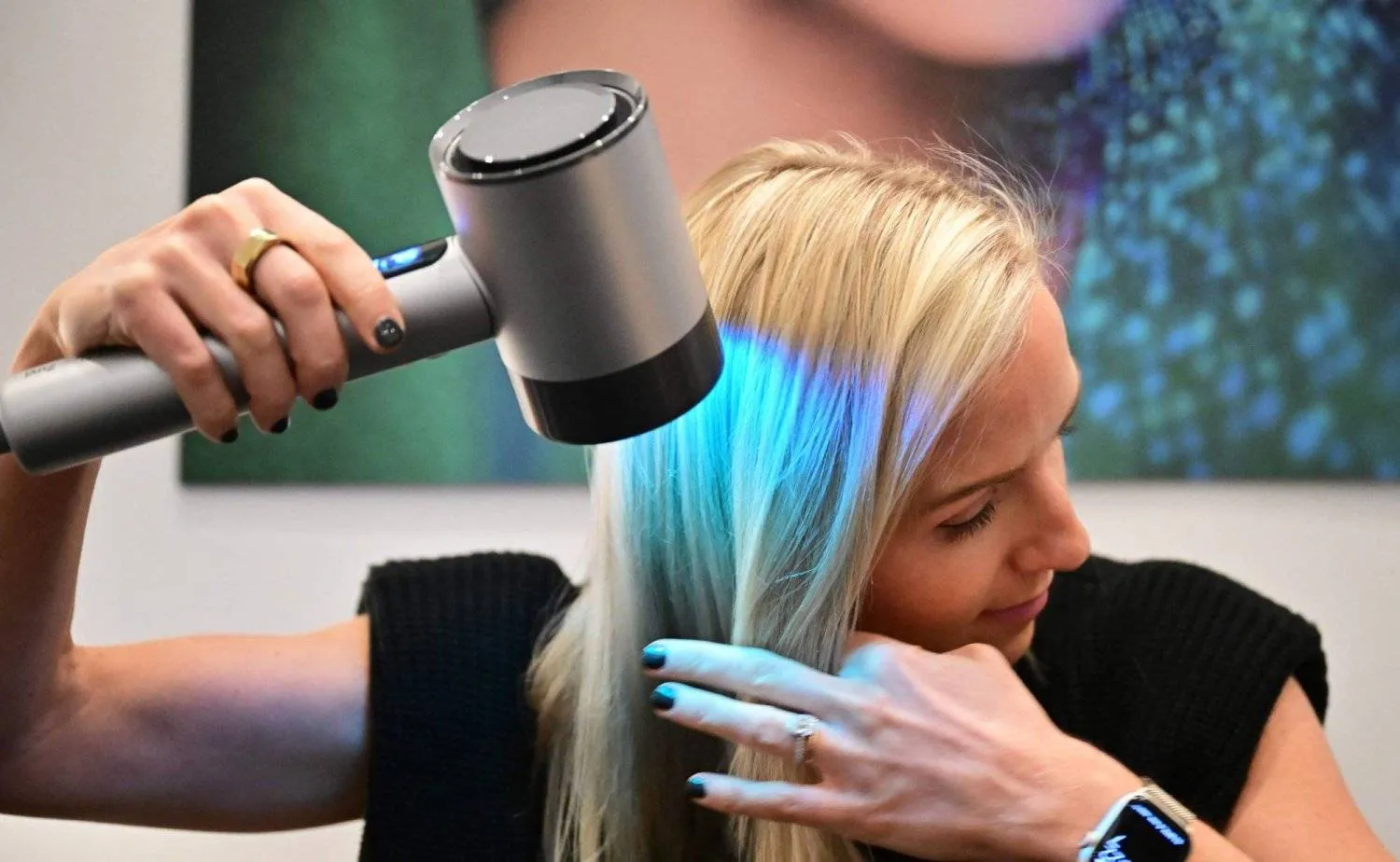
This week, L'Oréal presents the world premiere of a connected hairdryer that can be customized via an app, taking hair type into account and automatically adapting power and heat distribution.
The Airlight Pro uses infrared light to dry the hair, allowing it to preserve the hair's moisture. It also offers energy savings of 31 percent compared with a conventional appliance, explained Adrien Chretien, head of augmented beauty development at L'Oreal. The Airlight Pro is due to go on sale in April.
Another product scheduled for launch later this year is Colorsonic, a hair coloring device that uses cartridges that last for three months.


