
The Designer Who Makes Movie Posters Worthy of Museums

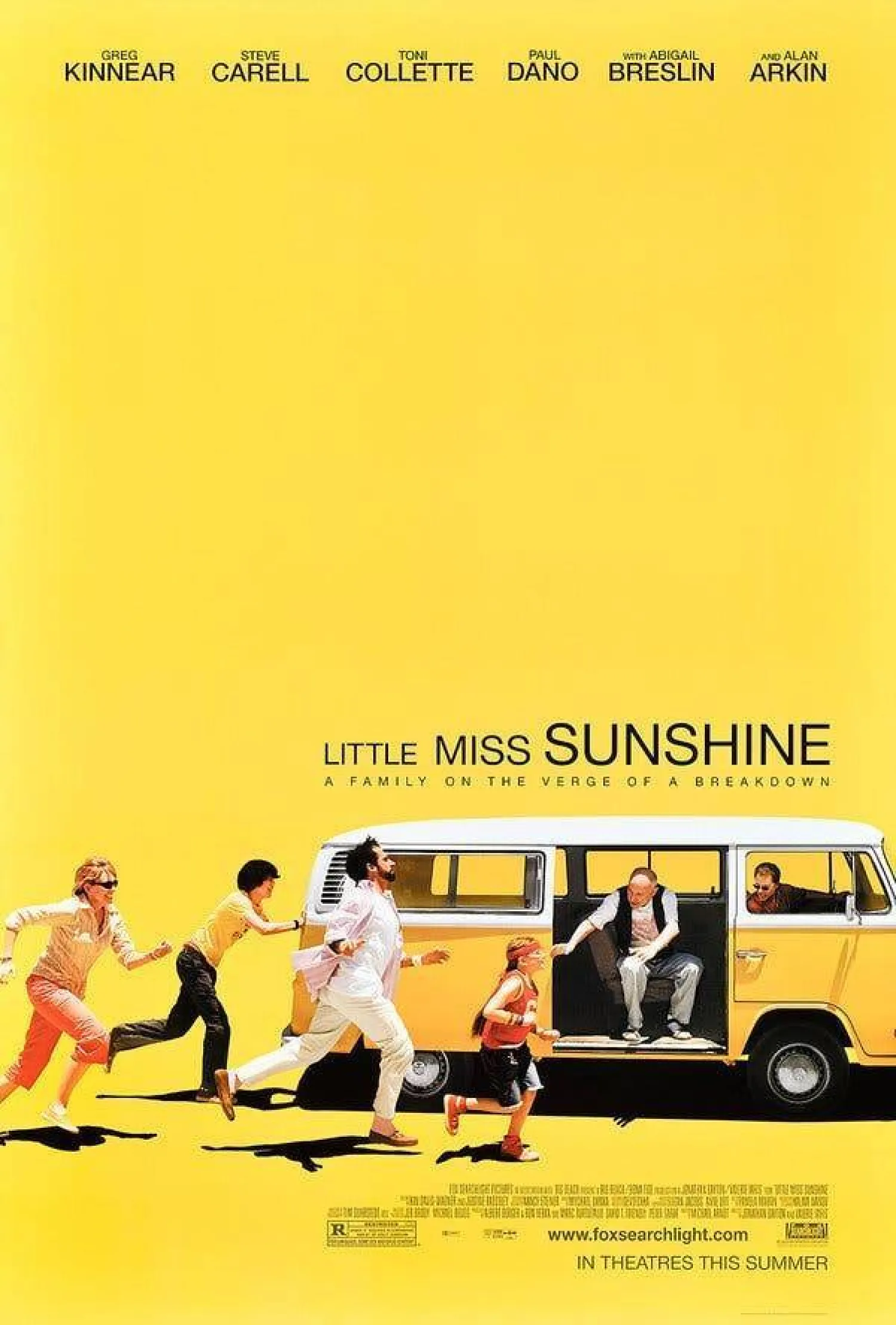
Bold bright design for the “Little Miss Sunshine” poster. Credit: Poster House
TT

The Designer Who Makes Movie Posters Worthy of Museums

Bold bright design for the “Little Miss Sunshine” poster. Credit: Poster House

By Erik Piepenburg

The killer’s knife, a woman cowering before it.

This was typical horror movie box cover stuff before 1991, when Dawn Baillie was asked to design a poster for a cerebral new thriller called “Silence of the Lambs.” She learned it was about a young F.B.I. agent-in-training, Clarice Starling (Jodie Foster), who enlists the help of an imprisoned serial killer, Hannibal Lecter (Anthony Hopkins), to solve a case.

“It came to me that I could illustrate ‘Silence’ if Clarice was the ‘lamb’ and the moth — or the bad guys — is what has left her without the right words,” Baillie explained in an email. “I think the poster works in showing vulnerability, strangeness and eeriness.”

In other words, the poster said: This isn’t your typical scary movie.

Starting March 14, Baillie gets marquee billing in a new exhibition, “The Anatomy of a Movie Poster: The Work of Dawn Baillie,” at Poster House in Manhattan. The show, through Sept. 8, takes us from her first poster, “Dirty Dancing” (1987) to “The Tragedy of Macbeth” (2021), for which she was the creative director. Along the way are posters for films as varied as “Zoolander,” “Indiana Jones and the Last Crusade” and “The Truman Show.”

Baillie’s career as a movie poster designer and creative director spans over four decades. Born in 1964, Baillie entered advertising in the 1980s when the industry was dominated by men and posters were mostly made by hand, not computer. After working at the agencies Seiniger Advertising and Dazu, in 1992 she co-founded BLT, the agency behind memorable posters for recent films (“Barbie”), TV shows (“The Last of Us”) and Broadway (“The Music Man”).

Angelina Lippert, the chief curator and director of content at Poster House, called Baillie a “design genius” with a style defined by “effortless simplicity.” Take the poster for “The Silence of the Lambs.”

“It’s visual anxiety that you get when you look at this, which is what makes it indelible,” Lippert said.

Baillie and Lippert recently talked about how a poster becomes a proxy for a movie itself, what’s so radical about yellow and more. The interview has been edited and condensed from questions emailed to Baillie and from a phone conversation with Lippert.

What are some things people might not realize about designing a movie poster?

BAILLIE Most people have no idea how a movie poster is made. A lot of times there is an assumption that a film still photograph is supplied by a filmmaker or studio, and type is just added. But there are so many things to be done, from sketching concepts, art-directing special shoots and making many, many, many mock-ups and revisions to logo design and pre-press production.

How does the process start?

BAILLIE Some projects begin with reading a script in preproduction, some start with reading a book or seeing a film, some start with such secrecy that we may only receive a meager summary.

Then comes my favorite part: concept, research, thumbnails and doodles. We are distilling down to: What is the experience, what do you want to take away from the director’s vision? Then there is a photo shoot, or possibly not, where we start receiving unit photography, and then we try to realize the sketches.

A poster’s job is to celebrate a film in one frame. The job is well done when an audience is piqued and the poster makes it to the dorm room wall.

Why does the “Dirty Dancing” poster work so well?

LIPPERT It is such a quiet, understated poster. She chose the moment where Jennifer Grey puts her arm around Patrick Swayze’s head, but it doesn’t look sexualized, even though that’s what the title suggests. It’s them with a drop shadow of lavender. We don’t know where they are. It’s an image that allows for endless questions and invites anticipation.

How has movie poster design changed?

LIPPERT In the ’80s everything had to be done by hand for the most part. Photoshop really didn’t exist for the masses until the ’90s. If you made comparables — the ideas you want to present to your boss — you produced maybe a dozen on a Xerox machine. You had to physically play with type size until you got it the size you want. Any element in the poster would have to be hand placed. It was very labor intensive.

As you got into the digital era, you could create hundreds of comps. Today, thousands of images can now be produced for a single film. You had to be deliberate in the ’80s. In my opinion, you had to be more creative because you can try everything today.

What about the poster for “Little Miss Sunshine”?

LIPPERT This is a daring and exciting poster because of all the negative space. She chose to essentially not use two-thirds of the poster and have it be a bright school bus yellow that’s pushing down on the family, and they’re all composited together into this running scene. It has this playfulness to it. It’s comical, strange, unexpected.

BAILLIE The executive at Fox Searchlight, Stephanie Allen, gave the direction to our team to explore what she called “color branding.” She wanted to own yellow for the season. So sunshine yellow was owned.

Who decides which poster to use?

BAILLIE The ultimate decider is a mystery to me. Sometimes it’s a filmmaker, sometimes it’s an executive from marketing, sometimes it’s another artist, sometimes I really don’t know!

Do you have a personal favorite in the exhibit?

BAILLIE As a mother, I love all of my children. Each poster has its own story of love, challenges, tears, and triumphs. I love the first one, for “Dirty Dancing,” because it gave me confidence, and I love the last because it proves I’m still capable.

Do you have a favorite movie poster designed by someone else?

BAILLIE I have so many favorites, from “M*A*S*H*,” “All About Eve,” “Straw Dogs,” “Dead Men Don’t Wear Plaid,” “The Jerk,” “Rosemary’s Baby,” “The Exorcist,” “Raging Bull.” Ask me tomorrow, and it will be a different list.

How does it feel to be the focus of an exhibit?

BAILLIE It feels surreal. I’m usually behind the scenes in the marketing process. I love that Angelina curated the exhibit in a way that highlights an era of movie posters from the mid ’80s through the digital change today. You can imagine how technology has broken open so many more ways to create art.

The New York Times



Times Square to Feature Patriotic Crystal Ball for New Year's Eve, Kicking Off US's 250th Birthday

FILE - The 7-foot tall "2026" numerals are displayed at an illumination ceremony in Times Square, Thursday, Dec. 18, 2025, in New York. (AP Photo/Adam Gray, File)
TT

Times Square to Feature Patriotic Crystal Ball for New Year's Eve, Kicking Off US's 250th Birthday

FILE - The 7-foot tall "2026" numerals are displayed at an illumination ceremony in Times Square, Thursday, Dec. 18, 2025, in New York. (AP Photo/Adam Gray, File)

After the crystal ball drops on New Year’s Eve in New York City, it will rise again, sparkling in red, white and blue to usher in 2026 and kick off months of celebrations for the nation’s upcoming 250th birthday.

The patriotic touches at this year's Times Square gathering, including a second confetti drop, will offer an early glimpse of what’s ahead: hundreds of events and programs, big and small, planned nationwide to mark the signing of the Declaration of Independence in 1776.

“I’m telling you right now, whatever you’re imagining, it’s going to be much more than that,” said America250 Chair Rosie Rios, who oversees the bipartisan commission created by Congress in 2016 to organize the semiquincentennial anniversary. “It’s going to be one for the ages, the most inspirational celebration this country and maybe the world has ever seen.”

According to The Associated Press, Rios and her group worked with the Times Square Alliance business district and One Times Square, the building from where the ball is dropped, to make the changes to this year's ceremonies.

They're also planning a second ball drop event on July 3, the eve of the nation's birthday, “in the same beautiful style that Times Square knows how to do it," Rios said.

It will mark the first time in 120 years there will be ball drop in Times Square that doesn't occur on New Year's Eve, she said.

A New Year’s Eve ball was first dropped in Times Square in 1907. Built by a young immigrant metalworker named Jacob Starr, the 700-pound (318-kilogram), 5-foot- (1.5-meter-) diameter ball was made of iron and wood and featured 100 25-watt light bulbs. Last year, the Constellation Ball, the ninth and largest version, was unveiled. It measured about 12 feet (3.7 meters) in diameter and weighs nearly 12,000 pounds (5,400 kilograms).

The only years when no ball drop occurred were 1942 and 1943, when the city instituted a nightly “dimout” during World War II to protect itself from attacks. Crowds instead celebrated the new year with a moment of silence followed by chimes rung from the base of One Times Square.

This year, the stroke of midnight will also mark the official launch of America Gives, a national service initiative created by America250. Organizers hope to make 2026 the largest year of volunteer hours ever aggregated in the country.

On the following day, America250 will participate in the New Years Day Rose Parade in Pasadena, California, with a float themed “Soaring Onward Together for 250 Years." It will feature three larger-than-life bald eagles representing the country’s past, present and future.

“We want to ring in this new year from sea to shining sea. What better way to think about it than going from New York to California,” Rios said. “This has to be community-driven, this has be grassroots. We’re going from Guam to Alaska, from Fairbanks to Philadelphia, and everything in between.”

President Donald Trump has also announced the “Freedom 250” initiative to coordinate additional events for the 250th anniversary.

Rios said she sees the wide range of celebrations and programs planned for the coming months, from large fireworks displays and statewide potluck suppers to student contests and citizen oral histories, as an opportunity to unite a politically divided nation.

“If we can find something for everyone ... having those menus of options that people can pick and choose how they want to participate," she said. “That’s how we’re going to get to engaging 350 million Americans.”


Elusive Wild Cat Feared Extinct Rediscovered in Thailand

This handout picture taken with a camera trap and released on December 26, 2025, by Thailand's Department of National Parks, Wildlife and Plant Conservation (DNP) and Panthera Thailand shows a recently rediscovered flat-headed cat in southern Thailand's Princess Sirindhorn Wildlife Sanctuary. (AFP / Thailand's Department of National Parks, Wildlife and Plant Conservation (DNP) / Panthera Thailand)
TT

Elusive Wild Cat Feared Extinct Rediscovered in Thailand

This handout picture taken with a camera trap and released on December 26, 2025, by Thailand's Department of National Parks, Wildlife and Plant Conservation (DNP) and Panthera Thailand shows a recently rediscovered flat-headed cat in southern Thailand's Princess Sirindhorn Wildlife Sanctuary. (AFP / Thailand's Department of National Parks, Wildlife and Plant Conservation (DNP) / Panthera Thailand)

An elusive wild cat long feared extinct in Thailand has been rediscovered three decades after the last recorded sighting, conservation authorities and an NGO said Friday.

Flat-headed cats are among the world's rarest and most threatened wild felines. Their range is limited to Southeast Asia and they are endangered because of dwindling habitat.

The domestic cat-sized feline with its distinctive round and close-set eyes was last spotted in a documented sighting in Thailand in 1995.

But an ecological survey that began last year, using camera traps in southern Thailand's Princess Sirindhorn Wildlife Sanctuary, recorded 29 detections, according to the country's Department of National Parks, Wildlife and Plant Conservation and wild cat conservation organization Panthera.

"The rediscovery is exciting, yet concerning at the same time," veterinarian and researcher Kaset Sutasha of Kasetsart University told AFP, noting that habitat fragmentation has left the species increasingly "isolated".

It was not immediately clear how many individuals the detections represent, as the species lacks distinctive markings so counting is tricky.

But the findings suggest a relatively high concentration of the species, Panthera conservation program manager Rattapan Pattanarangsan told AFP.

The footage included a female flat-headed cat with her cub -- a rare and encouraging sign for a species that typically produces only one offspring at a time.

Nocturnal and elusive, the flat-headed cat typically lives in dense wetland ecosystems such as peat swamps and freshwater mangroves, environments that are extremely difficult for researchers to access, Rattapan said.

Globally, the International Union for Conservation of Nature estimates that around 2,500 adult flat-headed cats remain in the wild, classifying the species as endangered.

In Thailand, it has long been listed as "possibly extinct".

Thailand's peat swamp forests have been heavily fragmented, largely due to land conversion and agricultural expansion, said Kaset, who was not involved in the ecological survey but has researched wild cats for years.

The animals also face mounting threats from disease spread by domestic animals, and they struggle to reproduce across isolated areas.

While the rediscovery offers hope, it is only a "starting point" for future conservation efforts, he said.

"What comes after this is more important -- how to enable them to live alongside us sustainably, without being threatened."


Hooked on the Claw: How Crane Games Conquered Japan’s Arcades

This picture taken on June 6, 2024 shows a claw crane game shop in Akihabara district of Tokyo. (AFP)
TT

Hooked on the Claw: How Crane Games Conquered Japan’s Arcades

This picture taken on June 6, 2024 shows a claw crane game shop in Akihabara district of Tokyo. (AFP)

As school and work wrap up, crowds fill Tokyo's many bustling arcade halls -- not to battle it out in fighting games, but to snag plush toys from claw machines.

In one of these gaming hubs in the Japanese capital's Ikebukuro district, aisles of crane games stretch as far as the eye can see.

The crown jewels of the arcade industry, they occupy the building's first two floors, relegating video games to the basement and upper levels.

"Crane games are keeping the sector afloat," said Morihiro Shigihara, an industry expert and former arcade manager.

"Arcade operators, machine manufacturers, and even prize suppliers depend on this business," he told AFP.

Some 80 percent of the 22,000 arcades Japan had in 1989 have shut down, but revenues have held up thanks to claw machines, according to the Japan Amusement Industry Association.

Their share of revenue has climbed since 1993 from 20 percent to more than 60 percent, the association said.

Suzuna Nogi, a 20-year-old student, visits these arcades at least twice a week in search of "big plushies" on which she can spend up to 3,000 yen ($19) at 100 yen per try.

"What I like best is the sense of accomplishment," she said, even though there is no guarantee of success.

Nogi added that she enjoys "the thrill of not knowing whether you'll manage to grab something or not".

The sensitivity of the claw arms is adjusted by operators "based on the cost of the prizes and revenue targets", Shigihara said.

"You can also make the game easier to compete with a nearby arcade."

- From cigarettes to candy -

This year, the industry is officially celebrating the 60th anniversary of these construction crane-inspired machines in Japan.

But they have actually been around since before World War II, said Benoit Bottos, who wrote his doctoral dissertation on the subject at Japan's Chuo University.

Older models, installed in cafes or bowling alleys, sometimes offered lighters and cigarettes, but those prizes quickly gave way to children's candy.

In the late 1980s, the machines began to gain traction, notably with game company Sega's 1985 invention of the "UFO Catcher", which switched up the older version that forced players to lean in and look down.

"The old ones were a bit dark. So we opted for a brighter, showcase-like style where you can see the prizes right in front of you," said Takashi Sasaya, a Sega executive.

But the real stroke of genius "was putting plush toys in the claw games", said Bottos.

Manufacturing giants like Sega or Bandai, involved in both video games and toys, then began negotiating licenses for anime and manga characters, with Sega notably securing Disney rights.

"That largely explains the success of these machines," said Bottos, who describes them as "somewhere between a vending machine, a game of chance and a game of skill".

- 'Transformation' -

The success of claw games also feeds on Japan's booming fan culture of "oshikatsu", with many people devoting more and more time and money to supporting their favorite idol.

Part of asserting their fan identity involves collecting character merchandise.

"I love Pokemon, so I often come looking for plush toys and merch from the franchise," said professional Pokemon card player Akira Kurasaki, showing off nails decorated with his most beloved characters.

Arcade operators have taken this enthusiasm to heart, tailoring their prize selections to the demographics of their neighborhood and organizing events around certain characters.

"New prizes are introduced almost every day," said Sasaya, the Sega executive.

The hegemony of claw machines has also gone hand in hand with a gradual transformation of urban hangouts.

Arcades -- seen in the 1970s and 1980s as dark, male-dominated places linked to crime -- "tried to attract a new audience" of women and families, Bottos said.

"The crane game is emblematic of that transformation."