Saudi Arabia Wins 6 Awards at 24th Arab Radio, TV Festival in Tunisia

The SBA achieved four radio and TV awards - SPA
TT

Saudi Arabia Wins 6 Awards at 24th Arab Radio, TV Festival in Tunisia

The SBA achieved four radio and TV awards - SPA

The 24th edition of the Arab Radio and Television Festival, held in Tunis, the capital of Tunisia, has come to a close. The festival was organized by the Arab States Broadcasting Union (ASBU) in collaboration with the Tunisian Radio and Television Establishment and ArabSat, SPA reported.
President of ASBU and CEO of the Saudi Broadcasting Authority (SBA) Mohammed bin Fahd Al-Harthi awarded the winners of the 24th edition. The SBA achieved four radio and TV awards, including the second prize in the health programs category for the "Mental Health: Violence in Schools” program.
In the TV category, Saudi Arabia won three awards, including the second prize in the news category for talk shows, honoring the Saudi street program on its episode about Vision 2030. The first prize in the general documentary films and programs category went to "Heritage in the Maqam of Hijaz." Additionally, the Saudi social drama series ‘Al-Arbaji 2’ secured the second position in the social series category.
Furthermore, the SBA was awarded the second prize in the 2024 news exchange competition and the second prize in the 2024 program exchange competition. Meanwhile, the festival honored the judging panels for its radio and television competitions and distributed the exchange awards.
The festival also featured the TV and radio program market and the ASBU Exhibition, where member institutions, private TV and radio networks, and production companies showcased their latest media, artistic, and cultural productions.



Pakistan Ranked Most Polluted Country in 2025, Data Shows

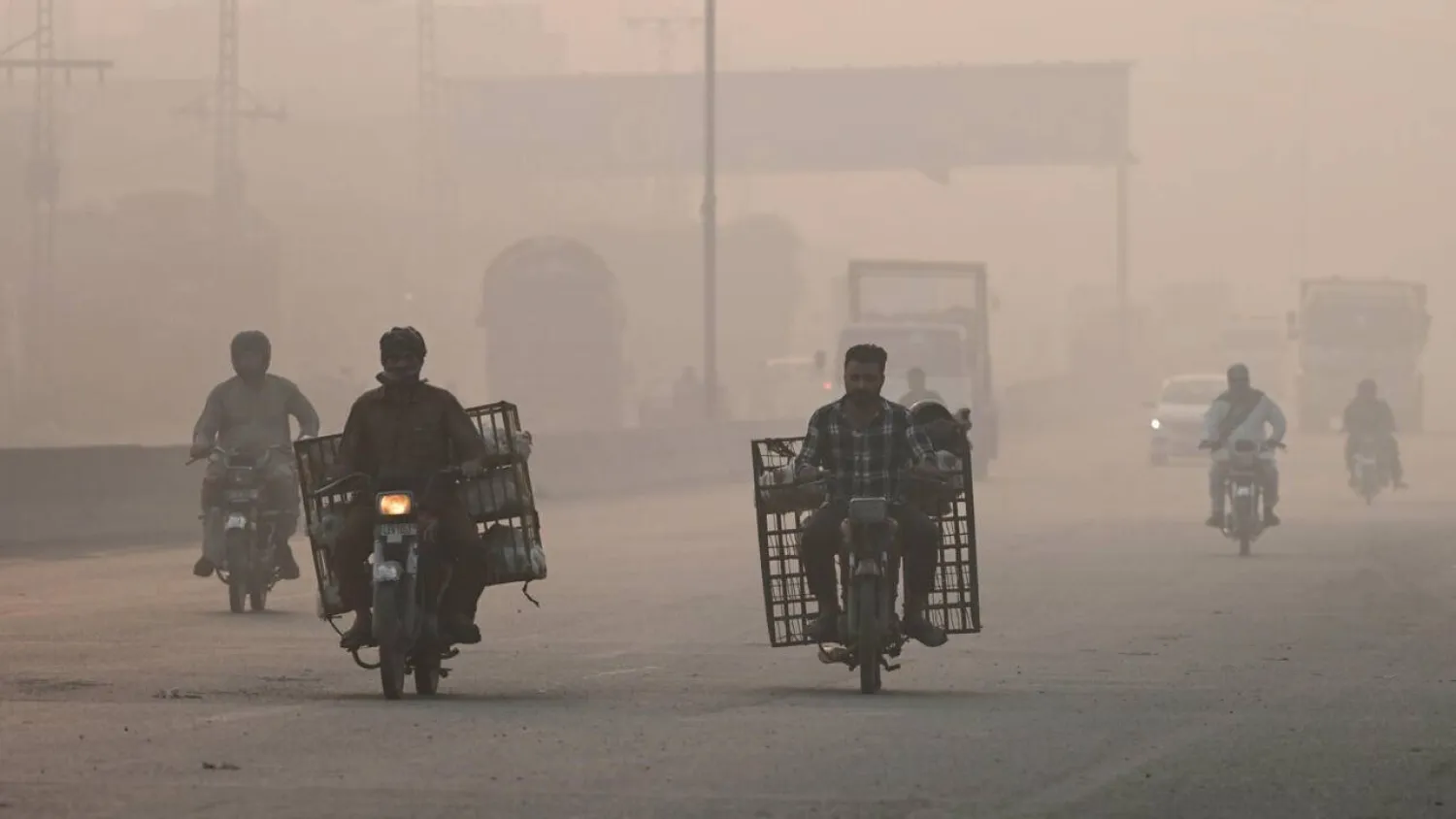
 Commuters make their way amid smog in Lahore on November 2, 2024. (AFP)
Commuters make their way amid smog in Lahore on November 2, 2024. (AFP)
TT

Pakistan Ranked Most Polluted Country in 2025, Data Shows

 Commuters make their way amid smog in Lahore on November 2, 2024. (AFP)
Commuters make their way amid smog in Lahore on November 2, 2024. (AFP)

Pakistan was ranked the world's smoggiest ‌country in 2025, with concentrations of hazardous small particles known as PM2.5 up to 13 times higher than the recommended World Health Organization level, research showed on Tuesday.

Swiss air quality monitoring firm IQAir said in its annual report that 13 countries and territories kept average PM2.5 levels at the WHO standard of less than 5 micrograms per cubic meter last year, up from seven in 2024.

In total, 130 out of 143 monitored countries and territories failed to meet the WHO guideline.

Bangladesh ‌and Tajikistan were ‌second and third on the most polluted list.

Chad, ⁠statistically the smoggiest ⁠country of 2024, ranked fourth in 2025, but the decline in PM2.5 concentrations last year is likely to be the result of data gaps.

Last March, the United States shut down a global monitoring program that compiled pollution data collected from its embassy and consulate buildings, citing budget constraints.

"The loss of the data in March made it ⁠appear there was a significant drop in PM2.5 levels (in ‌Chad), but the fact of ‌the matter is that we don't know," said Christi Chester Schroeder, lead author of ‌the IQAir report.

The US decision eliminated a primary data ‌source for many smog-prone countries, and Burundi, Turkmenistan and Togo were excluded from the 2025 report because of information gaps.

India's Loni was the world's most polluted city in 2025, with average PM2.5 levels of 112.5 micrograms, ‌followed by Hotan in the northwestern Chinese region of Xinjiang at 109.6 micrograms.

The world's top 25 most ⁠polluted cities ⁠were all in India, Pakistan and China.

Only 14% of the world's cities met the WHO standard in 2025, down from 17% a year earlier, with Canadian wildfires driving up PM2.5 across the United States and as far as Europe.

Among the countries that met the standard in 2025 were Australia, Iceland, Estonia and Panama.

Laos, Cambodia and Indonesia all reported significant PM2.5 reductions compared to the previous year, thanks mainly to wetter and windier La Nina weather. Mongolia saw average concentrations fall 31% to 17.8 micrograms per cubic meter.

In all, 75 countries reported lower PM2.5 levels in 2025 compared to a year earlier, with 54 recording higher average concentrations, IQAir said.


UK Pet Owners to Get Price Comparison Tools, Fee Caps Under New Vet Services Rules

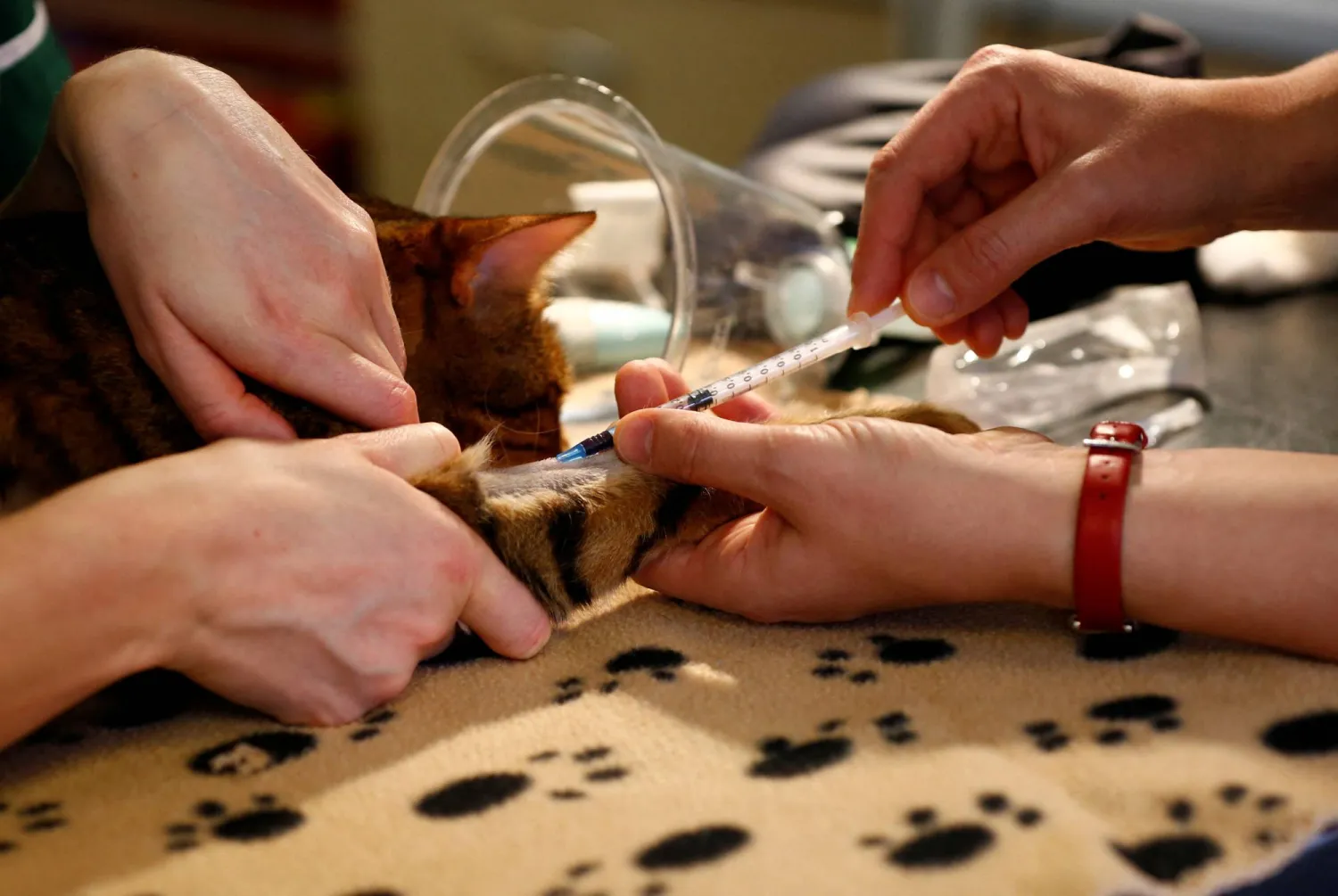
FILE PHOTO: Principle vet Kate Russell takes blood from Po the cat during a Vets Now clinic in Farnham, southern England, October 27, 2013. REUTERS/Darren Staples
TT

UK Pet Owners to Get Price Comparison Tools, Fee Caps Under New Vet Services Rules

FILE PHOTO: Principle vet Kate Russell takes blood from Po the cat during a Vets Now clinic in Farnham, southern England, October 27, 2013. REUTERS/Darren Staples

Britain's veterinary services will be required to implement price transparency measures, cap prescription fees, while large chains will have to disclose their ownership, the competition watchdog said on Tuesday, as it moved to shake up the 6.7-billion-pound ($9 billion) sector.

The UK's Competition and Markets Authority's (CMA) final reforms, which mark the end of its two-and-a-half-year probe into the sector, followed proposals it set out last October to overhaul the ⁠country's vet services ⁠market.

Vet group CVS Group said some of the CMA's remedies were not "fully justified", but added it was comfortable with them and believes they are workable.

Here are some details on the new rules.

⁠Written prescription fees will be capped at 21 pounds for the first medicine and 12.50 pounds for any additional medicines, down from 30 pounds or more at many practices.

Veterinary businesses must clearly display whether they are part of a chain or independent.

All practices must publish comprehensive price lists for standard services, including consultations, procedures, diagnostics and ⁠cremation ⁠options; currently, less than 40% have prices on their websites.

Practices must provide written estimates in advance for any treatment expected to cost 500 pounds or more, with itemized bills.

The CMA will have six months to impose legally binding orders on businesses, meaning all remedies will be in place by September 23, 2026, with most taking effect within three to 12 months after that.


On the Road with Antiprotons: CERN Runs Delicate Test on Transporting Ultrasensitive Antimatter

A technician works in the LHC (Large Hadron Collider) tunnel of the European Organization for Nuclear Research, CERN, during a press visit in Meyrin, near Geneva, Switzerland, Feb. 16, 2016. (Laurent Gillieron/Keystone via AP, File)
TT

On the Road with Antiprotons: CERN Runs Delicate Test on Transporting Ultrasensitive Antimatter

A technician works in the LHC (Large Hadron Collider) tunnel of the European Organization for Nuclear Research, CERN, during a press visit in Meyrin, near Geneva, Switzerland, Feb. 16, 2016. (Laurent Gillieron/Keystone via AP, File)

Scientists in Geneva are taking some antiprotons out for a spin — a very delicate one — in a truck, in a never-tried-before test drive.

If this so-called antimatter comes into contact with actual matter — even for a fraction of an instant — it will be annihilated in a quick flash of energy. So experts at the European Organization for Nuclear Research, known as CERN, will, over the course of four hours Tuesday, gingerly wheel out from its lab about 100 antiprotons. They are suspended in a vacuum inside a specially designed box and held in place by supercooled magnets.

Then, they'll ease it into a truck, and take about a half-hour drive to test how — if at all — the infinitesimal particles can be transported by road without seeping out. If all goes well, the antiprotons will be returned back to the lab.

The hard part: Manipulating antimatter, like antiprotons, can be tricky business. As scientists understand the universe today, for every type particle that exists, there is a corresponding antiparticle, exactly matching the particle but with an opposite charge.

If those opposites come into contact, they “annihilate” each other, setting off lots of energy, depending on the masses involved. Any bumps in the road on the test journey that aren't compensated for by the specially-designed box could spoil the whole exercise.

Tuesday’s practice is a first step toward making good on hopes, one day, to deliver CERN antiprotons to researchers at Heinrich Heine University in Düsseldorf, Germany, which is about eight hours away in normal driving conditions.

The antiprotons have been encased in a 1,000-kilogram (2,200 pounds) box called a “transportable antiproton trap.” It's compact enough to fit through ordinary laboratory doors and fit on a truck. It uses superconducting magnets cooled to -269 degrees Celsius (-452 Fahrenheit) that allows the antiprotons to be remain suspended in a vacuum — not touching the inner walls, which are made of ... matter.

The mass in Tuesday's test — slightly less than that of about 100 hydrogen atoms — is so little, experts say, that the worst possible outcome is the loss of the antiprotons. Even if they do touch matter, any release of energy would be unnoticeable, only an oscilloscope, which picks up electrical signals, would be able to detect it.

The trap, says CERN spokeswoman Sophie Tesauri, “is supposed to contain these antiprotons no matter what: if the truck stops, if it starts again, if it has to slam on the brakes — all that.” Work remains: The trap can contain the antiprotons on its own for only about four hours, and the drive to Düsseldorf is twice that.

The Geneva-based center is best known for its Large Hadron Collider, a network of magnets that accelerates particles through a 27-kilometer (17-mile) underground tunnel and slams them together at velocities approaching the speed of light. Scientists then study the results of those collisions.

But the sprawling, buzzing complex of scientific experiment is more than just about smashing atoms together: the World Wide Web, for example, was invented here by Britain’s Tim Berners-Lee in 1989.

Heinrich Heine University is seen as a better place to study antiprotons in-depth, because CERN — with all its other activities — generates a lot of magnetic interference that can skew the study of antimatter.

But to get them there, those antiprotons will have to avoid touching anything on the way.

The center's Antiproton Decelerator, where a proton beam gets fired into a block of metal, causes collisions that generate secondary particles, including lots of antiprotons. It’s billed as a unique machine that produces low-energy antiprotons for the study of antimatter.

CERN’s “Antimatter Factory,” lab officials say, is the only place in the world where scientists can store and study antiprotons.

The center has been experimenting with antimatter for years, and has made breakthroughs on measurement, storage and interaction of antimatter. Two years ago, the team transported a “cloud” of about 70 protons — not antiprotons — across CERN's campus.

It's a similar drill this time, except that with antiprotons, a much better vacuum chamber is needed, according to Christian Smorra, head of a team behind the apparatus designed to store and transport antimatter.

Jittery test teams weren't available for interviews before the exercise, but were expected to explain the results afterward on Tuesday.