


Saudi Arabia Celebrates Birth of 4 Cheetah Cubs, Unveils Ambitious Conservation Strategy

The birth of the four cheetah cubs coincides with the launch of the National Cheetah Conservation Strategy. SPA
TT

Saudi Arabia Celebrates Birth of 4 Cheetah Cubs, Unveils Ambitious Conservation Strategy

The birth of the four cheetah cubs coincides with the launch of the National Cheetah Conservation Strategy. SPA

The National Center for Wildlife (NCW) has announced a major breakthrough in its Cheetah Conservation Program: the birth of four cheetah cubs, which coincides with the launch of the National Cheetah Conservation Strategy that marks a significant milestone for the initiative spearheaded by Minister of Environment, Water, and Agriculture and NCW Board Chairman Eng. Abdulrahman AlFadley last year.

"The official launch of the National Cheetah Conservation Strategy, and the announcement of the birth of four cheetah cubs, signifies an important achievement in our conservation efforts,”
NCW CEO Dr. Mohammed Qurban said in a statement.

“This strategy reflects our unwavering commitment to ensuring a sustainable future for wild cheetahs in their natural habitats in the Kingdom."

Qurban added that the birth of these cubs is especially momentous given the cheetah's absence from the Arabian Peninsula for over four decades.

"Our recent discovery of ancient cheetah mummies in northern Saudi Arabia underscores the region's historical role as a prime cheetah habitat," he said.
Qurban stressed the discovery will fuel the determination to reestablish cheetah populations, "guided by an integrated strategy designed in line with best international practices.”

According to the statement, "the strategy sets ambitious goals for reintroduction through successful captive breeding, strategic site selection, and community engagement in wildlife conservation.”

Rigorous monitoring after the reintroduction aims to ensure the cheetah population's sustainability.
Structured across multiple phases, the strategy's first phase focuses on breeding, habitat conservation, and environmental assessment. Subsequent phases involve experimental releases of captive-bred cheetahs and widespread reintroduction, with population monitoring.
Given the global challenge of cheetah conservation — with only 15% of wild-born cheetahs successfully breeding in captivity, and just 20% of those continuing to produce offspring — Saudi Arabia's achievement in having four cheetah cubs born and launching the National Cheetah Conservation Strategy underscores the Kingdom's commitment to biodiversity preservation, including the protection of endangered species and the ambitious goal of reintroducing previously extinct ones.


Saudi Arabia Leads Global Coral Reef Efforts as ICRI Adopts Five Key Recommendations

Saudi Arabia Leads Global Coral Reef Efforts as ICRI Adopts Five Key Recommendations
TT

Saudi Arabia Leads Global Coral Reef Efforts as ICRI Adopts Five Key Recommendations

Saudi Arabia Leads Global Coral Reef Efforts as ICRI Adopts Five Key Recommendations

Saudi Arabia has enhanced its global leadership role in coral reef protection by chairing the 39th General Meeting of the International Coral Reef Initiative (ICRI), a step that paves the way for the Kingdom to host the first Global Coral Reef Summit in early November 2026.

The four-day meeting featured high-level dialogue sessions and scientific and policy discussions focused on developing an integrated practical framework that brings together science, policy, and sustainable financing, enhancing international coordination and tangible on-the-ground impact.

The meeting unanimously adopted five strategic recommendations proposed by Saudi Arabia. The recommendations focused on boosting the link between international commitments and actual implementation at the national level, developing supportive regulatory frameworks, unifying scientific references, and enabling sustainable financing, SPA reported.

The recommendations also endorsed the first Global Coral Reef Summit, which Saudi Arabia announced it would host during the Saudi House events at the World Economic Forum (WEF) Annual Meeting 2026 in Davos.

This reflects international consensus on the summit's importance and its pivotal role in supporting a Saudi-led effort to develop a comprehensive global framework that integrates science, policy, and sustainable financing while enabling countries to implement practical and actionable solutions to protect coral reefs.

The meeting also witnessed the acceptance of membership applications from four new countries: Somalia, Papua New Guinea, Vanuatu, and Trinidad and Tobago. In addition, the World Bank and the UN Global Fund for Coral Reefs joined the initiative, reflecting the expanding scope of international partnership and enhancing global momentum toward coral reef protection and sustainability. The total number of member states has now reached 48, accounting for some 84% of the world's coral reefs.


Russia Unblocks Roblox after Widespread Child Anger

People rest outside the Kremlin on a warm summer day in downtown Moscow, Russia, 05 June 2026. EPA/MAXIM SHIPENKOV
TT

Russia Unblocks Roblox after Widespread Child Anger

People rest outside the Kremlin on a warm summer day in downtown Moscow, Russia, 05 June 2026. EPA/MAXIM SHIPENKOV

Russia has lifted its ban on the popular gaming platform Roblox, after tens of thousands of children and parents sent letters complaining about the measure.

The platform -- which allows users to build their own games and share them with others -- was among Russia's most popular mobile games, tying third with TikTok in usage time among children in early 2025, according to Kaspersky Lab, a Moscow-based global cybersecurity firm.

In a statement published Wednesday, Russia's digital ministry said Roblox had successfully implemented measures to "protect children, including by launching a mechanism to restrict access to games by age group.”

"Roblox has also committed to continuing to combat the spread of undesirable content on the platform," the statement added.

Russia banned access to the US-owned platform last December, accusing it of distributing extremist materials and promoting "LGBT propaganda.”

A Roblox spokesperson told AFP at the time that the company was committed to safety and respected "local laws and regulations.”

Ekaterina Mizulina, the head of Russia's state-sponsored internet censorship watchdog, said in December she had received "63,000 emails" from disgruntled schoolchildren and parents commenting on the ban.

"This raises a question. Perhaps it's time to look for other ways to combat pedophiles and provocateurs who target children online?" she said.

Around 100 million people use Roblox daily, with under-13s accounting for around 40 percent of its 2024 users, according to the company.

Kremlin spokesman Dmitry Peskov said Thursday that Roblox's unblocking in Russia "shows that all services can return if they comply with the law,” in comments to the state TASS news agency.


Moose Put Down after Wandering Into Central Oslo

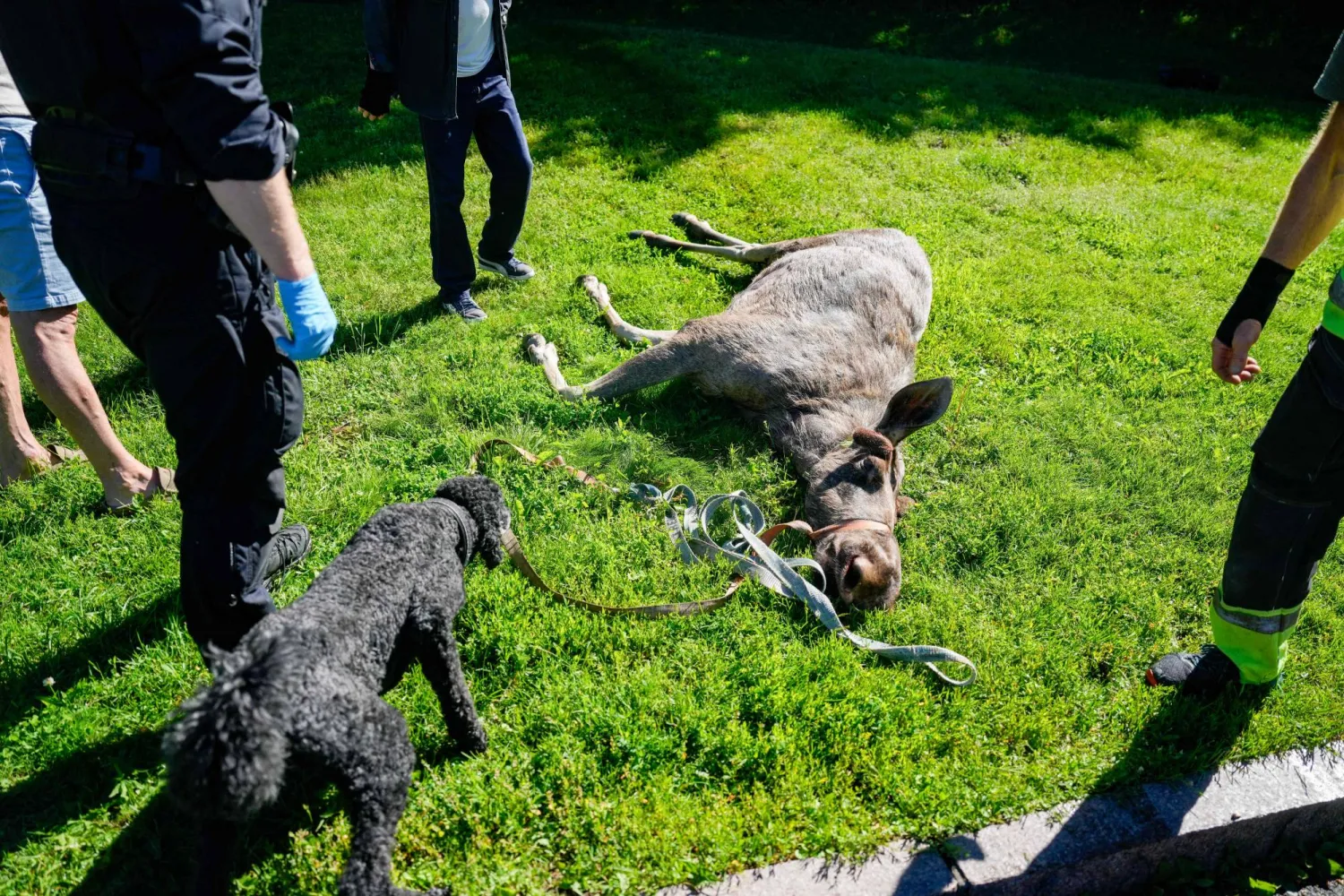
People and personell from the wildlife board mill around a dead moose that had strayed into Majorstuen,a inner city area in Oslo, Norway on, June 11, 2026. (Photo by Javad Parsa / NTB / AFP)
TT

Moose Put Down after Wandering Into Central Oslo

People and personell from the wildlife board mill around a dead moose that had strayed into Majorstuen,a inner city area in Oslo, Norway on, June 11, 2026. (Photo by Javad Parsa / NTB / AFP)

Norwegian police said Thursday that a moose that had wandered into downtown Oslo, drawing curious crowds, had been shot and killed.

Videos taken by witnesses and published by Norwegian media show the disoriented animal galloping through the streets of the Norwegian capital, weaving around cars and pedestrians.

"For animal welfare reasons, the moose was put down" by the wildlife authorities, AFP quoted the police as saying.

Although such incidents remain rare -- moose tend to avoid metropolitan areas -- this is the second such incident recorded in two days in Scandinavia.

On Tuesday, a young moose was put down in Sweden after it strayed into the streets of Stockholm.