Indian Desert School's Unique Design Offers Respite from Heat

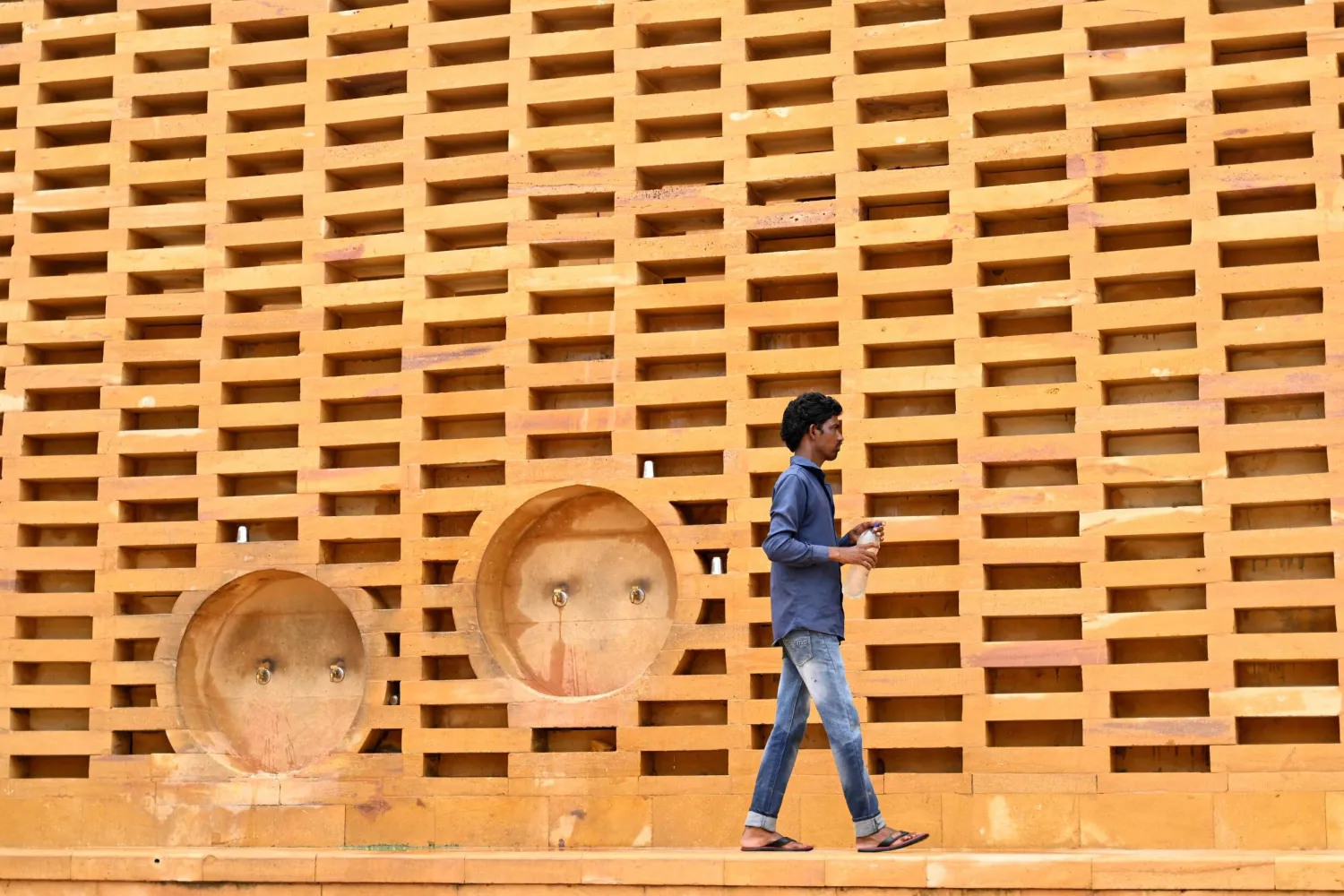
Temperatures inside the school can be as much as 20 percent lower than those outside. Idrees MOHAMMED / AFP
TT

Indian Desert School's Unique Design Offers Respite from Heat

Temperatures inside the school can be as much as 20 percent lower than those outside. Idrees MOHAMMED / AFP

In the sweltering heat of India's Thar desert, where summer highs soar above 50 degrees Celsius, an architecturally striking school is an oasis of cool thanks to a combination of age-old techniques and modern design.
The Rajkumari Ratnavati girls' school uses the same yellow sandstone as the 12th-century fort in nearby Jaisalmer, in India's western state of Rajasthan, dubbed the "golden city" due to the color of the rock, AFP said.
Like the fort, the school has thick rubble walls that help bounce back the heat, while the interior is plastered with lime, a porous material that regulates humidity and aids natural cooling.
Unlike the ancient fort, its roof is lined with solar panels, which provide all the school's power in an area with frequent electricity cuts.
Temperatures inside the school, designed by US-based architect Diana Kellogg and built by local artisans -- many of them parents of pupils -- can be as much as 20 percent lower than those outside.
"I love going to the school," said eight-year-old Khushboo Kumari, one of the 170 students.
"The air feels as if it is coming from an AC."
The school's classrooms are arranged around an open elliptical courtyard resembling a Roman coliseum, and walls with grids of vents create shade while allowing for cooling airflow.
Elevated windows allow hot air to escape as it rises. Rainwater is harvested from the flat roof.
In some places, the walls are dotted with perforations -- a technique known as "jali" that was traditionally used for modesty, shielding women from view in the conservative society.
At the school, it is used to promote ventilation, creating a breeze channeled by the building's oval shape.
"There is cross-ventilation," said school supervisor Rajinder Singh Bhati, aged 29. "The white tiles on the terrace reflect the sunlight."
"It is totally eco-friendly."
'Airy and cool'
India this year baked in its longest-ever heatwave, according to government weather experts.
Temperatures surged above 50 degrees Celsius (122 degrees Fahrenheit), with warnings people will face increasingly oppressive heat in the future.
Manohar Lal, 32, the father of pupil Khushboo, said students looked forward to class thanks to the relative cool.
"There are frequent power cuts in Rajasthan, and children have to suffer as temperatures touch almost 50 degrees Celsius in summer," Lal said outside his modest home of mud and brick, which does not have a ceiling fan.
"But there are no such worries in the school because it is powered by solar energy," he added.
"It is airy and cool, and that is why the children enjoy going to school".
'Feels like heaven'
The school is supported by the US-based CITTA Education Foundation, meaning pupils attend for free in a state where the literacy rate for women is about 52 percent.
Uniforms, school materials and lunch for pupils are also provided.
"It's a big thing that they are getting quality education free of cost, considering they can't even afford proper meals or clothing," said Hindi teacher Priyanka Chhangani, 40.
Kellogg, the architect, said combining tradition with modern design and sustainable techniques was key.
"Because the craftsmen were so familiar with the stone, we were able to integrate traditional architectural details along with indigenous heritage details, so that the structure felt authentic to the region", she said.
Her oval design was inspired by "feminine symbols of strength", she added.
But while her design focused on tackling baking heat, it also faces an unexpected, climate change-driven problem -- floods.
Intense rainfall during the annual monsoon is common from June to September, but experts say climate change is increasing its frequency and severity.
That increased rainfall has begun to impact the school, which was designed for a drier climate.
This year, a long-dormant river was overflowing, washing away soil at one side of the school.
Rajan Rawal, a professor at India's Centre for Environmental Planning and Technology University, said the increasing intensity of rain was impacting buildings designed for other weather.
"Disasters like heat waves and floods impact the structural stability," Rawal said.
They also affect the thermal performance of the building, he added.
But teacher Chhangani said the school was still changing the lives of the pupils.
"These children don't even have fans at home," she said. "When they come to school, it feels like heaven to them."



EU Nations Want Reduced Protection for Bears

19 June 2026, Berlin: A brown bear sits on a rock in its enclosure at the Berlin Zoo during a heat wave. Photo: Sven Kaeuler/dpa
TT

EU Nations Want Reduced Protection for Bears

19 June 2026, Berlin: A brown bear sits on a rock in its enclosure at the Berlin Zoo during a heat wave. Photo: Sven Kaeuler/dpa

A group of EU countries pushed Monday to lower the protection status of bears in Europe and relax hunting restrictions, citing an increase in attacks against humans and livestock.

In a letter to fellow European Union members, Romania and Slovakia said rapidly expanding bear numbers were to blame for a spree of incidents.

Bears killed 18 people and seriously injured more than 200 in the two countries over the past five years, AFP reported.

They also accounted for a good part of the more than 2,000 domestic animals, including horses, cattle, sheep, goats and pigs mauled to death by large carnivores at a hefty economic cost since 2023, they said.

"As an apex predator with no natural predators of its own, the species urgently requires effective management," they wrote in the letter which was backed also by Croatia, the Czech Republic and Finland.

The issue was discussed at a meeting of agriculture ministers in Luxembourg Monday.

The appeal follows a recent similar move against the wolf which proved successful, resulting last year in a lowering of the canine's protection status.

"Romania and Slovakia call for a similar approach to be applied to the brown bears," the countries wrote.

A majority of EU nations need to back any such proposal for the bloc to be able to initiate procedures to change bears' protection status -- a move opposed by environmental groups.

Bears are not the only species facing calls for a cull.

Last month, nine EU countries said the great cormorant's population might need a trim, for the bird was eating too much fish for the liking of human fishers.


First Confirmed Black-winged Kite Nesting Documented in Saudi Arabia’s King Abdulaziz Reserve

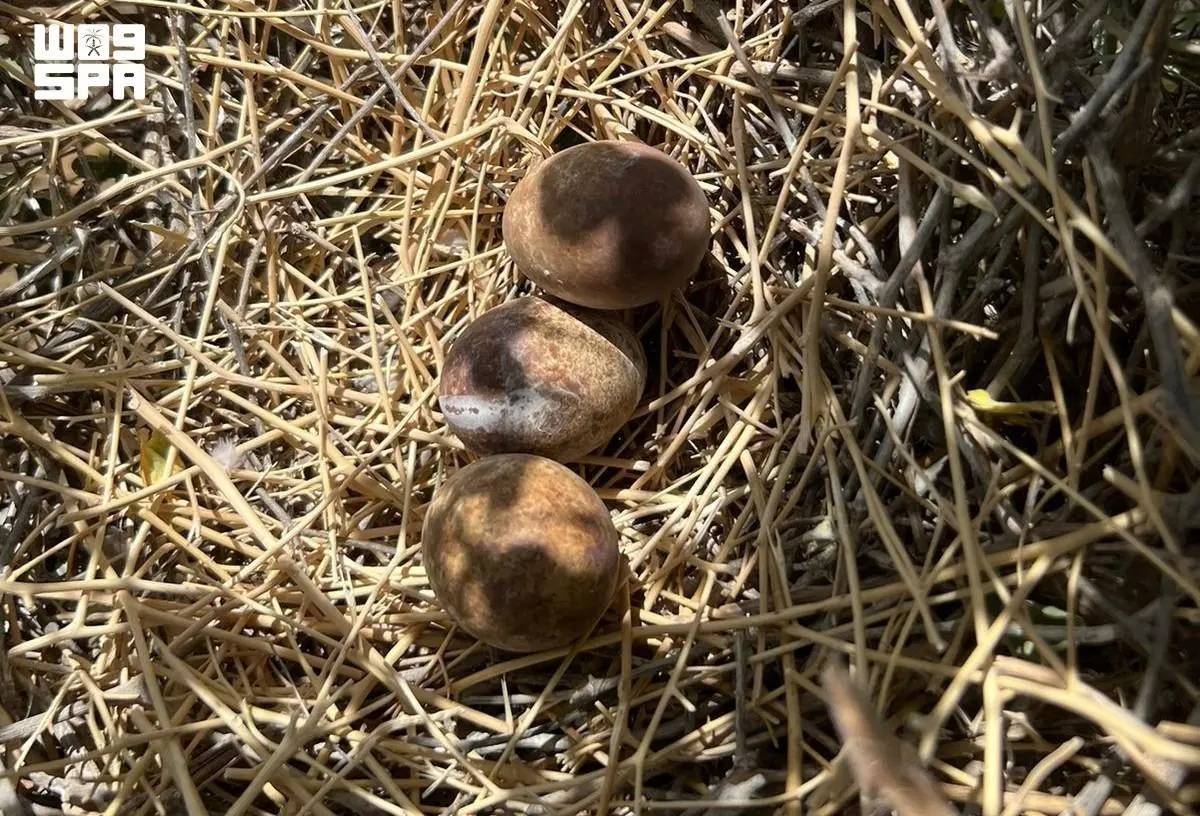
The Black-winged Kite is a bird of prey associated with open habitats that provide suitable nesting trees and reliable food sources. (SPA)
TT

First Confirmed Black-winged Kite Nesting Documented in Saudi Arabia’s King Abdulaziz Reserve

The Black-winged Kite is a bird of prey associated with open habitats that provide suitable nesting trees and reliable food sources. (SPA)

The King Abdulaziz Royal Reserve Development Authority announced the documentation of the first confirmed nesting record of Elanus caeruleus, commonly known as the Black-winged Kite, within the boundaries of the King Abdulaziz Royal Reserve, reported the Saudi Press Agency on Monday.

Providing new scientific evidence of the reserve's suitability as a natural habitat that supports wildlife settlement, breeding, and biodiversity conservation, the achievement aligns with the strategic objectives of the royal reserves and the Saudi Green Initiative in support of Saudi Vision 2030.

The nesting activity was recorded between January 20 and May 26, 2025, based on field surveys conducted in several natural meadows characterized by dense Sidr tree growth.

Adult and juvenile birds of the species were observed throughout the season, before researchers discovered an active nest on May 14, 2025, atop a Sidr tree approximately 2.9 meters high. The nest contained three eggs, providing direct evidence of local breeding within the reserve.

The Black-winged Kite is a bird of prey associated with open habitats that provide suitable nesting trees and reliable food sources.

Its documentation within the reserve reflects the authority’s efforts to protect and manage natural habitats and provide safe environments capable of supporting raptor populations, particularly in areas undergoing ecological recovery and improvements in vegetation cover.

The nesting activity was recorded between January 20 and May 26, 2025, based on field surveys conducted in several natural meadows characterized by dense Sidr tree growth. (SPA)

The authority also holds scientific records confirming the expansion of the species’ breeding range within Saudi Arabia through a combination of field observations in the reserve and national records published in a global biodiversity database.

These findings indicate a seasonal pattern of occurrence that supports the hypothesis of local breeding synchronized with seasonal movements and dispersal across several regions of the Kingdom.

The findings were published in a peer-reviewed study in the international journal Zoology and Ecology. The study was conducted by a joint research team comprising researchers from the King Abdulaziz Royal Reserve Development Authority and King Saud University as part of efforts to promote scientific research and document biodiversity within the reserve in accordance with internationally recognized scientific standards.

The authority underlined the importance of continuing environmental monitoring and surveillance programs in the reserve, identifying new nesting sites and incorporating them into conservation programs. These efforts contribute to protecting natural habitats, supporting wildlife, and advancing scientific knowledge of biodiversity in Saudi Arabia.


Interstellar Comet Likely Far Older Than Solar System, Say Astronomers

This handout photograph released by NASA on June 22, 2026, shows a view taken by Hubble of the interstellar comet 3I/ATLAS on July 21, 2025, when the comet was 277 million miles from Earth. "AFP photo / NASA / ESA / David Jewitt (UCLA)"
TT

Interstellar Comet Likely Far Older Than Solar System, Say Astronomers

This handout photograph released by NASA on June 22, 2026, shows a view taken by Hubble of the interstellar comet 3I/ATLAS on July 21, 2025, when the comet was 277 million miles from Earth. "AFP photo / NASA / ESA / David Jewitt (UCLA)"

An interstellar comet that blazed past the Sun last year could be nearly three times older than our Solar System and is unlike anything ever before seen in our cosmic backyard, astronomers said Monday.

The comet 3I/ATLAS is just the third visitor from beyond our Solar System that humanity has ever observed, its unusual brightness offering scientists an unprecedented opportunity to study something that came from elsewhere in the galaxy.

After being spotted in July last year, the space rock prompted excitement online, with one prominent Harvard researcher speculating it could be an alien spacecraft -- a theory that NASA shot down.

Now, observations by the world's most powerful telescopes are revealing more about the unique comet.

According to a new study published in the journal Nature, 3I/ATLAS could be up to 12 million years old. Our Solar System is believed to have formed around 4.5 billion years ago.

Lead study author Martin Cordiner of NASA's Goddard Space Flight Center told AFP that "maybe it's the oldest object to have been observed in our Solar System".

However, there could be "edge-case scenarios" that offer other explanations for the comet's unusual chemical composition, he added.

The new research is based on the comet's ratio of chemical elements called isotopes detected by the James Webb space telescope and the ALMA observatory in Chile.

These measurements "reveal an elemental composition unlike any Solar System body", the study said.

- Relic from 'cosmic noon'? -

Compared to comets in our Solar System, 3I/ATLAS has 10 times more deuterium, a type of hydrogen commonly seen in heavy water, according to the study.

"That high abundance of heavy water can only really happen, according to our understanding of astrochemistry, in a very cold environment," Cordiner explained.

This means the comet is also likely among the coldest objects ever seen in our Solar System, the isotopic evidence suggesting it formed in an environment that was minus 243 degrees Celsius.

Exactly where this comet came from within the Milky Way remains a mystery.

But these interstellar objects are thought to form in a similar way to the comets in our Solar System -- being flung out during the violent formation of a new planet.

Untethered to any star, 3I/ATLAS likely spent billions of years on "vast unimaginable trajectories around our galaxy," Cordiner said.

The scientists also detected a strange lack of chemical enrichment on the comet, which suggests it formed relatively close to stars being born.

It could even be a "relic" from an era called "cosmic noon" when many stars were forming around 10 billion years ago, Cordiner said.

The previous interstellar objects -- 1I/'Oumuamua, which was spotted in 2017, followed by 2I/Borisov in 2019 -- were not bright enough to gather isotopic evidence.

Harvard professor Avi Loeb, who had previously sparked controversy by suggesting 'Oumuamua could be an alien spacecraft, made similar suggestions about 3I/ATLAS.

However, NASA has dismissed this possibility. The Search for Extraterrestrial Intelligence Institute (SETI) said last month it had found "no evidence of extraterrestrial technology" on the comet.

- 'Just the beginning' -

Several astronomers who have studied 3I/ATLAS, but were not involved in the new research, hailed the "unprecedented" results.

"Until these measurements we could only really dream about" getting this kind of information for an interstellar object, Darryl Seligman of Michigan State University told AFP.

He cautioned that the comet's age remained uncertain, adding it was "a safe bet that it's older than anything that formed in the Solar System".

Astronomer Peter Veres, who was involved in identifying the comet at the International Astronomical Union's Minor Planet Center, called the research "exciting".

"The comet is now leaving the Solar System and will never return, so future observations will become increasingly difficult," he told AFP.

However, astronomers expect to spot many more interstellar objects in the coming years, particularly via the new Vera C. Rubin Observatory in Chile.

"This is just the beginning of an exciting new field, we've got a lot more to learn about these things -- and what they can tell us about our galaxy," Cordiner concluded.