Coke and Pepsi Boycott over Gaza Lifts Muslim Countries' Local Sodas

An employee of Kinza soft drinks company scans the fresh delivery of drinks at the Kinza warehouse in Doha, Qatar, September 2, 2024. REUTERS/Ibraheem Abu Mustafa
TT

Coke and Pepsi Boycott over Gaza Lifts Muslim Countries' Local Sodas

An employee of Kinza soft drinks company scans the fresh delivery of drinks at the Kinza warehouse in Doha, Qatar, September 2, 2024. REUTERS/Ibraheem Abu Mustafa

Coca-Cola and rival PepsiCo spent hundreds of millions of dollars over decades building demand for their soft drinks in Muslim-majority countries including Egypt to Pakistan. Now, both face a challenge from local sodas in those countries due to consumer boycotts that target the globe-straddling brands as symbols of America, and by extension Israel, at a time of war in Gaza, Reuters reported.
In Egypt, sales of Coke have cratered this year, while local brand V7 exported three times as many bottles of its own cola in the Middle East and the wider region than last year. In Bangladesh, an outcry forced Coca-Cola to cancel an ad campaign against the boycott. And across the Middle East, Pepsi's rapid growth evaporated after the Gaza war started in October.
Pakistani corporate executive Sunbal Hassan kept Coke and Pepsi off her wedding menu in Karachi in April. She said she didn't want to feel her money had reached the tax coffers of the United States, Israel's staunchest ally.
"With the boycott, one can play a part by not contributing to those funds," Hassan said. Instead, she served her wedding guests Pakistani brand Cola Next.
She is not alone. While market analysts say it is hard to put a dollar figure on lost sales and PepsiCo and Coca-Cola still have growing businesses in several countries in the Middle East, Western beverage brands suffered a 7% sales decline in the first half of the year across the region, market researcher NielsenIQ says.
In Pakistan, Krave Mart, a leading delivery app, has seen local cola rivals like Cola Next and Pakola soar in popularity to become about 12% of the soft drinks category, founder Kassim Shroff told Reuters this month. Before the boycott, the figure was closer to 2.5%.
Shroff said Pakola, which is ice-cream soda flavored, made up most of the purchases before the boycott. He declined to provide figures for Coca-Cola and PepsiCo sales.
Consumer boycotts date back at least as far as an 18th century anti-slavery sugar protest in Britain. The strategy was used in the 20th century to fight apartheid in South Africa and has been widely wielded against Israel through the Boycott, Divestment and Sanctions movement.
Many consumers shunning Coca-Cola and PepsiCo cite US support of Israel over decades, including in the current, ongoing war with Hamas. "Some consumers are deciding to make different options in their purchases because of the political perception," PepsiCo CEO Ramon Laguarta told Reuters in a July 11 interview, adding that boycotts are "impacting those particular geographies" such as Lebanon, Pakistan and Egypt.
"We will manage through it over time," he said. "It's not meaningful to our top line and bottom line at this point."
PepsiCo's total revenue from its Africa, Middle East and South Asia division was $6 billion in 2023, earnings releases show. The same year, Coca-Cola's revenue from its Europe, Middle East and Africa region was $8 billion, company filings show.
In the six months following the Oct. 7 Hamas attacks on Israel that triggered the invasion of Gaza, PepsiCo beverage volumes in the Africa, Middle East and South Asia division barely grew, after notching up 8% and 15% growth in the same quarters of 2022/23, the company said. Volumes of Coke sold in Egypt declined by double-digit percentage points in the six months ended June 28, according to data from Coca-Cola HBC, which bottles there. In the same period last year, volumes rose in high single digits.
Coca-Cola has said it does not fund military operations in Israel or any country. In response to a Reuters request, PepsiCo said neither the company "nor any of our brands are affiliated with any government or military in the conflict."
Palestinian-American businessman Zahi Khouri founded Ramallah-based Coca-Cola bottler National Beverage Company, which sells Coke in the West Bank. The company's $25 million plant in Gaza, opened in 2016, has been destroyed in the war, he said. Employees were unharmed, he said.
Khouri said boycotts were a matter of personal choice but didn't really help Palestinians. In the West Bank itself, he said, they had limited sales impact.
"Only ending the occupation would help the situation," said Khouri, who supports the creation of a Palestinian state alongside Israel.
Israel's government did not respond to a request for comment.
HISTORICAL TARGETS
The big soda companies are no stranger to pressure among the Muslim world's hundreds of millions of consumers. After Coke opened a factory in Israel in the 1960s, it was hit by an Arab League boycott that lasted until the early 1990s and benefited Pepsi for years in the Middle East.
Coke still lags Pepsi's market share in Egypt and Pakistan, according to market research firm GlobalData.
PepsiCo, which entered Israel in the early 1990s, itself faced boycotts when it purchased Israel's SodaStream for $3.2 billion in 2018.
In recent years though, Muslim-majority countries with young, rising populations have provided some of the soda giants' fastest growth. In Pakistan alone, Coca-Cola says it has invested $1 billion since 2008, yielding years of double-digit sales growth. PepsiCo had similar gains, according to securities filings.
Now, both are losing ground to local brands.
Cola Next, which is cheaper than Coke and Pepsi, changed its ad slogan in March to "Because Cola Next is Pakistani," emphasizing its local roots.
Cola Next's factories cannot meet the surge in demand, Mian Zulfiqar Ahmed, the CEO of the brand's parent company, Mezan Beverages, said in an interview. He declined to share volume figures.
Restaurants, Karachi's private schools association and university students have all taken part in anti-Coca-Cola actions, eroding goodwill built through sponsorship of Coke Studio, a popular music show in Pakistan.
Exports of Egyptian cola V7 have tripled this year compared to 2023, founder Mohamed Nour said in an interview. Nour, a former Coca-Cola executive who left the company after 28 years in 2020, said V7 was now sold in 21 countries.
Sales in Egypt, where the product has only been available since July 2023, were up 40%, Nour said.
Paul Musgrave, an associate professor of government at Georgetown University in Qatar, warned of long-term damage to consumer loyalty due to boycotts. "If you break habits, it’s going to be harder to win you back in the long run," he said, without giving an estimate of the financial cost to the companies.
BANGLADESH BACKFIRE
In Bangladesh, Coke launched an advertisement showing a shopkeeper talking about the company's operations in Palestine.
After a public outcry over perceived insensitivity, Coke pulled the ad in June and apologized. In response to a question from Reuters, the company said the campaign "missed the mark."
The ad made the boycott worse, said one Bangladeshi advertising executive, who declined to be named because he was not authorized to speak to the media. Other American brands seen as symbols of Western culture, such as McDonalds and Starbucks, also face anti-Israel boycotts.
Market share for global brands fell 4% in the first half of 2024 in the Middle East, according to NielsenIQ. But the protests have been more visible against the widely-available sodas.
As well as boycotts, inflation and economic turmoil in Pakistan, Egypt and Bangladesh eroded consumers' buying power even before the war, making cheaper local brands more appealing.
Last year, Coke's market share in the consumer sector in Pakistan fell to 5.7% from 6.3% in 2022, according to GlobalData, while Pepsi's fell to 10.4% from 10.8%.
FUTURE PLANS
Coca-Cola and its bottlers, and PepsiCo, still see the countries as important areas for growth, particularly as Western markets slow down.
Despite the boycotts, Coke invested another $22 million upgrading technology in Pakistan in April, it said in a press release at the time.
Coca-Cola's bottler in Pakistan said to investors in May that it remained "positive about the opportunity" the world's fifth most-populous country offers, and that it invested in the market with a long-term commitment.
In recent weeks, PepsiCo reintroduced a brand called Teem soda, traditionally lemon-lime flavored, in Pakistani market, a spokesperson confirmed. The product is now available in a cola flavor with "Made in Pakistan" printed prominently on the label.
The companies are also still injecting the Coke and Pepsi brands into the fabric of local communities by sponsoring charities, musicians and cricket teams.
Those moves are key to Coke and Pepsi keeping a toehold in the countries long-term even as they face setbacks now, Georgetown's Musgrave said.
"Anything you can do to make yourself an ally or presence, a part of a community," helps, he said.



Ice Melt Threatens Emperor Penguins During Annual Molt, Say Researchers 

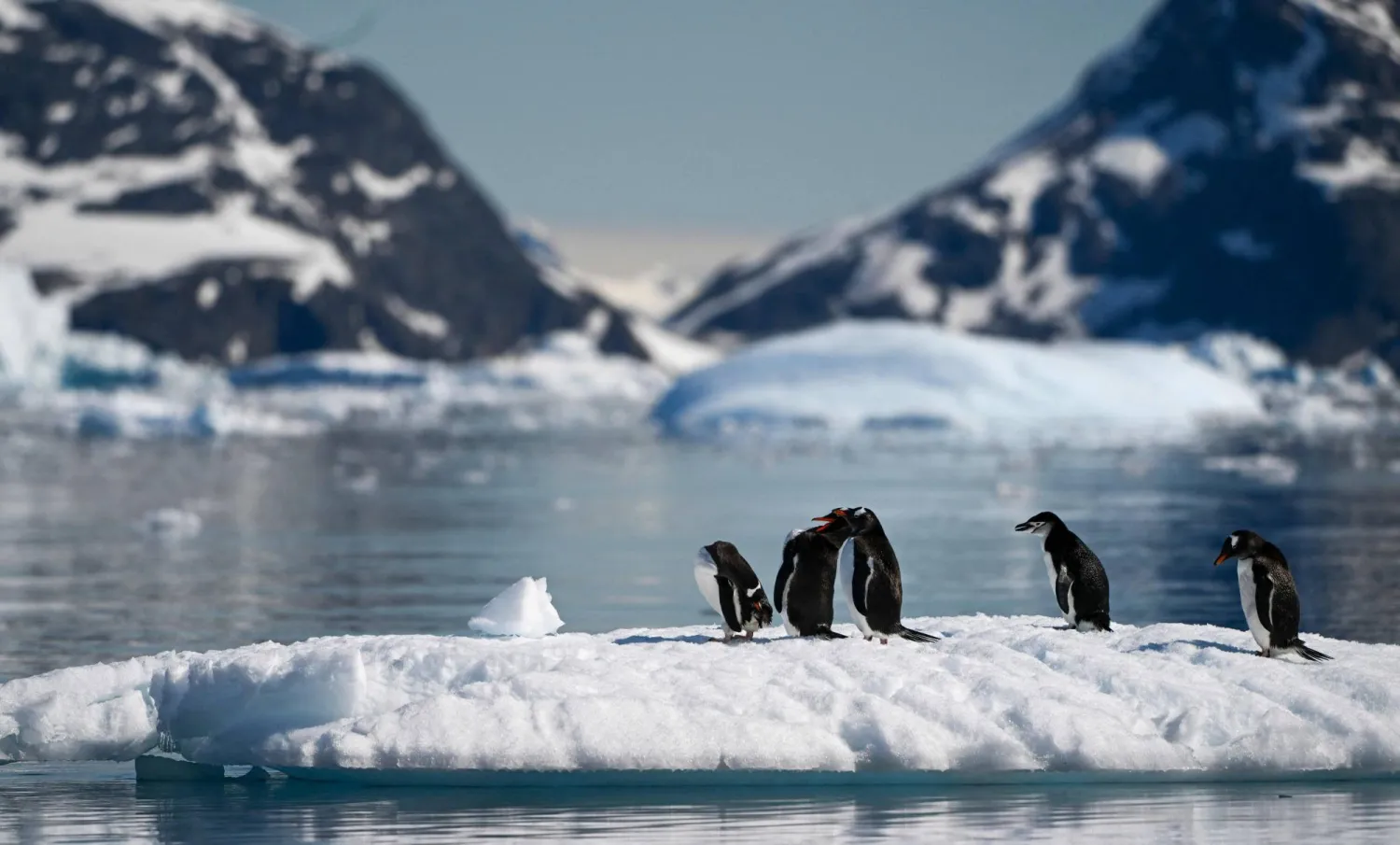
View of a chinstrap (Pygoscelis antarcticus) and gentoo (Pygoscelis papua) penguins at the Gerlache Strait, which separates the Palmer Archipelago from the Antarctic Peninsula, on January 15, 2024. (AFP)
TT

Ice Melt Threatens Emperor Penguins During Annual Molt, Say Researchers 

View of a chinstrap (Pygoscelis antarcticus) and gentoo (Pygoscelis papua) penguins at the Gerlache Strait, which separates the Palmer Archipelago from the Antarctic Peninsula, on January 15, 2024. (AFP)

Emperor penguins shed all their feathers once a year, a precarious ritual that may have become deadly as climate change pushes them into shrinking patches of Antarctic sea ice, researchers said Wednesday.

The flightless birds molt during summer, relying on stored fat to survive for several weeks until their waterproof coat grows back so they can swim and hunt in icy waters again.

Researchers from the British Antarctic Survey, analyzing seven years of satellite images, accidentally discovered several molting colonies along the extremely remote coastline of an area known as Marie Byrd Land.

As sea ice melted, the penguins were forced onto smaller spaces in increasingly large and tightly packed groups, the UK polar research organization said in a statement.

In 2025, only 25 small groups of penguins were visible in the satellite images, it said. Prior to 2022, more than 100 groups had been spotted in the same region.

"While we don't know for sure what happened to those penguins, we know they can find new suitable breeding sites after ice loss, so it's possible they have established new molting sites elsewhere," said Peter Fretwell, lead author and mapping expert at the British Antarctic Survey.

"But also it's possible that huge numbers of penguins perished after entering the Southern Ocean before they had replaced their waterproof feathers," Fretwell said.

"If this has happened, the situation for emperors as a species is even worse than we thought."

The researchers said that if emperor penguins are forced into the ocean before their feathers are replaced, they face exhaustion from increased energy use, hypothermia and increased risk from predators.

- Ice at record low -

Emperor penguin populations have shrunk by almost a quarter as global warming transforms their icy habitat, the British Antarctic Survey said in research published last year.

During the January-March Antarctic summer, emperor penguins from the Ross Sea in West Antarctica migrate as much as 1,000 kilometers (620 miles) to Marie Byrd Land to molt on stable sea ice, the researchers said Wednesday.

It is one of the few areas that historically retains its fast ice -- sea ice attached to the coast -- throughout the year.

The molting process takes about four to five weeks and the penguins cannot go in the freezing water during that time.

The extent of Antarctic Sea ice fell to record lows between 2022 and 2024, accompanied by a drastic decrease in fast ice, the British Antarctic Survey said.

In the region they observed, sea ice coverage fell from a 50-year average of 500,000 square kilometers -- roughly the size of Spain -- to 100,000 square kilometers in 2023. Only 2,000 square kilometers of fast ice were left near the coast.

During those years, the sea ice broke before the penguins had finished molting, raising fears that many may not have survived, the scientists said.

The survey's previous study found that some emperor penguin colonies lost all their chicks in recent years as the ice broke, plunging hatchlings into the sea before they were old enough to cope with the freezing ocean.

At current rates of warming, there is a 45 percent chance the species will become extinct by the turn of the century, the survey said.


Are Expensive Shampoos Worth it? Here's what the Experts Have to Say

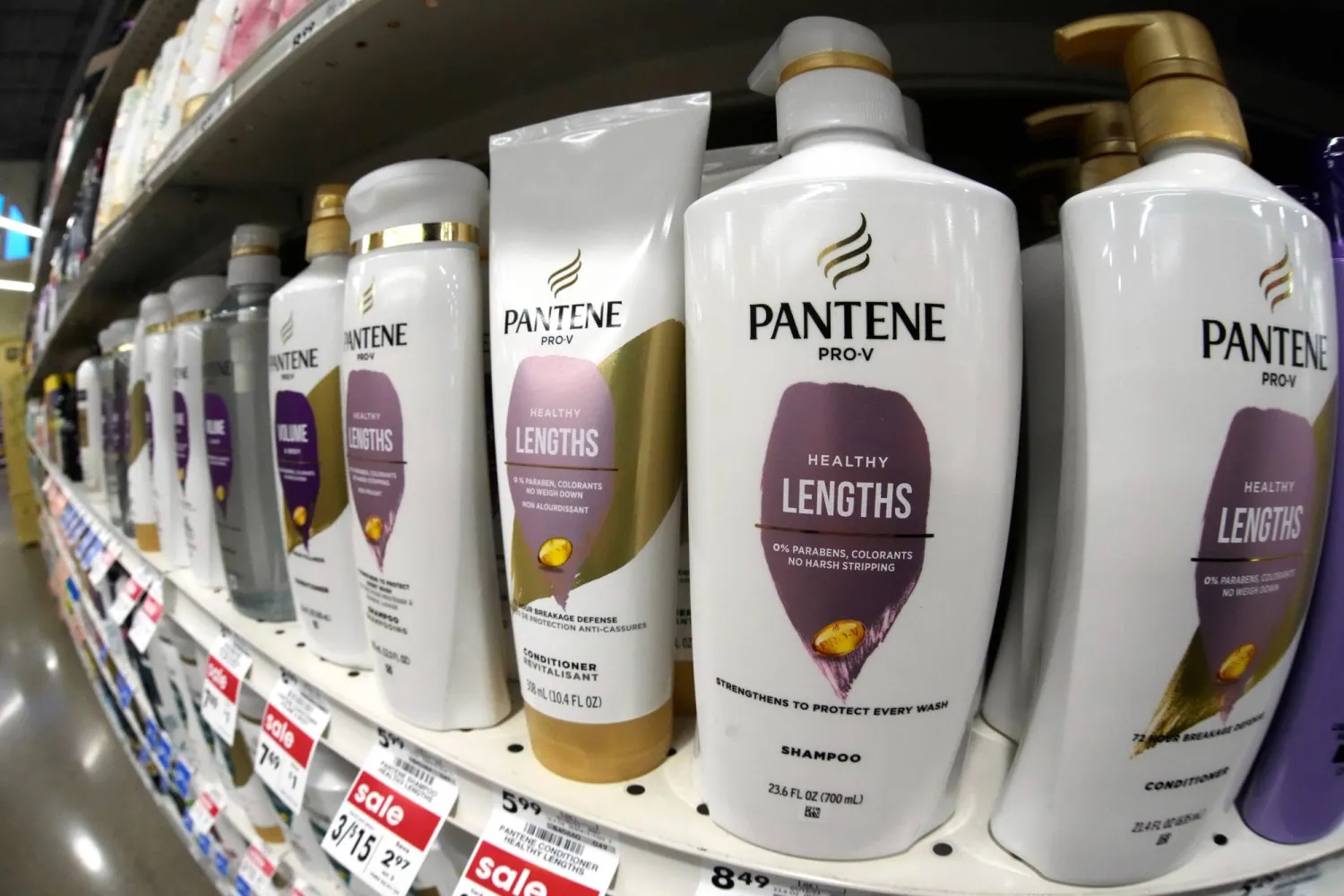
FILE - Shampoo sits on a shelf at a store in Pittsburgh, Jan. 26, 2023. (AP Photo/Gene J. Puskar, File)
TT

Are Expensive Shampoos Worth it? Here's what the Experts Have to Say

FILE - Shampoo sits on a shelf at a store in Pittsburgh, Jan. 26, 2023. (AP Photo/Gene J. Puskar, File)

Ornate packaging paired with enticing advertisements that claim expensive shampoos are elixirs to all hair woes can leave one wondering: Are the higher prices really worth it? Should I abandon my $8 drugstore mainstay for a $42 premium brand?

Experts say affordable shampoos and conditioners found in grocery stores and pharmacies can do the job as well as the pricey versions with tempting messaging and testimonials on social media. They advise consumers to evaluate the ingredients in products, their own scalp and hair concerns, and their entire hair care routine — and to check with a doctor when in doubt.

Premium brands can work well, and some have active ingredients that cost more, according to dermatologists. Other factors influencing the price include the size of the company and whether it has invested in organic ingredients, sustainable agriculture and recycled materials.

Dr. Crystal Aguh, dermatologist and director of the Ethnic Skin Program at Johns Hopkins School of Medicine, said she generally categorizes people into two hair types: damage-prone and damage-resistant.

Damage-prone includes people with very curly hair, people who chemically treat their hair and those who use hot tools to style it. She said damage-resistant attributes include oily hair and straight hair, The Associated Press reported.

People with damage-prone hair should avoid shampoos that have sodium lauryl sulfate as the main ingredient, Aguh said. It removes a lot of sebum, a natural oil that coats and protects hair. Without sebum, hair could feel very dry and break easily.

For curly or dyed hair, Aguh recommends washing less frequently to avoid removing too much sebum. She said people with tightly curled or coily hair should only wash their hair once a week. People with wavy hair that is dyed might find it best to wash every two to three days.

Damage-resistant hair that is oily and straight can be washed every day.

Expensive shampoos and conditioners can work well, but there are affordable products that perform just as well, Aguh said. She tells patients that “it’s not the products, it’s the process” that affects hair health the most, including how often hair is washed, dyed or treated with heat.

“Instead of spending hundreds of dollars thinking, 'If I just find the right shampoo, right conditioner, all of my troubles will go away,' you also have to just look at what your process looks like ... because that will often do the trick,” she said.

She said it is fine to mix high-end and mass market products and that people shouldn’t feel compelled to buy an entire line of expensive products.

Aguh said some common brands are more affordable because they are made by large corporations that can achieve economies of scale. Sometimes expensive brands have a smaller team and lack the workforce and resources to reach those same cost advantages.

When treating dandruff, for example, Aguh often recommends over-the-counter shampoos instead of prescription formulas. But she added people should see a doctor for lingering dandruff problems.

Shampoo is skincare for the scalp Dr. Joe Tung, a dermatologist at the University of Pittsburgh Medical Center, said people should think of shampoo as skincare for the scalp, not just a cosmetic product.

“Hair itself is biologically inactive once it grows out, but underneath the surface of the skin on the scalp is a full ecosystem with stem cells, immune cells, oil glands, nerve endings," he said. “When that ecosystem is balanced, the scalp feels comfortable and hair grows optimally; when it is disrupted, people can experience itching, flaking, excess oil, or hair loss.”

Tung said people should consider what their scalp needs when choosing shampoo, and a conditioner should be chosen based on hair texture and damage level. He said dandruff and itchiness benefit from shampoos that address inflammation and microbial imbalance, whereas dry or chemically treated hair could benefit from a gentle cleanser with a rich conditioner.

Tung said expensive shampoos and conditioners are sometimes worth the price, but a product's effectiveness is determined by active ingredients and not branding. "An antifungal ingredient works because of its molecular activity, not because it comes in a luxury bottle or from a prestigious brand," he said.

Expensive shampoos typically rely on more refined conditioning agents and soothing ingredients that may make frequent hair washing more comfortable, Tung said. But some luxury products contain fragrances or botanical extracts that can irritate sensitive skin, he said. Simpler formulas are often better tolerated by people with sensitive skin.

Hair products with a sustainability focus MOKO Organic Beauty Studio in Philadelphia stocks organic shampoos and conditioners that cost from $24 to $45. Owner Monique Mason said it is the salon's mission to provide products that are good for scalps and the planet.

Ingredients are the biggest of many factors influencing price, Mason said. Organic products typically avoid inexpensive sulfates, synthetic fragrances and parabens that are widely used in the personal care industry, she said. Mason said she also researches how the brands she sells manufacture their products to ensure their sustainability claims can be verified.

“I get to know them, whether they’re family-owned, how they farm, how they source their ingredients," she said.


Player Saves Stricken Seagull Hit by Ball During Match in Türkiye

Seagulls fly along the Hudson River while snow falls on February 22, 2026 in Jersey City, New Jersey. (Getty Images/AFP)
TT

Player Saves Stricken Seagull Hit by Ball During Match in Türkiye

Seagulls fly along the Hudson River while snow falls on February 22, 2026 in Jersey City, New Jersey. (Getty Images/AFP)

A footballer's ‌quick thinking brought a seagull back to life after the bird was struck by the ball during a match in Türkiye, Anadolu Agency reported.

The incident occurred in the first half of the Istanbul First Amateur League playoff final between Mevlanakapi Guzelhisar and ‌Istanbul Yurdum ‌Spor in Zeytinburnu.

Istanbul Yurdum ‌Spor ⁠goalkeeper Muhammet Uyanik ⁠cleared the ball up the pitch and it struck a seagull, sending it plummeting to the turf.

Team captain Gani Catan rushed over and seeing that the ⁠bird was unresponsive, he ‌began cardiopulmonary ‌resuscitation (CPR) and chest compressions in an attempt ‌to revive it.

The seagull responded ‌and showed movement before Catan cradled it and rushed to the touchline to hand it over to medical ‌staff.

"Our captain Gani Catan brought the seagull back to ⁠life ⁠thanks to the cardiopulmonary resuscitation (CPR) he performed on the field," the club said on Instagram.

Although Istanbul Yurdum Spor lost the game, Catan had no regrets.

"We missed out on the championship, but helping save a life is a good thing," he said. "This was more important than the championship."