


Are Expensive Shampoos Worth it? Here's what the Experts Have to Say

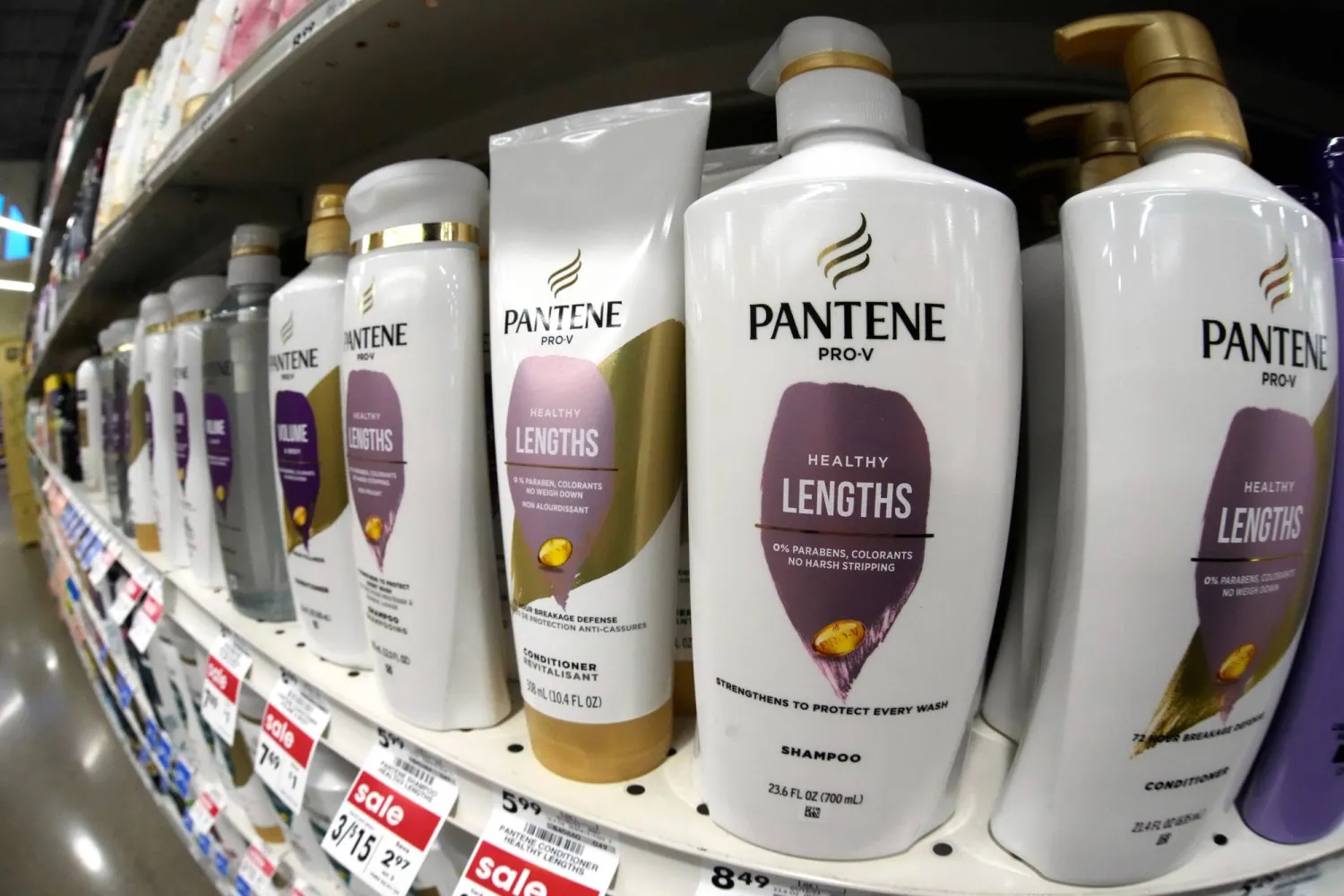
FILE - Shampoo sits on a shelf at a store in Pittsburgh, Jan. 26, 2023. (AP Photo/Gene J. Puskar, File)
TT

Are Expensive Shampoos Worth it? Here's what the Experts Have to Say

FILE - Shampoo sits on a shelf at a store in Pittsburgh, Jan. 26, 2023. (AP Photo/Gene J. Puskar, File)

Ornate packaging paired with enticing advertisements that claim expensive shampoos are elixirs to all hair woes can leave one wondering: Are the higher prices really worth it? Should I abandon my $8 drugstore mainstay for a $42 premium brand?

Experts say affordable shampoos and conditioners found in grocery stores and pharmacies can do the job as well as the pricey versions with tempting messaging and testimonials on social media. They advise consumers to evaluate the ingredients in products, their own scalp and hair concerns, and their entire hair care routine — and to check with a doctor when in doubt.

Premium brands can work well, and some have active ingredients that cost more, according to dermatologists. Other factors influencing the price include the size of the company and whether it has invested in organic ingredients, sustainable agriculture and recycled materials.

Dr. Crystal Aguh, dermatologist and director of the Ethnic Skin Program at Johns Hopkins School of Medicine, said she generally categorizes people into two hair types: damage-prone and damage-resistant.

Damage-prone includes people with very curly hair, people who chemically treat their hair and those who use hot tools to style it. She said damage-resistant attributes include oily hair and straight hair, The Associated Press reported.

People with damage-prone hair should avoid shampoos that have sodium lauryl sulfate as the main ingredient, Aguh said. It removes a lot of sebum, a natural oil that coats and protects hair. Without sebum, hair could feel very dry and break easily.

For curly or dyed hair, Aguh recommends washing less frequently to avoid removing too much sebum. She said people with tightly curled or coily hair should only wash their hair once a week. People with wavy hair that is dyed might find it best to wash every two to three days.

Damage-resistant hair that is oily and straight can be washed every day.

Expensive shampoos and conditioners can work well, but there are affordable products that perform just as well, Aguh said. She tells patients that “it’s not the products, it’s the process” that affects hair health the most, including how often hair is washed, dyed or treated with heat.

“Instead of spending hundreds of dollars thinking, 'If I just find the right shampoo, right conditioner, all of my troubles will go away,' you also have to just look at what your process looks like ... because that will often do the trick,” she said.

She said it is fine to mix high-end and mass market products and that people shouldn’t feel compelled to buy an entire line of expensive products.

Aguh said some common brands are more affordable because they are made by large corporations that can achieve economies of scale. Sometimes expensive brands have a smaller team and lack the workforce and resources to reach those same cost advantages.

When treating dandruff, for example, Aguh often recommends over-the-counter shampoos instead of prescription formulas. But she added people should see a doctor for lingering dandruff problems.

Shampoo is skincare for the scalp Dr. Joe Tung, a dermatologist at the University of Pittsburgh Medical Center, said people should think of shampoo as skincare for the scalp, not just a cosmetic product.

“Hair itself is biologically inactive once it grows out, but underneath the surface of the skin on the scalp is a full ecosystem with stem cells, immune cells, oil glands, nerve endings," he said. “When that ecosystem is balanced, the scalp feels comfortable and hair grows optimally; when it is disrupted, people can experience itching, flaking, excess oil, or hair loss.”

Tung said people should consider what their scalp needs when choosing shampoo, and a conditioner should be chosen based on hair texture and damage level. He said dandruff and itchiness benefit from shampoos that address inflammation and microbial imbalance, whereas dry or chemically treated hair could benefit from a gentle cleanser with a rich conditioner.

Tung said expensive shampoos and conditioners are sometimes worth the price, but a product's effectiveness is determined by active ingredients and not branding. "An antifungal ingredient works because of its molecular activity, not because it comes in a luxury bottle or from a prestigious brand," he said.

Expensive shampoos typically rely on more refined conditioning agents and soothing ingredients that may make frequent hair washing more comfortable, Tung said. But some luxury products contain fragrances or botanical extracts that can irritate sensitive skin, he said. Simpler formulas are often better tolerated by people with sensitive skin.

Hair products with a sustainability focus MOKO Organic Beauty Studio in Philadelphia stocks organic shampoos and conditioners that cost from $24 to $45. Owner Monique Mason said it is the salon's mission to provide products that are good for scalps and the planet.

Ingredients are the biggest of many factors influencing price, Mason said. Organic products typically avoid inexpensive sulfates, synthetic fragrances and parabens that are widely used in the personal care industry, she said. Mason said she also researches how the brands she sells manufacture their products to ensure their sustainability claims can be verified.

“I get to know them, whether they’re family-owned, how they farm, how they source their ingredients," she said.




Research Reveals Decades-Long Silverpit Crater Triggered by Tsunami 40 Million Years Ago

A massive asteroid struck the North Sea millions of years ago (Getty)
TT

Research Reveals Decades-Long Silverpit Crater Triggered by Tsunami 40 Million Years Ago

A massive asteroid struck the North Sea millions of years ago (Getty)

A long-running dispute about the origin of a North Sea crater has finally been settled, as new research finds a massive asteroid hit the water and triggered a towering tsunami millions of years ago.

Scientists have found that the Silverpit Crater – which lies around 700 meters beneath the southern North Sea seabed, roughly 80 miles off the coast of Yorkshire – was formed when an asteroid or comet struck the region roughly 43 to 46 million years ago, sparking a 330 feet tsunami.

Since geologists first identified the formation in 2002, the 3km-wide crater and its surrounding ring of circular faults spanning about 20 km have sparked intense debate, according to The Independent.

But researchers say their new study marks the clearest evidence yet that the structure is one of Earth’s rare impact craters.

This confirmation places it in the same category as well-known structures such as the Chicxulub Crater in Mexico, which is linked to the dinosaur mass extinction.

The team used computer modelling and analyzed newly available seismic imaging and microscopic geological samples taken from beneath the seabed.

Dr. Uisdean Nicholson, a sedimentologist in Heriot-Watt University’s School of Energy, Geoscience, Infrastructure and Society, who led the investigation, said: “New seismic imaging has given us an unprecedented look at the crater.”

He said samples from an oil well in the area also revealed rare ‘shocked’ quartz and feldspar crystals at the same depth as the crater floor.

“We were exceptionally lucky to find these – a real ‘needle-in-a-haystack’ effort. These prove the impact crater hypothesis beyond doubt, because they have a fabric that can only be created by extreme shock pressures,” said Nicholson.

The scientists say these microscopic minerals form only under the extreme pressures generated during asteroid impacts, providing strong confirmation of the event.

Early research proposed that the feature was created by a high-speed asteroid impact. Supporters of that idea pointed to its round shape, central peak, and surrounding concentric faults, which are often seen in known impact craters.

But other scientists suggested different explanations. Some proposed that underground salt movement distorted the rock layers and created the structure.

Others argued that volcanic activity may have caused the seabed to collapse.

In 2009, geologists even voted on the issue. According to a report in the December 2009 issue of Geoscientist magazine, most participants rejected the asteroid impact explanation at the time.

The latest findings, published in the journal Nature Communications and funded by the Natural Environment Research Council (NERC), now appear to overturn that conclusion.

Dr. Nicholson said: “Our evidence shows that a 160-meter-wide asteroid hit the seabed at a low angle from the west.”

“Within minutes, it created a 1.5 km high curtain of rock and water that then collapsed into the sea, creating a tsunami over 100 meters high.”

The impact would have produced a violent explosion at the seafloor and sent enormous waves spreading across the region.

Professor Gareth Collins, of Imperial College London, who attended the 2009 debate about the crater’s origin and contributed to the new research, said the researchers have “finally found the silver bullet” to end the debate.

He said: “I always thought that the impact hypothesis was the simplest explanation and most consistent with the observations.”

“It is very rewarding to have finally found the silver bullet. We can now get on with the exciting job of using the amazing new data to learn more about how impacts shape planets below the surface, which is really hard to do on other planets,” Collins added.

Dr. Nicholson also expressed his excitement about using the new findings for further research into asteroids.

“Silverpit is a rare and exceptionally preserved hypervelocity impact crater,” he said.

“These are rare because the Earth is such a dynamic planet – plate tectonics and erosion destroy almost all traces of most of these events.”


Naples Museum to Allow Visually Impaired Visitors to Experience Art Through Touch

Giuseppe Sanmartino's sculpture of the Veiled Christ housed in the Sansevero Chapel in Naples, Italy, 10 March 2026. EPA/CIRO FUSCO
TT

Naples Museum to Allow Visually Impaired Visitors to Experience Art Through Touch

Giuseppe Sanmartino's sculpture of the Veiled Christ housed in the Sansevero Chapel in Naples, Italy, 10 March 2026. EPA/CIRO FUSCO

The Sansevero Chapel Museum in Naples will allow dozens of visually impaired visitors to take part in a rare tactile experience, letting them touch celebrated works of art including the Veiled Christ, which is widely regarded as one of the most striking masterpieces in the history of sculpture.

On March 17, the museum will host an initiative called La meraviglia a portata di mano – Wonder within reach – organized in partnership with the Italian Union of the Blind and Visually Impaired of Naples, offering about 80 blind and partially sighted visitors a chance to encounter the marble masterpieces.

According to The Guardian, visitors will be guided through the chapel by guides who are also visually impaired in a program designed to place accessibility at the center of the museum experience.

The protective barrier surrounding the sculptures will be removed, allowing participants, wearing latex gloves, to explore by touch the intricate marble surface of the sculptures including Giuseppe Sanmartino’s Veiled Christ, which depicts Jesus covered by a transparent shroud made from the same block as the statue. The tactile route will also extend to the reliefs at the feet of the sculptures La Pudicizia and Il Disinganno.

Chiara Locovardi, a guide, told the state agency Ansa: “The veil covering Christ is extraordinary. It’s impossible to understand how Sanmartino managed to create it. The veil defies explanation – for those who can see and for those who cannot. When you touch it, you can feel the veins pulsing beneath.”

“This initiative forms part of our wider program to create a cultural space that is inclusive and accessible through dedicated pathways and tools tailored to the different needs of museum visitors,” Maria Alessandra Masucci, the president of the Sansevero Chapel Museum, said.


All But 2 of Austria's 96 Glaciers Have Retreated Over Last 2 Years

FILE - The Sulzenauferner Glacier is visible near Innsbruck, Austria, on Sept. 25, 2023. (AP Photo/Matthias Schrader, File)
TT

All But 2 of Austria's 96 Glaciers Have Retreated Over Last 2 Years

FILE - The Sulzenauferner Glacier is visible near Innsbruck, Austria, on Sept. 25, 2023. (AP Photo/Matthias Schrader, File)

All but two of Austria’s 96 glaciers have retreated over the last two years, monitors in the Alpine country reported Friday, saying the “dramatic development” highlights the impact of climate change.

The latest report from the Austrian Alpine Club shows the Alpeiner Ferner in the western Tyrol region and Stubacher Sonnblickkees in Salzburg to the east are facing the greatest loss, each with a retreat of more than 100 meters (about 330 feet). The average retreat was more than 20 meters (65 feet).

“The disintegration of the glacier tongue is also progressing at the Pasterze, Austria’s largest glacier, making the consequences of climate change visible,” the club said in the report covering 2024 and 2025.

The report, it added, “confirms once again the long-term trend: Glaciers in Austria continue to shrink significantly in length, area, and volume.”

FILE - The Gaisskarferner Glacier is visible near Innsbruck, Austria, Monday, Sept. 25, 2023. (AP Photo/Matthias Schrader, file)

The retreat of glaciers in Europe has vast implications for drinking water, power generation, agriculture, infrastructure, recreational activities, the Alpine landscape and more.

Neighboring Switzerland, which is home to the most glaciers in Europe, has noted a similar retreat in its glaciers in recent years, a trend that has been reported around the world.

Poor weather conditions including low snowfall, warm temperatures including an exceptionally hot June last year — nearly 5 degrees Celsius (9 degrees Fahrenheit) above the average — have contributed to the retreat, The Associated Press quoted the club as saying.

“The glaciers are melting — and with every new report, the urgency grows,” club vice president Nicole Slupetzky said. “It’s no longer a question of whether we can still save the glaciers in their old form; it’s about mitigating the consequences for ourselves.”

Such changes in the Alps should serve as a “wake-up call” for policymakers and the public in its behavior, the club said.

It said the current figure was lower than during the previous two years, but still ranks as the eight-largest retreat in the 135 years of measurements.