China’s Frigid Northeast Thrives on ‘Little Potato’ Tourism Boom

This picture taken on December 17, 2024 shows people having picture with a snowman sculpture in Harbin, China’s Northeastern Heilongjiang province. (AFP)
TT

China’s Frigid Northeast Thrives on ‘Little Potato’ Tourism Boom

This picture taken on December 17, 2024 shows people having picture with a snowman sculpture in Harbin, China’s Northeastern Heilongjiang province. (AFP)

Animal ears and pom-poms on fuzzy hats adorn tourists' heads on the streets of the frigid northeastern Chinese city of Harbin, which is enjoying a surge in visitors driven by social media.

Photos and videos taken around the city's landmarks flood platforms such as TikTok counterpart Douyin and Instagram-esque Xiaohongshu -- many featuring tourists from the warmer south.

They're affectionately known as "southern little potatoes", a reference to their alleged smaller stature and cutesy winter gear that contrast with the area's stereotypically coarse character.

A search for "southern little potatoes visit the north" racked up more than 428,000 notes on Xiaohongshu.

That's where Chen Xiting, who works in e-commerce in the southern province of Guangdong, said she was inspired to visit.

"It's the quickest way young people get trip recommendations," said Chen.

She said she had noticed a sizeable number of fellow southerners.

"I heard quite a bit of Cantonese, which we're very familiar with, today at tourist sites and on the street," said the 29-year-old, wearing a hat with dog ears and with only her face exposed to the air.

Liu Rong, a student from Sichuan, said the city's push for more southern tourists was clear from the surge in videos about Harbin he often watched with his wife.

"These years, especially this year, Harbin's cultural tourism has placed a lot of importance on paying attention to us southerners," Liu said.

- 'Little potatoes' go north -

Harbin is the capital of Heilongjiang, one of three provinces that make up the "Dongbei" (northeast) region, where temperatures can reach -30 degrees Celsius (-22 degrees Fahrenheit) during winter.

Bordered by Russia and North Korea, it is one of China's poorest provinces, outperforming only neighboring Jilin, Gansu, Hainan island and sparsely populated Tibet, Qinghai and Ningxia.

But the first five months of 2024 saw the operating income of Heilongjiang's cultural, sports and entertainment industries rise nearly 60 percent year-on-year, according to official data.

Tourists spent 154 billion yuan ($21 billion) in the first half of 2024, up 171 percent from the first half of 2023.

Popular novels and dramas set in the northeast have also helped spark a travel boom to the region.

"A lot of southerners, which we call 'little potatoes', came over here for travel and made our Harbin very trendy," Emily Liu, a local tour guide, told AFP.

The online fame has been good for the travel business, said 30-year-old Jiang Zhonglong, energetically gesticulating in front of his tripod just meters away from Liu.

He started working for a Harbin-based travel agency three years ago, during the Covid-19 pandemic, and said business was now much better.

"So many little friends, southern potatoes, tourists have all come here," he said.

One night this month, the city's commercial district of Central Street saw a steady stream of people walking on the cobblestone path under bright yellow lights.

Ling, a 38-year-old from the coastal eastern province of Zhejiang, was there with his wife to "daka", a phrase that means "punching in" but now describes visiting popular spots to share photos on social media.

"We often scroll through (video sharing platform) Douyin and such. We often see videos promoting Harbin," said Ling, who asked to be identified only by his surname.

- 'My hometown is popular' -

Ling told AFP he'd believed negative stereotypes about Dongbei in the past.

"But we came here and found that things are pretty decent," he said.

"I've been yearning for a different cultural experience compared to where I come from -- the weather and style are completely different."

Nearby, a steady stream of people ducked inside a shop selling goods from Russia -- just a stone's throw away.

Foot traffic to the shopping street has tripled since 2022, said store manager Zhangzhang, who has worked in the area for more than 10 years and asked to be identified by her nickname.

"My hometown has suddenly become popular," she said, adding she was "extremely proud".

She said the store last year started selling more hats and scarves for travelers who "didn't pack enough layers" -- including those printed with the region's classic red florals.

"I think that this can help lift the economy of our Dongbei."


NASA Moves its Artemis II Moon Rocket off the Launch Pad for More Repairs

Esta imagen proporcionada por la NASA muestra el cohete lunar de la NASA en la plataforma del Centro Espacial Kennedy en Florida el jueves 19 de febrero de 2026. (NASA vía AP)
TT

NASA Moves its Artemis II Moon Rocket off the Launch Pad for More Repairs

Esta imagen proporcionada por la NASA muestra el cohete lunar de la NASA en la plataforma del Centro Espacial Kennedy en Florida el jueves 19 de febrero de 2026. (NASA vía AP)

NASA moved its grounded Artemis moon rocket from the launch pad back to its hangar Wednesday for more repairs.

The slow-motion trek at Florida’s Kennedy Space Center was expected to take all day. The 322-foot (98-meter) Space Launch System rocket had spent a month at the pad ready for potential liftoff, but encountered a series of problems serious enough to require a return to the Vehicle Assembly Building, about 4 miles (6.4 kilometers) away, The AP news reported.

Managers ordered the rollback over the weekend after the rocket’s helium pressurization system malfunctioned. Already delayed a month by hydrogen fuel leaks, the launch team had been targeting March for astronauts' first trip to the moon in decades. But now the Artemis II lunar fly-around by a US-Canadian crew is off until at least April.

All four astronauts were at the US Capitol on Tuesday night for President Donald Trump's State of the Union address as invited guests, since the flight delay means they no longer need to quarantine.


Ice Melt Threatens Emperor Penguins During Annual Molt, Say Researchers 

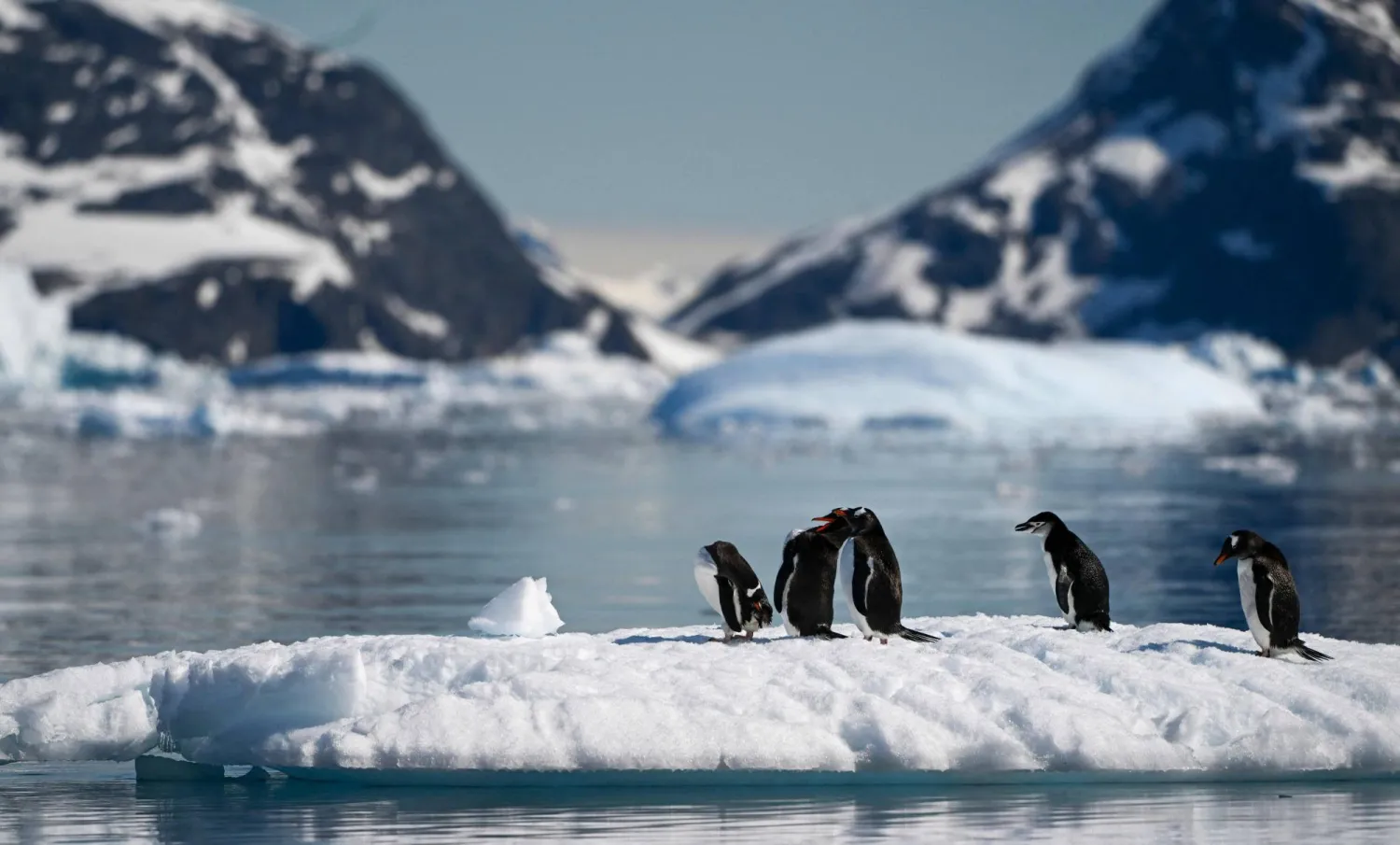
View of a chinstrap (Pygoscelis antarcticus) and gentoo (Pygoscelis papua) penguins at the Gerlache Strait, which separates the Palmer Archipelago from the Antarctic Peninsula, on January 15, 2024. (AFP)
TT

Ice Melt Threatens Emperor Penguins During Annual Molt, Say Researchers 

View of a chinstrap (Pygoscelis antarcticus) and gentoo (Pygoscelis papua) penguins at the Gerlache Strait, which separates the Palmer Archipelago from the Antarctic Peninsula, on January 15, 2024. (AFP)

Emperor penguins shed all their feathers once a year, a precarious ritual that may have become deadly as climate change pushes them into shrinking patches of Antarctic sea ice, researchers said Wednesday.

The flightless birds molt during summer, relying on stored fat to survive for several weeks until their waterproof coat grows back so they can swim and hunt in icy waters again.

Researchers from the British Antarctic Survey, analyzing seven years of satellite images, accidentally discovered several molting colonies along the extremely remote coastline of an area known as Marie Byrd Land.

As sea ice melted, the penguins were forced onto smaller spaces in increasingly large and tightly packed groups, the UK polar research organization said in a statement.

In 2025, only 25 small groups of penguins were visible in the satellite images, it said. Prior to 2022, more than 100 groups had been spotted in the same region.

"While we don't know for sure what happened to those penguins, we know they can find new suitable breeding sites after ice loss, so it's possible they have established new molting sites elsewhere," said Peter Fretwell, lead author and mapping expert at the British Antarctic Survey.

"But also it's possible that huge numbers of penguins perished after entering the Southern Ocean before they had replaced their waterproof feathers," Fretwell said.

"If this has happened, the situation for emperors as a species is even worse than we thought."

The researchers said that if emperor penguins are forced into the ocean before their feathers are replaced, they face exhaustion from increased energy use, hypothermia and increased risk from predators.

- Ice at record low -

Emperor penguin populations have shrunk by almost a quarter as global warming transforms their icy habitat, the British Antarctic Survey said in research published last year.

During the January-March Antarctic summer, emperor penguins from the Ross Sea in West Antarctica migrate as much as 1,000 kilometers (620 miles) to Marie Byrd Land to molt on stable sea ice, the researchers said Wednesday.

It is one of the few areas that historically retains its fast ice -- sea ice attached to the coast -- throughout the year.

The molting process takes about four to five weeks and the penguins cannot go in the freezing water during that time.

The extent of Antarctic Sea ice fell to record lows between 2022 and 2024, accompanied by a drastic decrease in fast ice, the British Antarctic Survey said.

In the region they observed, sea ice coverage fell from a 50-year average of 500,000 square kilometers -- roughly the size of Spain -- to 100,000 square kilometers in 2023. Only 2,000 square kilometers of fast ice were left near the coast.

During those years, the sea ice broke before the penguins had finished molting, raising fears that many may not have survived, the scientists said.

The survey's previous study found that some emperor penguin colonies lost all their chicks in recent years as the ice broke, plunging hatchlings into the sea before they were old enough to cope with the freezing ocean.

At current rates of warming, there is a 45 percent chance the species will become extinct by the turn of the century, the survey said.


Are Expensive Shampoos Worth it? Here's what the Experts Have to Say

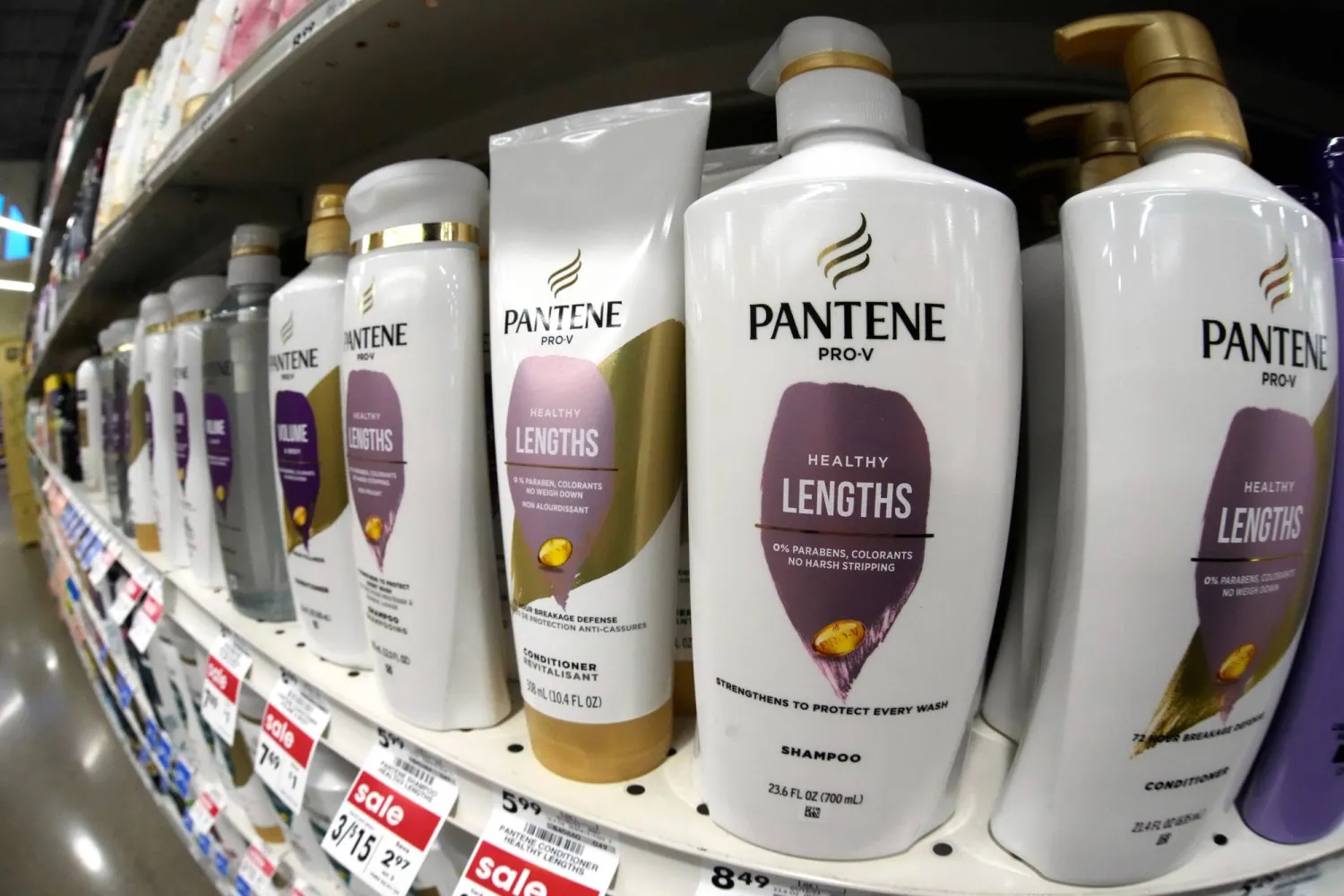
FILE - Shampoo sits on a shelf at a store in Pittsburgh, Jan. 26, 2023. (AP Photo/Gene J. Puskar, File)
TT

Are Expensive Shampoos Worth it? Here's what the Experts Have to Say

FILE - Shampoo sits on a shelf at a store in Pittsburgh, Jan. 26, 2023. (AP Photo/Gene J. Puskar, File)

Ornate packaging paired with enticing advertisements that claim expensive shampoos are elixirs to all hair woes can leave one wondering: Are the higher prices really worth it? Should I abandon my $8 drugstore mainstay for a $42 premium brand?

Experts say affordable shampoos and conditioners found in grocery stores and pharmacies can do the job as well as the pricey versions with tempting messaging and testimonials on social media. They advise consumers to evaluate the ingredients in products, their own scalp and hair concerns, and their entire hair care routine — and to check with a doctor when in doubt.

Premium brands can work well, and some have active ingredients that cost more, according to dermatologists. Other factors influencing the price include the size of the company and whether it has invested in organic ingredients, sustainable agriculture and recycled materials.

Dr. Crystal Aguh, dermatologist and director of the Ethnic Skin Program at Johns Hopkins School of Medicine, said she generally categorizes people into two hair types: damage-prone and damage-resistant.

Damage-prone includes people with very curly hair, people who chemically treat their hair and those who use hot tools to style it. She said damage-resistant attributes include oily hair and straight hair, The Associated Press reported.

People with damage-prone hair should avoid shampoos that have sodium lauryl sulfate as the main ingredient, Aguh said. It removes a lot of sebum, a natural oil that coats and protects hair. Without sebum, hair could feel very dry and break easily.

For curly or dyed hair, Aguh recommends washing less frequently to avoid removing too much sebum. She said people with tightly curled or coily hair should only wash their hair once a week. People with wavy hair that is dyed might find it best to wash every two to three days.

Damage-resistant hair that is oily and straight can be washed every day.

Expensive shampoos and conditioners can work well, but there are affordable products that perform just as well, Aguh said. She tells patients that “it’s not the products, it’s the process” that affects hair health the most, including how often hair is washed, dyed or treated with heat.

“Instead of spending hundreds of dollars thinking, 'If I just find the right shampoo, right conditioner, all of my troubles will go away,' you also have to just look at what your process looks like ... because that will often do the trick,” she said.

She said it is fine to mix high-end and mass market products and that people shouldn’t feel compelled to buy an entire line of expensive products.

Aguh said some common brands are more affordable because they are made by large corporations that can achieve economies of scale. Sometimes expensive brands have a smaller team and lack the workforce and resources to reach those same cost advantages.

When treating dandruff, for example, Aguh often recommends over-the-counter shampoos instead of prescription formulas. But she added people should see a doctor for lingering dandruff problems.

Shampoo is skincare for the scalp Dr. Joe Tung, a dermatologist at the University of Pittsburgh Medical Center, said people should think of shampoo as skincare for the scalp, not just a cosmetic product.

“Hair itself is biologically inactive once it grows out, but underneath the surface of the skin on the scalp is a full ecosystem with stem cells, immune cells, oil glands, nerve endings," he said. “When that ecosystem is balanced, the scalp feels comfortable and hair grows optimally; when it is disrupted, people can experience itching, flaking, excess oil, or hair loss.”

Tung said people should consider what their scalp needs when choosing shampoo, and a conditioner should be chosen based on hair texture and damage level. He said dandruff and itchiness benefit from shampoos that address inflammation and microbial imbalance, whereas dry or chemically treated hair could benefit from a gentle cleanser with a rich conditioner.

Tung said expensive shampoos and conditioners are sometimes worth the price, but a product's effectiveness is determined by active ingredients and not branding. "An antifungal ingredient works because of its molecular activity, not because it comes in a luxury bottle or from a prestigious brand," he said.

Expensive shampoos typically rely on more refined conditioning agents and soothing ingredients that may make frequent hair washing more comfortable, Tung said. But some luxury products contain fragrances or botanical extracts that can irritate sensitive skin, he said. Simpler formulas are often better tolerated by people with sensitive skin.

Hair products with a sustainability focus MOKO Organic Beauty Studio in Philadelphia stocks organic shampoos and conditioners that cost from $24 to $45. Owner Monique Mason said it is the salon's mission to provide products that are good for scalps and the planet.

Ingredients are the biggest of many factors influencing price, Mason said. Organic products typically avoid inexpensive sulfates, synthetic fragrances and parabens that are widely used in the personal care industry, she said. Mason said she also researches how the brands she sells manufacture their products to ensure their sustainability claims can be verified.

“I get to know them, whether they’re family-owned, how they farm, how they source their ingredients," she said.