Hong Kong Residents Compete to Name Twin Panda Cubs Who Just Turned 6 Months Oldhttps://english.aawsat.com/varieties/5112685-hong-kong-residents-compete-name-twin-panda-cubs-who-just-turned-6-months-old
Hong Kong Residents Compete to Name Twin Panda Cubs Who Just Turned 6 Months Old
A panda cub plays during a debut ceremony for the 6-month-old panda twin cubs at the Ocean Park in Hong Kong, China, February 15, 2025. Picture taken through glass. (Reuters)
TT
TT
Hong Kong Residents Compete to Name Twin Panda Cubs Who Just Turned 6 Months Old
A panda cub plays during a debut ceremony for the 6-month-old panda twin cubs at the Ocean Park in Hong Kong, China, February 15, 2025. Picture taken through glass. (Reuters)
Panda craze has once again gripped Hong Kong as residents compete to name the territory’s first locally-born giant panda cubs who just turned six months old.
The competition to name the twin cubs, born Aug. 15, launched Saturday following a celebratory ceremony attended by Hong Kong leader John Lee and other officials at Ocean Park, the theme park that houses the twins, their parents and two other giant pandas that arrived from mainland China last year. Residents can submit their suggestions via the park's website.
Lee said the southern Chinese city now has the largest number of pandas in captivity outside of mainland China, and the cubs’ names would be announced in the first half of this year.
The pair, currently identified as the “Elder Sister” and the “Little Brother," will make their public debut on Sunday and meet visitors for five hours daily. Those who want to enjoy time with the cubs outside regular visiting hours, before the park opens, can pay 1,500 Hong Kong dollars (about $190).
During a media preview session on Saturday, the male cub laid on a swing playing with a tree stick before a carer placed him on a slide. The female cub explored the enclosure before climbing onto a tree.
The panda carers said the female cub seemed more active than her male twin. She loves climbing the tree inside the enclosure and resting there while her brother likes to wander around and play with the plants. The male cub has been marked with two purple food-coloring spots on its back to distinguish it from his sister.
The birth of the baby pandas last year made their mother Ying Ying the world’s oldest first-time panda mom.
Their popularity on social media also raised hopes for the city's tourism boost. Officials have encouraged businesses to capitalize on the panda craze to seize opportunities in what some lawmakers have dubbed the “panda economy.”
Ocean Park’s chairman Paulo Pong told reporters on Saturday that the park already saw income increases over the Christmas period and Lunar New Year holiday, alongside an uptake in overseas tourists, after the newly arrived pandas from mainland China started to greet the public.
“We're turning the page and we believe the pandas are definitely helping the income of the park,” he said.
But caring for pandas in captivity is expensive. Ocean Park recorded a deficit of 71.6 million Hong Kong dollars ($9.2 million) last financial year, and in 2020 required a government relief fund to stay afloat. Observers are watching if taking care of six pandas will add to its burden or give it a chance to revive its business.
Pong said raising pandas was about animal conservation and education, instead of “just a money exercise.”
Pandas are considered China’s unofficial national mascot. The country’s giant panda loan program with overseas zoos has long been seen as a tool of Beijing’s soft-power diplomacy.
A Frontier Plane Hits a Pedestrian during Takeoff at Denver Airporthttps://english.aawsat.com/varieties/5271327-frontier-plane-hits-pedestrian-during-takeoff-denver-airport
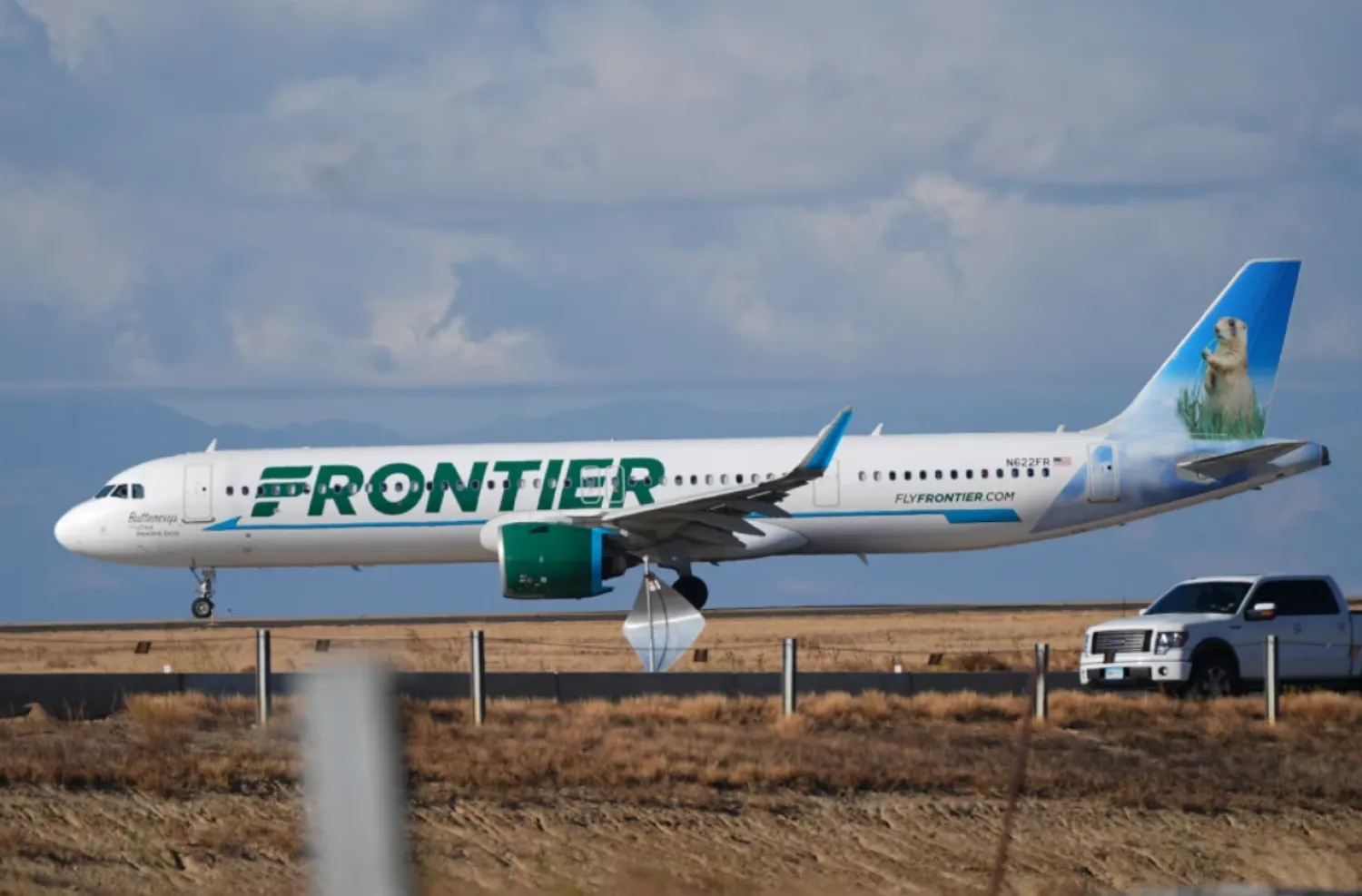
A Frontier Airlines jetliner taxis down a runway for take off from Denver International airport on Nov. 25, 2025, in Denver. (AP Photo/David Zalubowski, File)
A Frontier Plane Hits a Pedestrian during Takeoff at Denver Airport
A Frontier Airlines jetliner taxis down a runway for take off from Denver International airport on Nov. 25, 2025, in Denver. (AP Photo/David Zalubowski, File)
A Frontier Airlines plane hit a pedestrian on the runway of the Denver International Airport during takeoff, airport authorities said, sparking an engine fire and forcing passengers to evacuate.
The plane, on route from Denver to Los Angeles International Airport, “reported striking a pedestrian during takeoff at DEN at approximately 11:19 p.m. on Friday," the airport's official X account wrote.
Neither the airport nor the airline has disclosed the pedestrian’s condition.
“We're stopping on the runway,” the pilot tells the control tower according to the site ATC.com. “We just hit somebody. We have an engine fire.”
The pilot tells the air traffic controller they have “231 souls” on board and that and “individual was walking across the runway.”
The air traffic controller responds that they are “rolling the trucks now" before the pilot tells the tower they “have smoke in the aircraft. We are going to evacuate on the runway.”
Frontier Airlines said in a statement flight 4345 was the one involved in the collision and that “smoke was reported in the cabin and the pilots aborted takeoff.” It was not clear whether the smoke was linked to the crash with the pedestrian, according to The AP news.
“The Airbus A321 was carrying 224 passengers and seven crew members,” the airline said. “We are investigating this incident and gathering more information in coordination with the airport and other safety authorities.”
Passengers were then evacuated via slides and the emergency crew bused them to the terminal.
Denver Airport said the National Transportation Safety Board had been notified and that runway 17L, where the incident took place, will remain closed while an investigation is conducted.
'Ghost of the Forest' Returns to Kenya as Conservationists Reintroduce Rare Antelope into the Wildhttps://english.aawsat.com/varieties/5271321-ghost-forest-returns-kenya-conservationists-reintroduce-rare-antelope-wild
Critically endangered mountain bongos feed in a forest enclosure at the Mount Kenya Wildlife Conservancy in Nanyuki, Laikipia County, Kenya, Saturday, May 9, 2026. (AP Photo/Brian Inganga)
'Ghost of the Forest' Returns to Kenya as Conservationists Reintroduce Rare Antelope into the Wild
Critically endangered mountain bongos feed in a forest enclosure at the Mount Kenya Wildlife Conservancy in Nanyuki, Laikipia County, Kenya, Saturday, May 9, 2026. (AP Photo/Brian Inganga)
The mountain bongo has become the ghost of the forest, hard to spot amid the dense shrubs due to its ability to camouflage.
A critically endangered species, the animal is being slowly reintroduced into the wild by conservationists to increase the number of the rare antelope that are indigenous to Kenya’s forests.
The mountain bongo is a rare antelope known for its brown skin and distinct white stripes. With fewer than 100 individuals left in the wild, a conservancy based in Kenya is breeding them and slowly reintroducing them into the wild, with a target of 750 wild bongos by 2050, The AP news reported.
Located on the misty slopes of Kenya’s highest mountain, Mount Kenya, and on the edge of the forest, the 1,250-acre Mount Kenya Wildlife Conservancy in the Nanyuki area has been restoring the survival instincts of zoo-bred bongos. They want to ensure the animals can feed without human assistance, escape from predators, and build a strong immunity against diseases in the wild.
Last week, the conservancy imported a new batch of four male bongos from the European Association of Zoos and Aquaria though the Czech Republic. These new arrivals, currently quarantined and under constant observation, will interbreed with descendants of 18 bongos that arrived at the conservancy in 2004 from the United States to ensure a more diverse genetic pool.
The conservancy’s head, Dr. Robert Aruho, says inbreeding among bongos with similar genes is discouraged while rebuilding the population of this critically endangered species.
“We want bongos that are not only strong in body, but strong in the genes they pass to the next generation,” he said.
Bongos are native to Kenya’s Mount Kenya, Aberdare, Eburu and Mau forests, which play a key role in protecting the forests that are vital to the country’s water supply.
The last wild bongo was spotted in the Mount Kenya forest in 1994 before the conservancy reintroduced the first 10 bongos to the wild in 2022. Today, they roam among the orange climber vines and shrubs that form part of their favorite plants.
The bongo population dwindled after thousands of them died in disease outbreaks in the 1960s. In the 1980s, conservationist Don Hunt exported 36 of the species to the U.S. as insurance to be bred in captivity, with a plan to return them to the wild when conditions improved.
When the Mount Kenya Wildlife Conservancy was opened in 2004, 18 descendants of these bongos were imported and have since interbred, bringing the conservancy’s population to 102 bongos.
Caroline Makena, 33, grew up in the Mount Kenya region and remembers hearing stories about bongos from her grandmother, who said they were her community’s favorite bush meat. However, Makena never got to see one until she came to work as a gardener at the conservancy.
“I never knew the bongos were this beautiful, and I think my community loved them not just for the meat but because of their beauty,” she said.
The bongos are shy and can camouflage despite their distinct white stripes, and these attributes are critical for their survival in the wild.
Andrew Mulani, the bongo program assistant at the conservancy, said the bongos are monitored for months before being reintroduced into the wild to ensure that the shyest ones are selected because docile animals would fall easily to predators.
His most fulfilling moment was when the fourth calf was born in the wild last year, an indication that the bongos are thriving in their native habitat and that their population will certainly increase.
Bongos have a gestation period of nine months, a factor that has negatively impacted their slow population growth. They are also sensitive and react to some plants and weather conditions compared to other species in the antelope family that thrive in the same ecosystem.
As the team of conservationists in Mount Kenya races to save the critically endangered species, supplementing the bongos’ shrub diet with special nutritious pellets, thousands of tourists who visit the conservancy annually marvel at their spiraled horns, hoping the ghost of the forest will become a more common sight in Kenya’s forests.
Trump is Lifting Restrictions on Hunting in National Parks, Refuges and Wilderness Areashttps://english.aawsat.com/varieties/5271208-trump-lifting-restrictions-hunting-national-parks-refuges-and-wilderness-areas
FILE - Cypress trees grow in a swamps in the Barataria Preserve, part of Jean Lafitte National Historical Park and Preserve in Marrero, La., June 3, 2018. (AP Photo/Beth J. Harpaz, File)
Trump is Lifting Restrictions on Hunting in National Parks, Refuges and Wilderness Areas
FILE - Cypress trees grow in a swamps in the Barataria Preserve, part of Jean Lafitte National Historical Park and Preserve in Marrero, La., June 3, 2018. (AP Photo/Beth J. Harpaz, File)
President Donald Trump's administration is quietly pushing national park, refuge and wilderness area managers to dramatically scale back hunting restrictions, raising questions about visitor safety and the impact on wildlife.
US Department of the Interior Secretary Doug Burgum issued an order in January directing multiple agencies to remove what he termed “unnecessary regulatory or administrative barriers” to hunting and fishing and justify regulations they want to keep in place.
“Expanding opportunities for the public to hunt and fish on Department-managed lands not only strengthens conservation outcomes, but also supports rural economies, public health, and access to America's outdoor spaces,” Burgum wrote. “The Department's policy is clear: public and federally managed lands should be open to hunting and fishing unless a specific, documented, and legally supported exception applies.”
Order clears the way for tree stands, training dogs and more The order applies to 55 sites in the lower 48 states under the National Park Service's jurisdiction, according to the National Parks Conservation Association. Managers at various locations have already lifted prohibitions on hunting stands that damage trees and training hunting dogs, using vehicles to retrieve animals and hunting along trails, according to an NPCA review of site regulations the organization recently performed after learning of the order. The New York Times was the first to report on the changes.
The hunting season in the Cape Cod National Seashore in Massachusetts, for example, would be extended through the spring and summer. Hunters in the Lake Meredith National Recreation Area in Texas would be allowed to clean their kills in bathrooms. And hunters would be allowed to kill alligators in the Jean Lafitte National Historical Park and Preserve in Louisiana.
An effort to save hunting? Burgum’s order comes as hunting continues to decline in the face of increasing urbanization. Only about 4.2% of the US population identified as a hunter older than 16 in 2024, according to US Fish and Wildlife Service and US Census data, leaving state wildlife agencies short on revenue from license sales and excise taxes on guns and ammunition.
Hunting advocates and conservative policymakers have been exploring multiple avenues to keep hunting alive, including promoting the sport to women and young children, creating seasons for more species and expanding hunter access to public land.
Hunting is currently allowed across about 51 million National Park Service acres spanning 76 sites, although only about 8 million of those acres lie in the contiguous United States with the rest in Alaska, according to the NPS website. Fishing is allowed in 213 sites. NPS sites typically adopt state hunting and fishing regulations although they can impose restrictions that go beyond them to protect public safety and wildlife resources, like prohibiting shooting along a trail or near buildings.
‘I’d love to know the problem we're trying to solve' Dan Wenk, a former Yellowstone National Park superintendent and NPS deputy operations director, said park managers established their regulations by talking with stakeholders and, as a result, most of the restrictions have been widely accepted. He said it makes no sense for the Trump administration to upend that structure without substantial public discussion.
“Process never seems to stand in the way of many things with this administration,” Wenk said in a telephone interview with The Associated Press. “This was never a big issue. I'd love to know the problem we're trying to solve. Then I could understand the costs that it's going to take to solve it in terms of resources and visitor safety.”
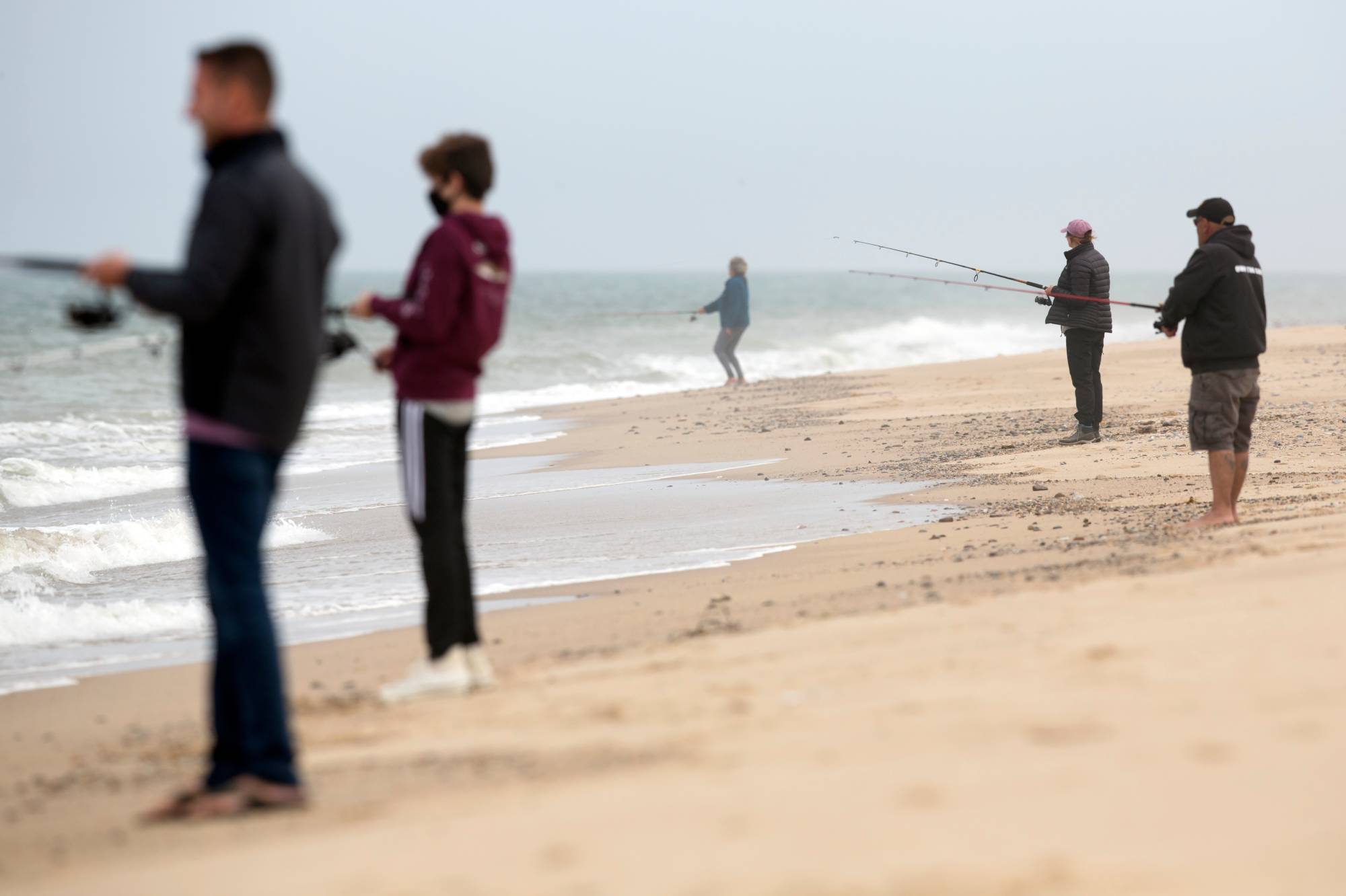
FILE - People fish on Race Point Beach, part of Cape Cod National Seashore, May 25, 2020, in Provincetown, Mass. (AP Photo/Michael Dwyer, File)
Interior Department spokesperson Elizabeth Peace said in an email that the order is a “commonsense approach to public land management" and promised that any closures or limits needed for public safety, resource protection or legal compliance will remain in place.
“For decades, sportsmen and women have been some of the strongest stewards of our public lands," she said, “and this order ensures their access is not unnecessarily restricted by outdated or overly broad limitations that are not required by law.”
Asked in a follow-up email about the extent of any public outreach efforts, if any, Peace said only that the department had given the AP its statement on the order.
Hunting groups applaud the order The Theodore Roosevelt Conservation Partnership, which works to preserve access for hunting and fishing, posted a statement online in January calling the order a balance between wildlife management and outdoor traditions hunters and anglers support. Ducks Unlimited posted a statement in March saying Burgum's order recognizes duck hunters' “vital role.”
“This process will streamline federal regulations, make them more consistent with existing state rules, and provide more public-land access for outdoor recreation. Thank you, Secretary Burgum, for prioritizing America’s hunters and anglers," the statement said.
Elaine Leslie, former head of the NPS' biological resources department, said Trump is undermining a process that was put in place in good faith and the order does not reflect science-based management.
“I don't want to take my young grandchildren to a park unit only to have a hunter drag a gutted elk they shot across a visitor center parking lot. Nor enter a restroom where hunters are cleaning their game,” Leslie said in a text to the AP. "There is a time and place for hunting, trapping and fishing ... but that doesn't mean every place has to be open to every activity especially at the expense of others and degrading our public resources.”
لم تشترك بعد
انشئ حساباً خاصاً بك لتحصل على أخبار مخصصة لك ولتتمتع بخاصية حفظ المقالات وتتلقى نشراتنا البريدية المتنوعة