Trump Says Coca-Cola to Switch to Cane Sugar in US

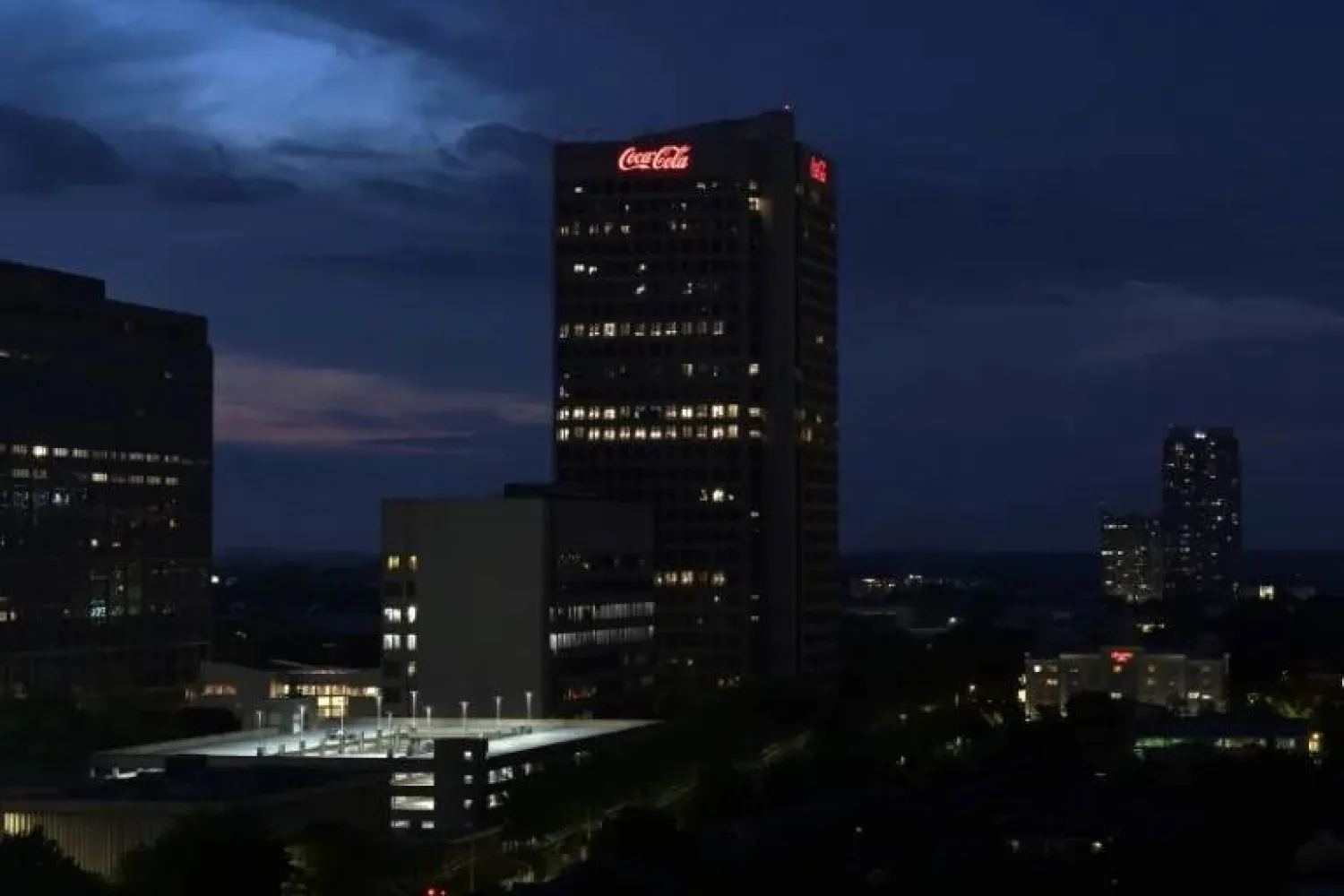
Partial view of the Coca-Cola Company's world headquarters in Atlanta, Georgia on June 29, 2025. JUAN MABROMATA / AFP/File
TT

Trump Says Coca-Cola to Switch to Cane Sugar in US

Partial view of the Coca-Cola Company's world headquarters in Atlanta, Georgia on June 29, 2025. JUAN MABROMATA / AFP/File

Beverage giant Coca-Cola has agreed to use real cane sugar in its US production, President Donald Trump announced Wednesday on social media.

The company currently uses high-fructose corn syrup (HFCS) in its domestic beverages -- a sweetener that has long drawn criticism from Health Secretary Robert F. Kennedy Jr. and his Make America Healthy Again movement, AFP said.

"I have been speaking to Coca-Cola about using REAL Cane Sugar in Coke in the United States, and they have agreed to do so," Trump wrote on his Truth Social platform.

"I'd like to thank all of those in authority at Coca-Cola. This will be a very good move by them -- You'll see. It's just better!"

The US president did not explain what motivated his push for the change, which would not impact his well-known favorite beverage, Diet Coke.

Since his return to the White House, Trump has re-installed a special button in the Oval Office which summons a helping of the sugar-free carbonated drink.

Coca-Cola did not immediately confirm the ingredient shift.

"We appreciate President Trump's enthusiasm for our iconic Coca‑Cola brand. More details on new innovative offerings within our Coca‑Cola product range will be shared soon," the company said in a short statement.

HFCS became popular in the 1970s, with its use skyrocketing thanks to government subsidies for corn growers and high import tariffs on cane sugar.

Any shift away from corn is likely to draw backlash in the Corn Belt, a Midwestern region that has been a stronghold of support for Trump.

Both HFCS and sucrose (cane sugar) are composed of fructose and glucose. However, they differ structurally: HFCS contains free (unbonded) fructose and glucose in varying ratios -- 55/45 in soft drinks -- while sucrose consists of the two sugars chemically bonded together.

These structural differences, however, don't appear to significantly affect health outcomes.

A 2022 review of clinical studies found no meaningful differences between HFCS and sucrose in terms of weight gain or heart health.

The only notable distinction was an increase in a marker of inflammation in people consuming HFCS. Overall, both sweeteners appear similarly impactful when consumed at equal calorie levels.

Despite this, Mexican Coke -- which is made with cane sugar -- is often sold at a premium in US stores and prized for its more "natural" flavor.

Trump's prized Diet Coke is sweetened with aspartame -- a compound classified as a "possible carcinogen" by the International Agency for Research on Cancer (IARC).


Crews Recover Bodies of 9 Backcountry Skiers Days after California Avalanche

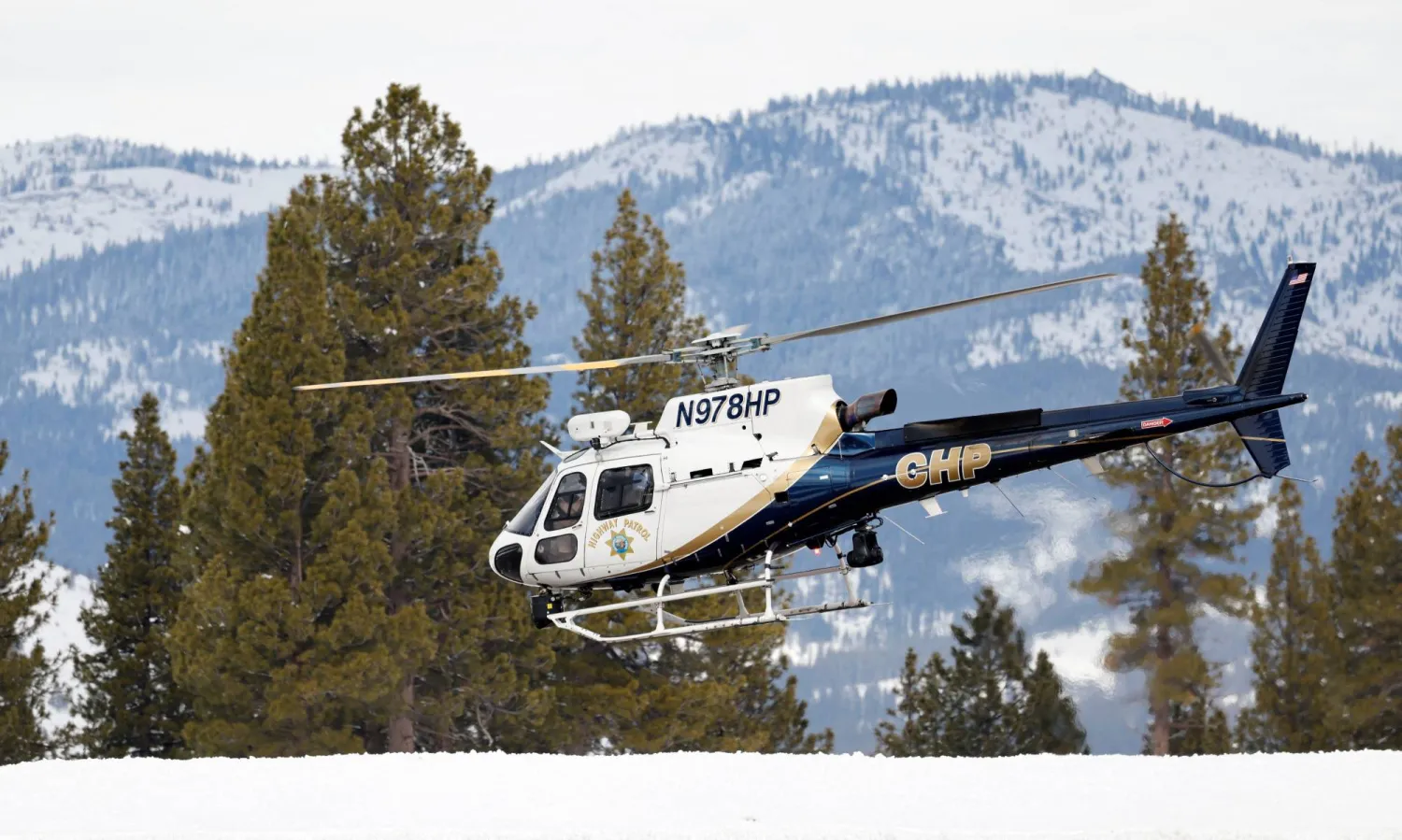
A California Highway Patrol helicopter lifts off from Truckee Tahoe Airport while taking part in recovery efforts for the skiers that died in an avalanche in the Sierra Nevada mountains, in Truckee, California, US February 21, 2026.  REUTERS/Fred Greaves
A California Highway Patrol helicopter lifts off from Truckee Tahoe Airport while taking part in recovery efforts for the skiers that died in an avalanche in the Sierra Nevada mountains, in Truckee, California, US February 21, 2026. REUTERS/Fred Greaves
TT

Crews Recover Bodies of 9 Backcountry Skiers Days after California Avalanche

A California Highway Patrol helicopter lifts off from Truckee Tahoe Airport while taking part in recovery efforts for the skiers that died in an avalanche in the Sierra Nevada mountains, in Truckee, California, US February 21, 2026.  REUTERS/Fred Greaves
A California Highway Patrol helicopter lifts off from Truckee Tahoe Airport while taking part in recovery efforts for the skiers that died in an avalanche in the Sierra Nevada mountains, in Truckee, California, US February 21, 2026. REUTERS/Fred Greaves

Crews recovered the bodies of nine backcountry skiers who were killed by an avalanche in California's Sierra Nevada, authorities said Saturday, concluding a harrowing operation that was hindered by intense snowfall.

A search team reached the bodies of eight victims and found one other who had been missing and presumed dead since Tuesday’s avalanche on Castle Peak near Lake Tahoe. The ninth person who was missing was found “relatively close” to the other victims, according to Nevada County Sheriff’s Lt. Dennis Hack, but was impossible to see due to whiteout conditions at that time.

At a news conference, Sheriff Shannon Moon praised the collective efforts of the numerous agencies that helped recover the bodies — from the California Highway Patrol to the National Guard to the Pacific Gas & Electric utility company — and 42 volunteers who helped on the last day of the operation.

“We are fortunate in this mountain community that we are very tight-knit, and our community shows up in times of tragedy,” The Associated Press quoted Moon as saying.

The sheriff named for the first time the three guides from Blackbird Mountain Company who died: Andrew Alissandratos, 34, Nicole Choo, 42, and Michael Henry, 30.

According to biographies on the company's website, Alissandratos was originally from Tampa, Florida, and moved to Tahoe roughly a decade ago. He enjoyed a wide array of adventure activities, from backcountry exploration to rock climbing.

Henry moved to Colorado in 2016 and then to Truckee three years later. He was described as “laid back” and devoted to sharing his knowledge and love of the mountains with others.

There was no bio for Choo on the website.

“This was an enormous tragedy, and the saddest event our team has ever experienced,” Blackbird Mountain founder Zeb Blais said Wednesday in a statement.

“We are doing what we can to support the families who lost so much,” he said, “and the members of our team who lost treasured friends and colleagues.”

The six other fatal victims were women who were part of a close-knit group of friends who were experienced backcountry skiers and knew how to navigate the Sierra Nevada wilderness, their families said this week.

They were identified as Carrie Atkin, Liz Clabaugh, Danielle Keatley, Kate Morse, Caroline Sekar and Kate Vitt, all in their 40s. They lived in the San Francisco Bay Area, Idaho and the Lake Tahoe area.

“We are devastated beyond words,” the families said in a statement. “Our focus right now is supporting our children through this incredible tragedy and honoring the lives of these extraordinary women. They were all mothers, wives and friends, all of whom connected through the love of the outdoors.”

The families asked for privacy while they grieve and added that they “have many unanswered questions.”

Two of the friends got out alive and were rescued along with four others, including one guide, after Tuesday’s avalanche. Their names have not been released.

The avalanche struck on the last day of the 15 skiers’ three-day tour, when the group decided to end the trip early to avoid the impending snowstorm.

Officials have said the path they took is a “normally traveled route” but declined to specify what that meant.

At around 11:30 a.m. Tuesday, the six survivors called for help, describing a sudden and terrifying slide that was approximately the length of a football field. In the aftermath they discovered the bodies of three fellow skiers, according to Hack.

Rescuers were not able to reach them until roughly six hours after the initial call for help, Hack said, and took two separate paths to arrive. They found five other bodies, leaving only one person unaccounted for.

But it was immediately clear to rescuers that it was too dangerous to extract the bodies at that time due to the heavy snowfall and threat of more avalanches.

Those conditions persisted on Wednesday and Thursday.

A breakthrough on Friday Authorities used two California Highway Patrol helicopters, with the help of Pacific Gas & Electric Company, to break up the snow and intentionally release unstable snowpack to reduce the avalanche risk.

Crews were then able to recover five victims that evening before it got too dark to access the last three.

Rescuers used helicopters and ropes to hoist the last four bodies from the mountain the following morning, fighting through severe winds that forced them to make multiple trips. The bodies were then taken to snowcats — trucks that are outfitted to drive on snow — for further transport.

“We cannot say enough how tremendously sorry we are for the families that have been affected by this avalanche,” Moon said.

Initial reports indicated that at least two of the surviving skiers were not swept away by the avalanche, Hack said. The others were standing separately and relatively close together and were hit.

Hack declined to offer information about what might have set off the avalanche.

Authorities close the area The terrain will be off-limits to visitors until mid-March, said Chris Feutrier, forest supervisor for the Tahoe National Forest. Officials intended to restore public access once the investigation is complete.

“This is the public’s land, and they love to recreate on it,” Feutrier said. “The Forest Service doesn’t close public land for every hazard or every obstacle. We trust the American people to use their best judgment when recreating.”



Riyadh Municipality Decorates Capital with Over 5,000 Lights for Founding Day

The capital's streets have transformed into vibrant displays of national pride, embodying 299 years of continuous development and progress - SPA
TT

Riyadh Municipality Decorates Capital with Over 5,000 Lights for Founding Day

The capital's streets have transformed into vibrant displays of national pride, embodying 299 years of continuous development and progress - SPA

The Riyadh Municipality has illuminated the capital's main streets, vital thoroughfares, and public squares with over 5,000 decorative lights in celebration of Saudi Founding Day.

The project involved installing 5,481 decorative lights across various locations to enhance the festive atmosphere throughout Riyadh's neighborhoods, giving the city a harmonious visual character that reflects profound pride in the nation's rich history, SPA reported.

As light and identity intertwine, the capital's streets have transformed into vibrant displays of national pride, embodying 299 years of continuous development and progress.

The transformation reflects the deep significance of Founding Day in the hearts of citizens and translates their loyalty to the leadership's blessed journey.


Residents in Australia’s Victoria State Urged to Evacuate as Bushfire Rages

This undated handout image received on December 26, 2024 from the State Control Center of the Victoria Emergency Services shows officials on a road near a bushfire in the Grampians National Park in Australia's Victoria state. (Handout / State Control Center of the Victoria Emergency Services / AFP)
TT

Residents in Australia’s Victoria State Urged to Evacuate as Bushfire Rages

This undated handout image received on December 26, 2024 from the State Control Center of the Victoria Emergency Services shows officials on a road near a bushfire in the Grampians National Park in Australia's Victoria state. (Handout / State Control Center of the Victoria Emergency Services / AFP)

An ‌out-of-control bushfire in Australia's Victoria state prompted an evacuation alert for residents near a remote mining settlement, authorities said on Saturday.

The alert, at the highest emergency rating, was for the area surrounding the A1 Mine Settlement in the Gaffney's Creek region, about 50 km (31 miles) ‌northeast of ‌state capital Melbourne.

"Leaving immediately is ‌the ⁠safest option, before ⁠conditions become too dangerous," Victoria Emergency said on its website, adding that the fire was not yet controlled.

Mountainous terrain was making it difficult for firefighters to battle ⁠the blaze from the ‌ground, the ‌Australian Broadcasting Corp. reported.

Since the 1860s gold ‌has been mined in the sparsely-populated ‌area, which is also popular with campers and tourists.

Three other bushfires were burning on Saturday at watch and act ‌level, the second highest danger rating, Victoria Emergency said.

In January, ⁠thousands ⁠of firefighters battled bushfires in Australia's southeast that razed homes, cut power to thousands of homes and burned swathes of bushland. They were the worst fires to hit the southeast since the Black Summer blazes of 2019-2020 that destroyed an area the size of Türkiye and killed 33 people.