

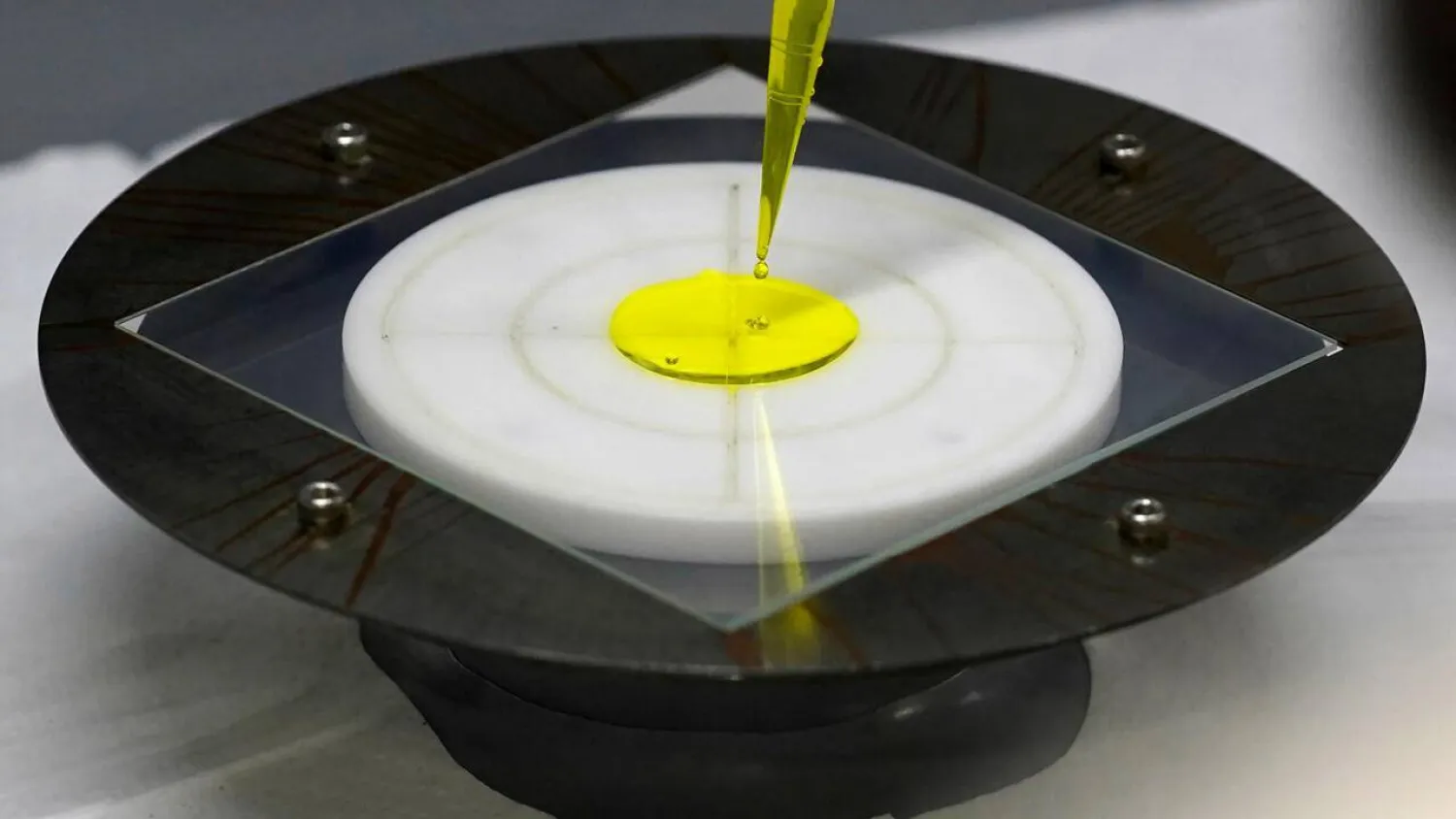

Japan Sees Bright Future for Ultra-Thin, Flexible Solar Panels

Japan is hoping ultra-thin, flexible solar panels made from perovskite will help it meet renewable energy goals. (AFP)
TT

Japan Sees Bright Future for Ultra-Thin, Flexible Solar Panels

Japan is hoping ultra-thin, flexible solar panels made from perovskite will help it meet renewable energy goals. (AFP)

Japan is heavily investing in a new kind of ultra-thin, flexible solar panel that it hopes will help it meet renewable energy goals while challenging China's dominance of the sector.

Pliable perovskite panels are perfect for mountainous Japan, with its shortage of flat plots for traditional solar farms. And a key component of the panels is iodine, something Japan produces more of than any country but Chile, reported AFP.

The push faces some obstacles: perovskite panels contain toxic lead, and, for now, produce less power and have shorter lifespans than their silicon counterparts.

Still, with a goal of net-zero by 2050 and a desire to break China's solar supremacy, perovskite cells are "our best card to achieve both decarbonization and industrial competitiveness," minister of industry Yoji Muto said in November.

The government is offering generous incentives to get industry on board, including a 157-billion-yen ($1 billion) subsidy to plastic maker Sekisui Chemical for a factory to produce enough perovskite solar panels to generate 100 megawatts by 2027, enough to power 30,000 households.

By 2040, Japan wants to install enough perovskite panels to generate 20 gigawatts of electricity, equivalent to adding about 20 nuclear reactors.

That should help Japan's target to have renewable energy cover up to 50 percent of electricity demand by 2040.

- Breaking the silicon ceiling -

The nation is looking to solar power, including perovskite and silicon-based solar cells, to cover up to 29 percent of all electricity demand by that time, a sharp rise from 9.8 percent in 2023.

"To increase the amount of renewable energy and achieve carbon neutrality, I think we will have to mobilize all the technologies available," said Hiroshi Segawa, a specialist in next-generation solar technology at the University of Tokyo.

"Perovskite solar panels can be built domestically, from the raw materials to production to installation. In that sense, they could significantly contribute to things like energy security and economic security," he told AFP.

Tokyo wants to avoid a repeat of the past boom and bust of the Japanese solar business.

In the early 2000s, Japanese-made silicon solar panels accounted for almost half the global market.

Now, China controls more than 80 percent of the global solar supply chain, from the production of key raw material to assembling modules.

Silicon solar panels are made of thin wafers that are processed into cells that generate electricity.

They must be protected by reinforced glass sheets and metal frames, making the final products heavy and cumbersome.

Perovskite solar cells, however, are created by printing or painting ingredients such as iodine and lead onto surfaces like film or sheet glass.

The final product can be just a millimeter thick and a tenth the weight of a conventional silicon solar cell.

Perovskite panels' malleability means they can be installed on uneven and curved surfaces, a key feature in Japan, where 70 percent of the country is mountainous.

- Generating where power is used -

The panels are already being incorporated into several projects, including a 46-storey Tokyo building to be completed by 2028.

The southwestern city of Fukuoka has also said it wants to cover a domed baseball stadium with perovskite panels.

And major electronics brand Panasonic is working on integrating perovskite into windowpanes.

"What if all of these windows had solar cells integrated in them?" said Yukihiro Kaneko, general manager of Panasonic's perovskite PV development department, gesturing to the glass-covered high-rise buildings surrounding the firm's Tokyo office.

That would allow power to be generated where it is used, and reduce the burden on the national grid, Kaneko added.

For all the enthusiasm, perovskite panels remain far from mass production.

They are less efficient than their silicon counterparts, and have a lifespan of just a decade, compared to 30 years for conventional units.

The toxic lead they contain also means they need careful disposal after use.

However, the technology is advancing fast. Some prototypes can perform nearly as powerfully as silicon panels and their durability is expected to reach 20 years soon.

University professor Segawa believes Japan could have a capacity of 40 gigawatts from perovskite by 2040, while the technology could also speed up renewable uptake elsewhere.

"We should not think of it as either silicon or perovskite. We should look at how we can maximize our ability to utilize renewable energy," Segawa said.

"If Japan could show a good model, I think it can be brought overseas."


Trump Urges 2028 Astronaut Moon Landing in Sweeping Space Policy Order

FILE PHOTO: US President Donald Trump poses on the red carpet for the 2025 Kennedy Center Honors at the John F. Kennedy Center for the Performing Arts in Washington, D.C., US, December 7, 2025. REUTERS/Jeenah Moon/File Photo
TT

Trump Urges 2028 Astronaut Moon Landing in Sweeping Space Policy Order

FILE PHOTO: US President Donald Trump poses on the red carpet for the 2025 Kennedy Center Honors at the John F. Kennedy Center for the Performing Arts in Washington, D.C., US, December 7, 2025. REUTERS/Jeenah Moon/File Photo

President Donald Trump enshrined the US goal to put humans back on the moon by 2028 and defend space from weapon threats in a sweeping executive order issued on Thursday, the first major space policy move of his administration's second term.

The order, issued hours after billionaire private astronaut and former SpaceX customer Jared Isaacman was sworn in as NASA's 15th administrator, also reorganized national space policy coordination under Trump's chief science adviser, Michael Kratsios, Reuters reported.

Titled "ENSURING AMERICAN SPACE SUPERIORITY," the order calls on the Pentagon and US intelligence agencies to create a space security strategy, urges efficiency among private contractors and seeks demonstrations of missile-defense technologies under Trump's Golden Dome program.

It appeared to ‌cancel the White ‌House's top space policy-coordinating body, the National Space Council, a ‌panel ⁠of cabinet members that ‌the president revived during his first term and has considered axing this year.

But an adminitration official said it would not be cancelled and suggested it would live on under the White House's Office of Technology Policy with a different structure in which the president, rather than the vice president, would be chairman.

The goal to land humans on the moon by the end of Trump's second term in 2028 bears resemblance to the president's 2019 directive in his first term to make a lunar return by 2024, putting the ⁠moon at the center of US space exploration policy with a timeline many in the industry regarded as unrealistic. Development and testing ‌delays with NASA’s Space Launch System and SpaceX’s Starship gradually pushed ‍that landing target date back.

NASA's goal had been ‍2028 under former president Barack Obama.

A 2028 astronaut moon landing would be ‍the first of many planned under NASA's Artemis effort to build a long-term presence on the lunar surface. The US is in competition with China, which is targeting 2030 for its first crewed moon landing. The order on Thursday called for "establishment of initial elements of a permanent lunar outpost by 2030," reinforcing NASA's existing goal to develop long-term bases with nuclear power sources.

At the start of his second term, Trump had repeatedly talked about sending missions to Mars as Elon Musk, a major donor ⁠who has made sending humans to the Red Planet a priority for his company SpaceX, served a stint as a close adviser and powerful government efficiency czar. But lawmakers in Congress this year have slowly put the moon back in focus, pressuring then-NASA nominee Isaacman to stick with the agency's moon program on which billions of dollars have been spent.

The White House, in a government efficiency push led by Musk, slashed NASA's workforce by 20% and has sought to cut the agency's 2026 budget by roughly 25% from its usual $25 billion, imperiling dozens of space-science programs that scientists and some officials regard as priorities.

Isaacman, who plans to give his first agency-wide address to NASA employees on Friday, has said he believes the space agency should try to target both the moon and Mars simultaneously while prioritizing a lunar return in ‌order to beat China.

The 2028 moon-landing target depends heavily on the development progress of SpaceX's giant Starship lander, which has been criticized by NASA's former acting administrator for moving too slowly.


Rare Diamond Changes Lives of Two Indian Friends

Satish Khatik and Sajid Mohammed found a 15.34-carat gem-quality diamond in Panna (Amit Rathaur)
TT

Rare Diamond Changes Lives of Two Indian Friends

Satish Khatik and Sajid Mohammed found a 15.34-carat gem-quality diamond in Panna (Amit Rathaur)

On a recent winter morning in Panna, a diamond mining region in central India, two childhood friends made a discovery that they think could change their lives forever.

Satish Khatik and Sajid Mohammed stumbled upon a large, glistening rock on a plot of land they had leased just weeks earlier, according to BBC India.

When they took the stone to the city's official diamond evaluator, they learnt they had found a 15.34-carat gem-quality diamond - one of the finest varieties of natural diamonds that exist.

“The estimated market price of the stone is around five to six million rupees [$55,000 - $66,000] and it will be auctioned soon,” Anupam Singh, the diamond evaluator, told BBC Hindi.

The government holds quarterly auctions, drawing buyers from across India and abroad to bid for the diamonds.

“Estimated prices depend on the dollar rate and benchmarks set by the Rapaport report,” Singh said. Rapaport is widely regarded as a leading authority on independent diamond and jewelry market analysis.

Khatik and Mohammed say they are over the moon. “We can now get our sisters married,” they said.

Khatik, 24, who runs a meat shop and Mohammed, 23 who sells fruits, come from poor backgrounds and are the youngest sons in their families.

For generations, their families have been trying their luck at finding diamonds, which is a common quest among the district's residents.

Panna, which is in Madhya Pradesh state, is among India's least developed districts - its residents face poverty, water scarcity and unemployment.

While most mines are run by the federal government, state authorities lease small plots to locals each year at nominal rates. With few job opportunities in the city, residents hope for a prized find to improve their fortunes - but most come up empty-handed.

Mohammed said his father and grandfather had dug through these plots for decades but discovered nothing more that “dust and slivers of quartz.”

His father Nafees said that the “gods have finally rewarded their hard work and patience.”

They leased a plot in search of diamonds partly out of desperation, as their meagre incomes could not keep pace with rising household costs - let alone pay for a wedding, Mohammed told the BBC.


SpaceX Loses Contact with Starlink Satellite after Mishap

FILE PHOTO: SpaceX logo and Elon Musk silhouette are seen in this illustration taken, December 19, 2022. REUTERS/Dado Ruvic/Illustration/File Photo
TT

SpaceX Loses Contact with Starlink Satellite after Mishap

FILE PHOTO: SpaceX logo and Elon Musk silhouette are seen in this illustration taken, December 19, 2022. REUTERS/Dado Ruvic/Illustration/File Photo

SpaceX's Starlink said one of its satellites experienced an anomaly in space on Wednesday that created a "small number" of debris and cut off communications with the spacecraft at 418 km (259.73 miles) in altitude, a rare kinetic accident in orbit for the satellite internet giant.

"The satellite is largely intact, tumbling, and will reenter the Earth's atmosphere and fully demise within weeks," Starlink said in a post on X.

The company said it was working with the US Space Force and NASA to monitor the debris pieces, the number of which SpaceX did not say.

Space Force's space-tracking unit did not immediately return a Reuters request for comment on the number of trackable debris, which could pose risks for other active satellites in orbit.

With the Starlink satellite still somewhat intact, the event seemed smaller in scale than other orbital mishaps such as the breakup of an Intelsat satellite that created more than 700 pieces, or the breakup of a Chinese rocket body last year.
