


The Environment, Another Casualty of War in the Mideast

Experts say that war harms the climate and pollutes the air, water and soil.  AFP
Experts say that war harms the climate and pollutes the air, water and soil. AFP
TT

The Environment, Another Casualty of War in the Mideast

Experts say that war harms the climate and pollutes the air, water and soil.  AFP
Experts say that war harms the climate and pollutes the air, water and soil. AFP

From the jet fuel used in bombing raids to acrid smoke from burning oil depots, the conflict in the Middle East is inflicting a significant toll on nature and the climate.

AFP interviewed experts about the environmental cost of war that often goes under the radar:

- Bombers and warships -

US and Israeli aircraft use a considerable amount of fuel reaching the Gulf and flying sorties over Iran, said Benjamin Neimark at the Queen Mary University of London.

Deploying stealth bombers and fighter jets around the clock adds a significant amount of planet-warming greenhouse gas emissions into the atmosphere.

"The US Navy also has a significant fleet which will be operating remotely for some time," Neimark told AFP.

"That is a significant number of US troops that need to be fed, housed, and working around the clock. These floating cities all need energy."

This is provided in part by polluting diesel generators, even if most larger aircraft carriers are nuclear powered, an energy source that produces far less emissions than fossil fuels.

But many experts take into account everything from the manufacture of weapons and explosives to post-war reconstruction efforts when estimating the total environmental impact of conflict.

According to one study published in the peer-reviewed journal One Earth, the Gaza conflict generated some 33 million tons of carbon dioxide equivalent -- an amount comparable to 7.6 million gasoline-powered cars, or the annual emissions of a small country like Jordan.

And by one estimate, the war in Ukraine has caused more than 300 million tons of additional emissions -- equivalent to France's annual output.

This estimate, by the Initiative on GHG Accounting of War, takes into account military operations and reconstruction efforts, forest fires, and longer flight routes.

- Climate cost -

This conflict is playing out on the Strait of Hormuz, a crucial artery for the passage of oil and gas supplies to global markets dependent on energy from the Gulf.

Ships transporting these highly flammable fuels through the narrow waterway -- along with the region's oil and gas refineries and storage facilities -- were "all a target" in this war, said Neimark.

"Clearly this conflict is different," he said.

"We have already seen a significant amount of refineries targeted. These toxic flames are deadly and have a severe climate cost."

The oil wells set ablaze in Kuwait in the 1990s during the first Gulf War took months to extinguish and released an estimated 130 to 400 million tons of CO2 equivalent.

- Ripple effect -

Since erupting on February 28, the conflict has sent oil prices soaring and focused fresh attention on the global transition to cleaner, more climate-friendly forms of energy.

Andreas Rudinger, from the Institute for Sustainable Development and International Relations, said the economic knock-on effects of the war had put policy makers "under pressure to reduce the burden on prices over climate action".

Brussels has faced pressure to relax its emissions trading rules in response to surging energy prices, while other governments have taken steps to help motorists fill up at the pump.

But there's also a "glass half-full perspective", said Rudinger.

"From a purely economic standpoint... rising fossil fuel prices make decarbonization and electrification solutions more attractive," he said.

He pointed to the rise in popularity of heat pumps in the aftermath of Russia's invasion of Ukraine, which caused energy prices in Europe to rise sharply.

In general, the increase in energy costs stemming from the war in the Middle East should temper demand in what economists call price elasticity.

- Pollution risks -

Apart from climate concerns, strikes on energy infrastructure, oil tankers and military targets pollute the surrounding air and water and spread highly toxic chemicals far and wide, experts say.

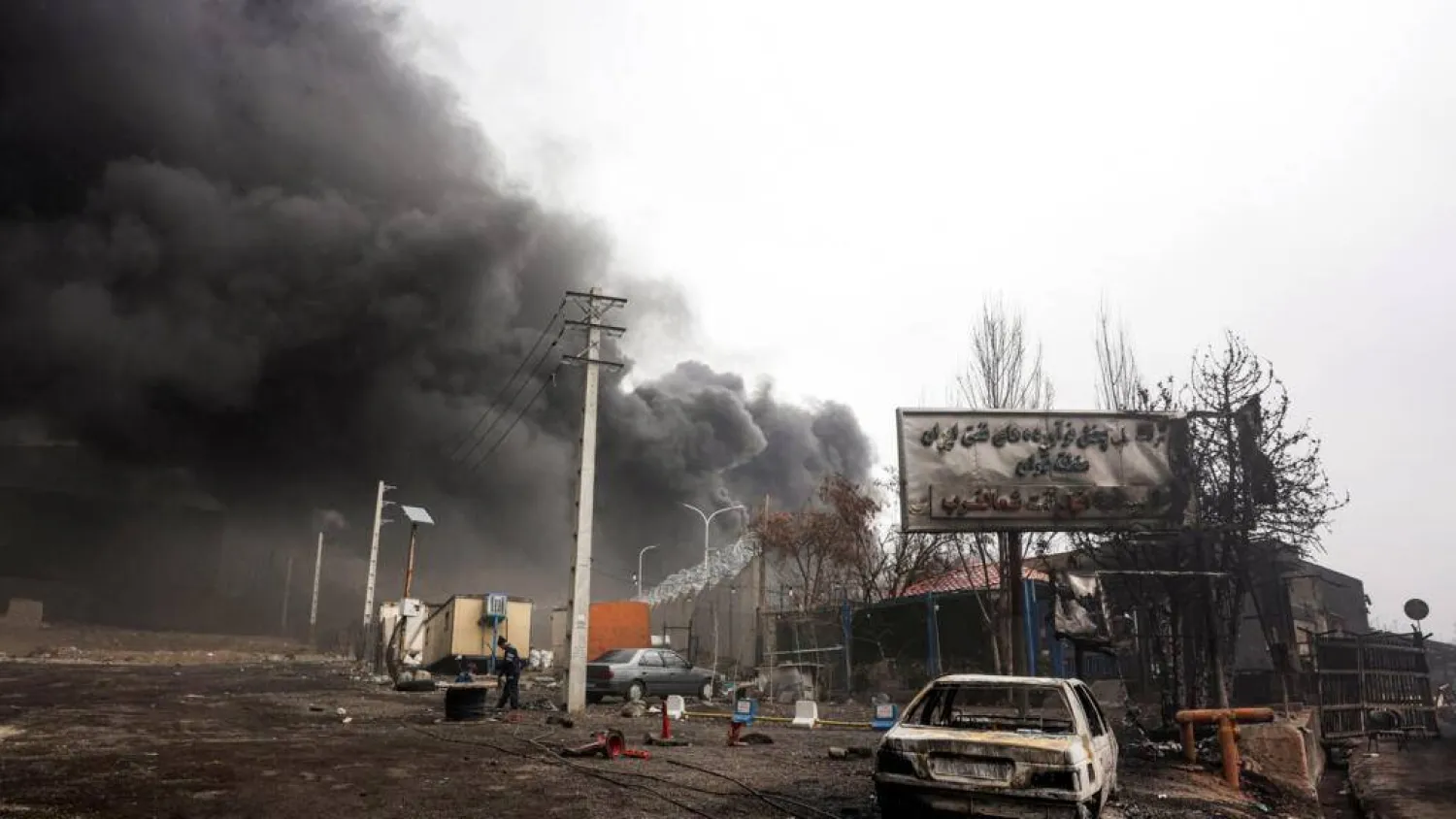
In Tehran, attacks on fuel depots last weekend plunged the capital into darkness as poisonous black clouds rose from burning oil facilities.

Mathilde Jourde, from the Institute for International and Strategic Relations (IRIS), said targeting nuclear, military and energy sites had "extremely polluting" consequences for air, water and soil.

"We're just scratching the surface but can already see that there are hundreds of damaged facilities in Iran and neighboring countries that pose pollution risks to people and the environment," Doug Weir, director of the Conflict and Environment Observatory (CEOBS), told AFP.

"We have particular concerns around damaged oil infrastructure, military facilities and the sensitive marine environment of the Arabian Gulf."


Researchers: Tropical Forest Loss Eases After Record Year

Vehicles drive on a fully paved section of BR-156 highway that connects the state capital Macapa with the city of Oiapoque, Amapa state, Brazil, Monday, March 9, 2026. (AP Photo/Eraldo Peres)
TT

Researchers: Tropical Forest Loss Eases After Record Year

Vehicles drive on a fully paved section of BR-156 highway that connects the state capital Macapa with the city of Oiapoque, Amapa state, Brazil, Monday, March 9, 2026. (AP Photo/Eraldo Peres)

The pace of tropical forest destruction slowed in 2025 after record losses the year before but remained at worrying levels equivalent to 11 football fields per minute, researchers said Wednesday.

The world lost 4.3 million hectares (10.6 million acres) of tropical primary rainforest last year -- down 36 percent from 2024, said researchers from the World Resources Institute (WRI) and the University of Maryland.

"A drop of this scale in a single year is encouraging -- it shows what decisive government action can achieve," said Elizabeth Goldman, co-director of WRI's Global Forest Watch platform.

"But part of the decline reflects a lull after an extreme fire year," Goldman said.

The researchers also warned that fires fueled by climate change have become a "dangerous new normal" which threatens to reverse the recent gains made by government efforts to tackle deforestation.

The warming El Nino weather phenomenon is expected to return in the middle of the year, which could push global temperatures even higher, raising the threat of heatwaves, droughts and wildfires.

The researchers, who used satellite data for their report, noted that last year's forest loss was still significant -- about the size of Denmark and 46 percent higher than a decade ago.

Despite last year's progress, global forest loss remains 70 percent above the level required to meet the 2030 goal of halting and reversing forest loss, the researchers said.

"A good year is a good year, but you need good years forever if you're going to conserve, for example, the tropical rainforest," Matthew Hansen, director of the GLAD Lab at the University of Maryland, said in a media briefing.

Much of last year's slowdown was due to sharp declines in Brazil, home to the biggest rainforest in the world.

Brazil's forest loss, excluding fires, was 41 percent lower than in 2024 -- its lowest rate on record.

"Brazil's declines are associated with stronger environmental policies and enforcement since President Lula took office in 2023," Goldman said in a news briefing, referring to Brazilian leader Luiz Inacio Lula da Silva.

Lula relaunched an anti-deforestation action plan and increased penalties for environmental crimes, AFP quoted her as saying.

But the country's forests are still threatened by agriculture, which remains the largest driver of forest loss to make room for soy fields and cattle ranches.

Some states in the Amazon have passed legislation to weaken environmental protections, the researchers said.

"Several countries showed that strong policy action can reduce forest loss quickly," Goldman said.

Forest loss in neighboring Colombia fell 17 percent, the second lowest year on record since 2016, thanks to government policies and agreements limiting forest clearing.

Government policies also helped to limit forest loss in Indonesia, where it increased by 14 percent but was well below the highs seen a decade ago.

In Malaysia, government efforts have helped to stabilize forest loss in the country.

Tropical forest loss remained high in other parts of the world, including in Bolivia, the Democratic Republic of Congo, Cameroon and Madagascar, the researchers said.

Global tree cover loss fell by 14 percent last year.

While agricultural expansion is still the leading driver of tree cover loss across the tropics, fires played a major role worldwide, accounting for 42 percent of the destruction.

"For the past three years, fires burned more than twice as much tree cover as they did two decades ago," Goldman said.

While humans cause most fires in the tropics, climate change is intensifying natural fire cycles in northern and temperate regions, the researchers said.

Canada had its second-worst fire year on record last year as wildfires tore through 5.3 million hectares of forest.

"Climate change and land clearing have shortened the fuse on global forest fires," Hansen said. "They are turning seasonal disturbances into a near-permanent state of emergency."


Europe Climate Report Signals Rising Extremes

(FILES) This photograph shows the scientific ice-going "Kronprins Haakon" sailing through the sea ice in eastern Spitzbergen, in the Svalbard archipelago, on April 10, 2025. (Photo by Olivier MORIN / AFP)
TT

Europe Climate Report Signals Rising Extremes

(FILES) This photograph shows the scientific ice-going "Kronprins Haakon" sailing through the sea ice in eastern Spitzbergen, in the Svalbard archipelago, on April 10, 2025. (Photo by Olivier MORIN / AFP)

Europe endured a historic heatwave across Nordic countries, shrinking glaciers and record sea temperatures in 2025 as the fast-warming continent faces more frequent climate extremes, a new report showed Wednesday.

"The climate indicators ... are quite worrying," Mauro Facchini, a European Commission official, told journalists.

The European State of the Climate report underscores the urgent need for the region to adapt to global warming and accelerate its transition to clean energy, another EU official said, according to AFP.

Here are some key findings of the report published by the EU's Copernicus Climate Change Service and the World Meteorological Organization (WMO):

At least 95 percent of the region experienced above-average annual temperatures, with Britain, Norway and Iceland recording their warmest year on record, according to the report.

"Since 1980, Europe has been warming twice as fast as the global average, making it the fastest warming continent on Earth," WMO Secretary-General Celeste Saulo said in a briefing on the report.

"Heatwaves are becoming more frequent and severe. And in 2025, we saw long duration heatwaves from the Mediterranean to the Arctic Circle," Saulo said.

Sub-Arctic Finland, Norway and Sweden -- a region dubbed Fennoscandia -- experienced a record three-week heatwave in July, with temperatures reaching 30C within the Arctic Circle.

Parts of Fennoscandia had almost two weeks of "strong heat stress" -- when temperatures feel hotter than 32C. In an average year, the region will normally have up to two days of strong heat stress.

In Türkiye, temperatures reached 50C for the first time in July while 85 percent of the Greek population was affected by extreme temperatures close to or above 40C.

Large parts of western and southern Europe were hit with two significant heatwaves in June, including most of Spain, Portugal, France and southern parts of Britain.

A third major heatwave struck Portugal, Spain and France in August.

Europe and the rest of the world could face another extremely hot summer as the El Nino weather phenomenon, which pushed global temperatures to record highs in 2024, is expected to return in the middle of the year.

Glaciers across Europe recorded a net mass loss in 2025, with Iceland experiencing its second-largest ever melt.

Europe's glaciers are found in mountainous areas such as the Alps, northern Scandinavia, Iceland and Greenland's periphery.

"Glaciers across Europe and globally are projected to continue to lose mass throughout the 21st century, regardless of the emission scenario," the report said.

The Greenland Ice Sheet lost round 139 billion tons of ice -- "equivalent to losing 100 Olympic-sized swimming pools every single hour", said Samantha Burgess, strategic lead for climate at the European Centre for Medium-Range Weather Forecasts (ECMWF), which operates Copernicus.

It raised the global mean sea level by 0.4 mm.

Europe's snow cover, meanwhile, was the third lowest on record.

For the third year running, renewable energy produced more of Europe's electricity than fossil fuels, accounting for 46.4 percent of the continent's power generation.

Solar power's contribution reached a record 12.5 percent.

"But that's not sufficient. We need to speed up," said Dusan Chrenek, principal advisor at the European Commission's climate office. "We need to work on transitioning away from fossil fuels."

Europe's annual sea surface temperature was the highest on record for the fourth consecutive year.

A record 86 percent of the European ocean region had at least one day with "strong" marine heatwave conditions.

Such heatwaves have an impact on biodiversity, notably on seagrass meadows in the Mediterranean which act as natural sea barriers and are sensitive to high temperatures.

"They are biodiversity hotspots housing thousands of fish per acre and are critical nursery habitats," said Claire Scannell, one of the report's authors and principal meteorologist officer at Ireland's weather service.

The area burnt by wildfires, meanwhile, reached a record 1,034,550 hectares.

Storms and floods killed at least 21 people and affected 14,500 across Europe, though flooding and extreme rainfall were less widespread than in recent years.


Australian Climber on Record Sea-to-Summit Everest Bid

A member of expedition team stands at Khumbu Icefall in Solukhumbu district, also known as the Everest region, Nepal, April 22, 2026. REUTERS/Purnima Shrestha
TT

Australian Climber on Record Sea-to-Summit Everest Bid

A member of expedition team stands at Khumbu Icefall in Solukhumbu district, also known as the Everest region, Nepal, April 22, 2026. REUTERS/Purnima Shrestha

Among the hundreds of climbers hoping to scale Everest this season, 27-year-old Australian Oliver Foran began his journey far away, cycling and then walking all the way from the sea.

Foran is seeking to break the 67-day "sea-to-summit" record, first pedaling 1,150 kilometers (715 miles) from the warm waves of the Bay of Bengal in India to Nepal and now trekking to the icy 8,849-meter (29,032-foot) peak.

"I always wanted to climb Mount Everest, but I wanted to do it in a special way," Foran told AFP by telephone on a break from his long hike upwards to Everest Base Camp, and then to the highest place on Earth.

It is also a deeply personal journey, with Foran raising funds for youth mental health.

The former real estate agent climbed his first major mountain, Nepal's 6,189-meter (20,305-foot) Island Peak, in 2024.

He then summited 6,812-meter (22,349-foot) Ama Dablam last year.

He hopes Everest will be his first 8,000-meter mountain.

He has been training -- cycling, exercising and working on his breathing -- for the past six months to build endurance for the altitude.

The sea-to-summit is a rare feat, first completed by another Australian, Tim Macartney-Snape, in 1990. Macartney-Snape spent three months walking from sea level to the Everest summit, and it was his documentary that sparked the idea for Foran.

The current record is held by South Korean climber Kim Chang-ho, who walked and then kayaked the Ganges river, cycled to Nepal and then trekked up to the base camp in 2013, five years before his death on another mountain.

Foran aims to slash a week off that record and reach the summit in 60 days.

"It is a challenging task and a unique one," said Gelje Sherpa, his lead guide and expedition organizer at AGA Adventures.

"There are so many facilities and options to summit Everest in a record time now, but he is using only his own human power. That is big."

Foran cycled across India and Nepal in the first 16 days, navigating sweltering hot plains before steep, relentless hills.

He said he is driven by "something bigger" than himself, the memory of his teenage grief when his mother died of brain cancer.

"I didn't know how to process it... Life on the outside looked pretty good, but inside I was just emptier than ever," he said.

The unresolved grief reached a breaking point seven years later.

Foran said he had "made up my mind that that was it" -- but a call to a friend proved life-saving.

"I made the decision then that... if I ever got the opportunity to stop somebody else from getting to that point or to give them another way, I would," he said.

That commitment underlines his Everest expedition.

Foran is partnering with Australian organization Youturn with a target to raise $200,000 to build a youth mental health support center back home.

Aaron Minton, a director at Youturn, said it would be a "youth-focused mental health and well-being hub".

Foran hopes his journey can offer both awareness and inspiration, sharing the good parts and the struggles of his journey through his social media.

"What's really motivating me is, hopefully, having an inspiration on some of these younger people -- that might be a little bit stuck with where they are right now in their lives," he said.

"Also, I'm doing it for my mum, because she can't, and I want to make her proud."

As he continues his ascent, an unexpected source of comfort that accompanies him is the Madonna song "Like a Prayer".

"My mum used to listen to it. And it now holds a special place in my heart," he said.

"So that's what I'm going to be whistling to myself when I'm walking up to the summit."