


US, Russian Space Chiefs Talk Moon, ISS Cooperation in Rare Florida Meeting 

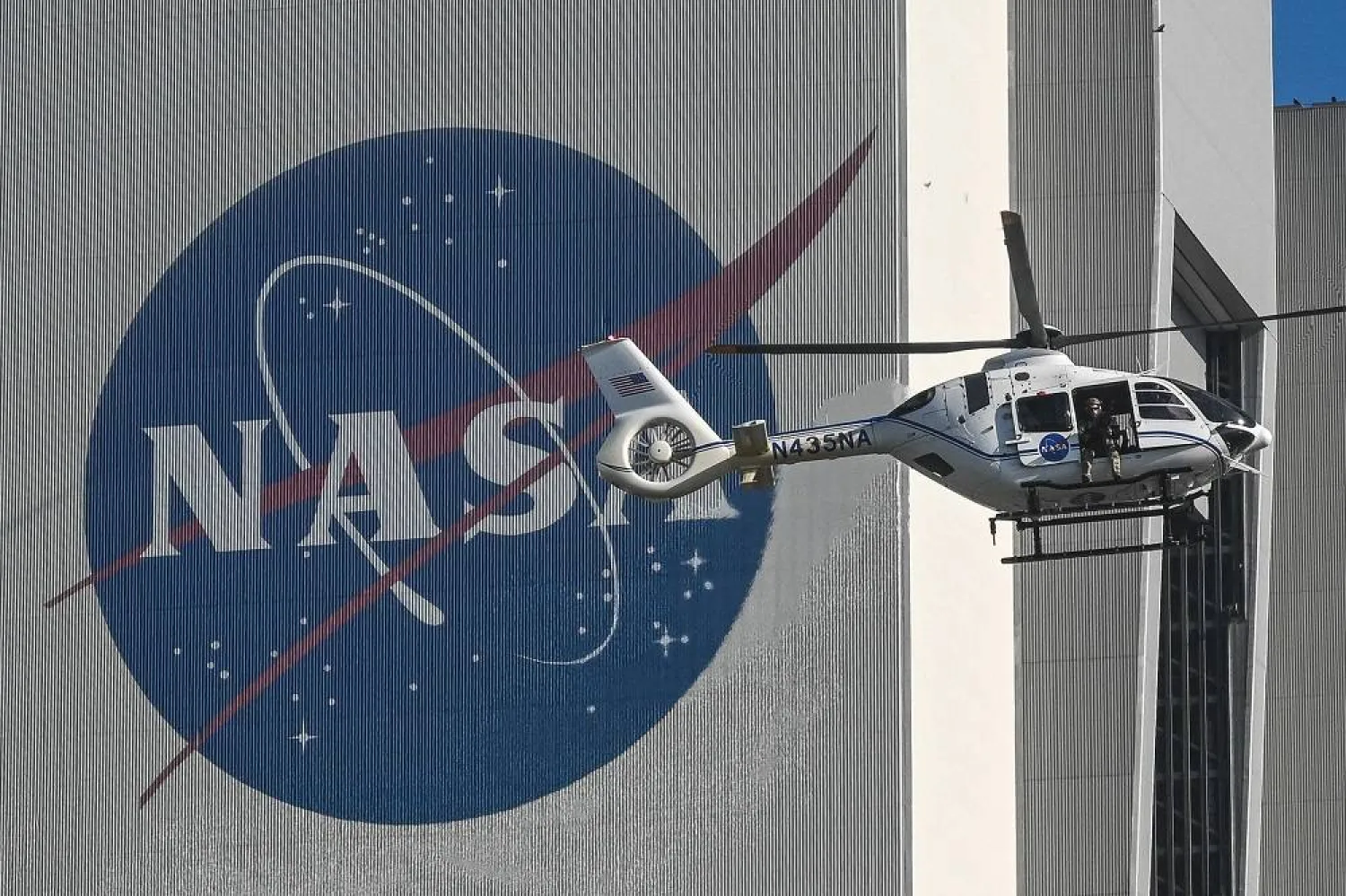
A NASA helicopter with armed security escorts the Crew-11 motorcade to launch pad LC-39A at Kennedy Space Center ahead of the Crew-11 Mission in Cape Canaveral, Florida, on July 31, 2025. (AFP)
TT

US, Russian Space Chiefs Talk Moon, ISS Cooperation in Rare Florida Meeting 

A NASA helicopter with armed security escorts the Crew-11 motorcade to launch pad LC-39A at Kennedy Space Center ahead of the Crew-11 Mission in Cape Canaveral, Florida, on July 31, 2025. (AFP)

NASA's new temporary administrator on Thursday held a rare face-to-face meeting in Florida with Russia's space agency chief, where they discussed cooperation on the moon and maintaining the space powers' longstanding relationship on the International Space Station, Roscosmos said.

The talks between Sean Duffy and Dmitry Bakanov at the US space agency's Kennedy Space Center represented the first in-person meeting between the heads of NASA and Russia's space agency, Roscosmos, since 2018.

NASA said late on Thursday the two chiefs "discuss continued cooperation and collaboration in space," without providing further details.

The meeting coincided with an attempt to launch a joint astronaut crew from Florida to the ISS that was postponed due to weather. It was a significant moment for Washington's bifurcated space relations with Russia, especially for Duffy, an acting NASA administrator who was assigned to the role just this month while also overseeing the Transportation Department.

Roscosmos showed on Telegram a video of the meeting between Duffy and Bakanov, each flanked by staff, and other events where Bakanov and his delegation can be seen mingling with US officials.

The Russian space agency said: "The parties discussed further work on the ISS, cooperation on lunar programs, joint exploration of deep space, continued interaction on other space projects."

Roscosmos and NASA did not respond to questions about the nature of the lunar program or deep space discussions. Such talks could signal thawing relations between the two countries' civil space programs and represent a shift in global space relations.

UKRAINE WAR ISOLATES RUSSIA

Russia had plans to participate in NASA's flagship Artemis moon program until it invaded Ukraine in February 2022. It became a partner on China's moon program, the International Lunar Research Station, a direct rival to the US Artemis program.

The war in Ukraine has led to a vastly isolated Russian space program, which has since boosted investments in military space efforts while nearly all of its joint space exploration projects with the West collapsed.

The Russian delegation visited NASA's Johnson Space Center in Houston on Wednesday and on Thursday was poised to watch the launch of Crew-11, a routine mission to the ISS featuring two US astronauts, a Russian cosmonaut and a Japanese astronaut. But bad weather pushed the launch to Friday morning, SpaceX said.

While US-Russian tensions over the war in Ukraine have limited contact between NASA and Roscosmos, they have continued to share astronaut flights and cooperate on the ISS, a 25-year-old totem of scientific diplomacy crucial to maintaining the two space powers' storied human spaceflight capabilities.

Amity on the $100 billion ISS is buoyed primarily by a technical interdependency: the Russian segment relies on power generated by American solar panels, while the task of maintaining the station's altitude is assigned to Russia's thrusters. Multiple other countries depend on the ISS for microgravity research, prominently the European Space Agency, Canada and Japan.

The military space programs of the US and Russia meanwhile have an adversarial relationship. The US has accused Russia of developing a nuclear space weapon and deploying counterspace weapons and spy satellites near American spy satellites. Russia has denied many of Washington's space allegations.

Bakanov and Duffy were expected to discuss extending the two countries' astronaut seat exchange agreement - in which US astronauts fly on Russian Soyuz capsules in exchange for Russian astronauts flying on US capsules - and the planned disposal of the ISS in 2030, according to Russian news agency TASS.



7 Drinks That Boost Your Brain Health Naturally

Green tea contains compounds beneficial for the brain (Reuters)
TT

7 Drinks That Boost Your Brain Health Naturally

Green tea contains compounds beneficial for the brain (Reuters)

Caring for brain health is not limited to mental exercises and good sleep; it also extends to the foods and beverages we consume on a daily basis.

Certain natural drinks contain nutrients and antioxidants that play an important role in supporting brain function, enhancing memory and concentration, and protecting against cognitive decline associated with aging.

Below are some of the most notable drinks that may help support brain health in a natural and simple way, according to the scientific website Verywell Health:

Green Tea

Green tea contains compounds with antioxidant and anti-inflammatory properties and has been studied for potential benefits related to metabolic health, aging, and immune support. Green tea has been widely studied for its effects on brain health. Regular consumption appears to be more beneficial than occasional use.

Green tea contains catechins, antioxidants that may reduce oxidative stress in the brain. It also provides L-theanine, an amino acid linked to improved attention and calm focus, especially when combined with small amounts of caffeine.

Coffee

Coffee is a major dietary source of antioxidants, and its effects on brain health have been widely studied.
In the short term, the caffeine in coffee works by inhibiting adenosine, a neurotransmitter that contributes to promoting drowsiness. This effect may temporarily improve alertness, reaction speed, and concentration.

Observational studies suggest that moderate coffee consumption, in the long term, may be associated with a reduced risk of age-related cognitive decline.

Blueberry Smoothies

Blueberries are rich in flavonoids, especially anthocyanins, which are plant compounds linked to brain health. Research indicates that regular consumption of blueberries may support memory, learning, and overall cognitive functions by helping to protect brain cells from oxidative stress and inflammation. Blending blueberries into smoothies or drinks helps retain many of their beneficial compounds while making them easy to consume regularly.

Beet Juice

Beetroot contains a combination of dietary nitrate, betalains, and polyphenols that may support brain health. Research suggests these compounds help improve blood flow, support antioxidant defenses, and influence processes involved in cognitive decline. Dietary nitrate from beetroot increases nitric oxide, which helps improve blood flow to the brain. Research suggests nitrate-rich foods may support brain blood flow and be linked to slower cognitive decline, while other beetroot compounds may help reduce oxidative stress and inflammation. Most studies are small, and more research is needed to confirm long-term benefits.

Turmeric Golden Milk

Turmeric contains curcumin, a plant compound with antioxidant and anti-inflammatory effects. Research suggests that curcumin may help protect brain cells by reducing inflammation and oxidative stress, which are associated with cognitive decline. Curcumin also affects pathways involved in memory and learning. However, it is poorly absorbed on its own, limiting the amount that reaches the brain.

Pomegranate Juice

Pomegranate juice is rich in polyphenols, plant compounds with powerful antioxidant effects. Research indicates that these compounds may help protect brain cells by reducing oxidative stress and inflammation, which are associated with cognitive decline and Alzheimer’s disease. Preliminary studies conducted on animals suggest that pomegranate compounds may also support healthy blood flow to the brain by increasing nitric oxide production. These effects combined may support brain function over time.

Omega-3-Fortified Drinks

Omega-3 fatty acids, especially docosahexaenoic acid (DHA) and eicosapentaenoic acid (EPA), are essential for normal brain function, as they help support communication between brain cells. Drinks fortified with DHA and EPA may help people increase their intake of these important fats.


Qassim Falcons Festival Concludes with Record Attendance

Photo by SPA
Photo by SPA
TT

Qassim Falcons Festival Concludes with Record Attendance

Photo by SPA
Photo by SPA

The Qassim Falcons Festival concluded yesterday in Al-Asyah Governorate, with 675 falconers from various Arab countries and over 20,000 visitors and 15 local families attending, contributing to the festival’s economic and social activities, SPA reported.

This edition of the festival featured numerous competitions and programs that attracted falconry enthusiasts and reinforced its status as one of the region’s premier heritage events.


Ethiopia Must Suspend Biggest Gold Mine over Toxic Chemicals

Mine workers stand underground at Gold Fields' South Deep mine, south-west of Johannesburg, South Africa October 12, 2022. REUTERS/Siphiwe Sibeko/File Photo
TT

Ethiopia Must Suspend Biggest Gold Mine over Toxic Chemicals

Mine workers stand underground at Gold Fields' South Deep mine, south-west of Johannesburg, South Africa October 12, 2022. REUTERS/Siphiwe Sibeko/File Photo

Work at Ethiopia's largest gold mine must be suspended to protect nearby children from the toxic chemicals it has released into the soil, Human Rights Watch (HRW) said Thursday.

Operations at the Lega Dembi mine, around 500 kilometres (310 miles) south of the capital Addis Ababa, were halted by authorities in 2018 following protests from locals over pollution.

The government promised to reopen the mine only after environmental concerns had been addressed, but did so in 2021 "without public announcement" and "quashed publication of a government health study", said HRW in a statement.

The rights group said several studies had revealed high concentrations of toxic chemicals including cadmium, mercury, lead and arsenic.

Residents had "for years complained about serious health impacts, including children born with long-term health conditions, miscarriages, and stillbirths".

The campaign group urged the UN Committee on the Rights of the Child, due to meet soon, to press Ethiopia to suspend mining operations and "ensure victims of abuse are provided effective remedy, including compensation, medical care, and access to justice".

The Ethiopian government did not respond to a request for comment from AFP.

Ethiopia, the continent's second most populous country with some 130 million inhabitants, is regularly criticised by NGOs for human rights abuses.

But mining is crucial to a country in which more than 40 percent live below the poverty line, with gold exports generating $2.1 billion in the first nine months of 2024, according to the latest figures from the mining ministry.