


What Are All These Microplastics Doing to Our Brains?

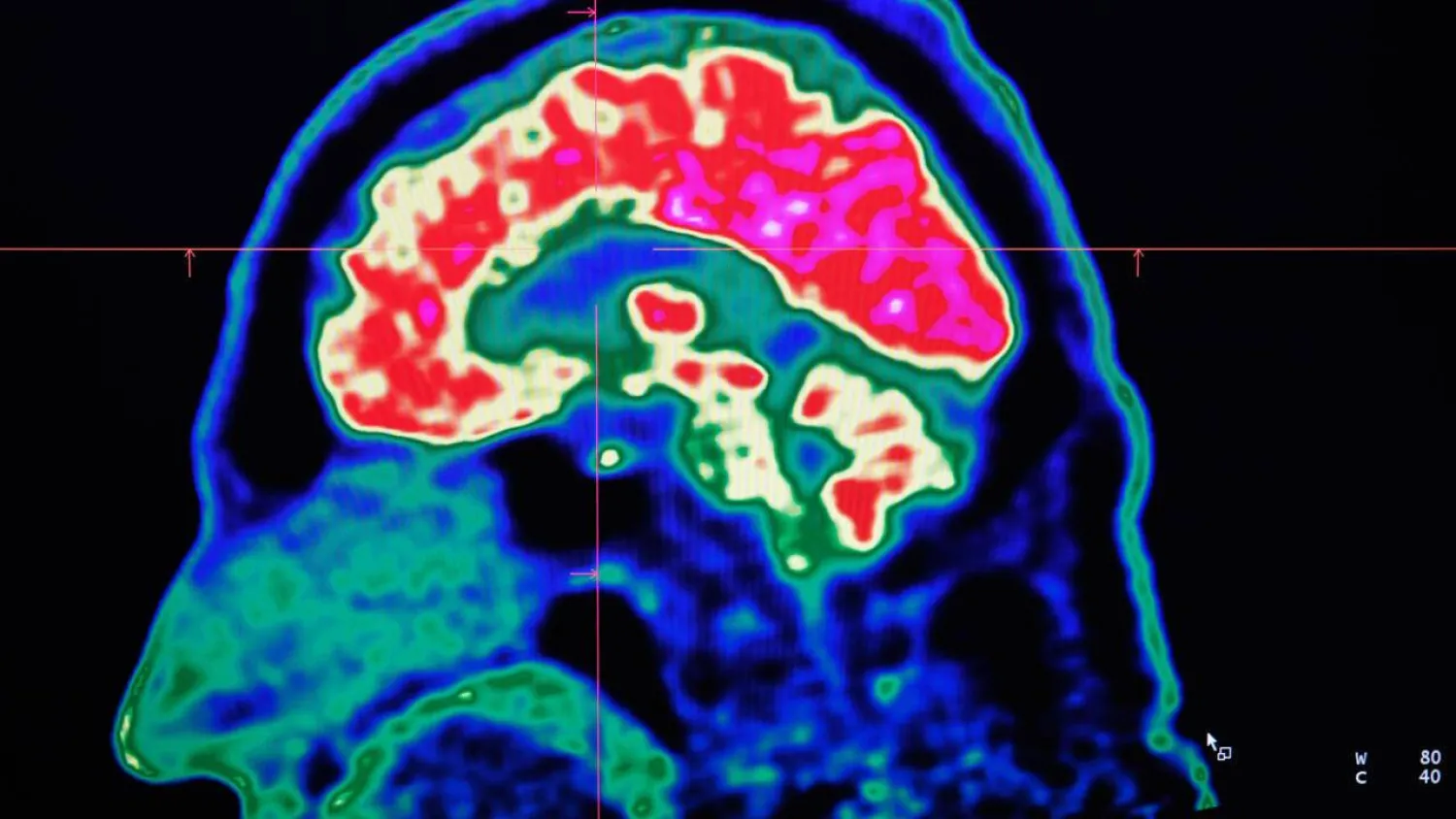
Microplastics are everywhere, but data is still lacking about how they could be affecting our brains. Fred TANNEAU / AFP/File
TT

What Are All These Microplastics Doing to Our Brains?

Microplastics are everywhere, but data is still lacking about how they could be affecting our brains. Fred TANNEAU / AFP/File

Tiny shards of plastic called microplastics have been detected accumulating in human brains, but there is not yet enough evidence to say whether this is doing us harm, experts have said.

These mostly invisible pieces of plastic have been found everywhere from the top of mountains to the bottom of oceans, in the air we breathe and the food we eat. They have also been discovered riddled throughout human bodies, inside lungs, hearts, placentas and even crossing the blood-brain barrier.

The increasing ubiquity of microplastics has become a key issue in efforts to hammer out the world's first plastic pollution treaty, with the latest round of UN talks being held in Geneva next week.

The effects that microplastics and even smaller nanoplastics have on human health is not yet fully understood, but researchers have been working to find out more in this relatively new field.

The most prominent study looking at microplastics in brains was published in the journal Nature Medicine in February.

The scientists tested brain tissue from 28 people who died in 2016 and 24 who died last year in the US state of New Mexico, finding that the amount of microplastics in the samples increased over time.

The study made headlines around the world when the lead researcher, US toxicologist Matthew Campen, told the media that they detected the equivalent of a plastic spoon's worth of microplastics in the brains.

Campen also told Nature that he estimated the researchers could isolate around 10 grams of plastic from a donated human brain -- comparing that amount to an unused crayon.

Speculation 'far beyond the evidence'

But other researchers have since urged caution about the small study.

"While this is an interesting finding, it should be interpreted cautiously pending independent verification," toxicologist Theodore Henry of Scotland's Heriot-Watt University told AFP.

"Currently, the speculation about the potential effects of plastic particles on health go far beyond the evidence," he added.

Oliver Jones, a chemistry professor at Australia's RMIT University, told AFP there was "not enough data to make firm conclusions on the occurrence of microplastics in New Mexico, let alone globally".

He also found it "rather unlikely" that brains could contain more microplastics than has been found in raw sewage -- as the researchers had estimated.

Jones pointed out the people in the study were perfectly healthy before they died, and that the researchers acknowledged there was not enough data to show that the microplastics caused harm.

"If (and it is a big if in my view) there are microplastics in our brains, there is as yet no evidence of harm," Jones added.

The study also contained duplicated images, the neuroscience news website The Transmitter has reported, though experts said this did not affect its main findings.

- 'Cannot wait for complete data' -

Most of the research into the effects microplastics have on health has been observational, which means it cannot establish cause and effect.

One such study, published in the New England Journal of Medicine last year, found that microplastics building up in blood vessels was linked to an increased risk of heart attack, stroke and death in patients with a disease that clogs arteries.

There have also been experiments carried out on mice, including a study in Science Advances in January which detected microplastics in their brains.

The Chinese researchers said that microplastics can cause rare blood clots in the brains of mice by obstructing cells -- while emphasizing that the small mammals are very different to humans.

A review by the World Health Organization in 2022 found that the "evidence is insufficient to determine risks to human health" from microplastics.

However many health experts have cited the precautionary principle, saying the potential threat microplastics could pose requires action.

A report on the health risks of microplastics by the Barcelona Institute for Global Health published this week ahead of the treaty talks said that "policy decisions cannot wait for complete data".

"By acting now to limit exposure, improve risk assessment methodologies, and prioritize vulnerable populations, we can address this pressing issue before it escalates into a broader public health crisis," it added.

The amount of plastic the world produces has doubled since 2000 -- and is expected to triple from current rates by 2060.



German Killed in Swiss Avalanche, 4 Other Skiers Hurt

Swiss Air Force's aerobatic team "The Patrouille Suisse" perform prior to the FIS alpine skiing Men's World Cup Super G event in Wengen, Swiss Alps, on January 19, 2026. (Photo by Dimitar DILKOFF / AFP)
TT

German Killed in Swiss Avalanche, 4 Other Skiers Hurt

Swiss Air Force's aerobatic team "The Patrouille Suisse" perform prior to the FIS alpine skiing Men's World Cup Super G event in Wengen, Swiss Alps, on January 19, 2026. (Photo by Dimitar DILKOFF / AFP)

A German man has been killed in an avalanche in the Swiss alps and four other people were hurt as they were cross-country skiing, Swiss police said Saturday.

The incident happened on Friday, on the Piz Badus peak near the village of Tujetsch in the center-south of the country, AFP reported.

Police said a group of seven cross-country skiers were swept up in the avalanche, with five of them buried underneath.

One member of the party raised the alarm in a phone call to local police, who deployed helicopters with rescue workers and dogs to the site.

The German man was found lifeless under the snow and ice, the police said, adding that the four others hurt -- whose nationalities were not given -- suffered light injuries and were flown to nearby hospitals.


NASA's New Moon Rocket Heads to the Pad Ahead of Astronaut Launch

NASA's Artemis II SLS (Space Launch System) rocket and Orion spacecraft, secured to the mobile launcher, is seen inside the Vehicle Assembly building as preparations continue for roll out to Launch Pad 39B, Thursday, Jan. 15, 2026, at NASA's Kennedy Space Center in Florida. (Keegan Barber/NASA via AP)
TT

NASA's New Moon Rocket Heads to the Pad Ahead of Astronaut Launch

NASA's Artemis II SLS (Space Launch System) rocket and Orion spacecraft, secured to the mobile launcher, is seen inside the Vehicle Assembly building as preparations continue for roll out to Launch Pad 39B, Thursday, Jan. 15, 2026, at NASA's Kennedy Space Center in Florida. (Keegan Barber/NASA via AP)

NASA’s giant new moon rocket headed to the launch pad Saturday in preparation for astronauts’ first lunar fly-around in more than half a century.

The out-and-back trip could blast off as early as February.

The 322-foot (98-meter) rocket began its 1 mph (1.6 kph) creep from Kennedy Space Center’s Vehicle Assembly Building at daybreak. The four-mile (six-kilometer) trek was expected to take until nightfall.

Throngs of space center workers and their families gathered in the predawn chill to witness the long-awaited event, delayed for years, The Associated Press reported. They huddled together ahead of the Space Launch System rocket’s exit from the building, built in the 1960s to accommodate the Saturn V rockets that sent 24 astronauts to the moon during the Apollo program. The cheering crowd was led by NASA’s new administrator Jared Isaacman and all four astronauts assigned to the mission.

Weighing in at 11 million pounds (5 million kilograms), the Space Launch System rocket and Orion crew capsule on top made the move aboard a massive transporter that was used during the Apollo and shuttle eras. It was upgraded for the SLS rocket’s extra heft.

The first and only other SLS launch — which sent an empty Orion capsule into orbit around the moon — took place back in November 2022.

“This one feels a lot different, putting crew on the rocket and taking the crew around the moon,” NASA’s John Honeycutt said on the eve of the rocket’s rollout.

Heat shield damage and other capsule problems during the initial test flight required extensive analyses and tests, pushing back this first crew moonshot until now. The astronauts won’t orbit the moon or even land on it. That giant leap will take come on the third flight in the Artemis lineup a few years from now.

Commander Reid Wiseman, pilot Victor Glover and Christina Koch — longtime NASA astronauts with spaceflight experience — will be joined on the 10-day mission by Canadian astronaut Jeremy Hansen, a former fighter pilot awaiting his first rocket ride.

They will be the first people to fly to the moon since Apollo 17’s Gene Cernan and Harrison Schmitt closed out the triumphant lunar-landing program in 1972. Twelve astronauts strolled the lunar surface, beginning with Neil Armstrong and Buzz Aldrin in 1969.

NASA is waiting to conduct a fueling test of the SLS rocket on the pad in early February before confirming a launch date. Depending on how the demo goes, “that will ultimately lay out our path toward launch,” launch director Charlie Blackwell-Thompson said on Friday.

The space agency has only five days to launch in the first half of February before bumping into March.


Iron Age Teeth Fossils Reveal Diet Diversity of Italians 2,500 Years Ago

The fresco on the wall of a house in Pompeii that dates back 2,000 years (AFP)
TT

Iron Age Teeth Fossils Reveal Diet Diversity of Italians 2,500 Years Ago

The fresco on the wall of a house in Pompeii that dates back 2,000 years (AFP)

Italians began exploring a varied diet sometime between the 7th and 6th centuries BC, according to a new analysis of ancient teeth from Iron Age Italians.

Unravelling details about the lifestyles of ancient cultures is a challenging task, as it requires specific, well-preserved fossils of long-deceased individuals, The Independent reported.

Fossil human teeth are an excellent resource to understand ancient diets, acting as archives of each individual’s life history.

However, collecting information from teeth across different eras remains a challenge.

In the new study, researchers combined multiple analyses of teeth remains from the Italian archaeological site of Pontocagnano to interpret the health and diet of people in the region during the 7th and 6th centuries BC.

Scientists assessed the dental tissue of 30 teeth from 10 individuals, obtaining data from canine and molar teeth to reconstruct each ancient person’s history during the first six years of their lives.

Researchers found that the Iron Age Italians had a diet rich in cereals, legumes, abundant carbohydrates, and even fermented foods and drinks.

“We could follow childhood growth and health with remarkable precision and identify traces of cereals, legumes, and fermented foods in adulthood, revealing how this community adapted to environmental and social challenges,” said Roberto Germano, an author of the study.

Emanuela Cristiani, another author of the study said, “In the case of Pontocagnano, the analysis of dental calculus revealed starch granules from cereals and legumes, yeast spores, and plant fibres, providing a very concrete picture of the diet and some daily activities of these Iron Age communities.”

The findings offer strong evidence of this ancient Italian population regularly consuming fermented foods and beverages, researchers said.

Their diets likely diversified at the time as their contact with Mediterranean cultures increased, they added.

The researchers noted that while the study may not be completely representative of the broader Italian population, it provides a “very concrete picture” of the diet and some daily activities of Iron Age communities in the Italian region.

“This and other modern approaches represent a major technological and disciplinary advancement that is revolutionizing the study of the biocultural adaptations of past populations,” said Alessia Nava, another author of the study from Sapienza University of Rome.