
Wolf Attack in Greece Prompts Calls for Hunting Rights

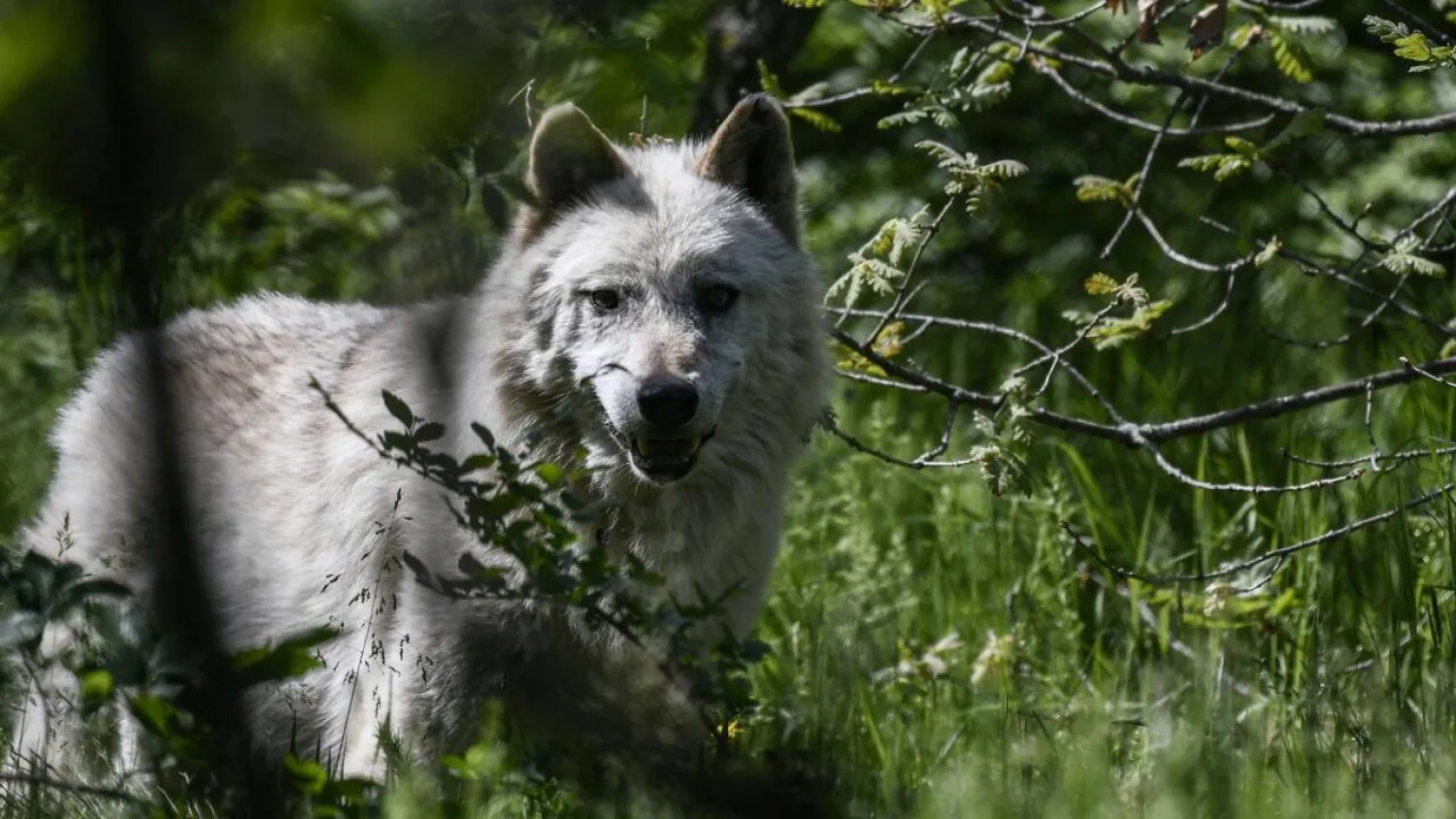
A wolf at the Arcturos sanctuary in Nymfaio, Greece, in 2018.  Aris MESSINIS / AFP
A wolf at the Arcturos sanctuary in Nymfaio, Greece, in 2018. Aris MESSINIS / AFP
TT

Wolf Attack in Greece Prompts Calls for Hunting Rights

A wolf at the Arcturos sanctuary in Nymfaio, Greece, in 2018.  Aris MESSINIS / AFP
A wolf at the Arcturos sanctuary in Nymfaio, Greece, in 2018. Aris MESSINIS / AFP

Hunters and farmers in Greece are demanding the right to cull wolves after one attacked a child on a beach this month, warning that the protected species is multiplying in the wild.

The animal "grabbed" the five-year-old girl by the waist as she played on a beach in the Halkidiki peninsula, northern Greece, her mother told Skai TV.

A bystander drove the wolf off by throwing stones, but it later followed the girl and her mother to their apartment yard, she said.

Greek hunters have long maintained that the wolf population in Greece is much greater than estimated, increasing the threat to hunting dogs and livestock, AFP said.

"Where I go hunting, there are wolf sightings almost every day," said Stelios Thomas, a 60-year-old from Thessaloniki who ventures out some 50 kilometers (30 miles) east of the city.

"I am now afraid to go to the mountain. They have eaten many dogs and livestock lately. There are attacks almost every day," he told AFP.

Local officials said they were laying traps in the area, but that if the animal could not be captured, it would be killed.

'Better be removed'

Yorgos Iliopoulos, a biologist and wolf expert with the environmental NGO Callisto, said the wolf involved appeared to be unusually accustomed to humans.

"This animal evidently either found food in this area, or was erroneously fed by a human as a cub," he said.

"Its behavior cannot be reversed and it is better to remove it, preferably through capture," he said.

The Thessaloniki-based organization aims to study, protect and manage the populations and habitats of large carnivores such as bears and wolves and other endangered species.

In early 2024, Callisto helped remove a young wolf from the Greek police academy in Amygdaleza, near Athens.

The young male was collared and released in the foothills of Mount Parnitha, where wolves have returned after a six-decade absence.

From his studies on the Parnitha wolves, Iliopoulos said that the packs in the area "are attracted by the dead bodies of farm animals or dogs".

Wolf revival

According to a recent six-year study by Callisto, the wolf population in Greece is estimated at 2,075.

Their range is also spreading, Iliopoulos said.

"Wolves are now in Attica," the region surrounding Athens, and in the southern mainland "there has been a resurgence in the Peloponnese over the past two or three years," he said.

"Some individuals crossed the Isthmus at Corinth and dispersed into the Peloponnese. Last winter, we confirmed the presence of a breeding wolf pack in the Taygetos (mountain) region," he added.

The abandonment of agriculture in the mountains and increased availability of prey such as wild boar and deer have help the wolf population rebound, he said.

"Similar trends are seen with all large mammals in Greece and Europe."

Bear scare

Sightings of bears in inhabited areas have also increased in the Greek countryside.

Last week, an 80-year-old man in Zagori, northwestern Greece, was injured by a brown bear that entered his garden looking for food.

Wildlife group Arcturos estimates there are between 550 and 900 bears in Greece, an increase over the last two decades, but still not high enough to lift hunting restrictions.

Bears began approaching inhabited areas in Greece around a decade ago, but authorities have long neglected to set up rapid response teams, the group said in a July statement.

"The Greek countryside is not what it was 20 years ago, and so it would be impossible for bears to be the same too," said Arcturos's general director Alexandros Karamanlidis.

Callisto spokesperson Iason Bantios called the bear sightings "a manageable phenomenon that should not cause panic".

"It requires adequate operational organization, proper planning, and targeted action protocols," he said.


Reintroduction of Wildlife Species at Saudi Arabia’s Hegra Reserve to Enhance Ecological Balance

The initiative forms part of RCU's strategy to rehabilitate wildlife and achieve environmental sustainability.
TT

Reintroduction of Wildlife Species at Saudi Arabia’s Hegra Reserve to Enhance Ecological Balance

The initiative forms part of RCU's strategy to rehabilitate wildlife and achieve environmental sustainability.

The Royal Commission for AlUla (RCU), in cooperation with the National Center for Wildlife, has reintroduced 37 wildlife species at the Hegra Nature Reserve in AlUla as part of its efforts to enhance ecological balance and preserve the region's natural biodiversity.

The initiative forms part of RCU's strategy to rehabilitate wildlife and achieve environmental sustainability.

It also supports eco-tourism by increasing the presence of wildlife species and enriching visitors' natural experiences, in line with AlUla's vision to develop its natural resources and strengthen its environmental values.


WHO Reaffirms No Link between Vaccines and Autism

The logo of the World Health Organization is seen at the WHO headquarters in Geneva, Switzerland, January 28, 2025. REUTERS/Denis Balibouse/File Photo
TT

WHO Reaffirms No Link between Vaccines and Autism

The logo of the World Health Organization is seen at the WHO headquarters in Geneva, Switzerland, January 28, 2025. REUTERS/Denis Balibouse/File Photo

The World Health Organization's vaccine safety committee said on Thursday that new reviews of scientific evidence found no link between vaccines and autism spectrum disorder, reaffirming conclusions reached more than two decades ago.

The WHO Global Advisory Committee on Vaccine Safety assessed two systematic reviews covering studies published between 2010 and August 2025, according to Reuters.

The reviews examined vaccines in general and those containing thiomersal, a mercury-based preservative that has long been accused by critics of contributing to autism - a claim repeatedly dismissed by scientific studies.

A causal link between vaccines and health outcomes is considered only when several high-quality studies consistently show a statistical association, the committee said.

Twenty out of 31 studies found no evidence of an association between vaccines and autism, according to the WHO.

Eleven studies that suggested a possible link were deemed to have major methodological flaws and a high risk of bias, the committee said.

Last month, US Health Secretary Robert F. Kennedy Jr. said in an interview with the New York Times that he had personally instructed the US Centers for Disease Control and Prevention to change its long-standing position that vaccines do not cause autism.


Vietnam's Capital Chokes Through Week of Toxic Smog

This picture shows vehicles driving on a highway amid heavy air pollution conditions in Hanoi on December 11, 2025. (Photo by NHAC NGUYEN / AFP)
TT

Vietnam's Capital Chokes Through Week of Toxic Smog

This picture shows vehicles driving on a highway amid heavy air pollution conditions in Hanoi on December 11, 2025. (Photo by NHAC NGUYEN / AFP)

Toxic smog has blanketed Vietnam's capital for more than a week, blotting out the skyline and leaving residents wheezing as Hanoi's air quality dipped to among the world's worst on Thursday.

The city of nine million ranked second only to India's New Delhi on IQAir's ranking of most polluted cities on Thursday morning, improving slightly in the afternoon.

According to the Swiss monitoring company, levels of PM2.5 pollutants -- cancer-causing microparticles small enough to enter the bloodstream through the lungs -- were vastly higher than the World Health Organization's recommended daily exposure limit.

"I have experienced difficulty in breathing out on the streets these days," resident Dang Thuy told AFP on Thursday, adding she had bought two new air purifiers for her apartment.

Hanoi authorities, in an administrative order made public Thursday, urged people to limit time outdoors and said schools can close if the situation deteriorates.

The order instructed officials to crack down on illegal waste burning and take measures to control the dispersion of dust at construction sites, including covering trucks and spraying water to keep tiny particles from becoming airborne.

However, AFP reporters observed construction sites operating normally, with trucks arriving and departing without the required coverings.

"Authorities have been quite active on paper only. Nothing has worked yet and the terribly toxic air remains in our city," said Thuy.

According to the WHO, a number of serious health conditions, including strokes, heart disease and lung cancer, are linked to air pollution exposure.

Experts say pollution in Hanoi is a result of widespread construction, as well as emissions from the huge number of motorbikes and cars that criss-cross the capital every day.

Emissions from coal plants to the north and agricultural burning exacerbate the problem.

Authorities have announced plans to ban gas motorbikes from central Hanoi during certain hours starting in July next year.