




Archeologists have uncovered an “extraordinary” stash of 600-year-old medieval artefacts within bearded vulture nests in the southern Spanish mountains.
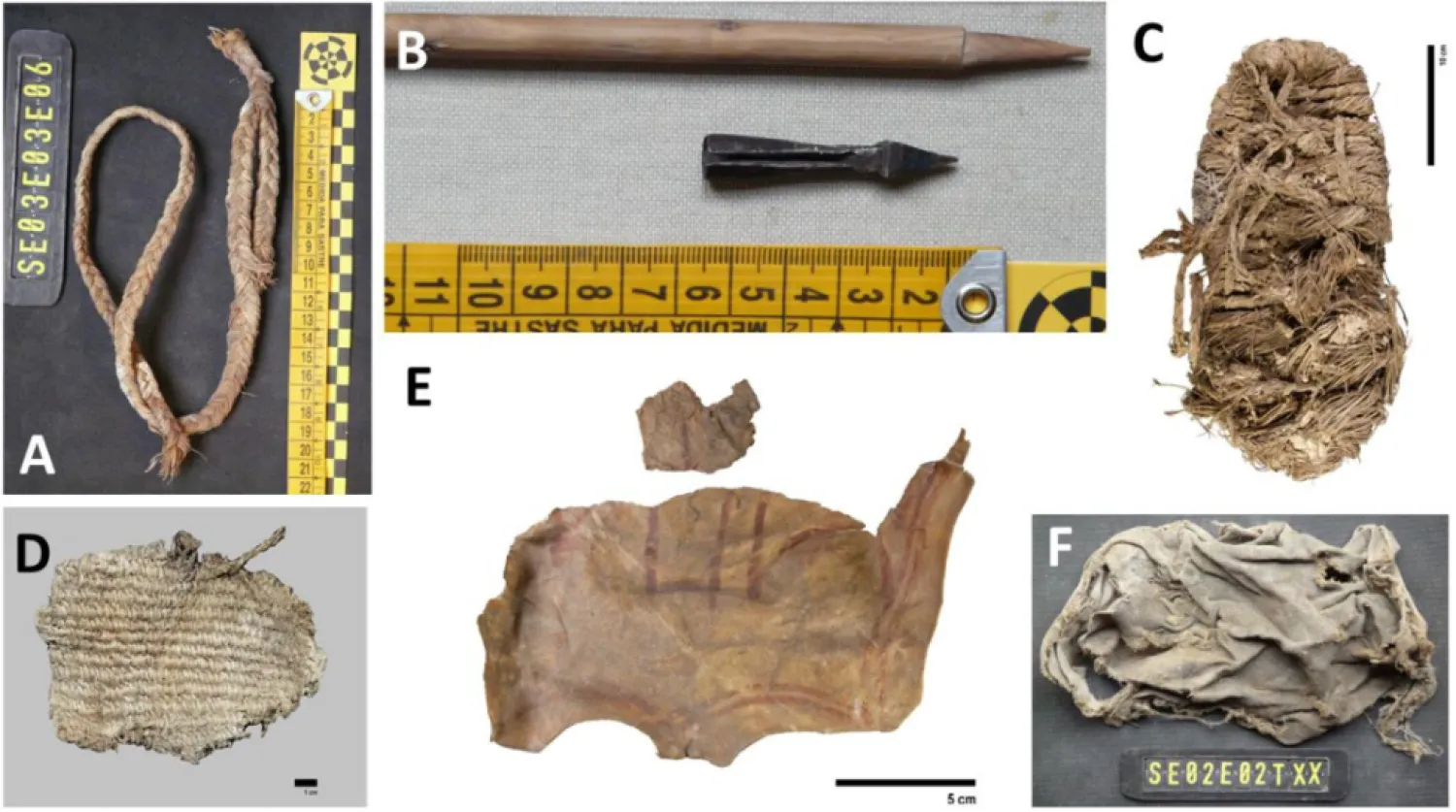
According to The Independent newspaper, archeologists examining the nests of the bearded vultures in the southern Spanish mountains uncovered medieval artefacts, including a crossbow bolt, a slingshot, and a decorated piece of leather, some of which date back to around 1375.
The items, which are believed to be from the Middle Ages, were used by the birds to build their homes, alongside more common nesting materials.
Bearded vultures have been extinct in the southern Spanish mountains for between 70 and 130 years. But scientists said their nests have been left remarkably well-preserved because of the birds’ tendency to build in protected sites such as cliff caves, describing them as “natural museums.”
The study, published in the journal Ecology, found an “abundant and well-preserved” hoard of medieval items across 12 bearded vulture nests.
After analyzing the nests layer by layer, researchers uncovered a total of 2,483 remains, including 2,117 from bone, 43 eggshell remains, 25 items manufactured from esparto grass, 86 hooves, 72 leather remains, 11 hair remains, and 129 cloth remains.
Items made from esparto grass included shoes, ropes, basketry, horse tacks, and slingshots. The team of archaeologists also recovered sandals made from grass and twigs, a wooden lance, a decorated piece of sheep leather, and a piece of fabric.
Similar artefacts discovered across the Iberian peninsula showed that humans have used plant fibers to make a “wide variety” of items since the Epipaleolithic period around 12,000years ago, according to researchers.
They said these discoveries can help scientists understand human practices, technological development, and shifts in material culture.
“Thanks to the solidity of bearded vulture nest structures and their locations in the western Mediterranean, generally in protected places such as caves and rock shelters with relatively stable temperature and low humidity conditions, they have acted as natural museums, conserving historical material in good condition,” the study’s authors wrote.


