
An Estimated 1 Million Cats Prowl the Streets of Cyprus as Officials Scramble to Check Their Numbers 

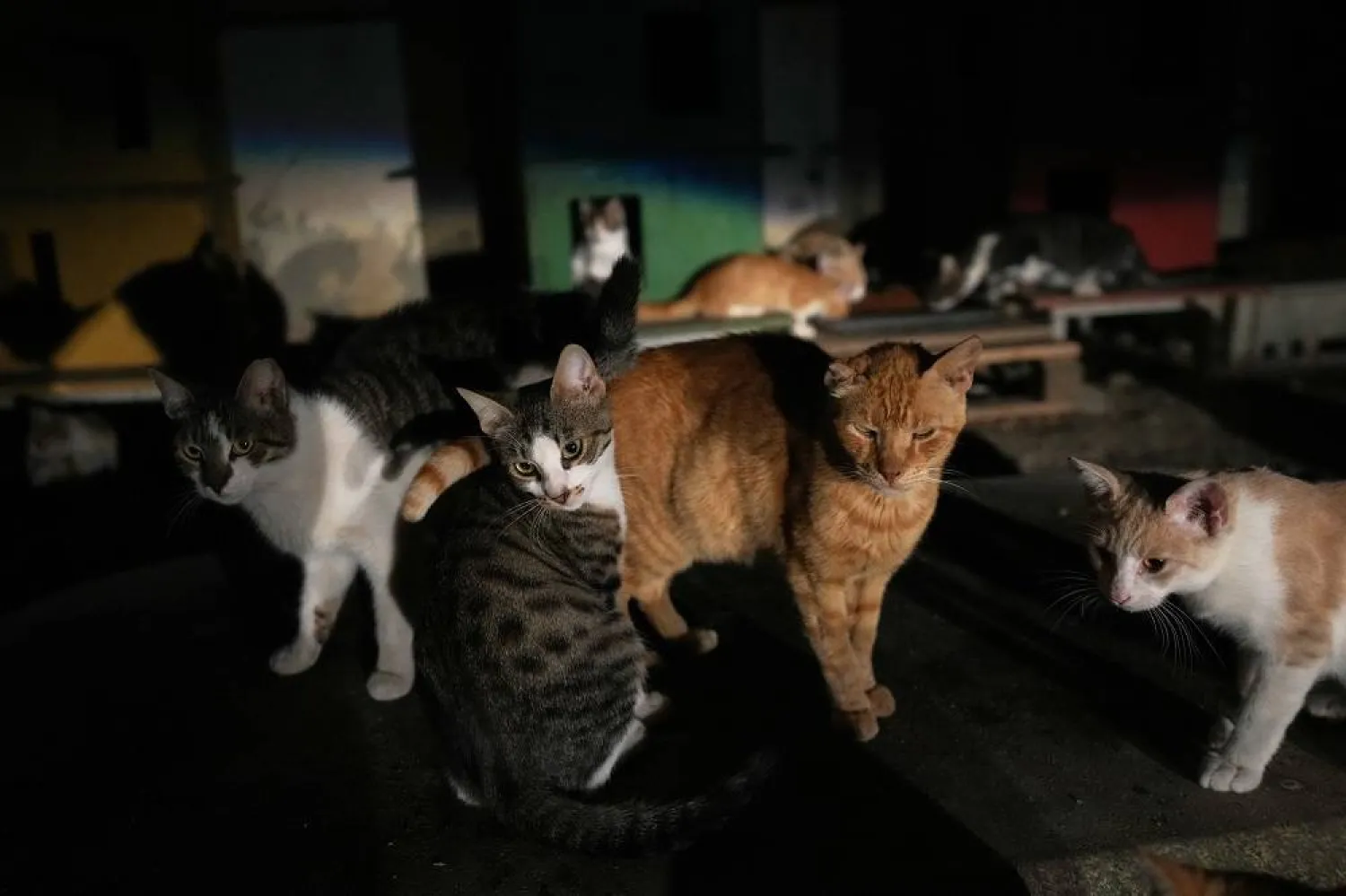
Cats are seen at a park in Lakatamia area, of capital Nicosia, Cyprus, Oct. 4, 2025. (AP)
TT

An Estimated 1 Million Cats Prowl the Streets of Cyprus as Officials Scramble to Check Their Numbers 

Cats are seen at a park in Lakatamia area, of capital Nicosia, Cyprus, Oct. 4, 2025. (AP)

The island of cats has a cat problem.

Officials in Cyprus, the small island nation in the eastern corner of the Mediterranean, estimate there is roughly one feral cat for every one of its 1 million inhabitants — though activists contend the actual population is hundreds of thousands higher.

In late September, the island’s parliamentary committee on the environment was told that an existing sterilization program is too limited to contain the burgeoning cat population.

“It’s a good program, but it needs to expand,” said Environment Commissioner Antonia Theodosiou, noting that the program conducts only about 2,000 sterilizations annually on a budget of just 100,000 euros ($117,000).

While there is no official comparative data, Theodosiou said Cyprus has gained a reputation for having a cat population that is exceptionally large relative to its human inhabitants.

‘There has to be a plan’

Change might be on the way, but funding alone won’t solve Cyprus’s cat problem.

Appearing to heed calls for more funding, Environment Minister Maria Panayiotou announced on Oct. 4 — World Animal Day — that the government would raise cat sterilization funding to 300,000 euros annually. The decision was hailed as a significant step forward.

However, Charalambos Theopemptou, chairman of the Parliamentary Environment Committee, warned against relying on money alone. “There has to be a plan," he said. "We can't just go ahead with sterilizations without having a plan,” he said.

Given cats’ predatory nature, a large population not only has the potential to wreak havoc with the island’s ecosystem, but it could cause undue suffering for feral felines roaming car-choked streets in search of food and shelter.

Cyprus' historic cats

Cyprus has a long history as a cat-loving nation where cat food dispensaries and clusters of tiny houses are a regular sight along popular footpaths.

Two decades ago, French archaeologists unearthed what they believed to be the earliest evidence of a domesticated cat in a 9,500-year-old neolithic village. They found the bones of a cat close to the skeletal remains of a human, suggesting that they were buried together.

Adding to this long history of human-feline connection is the 4th century legend of Saint Helen who, after finding the True Cross in the Holy Lands, brought over a couple of boatloads of cats to deal with a snake infestation. A monastery that serves as a feline safe haven, St. Nicholas of the Cats, still exists today.

With tourism a key economic driver for Cyprus, the island’s cats have become a major attraction for the millions of vacationers who descend on the island every year. The well-fed felines are a common sight, often seen feasting on leftovers provided by visitors at the plethora of restaurants where they like to hang out.

Felines galore

Demetris Epaminondas, president of the Veterinary Association, attributes the exploding population to unchecked breeding, particularly in high-concentration urban areas, and to more kittens surviving birth, thanks to ordinary folks offering care.

The current government-run program disburses its budget to municipalities which, in turn, fund private veterinarians to sterilize cats brought in by animal conservation groups.

Authorities acknowledge the program is ineffective.

The country’s state-run Veterinary Services, which is in charge of sterilizations, conceded that the program’s capabilities are "lesser than the real need.” To reassess where available funding could be redistributed, it has asked local government authorities to submit reports on locations with large feral cat concentrations.

Elias Demetriou who runs the private sanctuary Friends of Larnaca Cats said tripling sterilization funds won't have the desired effect unless conservationist groups who have the know-how are recruited to round up cats for sterilization.

Eleni Loizidou, head of Cat Alert, a volunteer organization caring for strays in Nicosia, said her organization’s recent efforts to round up 397 feral cats from the city center were a mere drop in the ocean and that too few females are being sterilized, partly because of the difficulty in trapping feral cats.

‘There are solutions’

Epaminondas, the Veterinary Association president, said Cyprus' cat population can be brought under control in as few as four years. This would be possible, he said, if authorities cobble together a unified sterilization plan that would put private clinics at the forefront of the effort by offering free-of-charge neutering without all the red tape that complicates the process.

“People will be more motivated to get cats neutered if we make it easier for them to do so,” he said.

His association has proposed a plan that would identify major cat concentration centers where authorities can round them up and take them for sterilization at designated vets. The initiative includes the creation of a smartphone application that would allow anyone to help authorities locate such large cat concentrations.

The state can avoid bearing the full cost of the program by setting up a fund where people and businesses can donate, according to Epaminondas. The minister's announcement about tripling the sterilization budget, he said, could act as a significant incentive for more corporate donations.

The cost of sterilizing a female feral cat in Cyprus is 55 euros ($64), which goes up to 120 euros for domesticated cats brought in by owners, as they receive more specialized care.

Theodosiou, the environment commissioner, said her staff have worked on a long-term strategy that would bring together government, conservationists, and volunteers to establish a precise cat population count and pave the way for a mass sterilization program. The plan would also legalize private cat sanctuaries.

“There are solutions,” Cat Alert's chief Loizidou said.


Saudi Arabia Ranks 5th Globally, 1st in Arab World for AI Sector Growth on Global AI Index

File photo of the Saudi flag/AAWSAT
TT

Saudi Arabia Ranks 5th Globally, 1st in Arab World for AI Sector Growth on Global AI Index

File photo of the Saudi flag/AAWSAT

The Kingdom of Saudi Arabia ranked fifth globally and first in the Arab world in artificial intelligence sector growth, according to the Global AI Index, the Saudi Press Agency reported on Sunday.

This marks a national achievement that builds on the Kingdom’s steady progress in artificial intelligence and reflects the effectiveness of its development plans and its ability to achieve high international competitiveness under Saudi Vision 2030.

During the period measured by the Global AI Index, Saudi Arabia launched a wide range of national initiatives led by the Saudi Data and Artificial Intelligence Authority (SDAIA). These initiatives strengthened Saudi Arabia’s position on the index.

They included several projects, notably the Rowad Package initiative, which supports entrepreneurs and startups by enabling them to verify customer data through electronic linkage with the National Information Center’s databases.

SDAIA also launched the AI Ethics Incentive Badges initiative to raise awareness of ethical practices and promote responsible use of technologies. The initiative provides a clear framework to help organizations and developers adhere to global best standards. More than 50 accreditation certificates have been granted to national AI companies for developing AI-based products serving priority sectors.

The generative Gaia AI accelerator, supported by SDAIA and the National Technology Development Program (NTDP) in collaboration with New Native, has helped numerous startups enter the market more quickly and efficiently.

These efforts also extended to the SDAIA Academy, which has focused on building national capabilities and empowering young talent through advanced training programs in data and AI, offered in partnership with international organizations.

As part of its efforts, the SDAIA Academy trained more than one million Saudi men and women in data and AI skills through the SAMAI initiative, conducted in collaboration with several government entities. The initiative is considered one of the world’s largest training programs targeting the general population.

These achievements highlight SDAIA’s success in the field of data and AI, both nationally and internationally. They reinforce its role as the Kingdom’s central authority for regulation, development, and application, and advance the nation toward leadership in data- and AI-driven economies.


Saudi Arabia: Newest State-of-the-Art Film Production Hub Launched in Qiddiya City

Located at the heart of Qiddiya City, PlayMaker Studios sits just 40 minutes from Riyadh
TT

Saudi Arabia: Newest State-of-the-Art Film Production Hub Launched in Qiddiya City

Located at the heart of Qiddiya City, PlayMaker Studios sits just 40 minutes from Riyadh

Qiddiya Investment Company has announced the official opening of PlayMaker Studios at Qiddiya City, marking the launch of Saudi Arabia’s newest state-of-the-art film production hub. The opening represents a major milestone in the Kingdom’s rapidly advancing film and creative industries.

The launch of PlayMaker Studios marks a strategic addition to Saudi Arabia’s production infrastructure. The studios feature two high-spec, purpose-built soundstages, flexible workshops, and fully integrated production facilities designed to meet the needs of large-scale international and regional productions. The complex also includes modern production offices and on-site support amenities, offering a seamless, end-to-end production environment.

With strong demand already recorded for studio space, construction has begun on two additional world-class soundstages, scheduled for completion in 2026, which will significantly expand PlayMaker Studios’ capacity and enable it to host multiple major productions simultaneously.

Qiddiya Investment Company has also established a dedicated on-the-ground team to provide hands-on support for producers across permitting, logistics, and operational services. In addition, PlayMaker Studios offers streamlined access to Saudi Arabia’s industry-leading 40% production cash rebate, one of the most competitive incentives globally.

As part of its long-term development strategy, PlayMaker Studios will introduce dedicated post-production, visual effects, volumetric, and music studios, further strengthening the Kingdom’s creative and production ecosystem. The complex is set to become both a creative powerhouse and a core pillar of Qiddiya City’s entertainment offering.

Qiddiya Investment Company Managing Director Abdullah Aldawood said: “PlayMaker Studios is a cornerstone of Qiddiya City’s ambition and builds on Saudi Arabia’s growing success in the creative industries. It marks an important step in strengthening this momentum and realizing our vision to create a world class destination where innovation, culture and entertainment come together, and where the global film industry can find a new home in the Kingdom.”

Located at the heart of Qiddiya City - the world’s first destination where culture, sport, and creativity converge - PlayMaker Studios sits just 40 minutes from Riyadh, offering producers integrated logistics solutions, premium accommodation options for production teams, and direct access to a dynamic entertainment environment designed to inspire world-class content creation.


Brigitte Macron Visits an Old Friend in China: Giant Panda Called Yuan Meng

FILE - French First lady Brigitte Macron attends a naming ceremony of the panda born at the Beauval Zoo, in Saint-Aignan-sur-Cher, France, on Dec. 4, 2017. (AP Photo/Thibault Camus, Pool, File)
TT

Brigitte Macron Visits an Old Friend in China: Giant Panda Called Yuan Meng

FILE - French First lady Brigitte Macron attends a naming ceremony of the panda born at the Beauval Zoo, in Saint-Aignan-sur-Cher, France, on Dec. 4, 2017. (AP Photo/Thibault Camus, Pool, File)

French first lady Brigitte Macron caught up with an old friend — a giant panda born in France — at the tail end Friday of a visit to China with President Emmanuel Macron.

At a panda reserve in southwest China that Yuan Meng now calls home, the first lady marveled at how big he has grown. She helped choose his name — which means “accomplishment of a dream” — when he was born in a French zoo in 2017.

“When they're born, they're like this,” she said, holding up two fingers a short distance apart. Meanwhile, the chunky male roamed in his enclosure, feasting on bamboo and ignoring bystanders who cried out his name, hoping to elicit a reaction.

“They have a very independent character,” she said. “They do only what they want.”

For decades, China has deployed what's often called “panda diplomacy” to smooth and promote relations with other countries, gifting the animals to friendly nations and lending pandas to zoos overseas on commercial terms.

Emmanuel Macron’s state visit this week to China, his fourth as president, included meetings with Chinese leader Xi Jinping and other officials, discussing Russia’s war in Ukraine, trade ties and other issues.

The China Wildlife Conservation Association said during the visit that it signed a letter of intent to send two of the animals to the Beauval Zoo south of Paris in 2027 under what would be a new 10-year round of panda cooperation with France.

The French zoo sent two 17-year-old pandas — Huan Huan, a female, and her partner Yuan Zi — back to China last month after 13 years on loan in France.

Yuan Meng was their cub, conceived using artificial insemination.

Despite being made in France, he officially belonged to the Chinese government. Yuan Meng bid ‘’adieu’’ to France in 2023, sent off to a new life in the Chengdu Research Base of Giant Panda Breeding in southwest China where Brigitte Macron, considered to be his “godmother,” dropped in to see him.

Huan Huan and Yuan Zi also produced female twins in France in 2021.

Huanlili and Yuandudu are also expected to leave the Beauval Zoo for China in the future. The China Wildlife Conservation Association has previously said that it expects them to remain at the French zoo until January 2027.