Yes, You Do Need to Clean Your Water Bottle. Here's Why and How

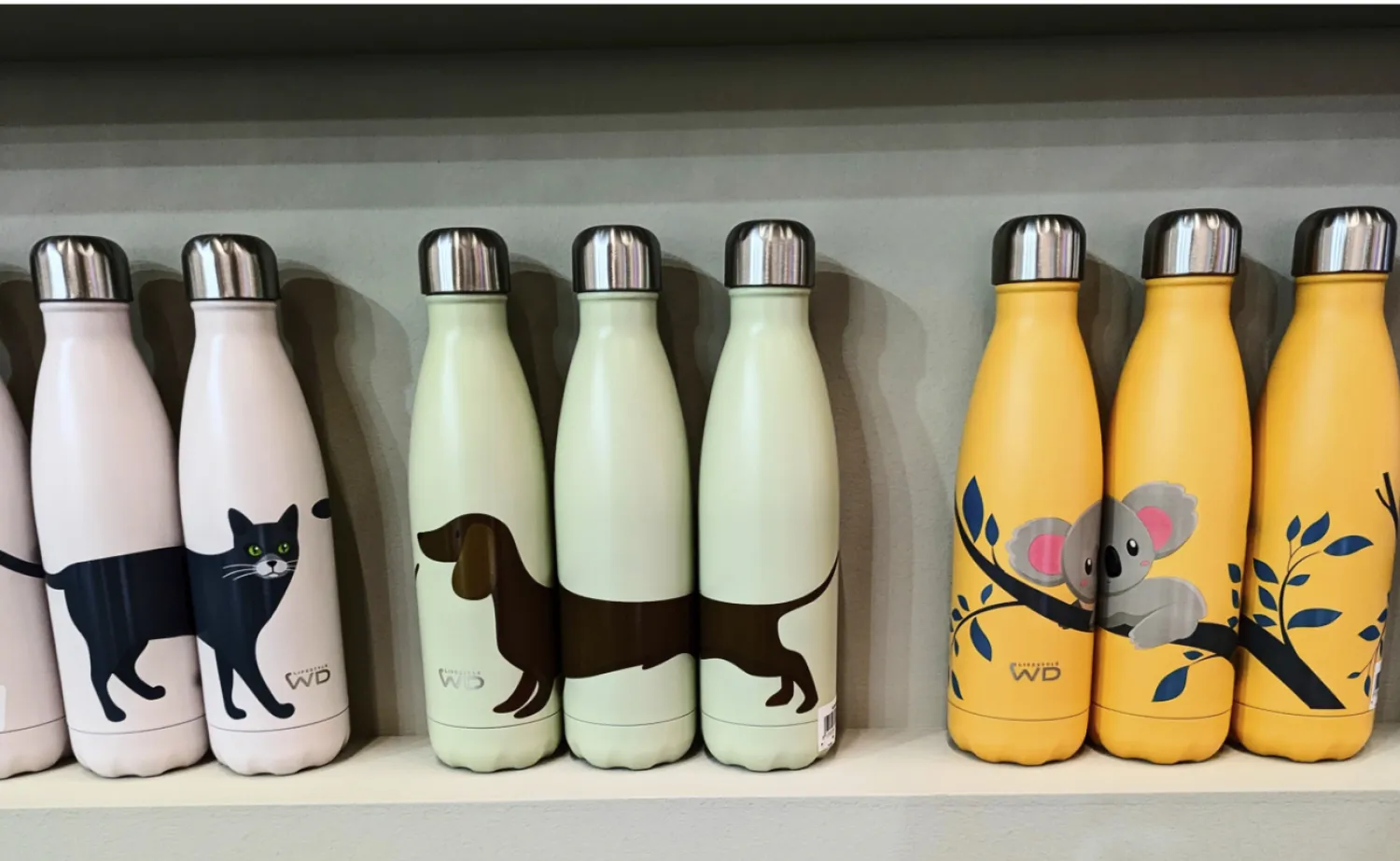
A selection of Lifestyle WD water bottles featuring animals are displayed at the Ambiente homewares trade fair in Frankfurt, Germany in Feb. 2025. (Kim Cook via AP)
TT

Yes, You Do Need to Clean Your Water Bottle. Here's Why and How

A selection of Lifestyle WD water bottles featuring animals are displayed at the Ambiente homewares trade fair in Frankfurt, Germany in Feb. 2025. (Kim Cook via AP)

You keep your trusty reusable bottle filled with only clear, delicious water. Do you still need to wash it?

Experts say reusable bottles get grubby no matter what liquid they're filled with, and it's important to clean them regularly.

Water bottles pick up germs from our mouths when we take a sip, and from our hands when we touch the straw or lid. They're covered in tiny, tough-to-reach nooks and crannies which can become breeding grounds for mold, bacteria and other microbes if left un-scrubbed, The AP news reported.

“It seems like something mundane, but it is extremely important,” said nurse practitioner Michele Knepper, who works at the University of Pittsburgh Medical Center.

Unclean water bottles can cause stomach aches and itchy throats and even exacerbate allergies and asthma.

Experts disagree on when and how you should wash them, but they're all in agreement on one thing: Give your water bottle a tender loving clean, because something is better than nothing at all.

“Is it that big of a deal? No. But it’s also not difficult to just wash your water bottle,” said Dr. Mike Ren, a family medicine physician at Baylor College of Medicine.

Some tips for a squeaky clean water bottle Experts say the gunk doesn’t care what your water bottle is made of. Reusable metal, plastic and glass bottles all grow germy, but plastic bottles are more likely to get scratches or dings on the inside where microbial life can cozy up.

The best cleaning routine is a simple one: Use a sponge or bottle brush to scrub inside and out with warm, soapy water, rinse it out and let it dry so it's ready for the next refill. A narrow or pipe cleaner-shaped tool can be useful to get into straws and tight crevices.

For a deeper wash, scientists recommend popping the bottle in the dishwasher if it's safe to do so, or dissolving a denture or retainer-cleaning tablet in the bottle overnight. Scrubbing with a warm water solution of vinegar or baking soda works too.

Many experts recommend doing a simple, soapy water clean every day and a deeper clean once a week. If daily cleaning feels a little extra, Ren said to try to get to it at least every other week or so while maintaining other good habits like rinsing the mouthpiece over the sink during each refill.

But if you fill your reusable bottle with other beverages like protein shakes or exercise drinks, it really is important to clean every day. Sugary drinks leave a residue that bacteria love to snack on.

Do you need to dump the water in your bottle every day? Is it okay to leave water in a reusable bottle overnight? Experts disagree.

Some say to dump the dregs out every refill, while others recommend emptying every few hours. Ren says it's likely okay to leave some inside overnight, but to empty old water at least every few days.

“Guidelines are guidelines,” Ren said. “Everyone's going to do it a little bit differently.”

If there's visible mold on the bottle or the liquid inside has a weird smell, don't drink it. Avoid refilling disposable plastic water bottles since chemicals can leach into the water, and they're even more full of cracks and crevices that can harbor germs.

Water bottle cleaning routines may not all look the same — but it's important to keep up the habit, said Ivy Sun, a hospitality expert at Georgia Southern University who has studied water bottle contamination. She washes her and her kids' bottles with soapy water every day.

“This is just a very small step that we do, but it can largely help with our health,” Sun said.


Cracking a Smile Regularly May be Good Not Just for Your Mood but for Your Health

FILE - A fan attends the performance by American singer Jon Batiste at the Rock in Rio music festival in Rio de Janeiro, Sept. 7, 2026. (AP Photo/Bruna Prado, File)
TT

Cracking a Smile Regularly May be Good Not Just for Your Mood but for Your Health

FILE - A fan attends the performance by American singer Jon Batiste at the Rock in Rio music festival in Rio de Janeiro, Sept. 7, 2026. (AP Photo/Bruna Prado, File)

Reminding yourself to smile often cannot only make more friendships but it can also make you feel better.

And rather than wait for a reason to smile, just making the physical change of literally turning that frown upside down could impact emotions, according to experts.

Research backs up the fact that smiling goes a long way.

Some older research has focused on this “facial feedback hypothesis,” according to Jeanne Tsai, a longtime psychology professor at Stanford University who runs the Culture and Emotion Lab. In one classic study in the late 1980s, researchers would have subjects put a pencil between their lips and adopt a smile or a frown while viewing a positive movie clip like a cartoon. Some subjects who smiled would feel the sensation of the smile more and be more amused.

“When we’ve done that demonstration in classes, it works,” Tsai said. “When you’re doing it in a room by yourself, you’re not doing it in a social interaction, maybe it’s making you remember, or it’s an effect of remembering some good thing that happened and that would put you in a better mood.”

At the Orange County Academy of Sciences and Arts in Southern California, the power of a smile is taken very seriously. An entire section on the charter school group’s website is dedicated to its philosophy that a smile can make a difference.

“Smiling creates a supportive classroom culture that makes students relaxed, active, and motivated,” according to the website. “It increases emotional well-being, lowers stress, and gives students confidence.”

How smiling can benefit health Dr. Judy Ho, a Los Angeles clinical and forensic neuropsychologist who also teaches at Pepperdine University, discusses smiling as a coping strategy with some patients suffering depression or anxiety.

“I'm not suggesting that that's the only way they can fix things,” Ho said. “It's just like another thing that you can add to your toolbox.”

Smiling can affect one's level of cortisol, a hormone the body releases partly to help regulate stress and mood, according to Ho. Smiling can affect brain chemicals that are associated with positive feelings including endorphins, dopamine and serotonin.

“People who smile during stressful tasks generally demonstrated lower heart rates during recovery than those maintaining neutral expressions,” Ho said. “Smiling also reduced aspects of the body's physiological stress response.”

The hope is if you smile enough, you will start feeling it emotionally.

“In some ways it's like a mediating effect,” she added.

The value of a smile varies culture to culture How smiling and even the openness of a smile are perceived are not universal. Tsai, the Stanford professor, has conducted research on how emotion in American culture puts value on trying to always feel positive and minimizing negativity and sadness. In East Asian cultures, emotion is more about balance.

“It’s like the positive and the negative emotions are braided together, and so you don’t want to feel too positive or too negative,” Tsai said. “You want more of a balance between the two.”

Her past studies also examined how European Americans and East Asians — including Taiwanese, South Koreans, Japanese and Hong Kong Chinese — look at a “neutral or a calm” smile versus a full-on grin. Subjects rated the differing facial expressions on warmth and trustworthiness. While some Americans saw the excited smiles as friendlier, some East Asians characterized those facial expressions as “emotionally unstable” or “unreliable."

“What kind of smile matters — whether it’s a calm, closed mouth smile more like the Dalai Lama or a big toothy excited smile like Julia Roberts,” Tsai said. “We’ve done some series of studies in Taiwan and other East Asian contexts. They don’t like the big, toothy, excited smile unless it’s really situationally appropriate.”

In Thailand — known as “The Land of Smiles” — smiling is embedded in the culture. There are nearly 30 Thai words for “smile.” Many teach-abroad programs where people can teach English as a foreign language in Thailand cite that smiling often with children and colleagues is key to showing respect, good manners and calmness.

At the OCASA charter schools, smiling is part of an effort to make children feel seen.

“I’ve always believed in wanting school to be a happy place for kids,” said RaNae Posey, principal of OCASA Capistrano Elementary School. “To actually help them form habits of looking at the bright side of things.”

Mandating smiles may lead to more frowns Women in recent years have smacked down the idea that they have to smile in the workplace while men do not. Smiling can feel like a Catch-22 for some women and sometimes for people of color who may be stereotyped as unapproachable or cold if they don’t smile enough.

Last year, retailer Target was ridiculed across social media for instituting a smiling policy. Workers had to smile and make eye contact if a customer was within 10 feet (3 meters) and personally greet them if they were within 4 feet (1.2 meters).

People do not like feeling like they have no “emotional autonomy,” according to Nicholas Coles, an assistant professor who runs the Social Science Collaboratory at the University of Florida in Gainesville.

“In those scenarios, what we find is that it’s more that you’re smiling your way to misery,” Coles said. “It’s only when it feels authentic and voluntary that I think it’ll have any real effect.”

With the holidays approaching, more people may have to muster smiles with family if sensitive topics like politics and religion come up. Those could be good times to see if smiling helps.

“If we were able to just smile and be like ’Look, this is somebody that historically cares about you and loves you,' maybe that would change the way that we respond to them even in a moment of tough conversation,” Ho said.


Six Flags Says it Will Install Seat Belts on Georgia Roller Coaster after Rider's Death

Six Flags Says it Will Install Seat Belts on Georgia Roller Coaster after Rider's Death
TT

Six Flags Says it Will Install Seat Belts on Georgia Roller Coaster after Rider's Death

Six Flags Says it Will Install Seat Belts on Georgia Roller Coaster after Rider's Death

The chief executive of Six Flags says the company will install seat belts on the Georgia roller coaster from which a rider fell to his death earlier this month.

The company's rides with similar restraints will also get the safety upgrade.

The theme park operator announced the extra safeguard less than two weeks after 42-year-old Hassan Jihad Ibn Kariem of Atlanta died after being ejected from his seat on the Goliath coaster at Six Flags Over Georgia.

“We are reinforcing safety precautions at our parks and taking additional measures, including adding seat belts on Goliath and other coasters with a similar restraint,” John Reilly, president and CEO of Six Flags Entertainment Corporation, said in a statement Friday.

Goliath remains shut down while state and local officials investigate the Oct. 12 death.

Reilly didn't specify which other Six Flags coasters will get seat belts. But it has temporarily closed eight additional roller coasters at five other parks in the US and Canada. Those rides all share the same manufacturer and a similar restraint system.

Six Flags hasn't said when those coasters are expected to reopen. Reilly's statement said Six Flags has enlisted independent engineers and inspectors to review safety procedures for all rides at its theme parks.

Investigators haven't said what went wrong on the Georgia coaster. Witnesses said they saw Kariem rise up out of his seat and fall headfirst back into the cart before being ejected. Some people who rode Goliath before him that day said they had concerns about its restraints.

All nine of the Six Flags coasters taken offline were manufactured by the Swiss company Bolliger & Mabillard. They also feature similar clamshell restraints that sit at the top of a vertical bar between each rider's knees. The bar locks a padded restraint into place over the rider's lap and upper legs.

The US patent granted to Bolliger & Mabillard for the restraint system in 2001 says it's designed to make each rider feel “that he is seated on a flying carpet or that he is at the controls of a kind of flying scooter, while still guaranteeing optimum security.”

Following the death in Georgia, non-Six Flags theme parks SeaWorld Orlando in Florida and La Ronde in Montreal, Canada, also temporarily closed one roller coaster apiece that use clamshell restraints.

SeaWorld reopened its Mako coaster Tuesday after it had been offline for a week. The Associated Press emailed the company Saturday asking if seat belts or other safety upgrades were planned for the coaster.

The AP also emailed a spokesperson for La Ronde seeking an update on its shuttered coaster.

In addition to Goliath in Georgia, eight coasters remain closed at Six Flags parks in Gurnee, Illinois; Jackson Township, New Jersey; Charlotte, North Carolina; Mason, Ohio; and Vaughan, Ontario.


British Embassy Quashes Winnie-the-Pooh Return Rumors, Keeping the Bear in New York

FILE - A photograph of author A. A. Milne with his son Christopher Robin is displayed beside Milne's son Christopher Robin's beloved teddy bear, the inspiration for "Winne-the-Pooh," at the New York Public Library, Monday, Sept. 30, 2013, in New York. (AP Photo/Kathy Willens,File)
TT

British Embassy Quashes Winnie-the-Pooh Return Rumors, Keeping the Bear in New York

FILE - A photograph of author A. A. Milne with his son Christopher Robin is displayed beside Milne's son Christopher Robin's beloved teddy bear, the inspiration for "Winne-the-Pooh," at the New York Public Library, Monday, Sept. 30, 2013, in New York. (AP Photo/Kathy Willens,File)

It turns out Winnie-the-Pooh and his fluffy friends aren't getting bear-napped from their longtime home at the New York Public Library.

The British Embassy in Washington dispelled rumors Thursday about a campaign to return the collection of stuffed animals including the “willy nilly silly old bear" to the United Kingdom.

The toys were owned by English author A.A. Milne's son — the real-life Christopher Robin — in the 1920s and served as the inspiration for the characters in the writer's beloved children’s books.

“There’s an open invite if Pooh ever wants to make a temporary visit to the UK, but we have no doubt that Pooh and his pals are in excellent hands with the New York Public Library," the embassy said in a post on social media.

Rumors began swirling about a change of scenery for Pooh after The Washington Post reported last week about a push to bring the teddy bear back home as the famed character turns 100 this year.

Milne bought Pooh for his son's first birthday in 1921 from Harrods department store in London. Decades later, the collection of dolls came to the U.S. for a national tour before publisher Dutton Children’s Books donated them to the library in 1987.

When asked about the British Embassy’s statement, Melissa Grace, director of communications at the library, said they’re excited to celebrate Winnie-the-Pooh’s anniversary and invite the public to their exhibit for free.

“Christopher Robin’s childhood toys are a cornerstone of our renowned children’s literature collection,” she said in a statement, adding that the library has plenty planned for the anniversary, including giving away 3,000 copies of the books.

Last week's Post story reported that Gyles Brandreth, an author and friend of the late Christopher Robin Milne, went to New York two years ago for Queen Camilla to try to bring Pooh to Buckingham Palace. But, he said, the library wasn't interested.

Camilla visited the library herself in April, and rather than try to make off with the plump bear, she delivered a new Roo doll to add to the library’s collection that also includes Piglet, Tigger, Eeyore and Kanga. Roo, in the books, was a small brown kangaroo and the son of Kanga.

This is far from the first time there has been talk of relocation.

In the late 1990s, then Labour Party lawmaker Gwyneth Dunwoody introduced a question in Parliament to ask what plans Britain’s culture secretary had to arrange for the collection's return.

“Just like the Greeks want their Elgin Marbles back — so we want our Winnie-the-Pooh back, along with all his splendid friends,” she had told a reporter.

A New York congresswoman introduced a resolution condemning the attempt to remove the bear.

“The Brits have their head in a honey jar if they think they are taking Pooh out of New York City,” then US Rep. Nita Lowey said, according to The Associated Press.

And unlike plundered antiquities, there's no doubt that Pooh and his friends were freely given to the library. So it would seem once again that children looking to catch a glimpse of the honey-loving bear who inspired such fantastical stories have nothing to worry about.

Besides, New Yorkers would never give up their stuffed friend without a fight. As Manhattan Borough President Brad Hoylman-Sigal said when he reposted the embassy’s statement Friday: “You come at the bear, you best not miss.”