Indonesia Floods Were 'Extinction Level' for Rare Orangutans

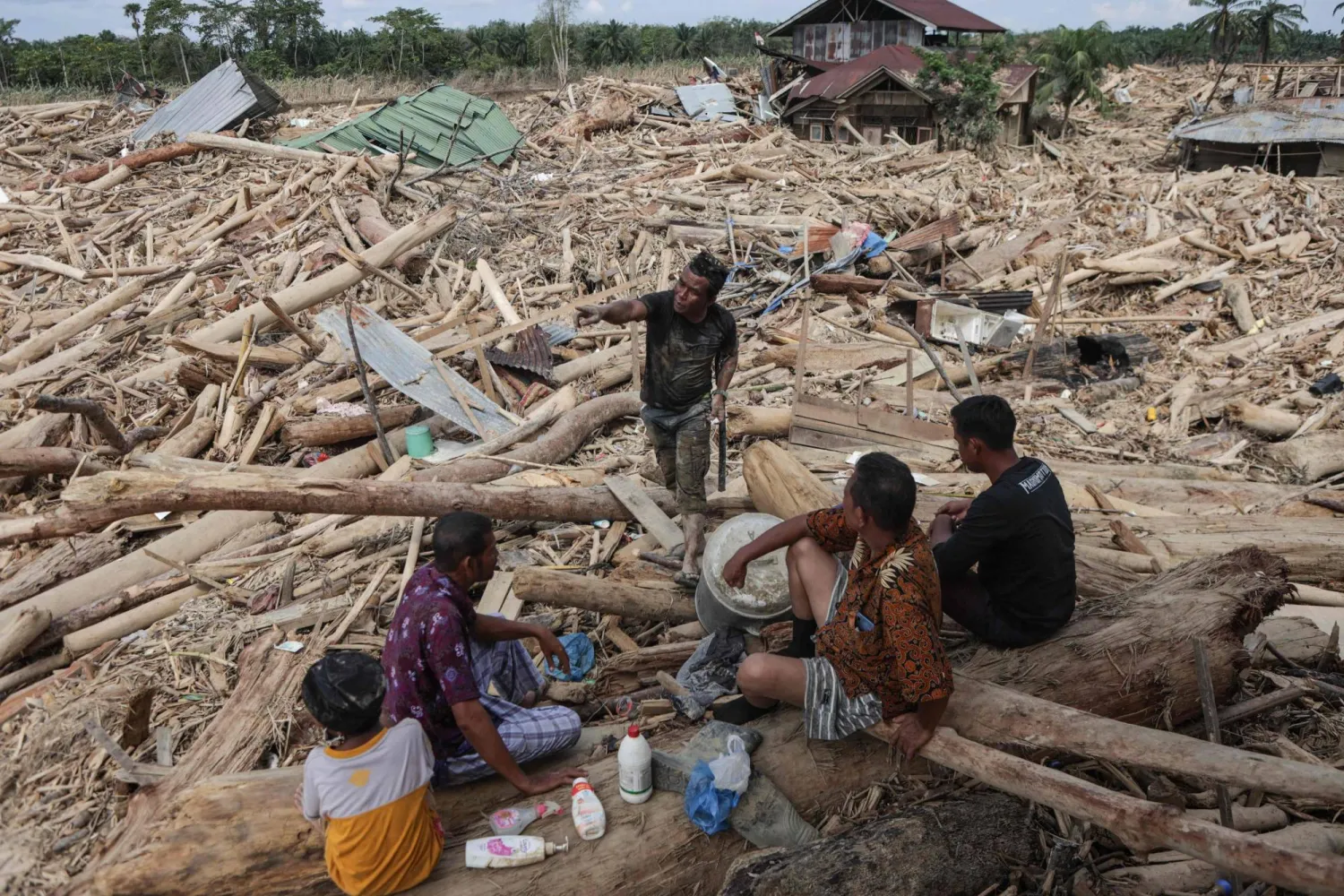
Residents rest as they search for the remains of their house, buried under piles of uprooted trees swept by the flash flood, in Lintang Baru village in Aceh Tamiang, northern Sumatra, on December 11, 2025. (Photo by Aditya Aji / AFP)
TT

Indonesia Floods Were 'Extinction Level' for Rare Orangutans

Residents rest as they search for the remains of their house, buried under piles of uprooted trees swept by the flash flood, in Lintang Baru village in Aceh Tamiang, northern Sumatra, on December 11, 2025. (Photo by Aditya Aji / AFP)

Indonesia's deadly flooding was an "extinction-level disturbance" for the world's rarest great ape, the tapanuli orangutan, causing catastrophic damage to its habitat and survival prospects, scientists warned on Friday.

Only scientifically classified as a species in 2017, tapanulis are incredibly rare, with fewer than 800 left in the wild, confined to a small range in part of Indonesia's Sumatra.

One dead suspected tapanuli orangutan has already been found in the region, conservationists told AFP.

"The loss of even a single orangutan is a devastating blow to the survival of the species," said Panut Hadisiswoyo, founder and chairman of the Orangutan Information Centre in Indonesia.

And analysis of satellite imagery combined with knowledge of the tapanuli's range suggests that the flooding which killed nearly 1,000 people last month may also have devastated wildlife in the Batang Toru region.

The scientists focused on the so-called West Block, the most densely populated of three known tapanuli habitats, and home to an estimated 581 tapanulis before the disaster.

There, "we think that between six and 11 percent of orangutans were likely killed," said Erik Meijaard, a longtime orangutan conservationist.

"Any kind of adult mortality that exceeds one percent, you're driving the species to extinction, irrespective of how big the population is at the start," he told AFP.

But tapanulis have such a small population and range to begin with that they are especially vulnerable, he added.

Satellite imagery shows massive gashes in the mountainous landscape, some of which extend for more than a kilometer and are nearly 100 meters wide, Meijaard said.

The tide of mud, trees and water toppling down hillsides would have carried away everything in its path, including other wildlife like elephants.

David Gaveau, a remote sensing expert and founder of conservation start-up The Tree Map, said he was flabbergasted by the before-and-after comparison of the region.

"I have never seen anything like this before during my 20 years of monitoring deforestation in Indonesia with satellites," he told AFP.

The devastation means remaining tapanulis will be even more vulnerable, with sources of food and shelter now washed away.

Over nine percent of the West Block habitat may have been destroyed, the group of scientists estimated.

In a draft paper shared with AFP and set to be published as a pre-print in coming days, they warned the flooding represents an "extinction-level disturbance" for tapanulis.

They are urging an immediate halt to development in the region that will damage remaining habitat, expanded protected areas, a detailed survey of the affected area and orangutan populations and work to restore lowland forests.

The highland homes currently inhabited by tapanulis are not their preferred habitat, but it is where remaining orangutans have been pushed by development elsewhere.

Panut said the region had become eerily quiet after the landslides.

"This fragile and sensitive habitat in West Block must be fully protected by halting all habitat-damaging development," he told AFP.


Belgium’s Francis Halzen Wins Nobel Prize in Physics

Eva Olsson, Ellen Moons, and Mark Pearce sit in front of a screen displaying Francis Halzen as the recipient of the 2026 Nobel Prize in Physics during a press conference at the Royal Swedish Academy of Sciences in Stockholm, Sweden, on October 6, 2026. (Photo by Christine OLSSON / TT NEWS AGENCY / AFP)
TT

Belgium’s Francis Halzen Wins Nobel Prize in Physics

Eva Olsson, Ellen Moons, and Mark Pearce sit in front of a screen displaying Francis Halzen as the recipient of the 2026 Nobel Prize in Physics during a press conference at the Royal Swedish Academy of Sciences in Stockholm, Sweden, on October 6, 2026. (Photo by Christine OLSSON / TT NEWS AGENCY / AFP)

Belgian Francis Halzen won the Nobel Prize in physics on Tuesday for his contributions to the IceCube Neutrino Observatory and his discovery of high-energy neutrinos of astrophysical origin.

The Royal Swedish Academy of Sciences announced the award in Stockholm.

The prize money this year is 12 million Swedish kronor (about $1.2 million), whether for an individual, a small group of laureates or an organization.

Last year, three scientists won the Nobel Prize in physics for research on the strange behavior of subatomic particles called quantum tunneling that enabled the ultra-sensitive

measurements achieved by MRI machines and laid the groundwork for better cellphones and faster computers.

The announcements of this year's prizes began Monday with the Nobel Prize in medicine being awarded to three scientists whose work led to a tool that uses light to help unravel how the brain works.

This week's awards continue Wednesday with the chemistry prize and literature on Thursday. After Friday’s peace prize is awarded, the Nobel Memorial Prize in Economic Sciences will be announced on Monday.

The prize money this year is 12 million Swedish kronor (about $1.2 million), whether for an individual, a small group of laureates or an organization.


Indonesia Says Will Halt Forest Destruction for Rice Paddies

A man attempts to extinguish flames with a bucket amid thick smoke and fires burning through peatland in Palangkaraya, Central Kalimantan, on October 3, 2026. (Photo by REINA / AFP)
TT

Indonesia Says Will Halt Forest Destruction for Rice Paddies

A man attempts to extinguish flames with a bucket amid thick smoke and fires burning through peatland in Palangkaraya, Central Kalimantan, on October 3, 2026. (Photo by REINA / AFP)

Indonesia said on Tuesday it will halt a project to raze several million hectares of forest to clear land for rice production, saying it had reached self-sufficiency levels of the staple grain.

The government launched a program in 2024 to stop relying on rice imports within five years by clearing three million hectares of land for paddies.

Indonesia is one of the world's most forested countries, and as such a major absorber of planet-warming carbon emissions from mankind's burning of fossil fuel.

It aims to become a net carbon sink by 2030, with forests and other land use absorbing more carbon than they emit.

However, observers have said continuing forest destruction for agriculture and logging, as well as rampant wildfires, could put Indonesia's plans at risk.

President Prabowo Subianto hailed an "important victory" this year after data showed countrywide rice demand had been met with domestic production in one of the world's top consumers of the commodity.

Climate envoy Hashim Djojohadikusumo said on Tuesday the government's strategic reserve rice stock had reached about 5.3 million tonnes.

"The government sees no further need for expanding rice cultivation areas in the so-called forest areas," said Hashim, who is Prabowo's brother.

He added that the government will focus instead on "intensification measures" using superior seeds, for example, to increase rice yields.

It was not known how much forest had already been replaced by rice paddies before the project was halted.

According to the National Food Agency, a government body that seeks to advance food security, Indonesia produced 34.71 million tons of rice in 2025 -- exceeding annual demand of 31.19 million tons.

Haze from wildfires consuming forests and peatlands in Indonesia has blanketed neighboring Malaysia and Singapore for weeks.

Hot, dry conditions associated with the El Nino weather phenomenon have fueled the fires, which are also linked to land clearing.

The Mighty Earth advocacy group welcomed Hashim's announcement, AFP reported.

"This decision renews Indonesia's leadership in showing how to expand agriculture while protecting nature," the NGO's founder, Glenn Hurowitz, said in a statement.

"This decision creates an opportunity for large-scale investments in achieving President Prabowo's goal of restoring 12 million hectares of forest, peat, and other ecosystems," he added.


Vietnam Busts Cat-stealing Ring that Took 2,700 Pets for Food

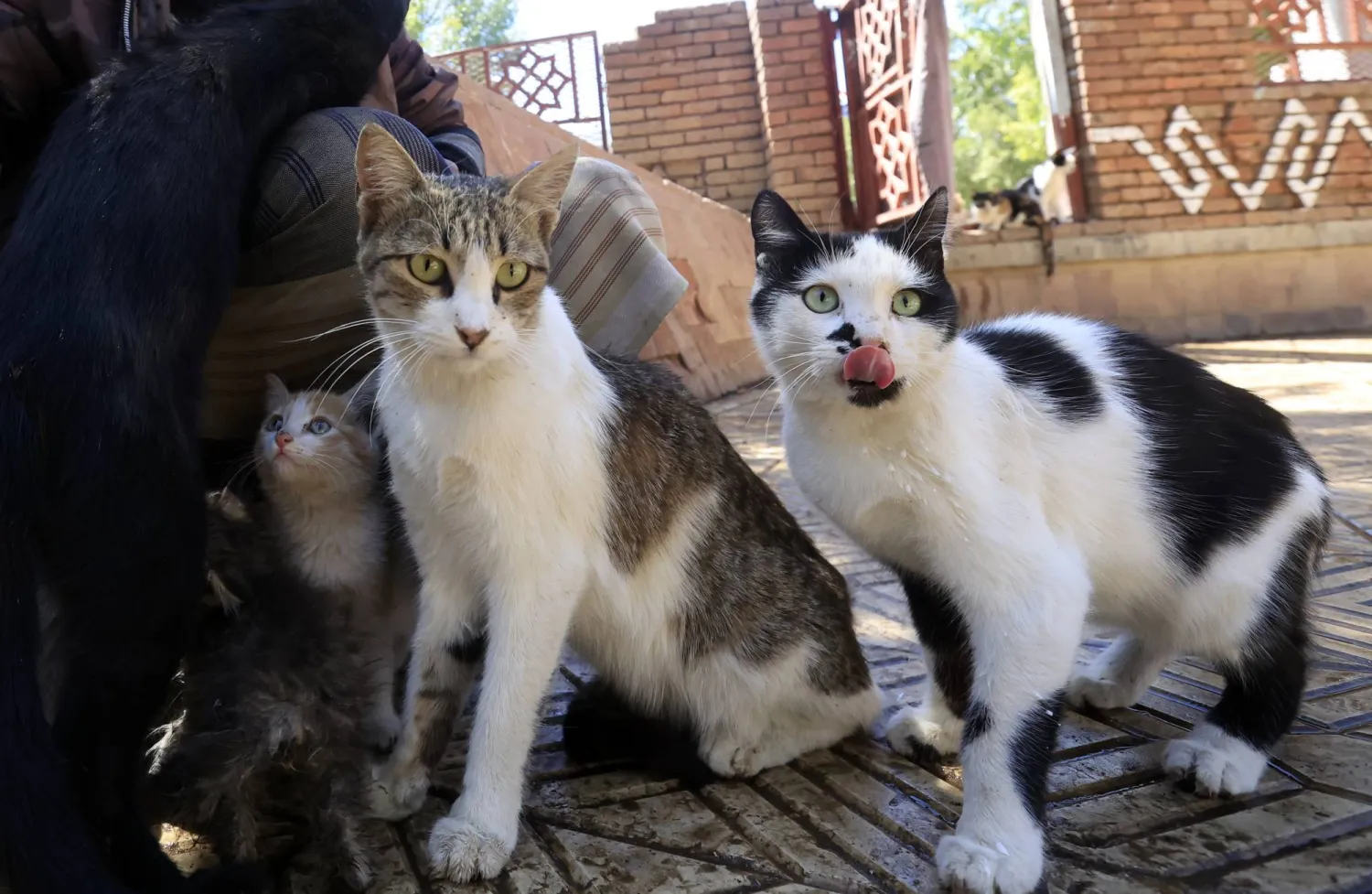
Stray cats. AFP
Stray cats. AFP
TT

Vietnam Busts Cat-stealing Ring that Took 2,700 Pets for Food

Stray cats. AFP
Stray cats. AFP

Vietnamese police have arrested 12 men accused of stealing nearly 2,700 cats during night raids into residential neighborhoods, taking the pets to be slaughtered for food, police and state media said on Monday.

Fur removal machines, cat traps and measuring scales were among items confiscated during investigations into the alleged cat-stealing ring in Ho Chi Minh City.

Consumption of dogs and cats is legal in Vietnam, where many restaurants openly advertise the meat, but vendors are required to obtain certificates showing the origin of the animals.

Media reports have said that stolen cats can be sold at restaurants for at least 70,000 dong ($2.70) per kilogram.

The 12 men were arrested on allegations of property theft and admitted "to stealing and trafficking approximately 2,700 cats of various types", police said in a statement.

Criminal proceedings began on Sunday, but it was not clear when the men were detained.

The suspects pounced between 11:00 pm and 04:00 am, roaming residential areas on motorbikes in small groups to steal local cats, state media said.

The network was first discovered in July, with police seizing 50 live cats alongside 55 cat traps, two scales and two fur removal machines.

Each team was estimated to have stolen between four and 10 cats per night.

Police in Ho Chi Minh City arrested 18 people earlier this year accused of being part of two separate cat-stealing rings.