


Move over Larry: Maximus the PM's Cat Grabs Belgium Spotlight

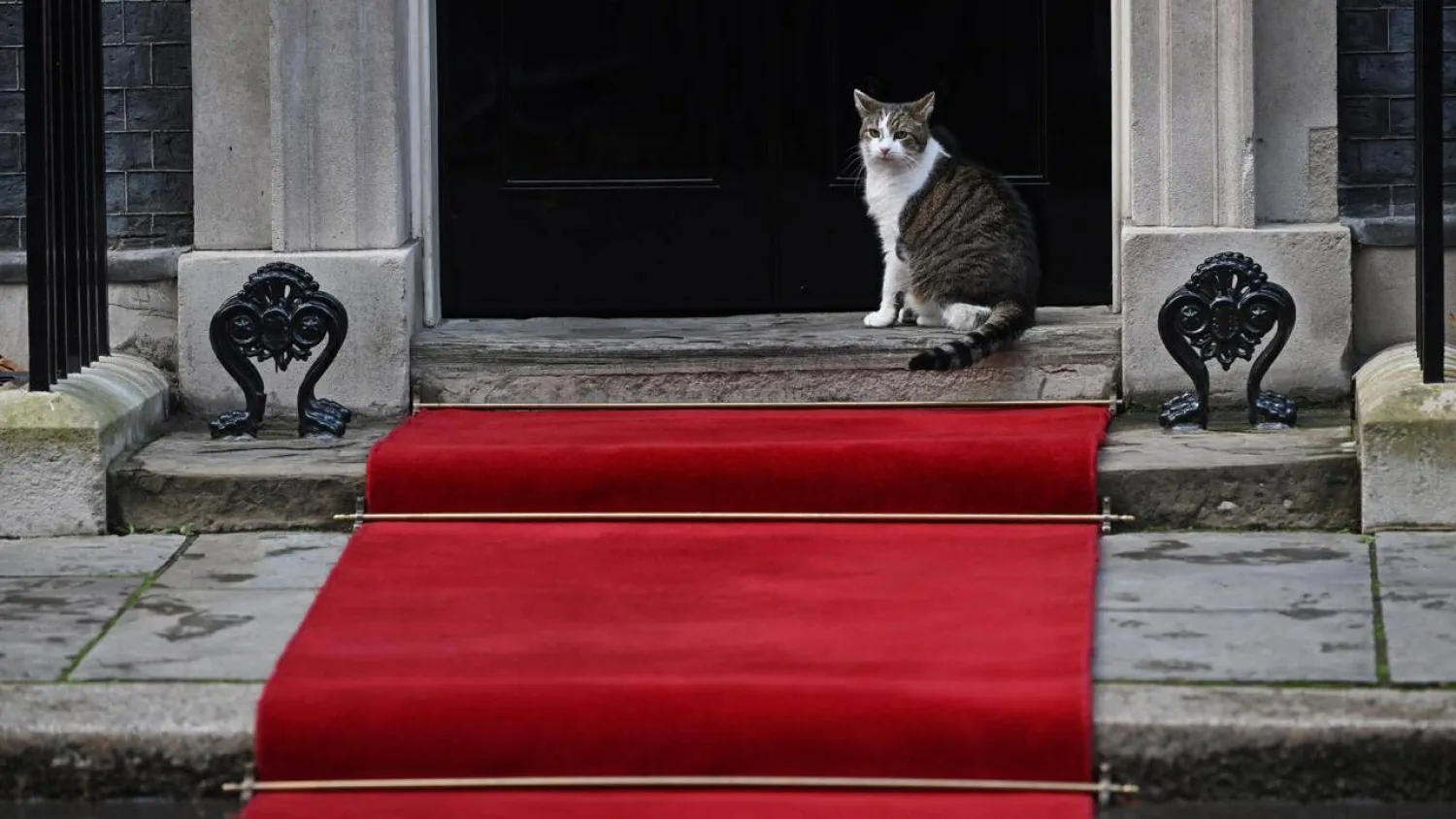
Larry the Downing Street cat is a global celebrity in his own right, with more than 900,000 followers on X. JUSTIN TALLIS / AFP/File
TT

Move over Larry: Maximus the PM's Cat Grabs Belgium Spotlight

Larry the Downing Street cat is a global celebrity in his own right, with more than 900,000 followers on X. JUSTIN TALLIS / AFP/File

It is no secret that a tabby named Larry wields considerable power in Downing Street. Now in Belgium, a rescue cat named Maximus has shot to social media stardom as bewhiskered sidekick and PR weapon of Prime Minister Bart De Wever.

Taken in from a shelter by the Flemish conservative leader over the summer, the grey fluffball has become a fixture on Instagram -- snapped batting at string or lolling around in the boss's office.

But while Larry has risen above politics as Chief Mouser to six British prime ministers, the adventures of De Wever's four-legged friend come with a dose of salty commentary on Belgium's turbulent public life, said AFP.

Cartoon bubbles have captured Maximus musing sardonically -- in Flemish -- on everything from the country's long-running budget showdown to strikes over his boss's austerity measures, or a new voluntary military service for young Belgians.

'Maximus, can you catch a drone?'

Less than six months after his account went live in July, Maximus has caught up with his master when it comes to Instagram followers.

The account name -- @maximustp16 -- stands for "Maximus Textoris Pulcher", a cryptic reference to that of his boss, which means "The Weaver" in Dutch.

Those in the know say the fel-influencer's posts are put up by the prime minister's personal assistant.

But the Belgian leader -- known for his deadpan sense of humor -- is also pretty prolific online, and regularly cross-posts with the cat's account when he wants to strike a lighter note.

Since taking office in February, De Wever has posted a whole series of vignettes of himself with Maximus, pushing him in a stroller or taking a nap by his side.

His first response in October to the news of a foiled plot to attack him using drone-mounted explosives?

A post showing the prime minister and reclining cat with the cartoon caption "Maximus, can you catch a drone?"

"No -- but I'm catching dreams like no one else!" the mog replies.

'Noise and hot air'

All good fun, but what is the strategy at work?

For political analyst Dave Sinardet the spoof account is chiefly a way for the 54-year-old De Wever to freshen up his public image -- and show he does not take himself too seriously.

"It's a smart way to do political PR," said Sinardet, a university professor in Brussels. "It makes politicians seem friendlier, gentler -- considering that most people see them as rational, even arrogant figures."

The Flemish nationalist faces an uphill challenge -- under fire from left-wing parties who accuse him of unpicking social protections with rolling strikes and protests targeting his government all year.

Deploying pets as political PR assets is nothing new: every US president in history, with the exception of Donald Trump, has posed with animals at the White House.

Larry the Downing Street cat is a global celebrity in his own right, with his @Number10cat account on X boasting almost 900,000 followers.

But De Wever's posts with Maximus are not to everyone's liking at home.

A video of the prime minister pretending to play "Amazing Grace" on the bagpipes -- the pipe being Maximus's tail -- during tense budget talks had the opposition hissing.

"Quite the summary of their politics: noise and hot air," snapped the socialist lawmaker Patrick Prevot.



Study: Despite Reputation, Bonobos Are Aggressive

A chimpanzee looks on at the Tacugama Chimpanzee Sanctuary, where rescued primates are rehabilitated in Western Area Peninsula National Park, Sierra Leone, Friday, July 4, 2025. (AP Photo/Misper Apawu)
TT

Study: Despite Reputation, Bonobos Are Aggressive

A chimpanzee looks on at the Tacugama Chimpanzee Sanctuary, where rescued primates are rehabilitated in Western Area Peninsula National Park, Sierra Leone, Friday, July 4, 2025. (AP Photo/Misper Apawu)

Historically considered a more peaceful species than their chimpanzee cousins, bonobos are actually just as aggressive -- but target their ire most often at males, according to a study published Wednesday.

Living in matriarchal societies, the gentle-eyed primates once dubbed "hippy apes" are far from violence-free, a group of European researchers reported in the journal Science Advances.

They studied 13 groups of bonobos and nine groups of chimpanzees -- who conversely live in patriarchal systems and are well known for their aggressivity -- in zoos, seeking to find out which is more prone to attacks.

Measuring different types of aggressive behavior, both physical and not -- such as throwing objects, intimidation, or biting and slapping -- they found "no overall differences in absolute aggression rates between the two species."

However, differences emerged "in how the aggression is distributed among group members," co-author Nicky Staes told AFP.

"In chimpanzees aggression mostly comes from males and is directed towards both males and females, whereas in bonobos aggression levels are quite equal in both sexes but are mostly directed at males," she said.

Emile Bryon, another co-author, said that, as bonobos live in female-dominant groups, the fact that both females and males direct most of their aggression toward males surprised researchers.

"Dominant individuals compete amongst each other for resources," he said, so "one could expect aggression among bonobo females. But our study says otherwise."

The relative lack of aggression among female bonobos could be explained by the species' well-studied use of sex to defuse conflicts, or the aggression may be "redirected towards males, who become buffers in the females' competitive dynamics," Bryon said.

The authors noted limitations to their findings due to the apes living in captivity, where food is not as much of a source of tension, but highlighted the variability of aggressiveness in both species.

Some groups of bonobos and chimpanzees appeared particularly prone to violence and others more peaceful, which "suggests that limiting our understanding of a species to a handful of groups can prevent grasping the full species-wide diversity in behavioral expressions," said Bryon.

As our closest primate relatives, the behavior of chimpanzees and bonobos are of particular interest to science.

"There is big debate in evolutionary anthropology whether humans descended from a violent ape or a more cooperative, peaceful one," Staes explained.

The new study suggests that "aggression was likely present in the common ancestor of humans, chimpanzees, and bonobos."

They also show that aggression can vary widely among apes, said Bryon.

"Recognizing this variation and understanding its roots suggests that it can be better understood, managed, and even reduced."


Red Fox Stows Away on Cargo Ship, Traveling from England to US

This Feb. 19, 2026, photo provided by the Bronx Zoo on Wednesday, March 11 shows a red fox that stowed away on a cargo ship, crossed the Atlantic and is now at the zoo in New York. (Bronx Zoo via AP)
TT

Red Fox Stows Away on Cargo Ship, Traveling from England to US

This Feb. 19, 2026, photo provided by the Bronx Zoo on Wednesday, March 11 shows a red fox that stowed away on a cargo ship, crossed the Atlantic and is now at the zoo in New York. (Bronx Zoo via AP)

This stowaway truly was sly as a fox.

A red fox somehow slipped onto a cargo ship that traveled from Southampton, England, to New York, where the animal is now in the Bronx Zoo’s care.

The zoo said Wednesday that the 11-pound (5-kilogram) male fox appears healthy after early examinations.

“He seems to be settling in well,” Keith Lovett, the zoo's director of animal programs, said by phone. “It’s gone through a lot.”

It's not clear how the animal got on the ship full of automobiles, which left Southampton on Feb. 4, according to the zoo. The ship arrived Feb. 18 at the Port of New York and New Jersey, and officials brought the fox to the zoo the next day. He's estimated to be 2 years old, The Associated Press reported.

Zoo representatives weren't sure how and when the fox was discovered.

Messages seeking those details were sent to government agencies involved with the port.

The species, formally named Vulpes vulpes, is widespread in Europe, Asia, North America and parts of Africa. A long-term home for this fox will be found once he clears some more health screening.

For now, he's in the zoo's veterinary center. Being an omnivore, he's getting a diet of produce, proteins and some biscuit-like items.


Saudi Embassy in Egypt Celebrates Flag Day, Honoring National Pride and Identity

This gesture reflects pride in the Saudi flag - SPA
TT

Saudi Embassy in Egypt Celebrates Flag Day, Honoring National Pride and Identity

This gesture reflects pride in the Saudi flag - SPA

The Saudi Embassy in Egypt was proudly adorned with the Flag Day in celebration of this national occasion, which is observed annually on March 11.

This gesture reflects pride in the Saudi flag, a symbol of unity and sovereignty that embodies the values of monotheism, justice, and strength upon which the Saudi state was established, SPA reported.

Decorating the embassy building with the Flag Day demonstrates the commitment of the Kingdom's diplomatic missions abroad to emphasize the significance of this national event and its historical and patriotic importance.

It reaffirms the enduring meanings the Saudi flag holds for the Kingdom's history, identity, and standing in the world.
