


'Magical' Blue Flower Changing Farmers' Fortunes in India

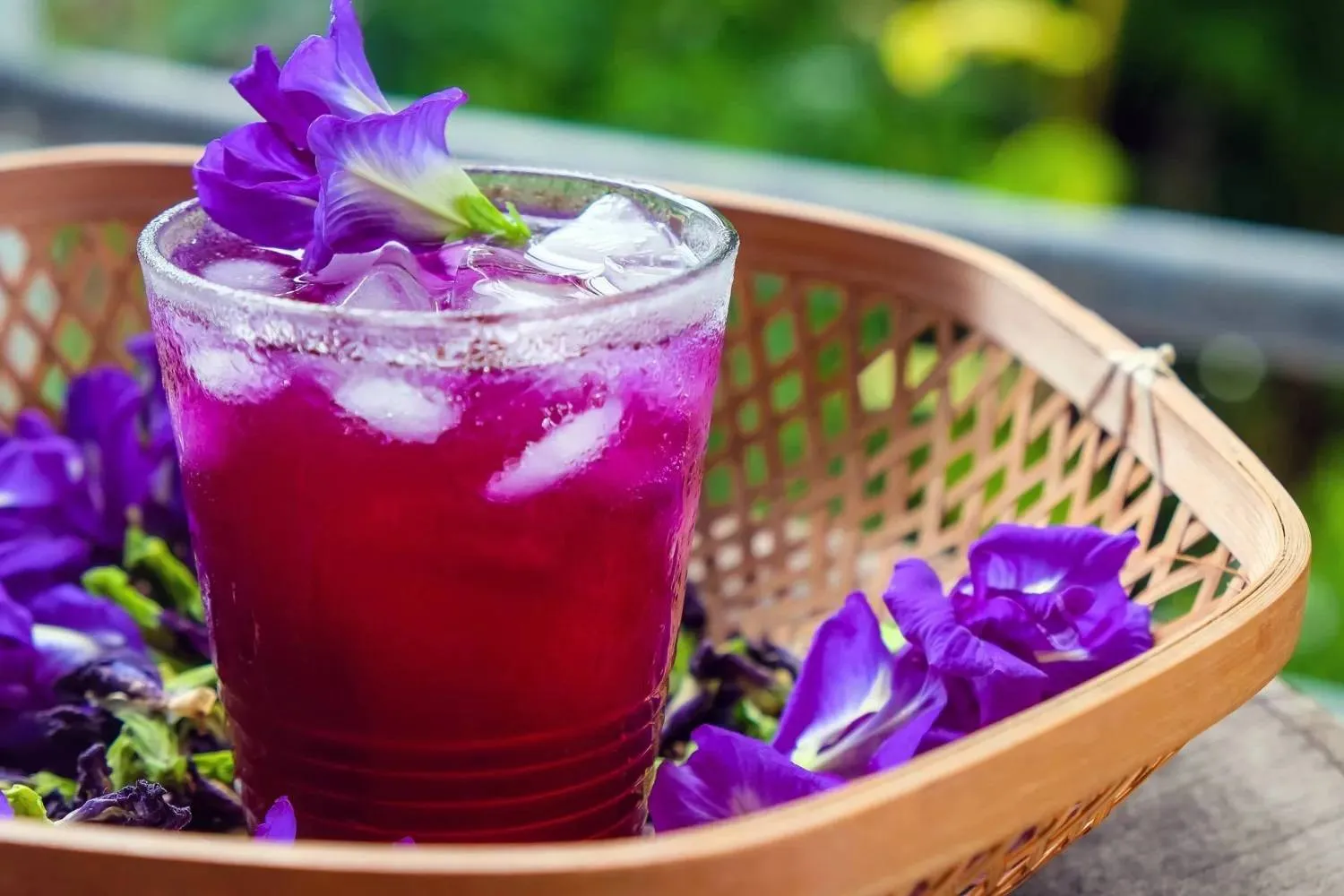
The butterfly pea grows wild across India. (Shutterstock)  
TT

'Magical' Blue Flower Changing Farmers' Fortunes in India

The butterfly pea grows wild across India. (Shutterstock)  

“Until a few years ago, the butterfly pea flower was just another climbing plant in my village,” said Nilam Brahma who lives in Anthaigwlao, a village in the northeastern Indian state of Assam.

Butterfly pea, also known as aparajita in India, grows as a vine and has a striking blue flower.

Around two years ago, Brahma heard that local women were making money selling the flowers, which can be made into tea, or a blue dye, according to BBC.

She decided to join them.

“The results surprised even me. The first time I earned $50 from selling dried flowers, I felt a shock. It made me believe I could control my own future,” she said.

The experiment led to a small business.

“I applied for a small loan and invested in solar dryers. The machines helped me dry flowers faster, preserve their color, and meet the quality standards demanded by buyers,” Brahma added.

Thailand and Indonesia have been the leading growers and consumers of butterfly pea flowers. But there's growing global demand for the flower, which is attracting entrepreneurs in India.

“The global demand for natural colorants is exploding,” explained Varshika Reddy, the founder of THS Impex, which exports natural dyes and additives.

Behind that demand is consumer appetite for natural ingredients and tighter controls in the US and Europe on synthetic food dyes.

In 2021, the US Food and Drug Administration (FDA) approved butterfly pea flower as a food additive.

However, in 2022 the European Food Safety Authority (EFSA) raised safety concerns about using the flower.

Both the EU and the UK classify butterfly pea flower as a "novel" food, meaning it still needs approval for widespread use.

Nevertheless, Indian entrepreneurs still see potential and want to develop India's market.

“The crop is still seen as a backyard ornamental or medicinal plant rather than a commercial commodity,” said Reddy. “There is no structured market awareness, no government classification, and no standard pricing mechanism, making farmers uncertain about returns.”

She is working with farmers to raise production standards.

“We work with a dedicated cluster of farmers and their families in Uttar Pradesh, including a significant number of women farmers. We have established formal contracts... we provide comprehensive agronomy support, including guidance on best farming practices, irrigation management, and crop-specific techniques,” Reddy said.

Others in India have spotted the commercial opportunity.

“When you infuse the flower in hot water, it turns blue, and when you squeeze lemon into it, it turns purple. That felt magical,” said Nitesh Singh, who is based just outside Delhi.

Like Reddy, he thought that the flower had much more potential in India.

“It was here for thousands of years, but nobody knew it could become clean, healthy food,” Singh added.



Saudi Arabia’s Prince Mohammed bin Salman Royal Reserve Reintroduces the Arabian Hare

Twenty Arabian hares, carefully selected to boost genetic diversity, have been introduced through the reserve’s rewilding program. (SPA)
TT

Saudi Arabia’s Prince Mohammed bin Salman Royal Reserve Reintroduces the Arabian Hare

Twenty Arabian hares, carefully selected to boost genetic diversity, have been introduced through the reserve’s rewilding program. (SPA)

Saudi Arabia’s Prince Mohammed bin Salman Royal Reserve has reintroduced the Arabian hare (Lepus capensis arabicus) to be the 14th native species returned to the reserve since the ReWild Arabia program began in winter 2022, reported the Saudi Press Agency on Sunday.

The reintroduction of this primary consumer supports the re-establishment of a critical layer of the trophic food web, restoring energy pathways from vegetation to predators. It also supports the recovery of ecosystem functioning at the landscape scale.

Arabian hares sit at a crucial link in the food chain, influencing ecosystem processes both up and down the trophic pyramid. As herbivores, they graze and disperse seeds, helping to regulate vegetation across the reserve’s ecosystems. For desert predators, they are a principal food source, transferring energy upward from scarce desert plant biomass with a high ectotrophic efficiency, sustaining higher-level wildlife.

Reserve CEO Andrew Zaloumis said: “True rewilding restores processes, not just populations. By bringing back the Arabian hare - a keystone prey for the Prince Mohammed bin Salman Royal Reserves' jackals, foxes, wildcats and hyenas, and ecosystem shaper - we strengthen the connections that allow desert life to recover and flourish. This is the foundation of ReWild Arabia.”

Twenty Arabian hares, carefully selected to boost genetic diversity, have been introduced through the reserve’s rewilding program. Due to their ecological significance, the animals will initially remain in purpose-built breeding enclosures to accelerate population growth before release. The first leveret (hare young) has already been born. These introductions will strengthen the reserve’s existing sparse population by increasing numbers and diversifying genetics.

Unlike many desert species that retreat underground to escape extreme heat, Arabian hares are uniquely adapted to life on the land’s surface, hence their other name, the desert hare. They are among the few mammals able to survive extreme temperatures without burrowing.

Their cryptic coloration provides effective camouflage, reducing detection by predators. Large ears, which can reach up to 17 centimeters in length, 30% of their total body length, act as efficient cooling systems and provide acute hearing, with pinnae capable of rotating independently. Combined with near-360-degree vision, these adaptations enable early detection of predators.

When threatened, Arabian hares can reach speeds of up to 80 kilometers per hour, zig-zagging sharply to evade pursuit. Despite these defenses, predation rates in desert environments can reach up to 90 percent, underscoring their importance as a primary prey species.

Since the ReWild Arabia program began, 14 species have been successfully reintroduced. The Arabian hare marks the sixth species to breed within the program. To date, the reserve has recorded over 100 sand gazelle births, 19 mountain gazelle births, the first two Nubian ibex kids, 36 Arabian oryx calves, and a Persian onager foal.

These milestones reflect the reserve’s long-term objective: to establish self-sustaining wildlife populations and build founder populations capable of supporting restoration efforts across Saudi Arabia and the wider region.

Large-scale rewilding across the reserve is guided by its Integrated Development Management Plan, which delivers habitat-wide restoration across 24,500 square kilometers of marine and terrestrial ecosystems. Supported by an advanced ranger program and strong community engagement, this work advances Vision 2030 and the Saudi Green Initiative, contributing to national commitments to restore biodiversity and protect 30% of the Kingdom’s land and sea by 2030.

The 24,500 km² Prince Mohammed bin Salman Royal Reserve stretches from the lava plains of the Harrats to the deep Red Sea in the west, connecting NEOM, Red Sea Global, and AlUla. It is home to the magnificent Wadi al-Disah and Red Sea Global’s AMAALA destination.

The reserve encompasses 15 distinct ecosystems. At just 1% of the Kingdom’s terrestrial area and 1.8% of its marine area, it boasts over 50% of the Kingdom’s species, making it one of the most biodiverse protected areas in the Middle East.

The reserve is committed to restoring and conserving the natural and cultural environment. This includes the reintroduction of 23 historically occurring native species, 14 of which have already been reintroduced, including the Arabian oryx, Persian onager, sand gazelle and mountain gazelle, as part of a wide-ranging rewilding program.

The Prince Mohammed bin Salman Royal Reserve is overseen by the Royal Reserves Council, chaired by Prince Mohammed bin Salman, Crown Prince and Prime Minister. Its program is integrated with Saudi Arabia’s wider sustainability and conservation programs, including the Saudi Green and Middle East Green Initiatives.


Red Sea Global Launches ‘Adrena,’ a New Adventure and Leisure Zone in Saudi Arabia

Adrena is strategically located a short drive from Shura Island. (SPA)
TT

Red Sea Global Launches ‘Adrena,’ a New Adventure and Leisure Zone in Saudi Arabia

Adrena is strategically located a short drive from Shura Island. (SPA)

Red Sea Global, the developer of regenerative tourism destinations, unveiled on Sunday “Adrena,” a contemporary adventure and leisure zone in Saudi Arabia that sets new benchmarks for excitement and exploration. The zone is scheduled to open to the public on March 1, following an invitation-only soft launch beginning February 15.

Adrena is strategically located a short drive from Shura Island and has been designed to serve visitors to The Red Sea destination as well as guests from outside the destination.

The zone offers a diverse range of activities and experiences, including surfing, water skiing, cliff jumping, and skateboarding, positioning it as a major attraction for thrill seekers.

Adrena boosts the Kingdom’s position on the global adventure tourism map, representing a qualitative addition to The Red Sea’s tourism ecosystem. Alongside luxury resort experiences in the surrounding area, the zone provides a social space catering to new generations and those seeking immersive experiences, allowing them to explore the beauty of sea and land from a different perspective.

Chief Executive Officer of Red Sea Global John Pagano said: “We wanted to create a space where adrenaline merges with the beauty of the natural environment, while fully preserving that environment. Sustainability has been placed at the heart of every experience within ‘Adrena,’ in line with our commitment to people and nature, to offer our guests exceptional moments that remain long in memory.”

The zone will be managed and operated by Red Sea Sports and Entertainment Company, leveraging the expertise of its affiliated brands WAMA for water sports, Galaxea for exploration diving, and Akun for land-based adventures.

Adrena features pioneering facilities, most notably a 215-meter seawater wave pool, described as the largest in the Kingdom upon opening. It is designed to simulate natural wave motion with heights reaching up to 2.1 meters and is equipped with advanced technologies suitable for all skill levels, from beginners to professionals.

The destination also includes a water-skiing lagoon, dedicated snorkeling routes, a six-meter-deep diving pool, a family water-play zone, a floating obstacle challenge area, a skate plaza, a BMX track, beach sports courts, a zipline over water, and aerial sliding and flying experiences at a height of 10 meters.

The design of Adrena reflects Red Sea Global’s commitment to responsible development through the adoption of sustainable operating systems, including seawater treatment and recycling technologies within facilities and the exclusive use of freshwater for irrigation to reduce environmental footprint and preserve natural resources.

The Red Sea destination began welcoming guests in 2023 and currently hosts a number of resorts in operation, in addition to the private Thuwal Resort. Red Sea International Airport serves as the main gateway to the destination, with regular flights from Riyadh, Jeddah, Dubai, and Doha, as well as international flights from selected cities such as Milan.


New Zealand Braces for More Flooding After Road Collapses, One Death

Vehicles drive through flood waters during a downpour in Lincoln at the Selwyn district in the Canterbury Region of New Zealand's South Island, May 1, 2025. (AFP)
TT

New Zealand Braces for More Flooding After Road Collapses, One Death

Vehicles drive through flood waters during a downpour in Lincoln at the Selwyn district in the Canterbury Region of New Zealand's South Island, May 1, 2025. (AFP)

New Zealand's weather forecaster on Sunday warned more flooding could hit the country's North Island, a day after floods caused power outages, road collapses, home evacuations and was linked to the death of a man whose vehicle was submerged on a highway.

There was "threat to life from dangerous ‌river conditions, significant ‌flooding and slips" as a deepening ‌low-pressure system ⁠east of the ⁠North Island brought heavy rain and severe gales to several regions, the weather bureau said.

The worst weather was forecast to hit late on Sunday, followed by a slow easing of conditions on Monday, it said on its website, after heavy rain began battering large ⁠swaths of the country on Friday, sparking the ‌floods.

Authorities on Sunday had ‌a state of emergency in place for the districts of ‌Waipa and Otorohanga, an agricultural region home to about ‌10,000 people that is 180 km (112 miles) south of the country's most populous city, Auckland.

The Otorohanga District Council said on Facebook that geotechnical teams "spent the night assessing slips and checking the ‌structural stability of roads" in the area. Some 4,291 properties remained without power ⁠on the ⁠North Island, energy company Powerco said on its website.

On Saturday, a man apparently died in his car in floodwaters, authorities said, adding that about 80 people were evacuated to an emergency center. Images shared on social media showed vast semirural neighborhoods submerged and collapsed sections of road where floodwaters had receded.

Six people were killed in January after heavy rains triggered a landslide at Mount Maunganui on the North Island's east coast, bringing down soil and rubble on a site crowded with families on summer holidays.