


King Penguins Are the Rare Species Benefiting from Warming World. But that Could Change

In this photo provided by Gaël Bardon, part of the king penguin colony is visible at La Baie du Marin, Possession Island, Crozet Archipelago, Jan. 16, 2026. (Gaël Bardon/CSM/CNRS/IPEV via AP)
TT

King Penguins Are the Rare Species Benefiting from Warming World. But that Could Change

In this photo provided by Gaël Bardon, part of the king penguin colony is visible at La Baie du Marin, Possession Island, Crozet Archipelago, Jan. 16, 2026. (Gaël Bardon/CSM/CNRS/IPEV via AP)

The warming world has disrupted the timing for plant and animal reproduction, and it's usually bad news for species that depend on each other — like flowers blooming too early and pollinating bees arriving too late. But researchers have found the rare critter that's getting a boost from the change: King penguins.

A new study of 19,000 king penguins in a sub-Antarctic island chain found their breeding is starting 19 days earlier than it did in 2000. Mating earlier has increased the breeding success rate by 40%, according to a study in Wednesday's journal Science Advances.

The study of timing in nature is called phenology. It's been a major concern for biologists because predators and prey and pollinators and plants are mostly adapting to warmer climates at different rates. And that means crucial mismatches in timing.

It's especially common in birds and pollinating species such as bees. Most birds, especially in North America, aren't keeping pace with changes in phenology, according to Clemson University biological sciences professor Casey Youngflesh, who wasn't part of the study.

Having a species like the king penguin adapt so well to seasonal shifts and timing changes “is unprecedented,” said study co-author Celine Le Bohec, a seabird ecologist at the French science agency CNRS. “It's quite striking.”

Unlike other penguins — which are threatened with dwindling numbers because of earlier breeding — the king penguin has the ability to breed from late October to March. And they are taking advantage of that flexibility, Le Bohec said.

They are succeeding even though the water is warming and the food web that they rely on is changing with it, said Le Bohec and study lead author Gaël Bardon, a seabird ecologist at the Scientific Centre of Monaco.

“They can adjust really well their foraging behavior,” Bardon said. “We know that some birds are going directly to the south, to the polar front. Some are going to the north. Some are staying around the colony and so they can adjust their behavior and that’s what makes king penguins cope really well with such changes for the moment.”

Le Bohec added that it may only be a temporary adjustment to an environment that is changing quickly. "So that’s why for the moment the species is able to cope with this change, but till when? This, we don’t know, because it’s going very, very fast.”

Other penguins that have limited diets are more threatened by changes coming from a warming ocean and the makeup of the food chain. But king penguins — which are so abundant they are considered a species of least concern — can eat other prey besides the lanternfish that makes up their primary diet, researchers said.

“The king penguin may have a bit of flexibility as a trick up its sleeve, and may be in a good position to adapt as their environment changes,” said Michelle LaRue, a professor of Antarctic marine science at the University of Canterbury in New Zealand who was not part of the study. But she said she wonders what happens after breeding because king penguins live 20 or more years in the wild and this study looks at only a small part of their lifespan.

Outside scientists are just as cautious as Le Bohec and Bardon over whether to declare the king penguins a rare good-news climate change story.

“Winning for this species might mean losing for another species if they are competing for resources,” The Associated Press quoted Clemson's Youngflesh as saying.

Ignacio Juarez Martinez, a biologist at Oxford University in the United Kingdom, who conducted a study of different penguins with earlier breeding, said: “This study shows that king penguins might be a winner for now, which is excellent news, but climate change is ongoing and future changes to currents, precipitation or temperatures can undo these gains.”


Moon Race: How China is Challenging the US

China is challenging the United States' supremacy in spaceflight. Pedro Pardo / AFP/File
TT

Moon Race: How China is Challenging the US

China is challenging the United States' supremacy in spaceflight. Pedro Pardo / AFP/File

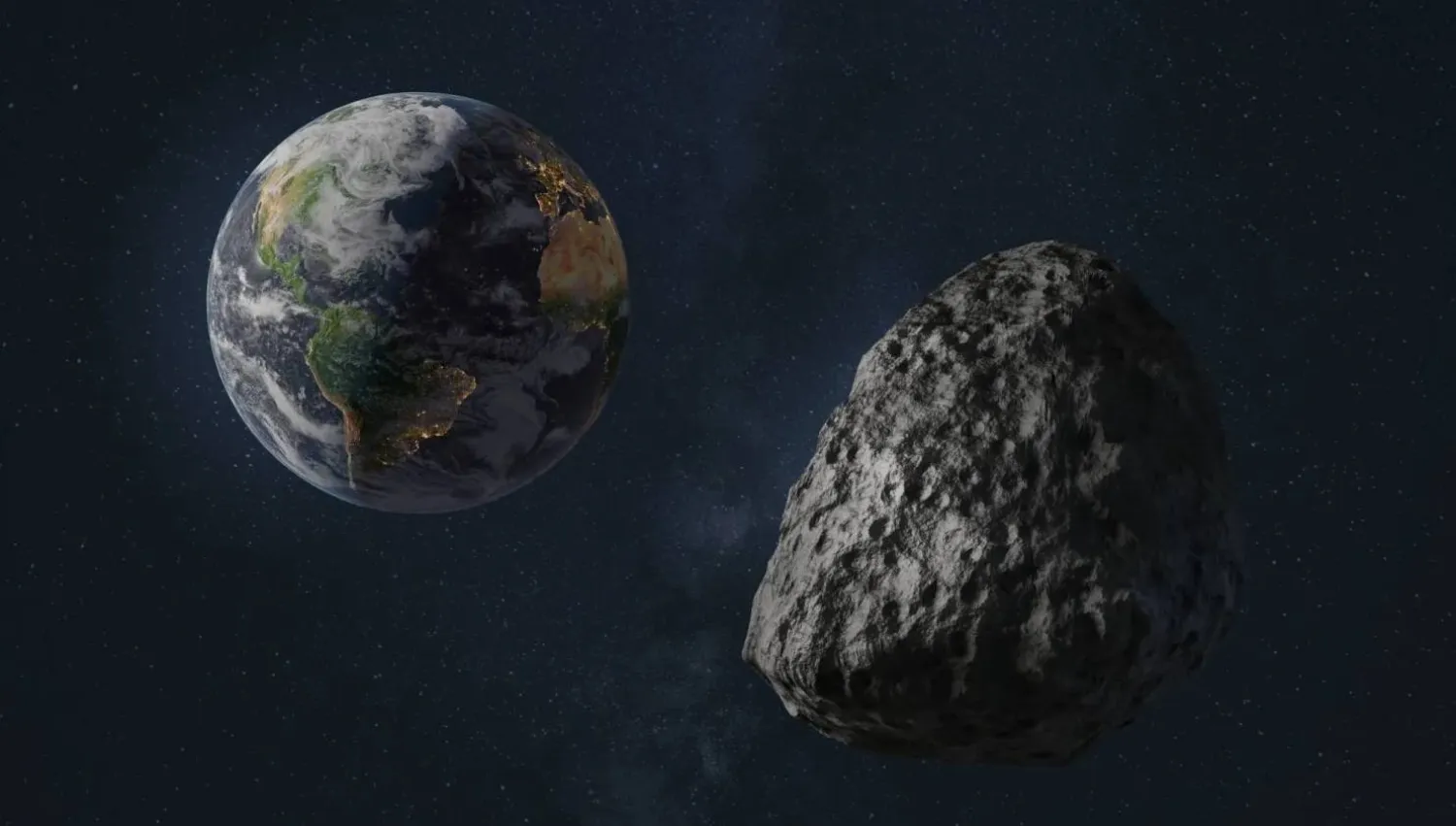
Walking on the Moon by 2030, building a lunar base, and then perhaps on to Mars: after 30 years of honing its expertise, China is challenging the United States' supremacy in spaceflight.

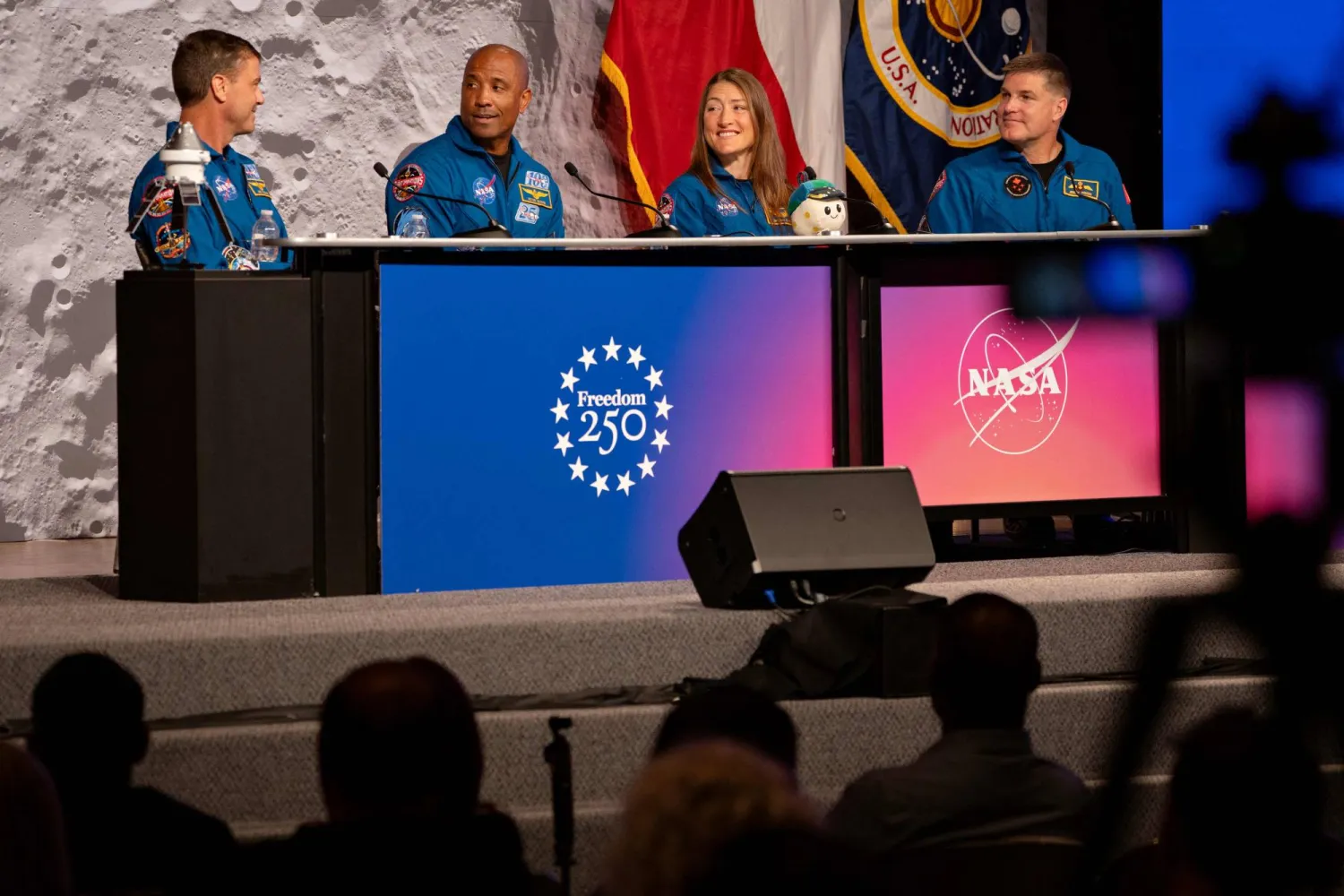
As US space agency NASA prepares for its crewed lunar flyby mission, Artemis II, we take a look at China's ambitions in space:

- What is China's crewed program? -

China's crewed space program -- known as Project 921 -- was launched on September 21, 1992, aiming to develop its own expertise and space station.

The program has conducted around 15 crewed missions since the first flight of a Chinese astronaut, Yang Liwei, in 2003.

Blocked from the International Space Station (ISS) in 2011 by the United States, China built its own orbital hub.

The Tiangong, or "Heavenly Palace", space station welcomed its first occupants in 2021.

Three Chinese astronauts -- known as "taikonauts" -- are currently staying there.

The station allows China to accumulate crucial experience in spacewalks, docking, maintenance and effects on the body.

None of China's crewed launches have been fatal, and the program is following a long-term roadmap rather than a series of isolated projects.

"This effectiveness stems from strong political commitment at the highest level of the state, stable funding... and the integration of the entire industrial chain into the project," said Richard de Grijs, professor of physics and astronomy at Australia's Macquarie University.

"Compared to the Western, and particularly US, approach, where priorities can shift with each political cycle, this model offers clear advantages in terms of predictability and risk management," he told AFP.

While China's space program has been historically slower, "it won't change course at the whim of its leadership either".

- When will Chinese astronauts land on the Moon? -

The Chinese space agency (CNSA) hopes to put astronauts on the Moon by 2030.

China has already sent several robots to the Moon and brought back lunar samples.

But a crewed mission requires different equipment, which is currently being tested.

China is set to conduct a test flight of its new Mengzhou ("Dream Ship") spacecraft in 2026. Replacing the ageing Shenzhou, it will carry astronauts into lunar orbit.

Engineers are also developing a new ultra-powerful rocket around 90-metres (295-feet) long -- the Long March-10, essential for propelling the spacecraft to the Moon. It made its first low-altitude flight on February 11.

The Lanyue ("Seize the Moon") lander, which will transport the astronauts from orbit to the lunar surface, could also make its maiden flight between 2028 and 2029.

- Does China want a lunar base? -

China hopes to build a basic version of a crewed scientific base, called the International Lunar Research Station (ILRS), by 2035.

The base will be built near the Moon's south pole, where water in the form of ice is believed to be present.

China is collaborating with Russia on the project.

The base is expected to be built with bricks made on-site from lunar soil using 3D printers. Tested on Earth and on Tiangong, the technique is to be tested on the Moon during the uncrewed Chang'e-8 mission, scheduled for around 2028.

The CNSA says it wants to carry out archaeological research into the origin of the Moon, achieve breakthroughs in strategic technologies and exploit lunar resources.

An expanded version of the base is planned for around 2040.

China is also developing a constellation of relay satellites around the Moon to communicate between its far side and Earth.

- Is this a race with the United States? -

China never talks about a "Moon race" or competition with the United States.

"They are ambitious for the future of their program and see the Moon as the logical next step, for its own sake, not for any rivalry. I don't think it would change anything for them if America wasn't going," said Jonathan McDowell, astrophysicist and space analyst.

"Having said that," he added, "the establishment of a lunar base by China would be a real challenge to America's ability to establish such a base -- there's only a small amount of suitable area near the lunar south pole."

For now, China lags behind the United States in terms of crewed flights, according to Chen Lan, a specialist in the Chinese space program.

NASA's Dragon and Orion spacecraft remain superior compared to China's Shenzhou, he noted.

"However, I expect when China realizes manned lunar landing by 2030 with the new spaceship and lunar landing vehicle, it will catch up with the US in the human spaceflight field."

- Mars next? -

After 2040, the Chinese lunar base will be used to "validate technology and capabilities for a manned mission to Mars", according to the CNSA.

Chinese space manufacturing companies and scientists have previously pointed to the Red Planet as a potential destination for astronauts.

"But I don't think that there will be serious plans to Mars before completion of the lunar landing and the initial lunar base," Chen said.


3-limbed Sea Turtle Being Tracked at Sea by Satellite

An adult female Kemp's ridley sea turtle is seen swimming in a tank at Loggerhead Marinelife Center after a satellite tracking device was attached to its shell in Juno Beach, Fla. on Tuesday, March 24, 2026. (AP Photo/Cody Jackson)
TT

3-limbed Sea Turtle Being Tracked at Sea by Satellite

An adult female Kemp's ridley sea turtle is seen swimming in a tank at Loggerhead Marinelife Center after a satellite tracking device was attached to its shell in Juno Beach, Fla. on Tuesday, March 24, 2026. (AP Photo/Cody Jackson)

The veterinary staff at a Florida sea turtle hospital is getting help from space to monitor the animals they have rehabilitated. They're particularly interested in amputees.

Using satellite tracking devices in a collaboration between the Loggerhead Marinelife Center and the Smithsonian Conservation Biology Institute, scientists are learning how well sea turtles can survive in the wild after losing a limb.

Amelie, a Kemp's ridley sea turtle who lost her right forelimb to a predator — most likely a shark, the center said — was taken to the beach on Wednesday for her highly anticipated release. The turtle paused for about 30 seconds, then slowly made her way into the Atlantic Ocean as onlookers cheered.

Amelie had been rescued and brought to the center by the Inwater Research Group in Port St. Lucie, Florida, seven weeks earlier after a traumatic amputation. She underwent surgery to clean and close the wound, and was treated for pneumonia while in a tank at the center.

When veterinarians deemed her healthy enough to return to the sea, they glued a tracking device to her shell.

A rehabilitated adult female Kemp's ridley sea turtle crawls toward the ocean during a release in Juno Beach, Fla. on Wednesday, March 25, 2026. (AP Photo/Cody Jackson)

An ultrasound confirmed that Amelie is developing eggs, giving researchers another reason to track her movements.

Kemp's ridley turtles, the rarest of sea turtle species, are more typically found on Florida's Gulf Coast, so treating Amelie was especially significant, said Andy Dehart, the center's president and CEO.

Amelie is actually the fourth amputee sea turtle being tracked by the enter, Loggerhead research director Sarah Hirsch said. They include a three-limbed turtle named Pyari who has traveled nearly 700 miles since her release in January, her tracker shows.

“We do know that they can be successful in the wild because we have seen them on our nesting beaches, but we really want to understand their dive behaviors, how they’re migrating once they’re back in the wild," The Associated Press quoted Hirsch as saying.

The satellite tags have a saltwater switch that detects when the turtle comes up to the surface to breathe, triggering the transmission of data to the satellites. Their location appears online after a 24-hour delay. To view Amelie and other turtles tracked for various research projects, visit the Loggerhead website.

“They’ve been through a lot," Hirsch said. "They’ve gotten a lot of medical care here, and to see them be able to go back out and contribute to the population is really rewarding.”


Genetic Study Identifies Earliest-known Dog, Dating to 15,800 Years Ago

FILE PHOTO: A woman gives her dog a kiss as they watch the sunset at Anchor Bay outside Mellieha, Malta, January 26, 2018.  REUTERS/Darrin Zammit Lupi/File Photo
FILE PHOTO: A woman gives her dog a kiss as they watch the sunset at Anchor Bay outside Mellieha, Malta, January 26, 2018. REUTERS/Darrin Zammit Lupi/File Photo
TT

Genetic Study Identifies Earliest-known Dog, Dating to 15,800 Years Ago

FILE PHOTO: A woman gives her dog a kiss as they watch the sunset at Anchor Bay outside Mellieha, Malta, January 26, 2018.  REUTERS/Darrin Zammit Lupi/File Photo
FILE PHOTO: A woman gives her dog a kiss as they watch the sunset at Anchor Bay outside Mellieha, Malta, January 26, 2018. REUTERS/Darrin Zammit Lupi/File Photo

Dogs have been loyal companions to people since we made them our first domesticated animals, descending long ago from gray wolves - though precisely when, where and why have remained unanswered. New genetic research now is offering valuable insight, including identifying the earliest-known dog, dating to 15,800 years ago, Reuters reported.

This dog, known from bones found at the Pinarbasi rock shelter site in Türkiye used by ancient human hunter-gatherers, is about 5,000 years older than the previous earliest-known, genetically confirmed canine, the researchers said.

The date of the Pinarbasi dog and several others almost as old identified at other sites in Europe shows that dogs already were widely distributed and an integral part of human culture millennia before the advent of agriculture, they said.

The new findings were presented in two scientific papers published on Wednesday in the journal Nature.

William Marsh, a postdoctoral researcher in the Ancient Genomics Laboratory at the Francis Crick Institute in London who was co-lead author of one of the studies, said the DNA evidence suggests dogs were present in various locales in western Eurasia by 18,000 years ago and already ⁠were quite different ⁠genetically from wolves.

"We putatively predict that dog and wolf populations diverged a lot earlier, likely before the last glacial maximum (of the Ice Age), so before 24,000 years ago. Although saying that, there is still a great degree of uncertainty," Marsh said.

The dog, descended from an ancient wolf population separate from modern wolves, was the first animal domesticated by people, with animals such as goats, sheep, cattle and cats coming later.

"Dogs have been by our side as humans underwent major lifestyle transitions and complex societies emerged," said geneticist Anders Bergström of the University of East Anglia in England, lead author of the other study.

"I think it's also interesting that, unlike most ⁠other domesticated animals, dogs do not always have very clearly defined roles or purposes for humans. Perhaps their primary role is often just to provide companionship," Bergström said.

The upper jaw of a domesticated dog from the Kesslerloch cave in Thayngen, Switzerland, dating to about 14,000 years ago, is seen in this photograph from July 2019. Cantonal Archaeological Service of Schaffhausen/Ivan Ivic/Handout via REUTERS

Bergström and his team performed a large-scale search for the early dogs of Europe, using a new method to differentiate genetically between wolves and dogs among 216 ancient remains ranging from 46,000 to 2,000 years old from Belgium, Denmark, France, Germany, the Netherlands, Scotland, Sweden, Switzerland and Türkiye. This was the largest study of such remains to date.

The researchers managed to identify 46 dogs and 95 wolves. Because the skeletons of dogs and wolves were so similar in the early stages of canine domestication, genetic studies are needed to distinguish between them in ancient remains.

The oldest of the dogs identified by Bergström's team was one dating to 14,200 years ago from Switzerland's Kesslerloch Cave site. The oldest of the European dogs identified in this study were found to have shared an origin with dogs in Asia and the rest of the world, showing that ⁠these various canine populations did not ⁠arise from separate domestication events.

The Pinarbasi dog, identified in the study Marsh worked on, showed how much dogs were valued by the hunter-gatherers who kept them.

"At Pinarbasi, we have both human and dog burials, with dogs buried alongside humans," Marsh said.

There also was evidence that the people at Pinarbasi fed their dogs fish.

This study identified five dogs dating to between 15,800 and 14,300 years ago, including canine remains from Gough's Cave near Cheddar in England.

"At Gough's Cave, we have butchering and processing of humans after death that included cannibalism, as a funerary behavior akin to burial. Similar post-mortem modification, albeit not definitively for consumption, was found on the dog remains," Marsh said.

The Pinarbasi and Gough's Cave dogs were found to be more closely related to the ancestors of present-day European and Middle Eastern breeds such as boxers and salukis than to Arctic breeds like Siberian huskies.

Beyond companionship, the ancient dogs may have helped people hunt or perhaps served as watchdogs, sort of Ice Age alarm systems, according to the researchers. Unlike the many exotic dog breeds around today, these early dogs still likely closely resembled the wolves from which they descended, they said.

"The questions of when, where and why people domesticated dogs still remain largely unanswered," Bergström said. "We think it probably happened somewhere in Asia, but more precisely remains to be determined."