


London Boasts 12 of Top 100 Cinemas in the World

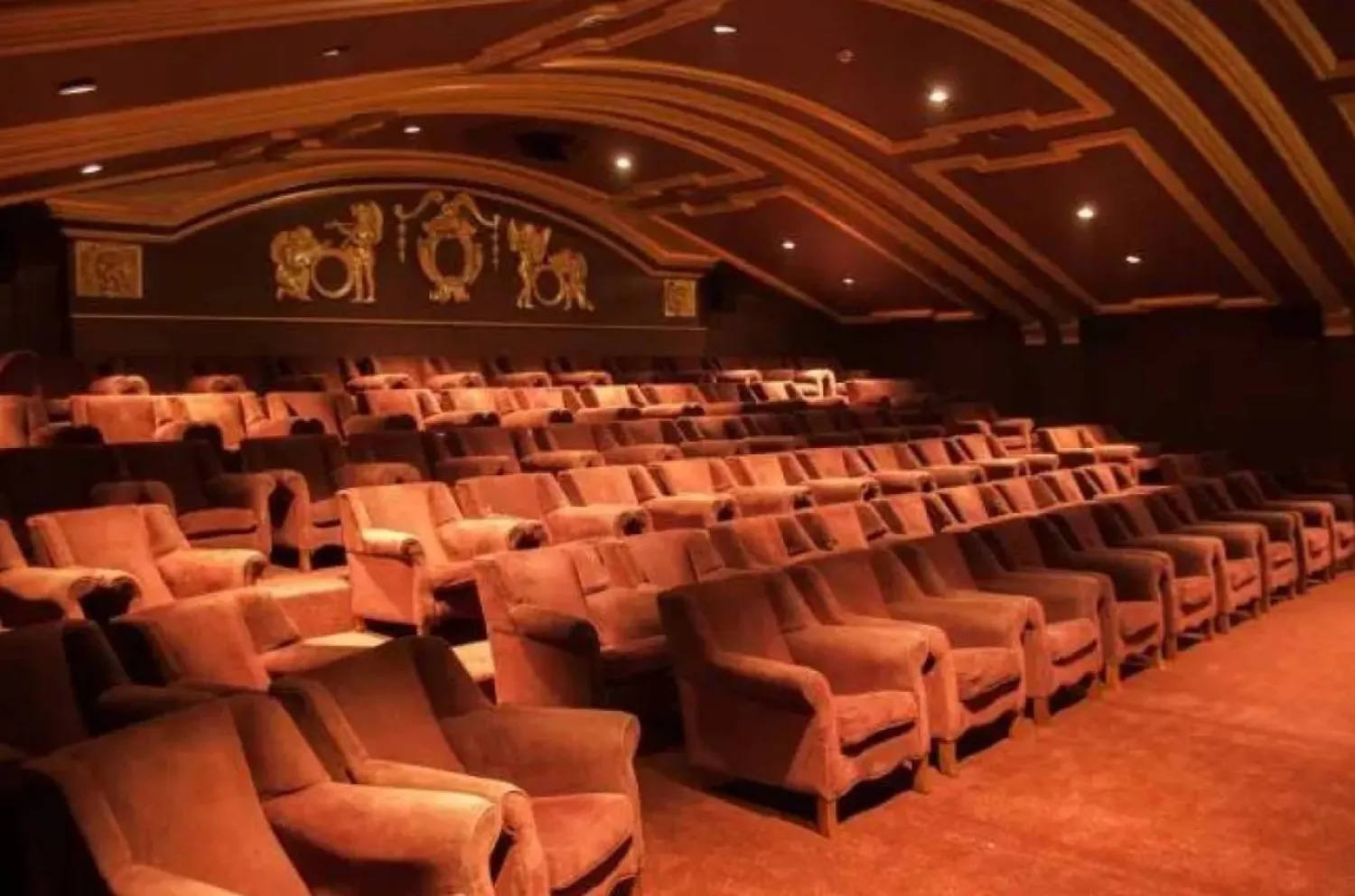
The Castle has been voted among the best in the world (The Castle Cinema)
TT

London Boasts 12 of Top 100 Cinemas in the World

The Castle has been voted among the best in the world (The Castle Cinema)

The cinema might feel like a relic to some – a moment from before films were available at the press of a button at home – but those interested in cinemas never turn their back on an afternoon spent sitting in complete darkness with total strangers in front of a booming big screen.

According to METRO, London is a city that can officially boast 12 of the top 100 cinemas in the world.

Time Out recently released its ranking of the greatest cinemas on the planet, with the TCL Chinese Theater in Los Angeles – host to more red carpet premieres for major blockbusters than anywhere outside London’s Leicester Square – taking the top spot.

Elsewhere on the list were some spectacularly unusual venues: the world’s biggest cinema screen in Leonberg, Germany, a small town with a population of just 49,000; a Hungarian cinema housed inside a former temple; a Berlin theater complete with its own nuclear bunker; and a Spanish Baroque picture house that even starred in the Oscar-winning film Milk.

But no city can claim more entries than London, whose best performer came in fourth place.

The BFI Southbank was named the capital’s top cinema, with £4 tickets for 16–25 year olds, the UK’s largest LGBTQ+ film festival, and a constant stream of panels and talks featuring some of the biggest names in film.

Other London venues that made the cut include Picturehouse Central, a seven-screen complex just off Piccadilly Circus, and Curzon Soho only a few meters down the road.

The Castle Cinema, tucked away on Chatsworth Road in the heart of east London, came in at number 82.

By afternoon, the same familiar faces are tapping away on laptops, before the evening crowd rolls in for a blockbuster, a streamed theater show they couldn’t get tickets for – even if they could afford the £100 price tag – or a niche arthouse film you’d struggle to find anywhere else.

If The Castle is backing a film, that’s usually recommendation enough.

The cinema’s distinctive charm is always enough to lure away from the temptation of anywhere else – even Time Out’s supposed best cinema in London – and rearrange the day if needed to catch a film in one of its two screens.

Screen One is the larger of the two, but what it boasts in size it matches in cosiness. Each customer sinks deep into their own armchair, perhaps with one of the best cocktails in east London in hand (often on offer) or a hot chocolate and a slice of homemade cake from the bar.

In Screen Two, however, the back two rows are made up of sofas which, if you’re lucky, you can often get one to yourself.

Independent cinemas are in desperate need of regular customers, but more often than not they struggle to compete with the low prices of soulless multiplex chains like Vue or Odeon.

At The Castle, though, a spectator rarely spends more than £3 on a ticket. Midweek, members can bring a friend for free before 5pm from Tuesday to Friday – and membership costs just £35 a year, or £17.50 for students, NHS staff and those on lower incomes.

Generosity and kindness sit at the heart of the cinema too. Anyone can leave a few pounds behind the bar so that someone else – someone who might need the comfort of a film but can’t afford a ticket – can still walk in and take a seat.

In an age of endless streaming and algorithm-driven recommendations, The Castle feels quietly radical. It’s not just a place to watch films – it’s a place to belong.

And while the world’s most famous cinemas might have bigger screens, grander foyers or red-carpet premieres, none of them have ever made the spectator feels quite as at home or impressed as much as a £3 seat on Chatsworth Road.

Skydiver Left Dangling When Parachute Snags on Stadium Video Board

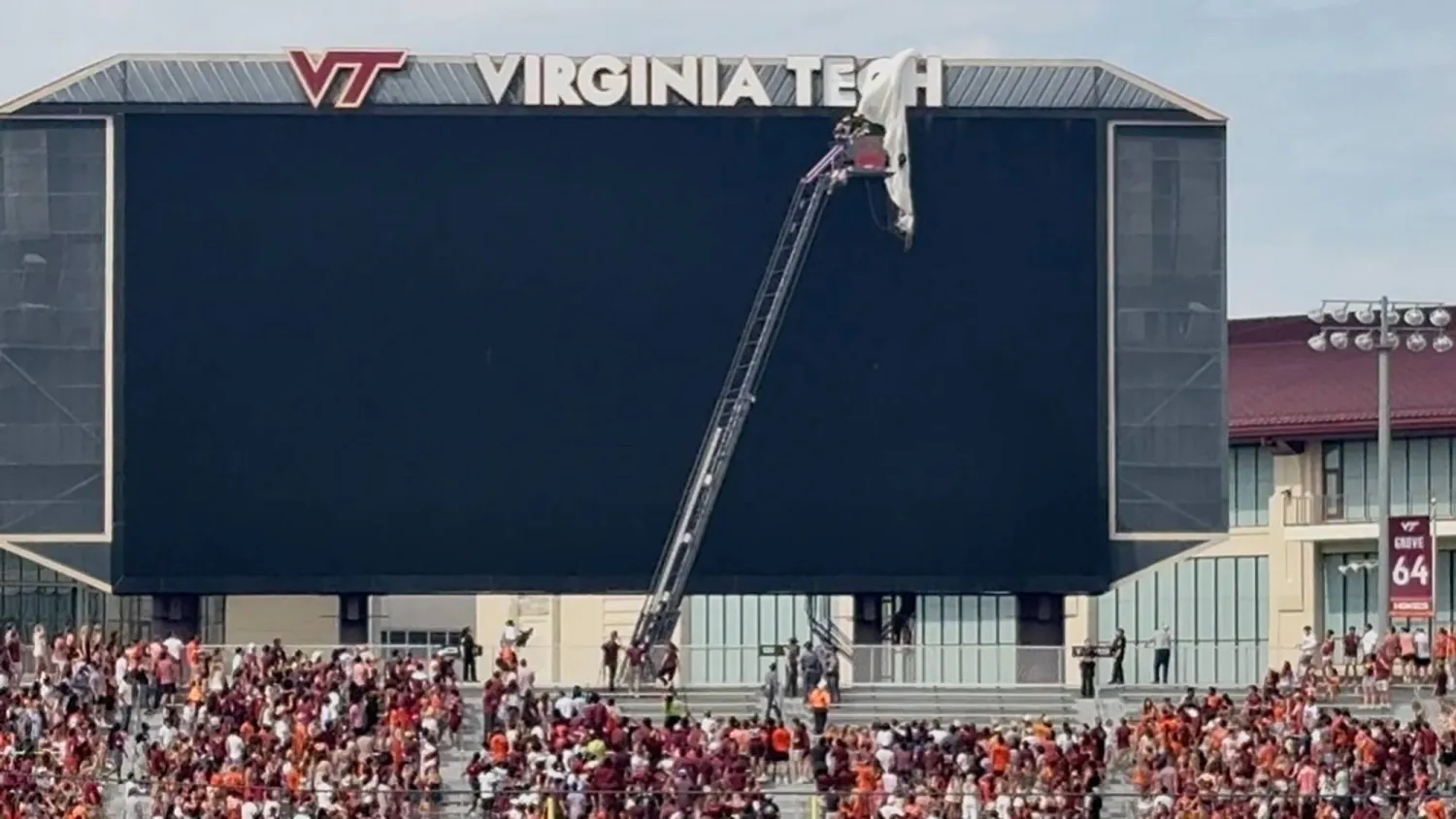
In this image from video, personnel on a lift work to secure a skydiver that crashed into the Lane Stadium scoreboard before Virginia Tech’s spring NCAA college football game, Saturday, April 18, 2026, in Blacksburg, Va. (Ben Walls/WRIC8 via AP)
TT

Skydiver Left Dangling When Parachute Snags on Stadium Video Board

In this image from video, personnel on a lift work to secure a skydiver that crashed into the Lane Stadium scoreboard before Virginia Tech’s spring NCAA college football game, Saturday, April 18, 2026, in Blacksburg, Va. (Ben Walls/WRIC8 via AP)

A skydiver ‌trailing a large American flag drifted off course and became tangled in the video board at a US college football game on Saturday, leaving him suspended above the field by his parachute until he was rescued.

Viral videos from inside ‌Virginia Tech's ‌Lane Stadium, confirmed ‌by ⁠Reuters, showed two ⁠skydivers descending into the arena before the school's spring game, when one of them missed the designated landing area, hit the electronic scoreboard and ⁠became entangled.

Fans watched in ‌distress as ‌the skydiver, whose name was not ‌immediately released, was left hanging ‌for 15 to 20 minutes before emergency crews using an aerial ladder brought him to safety.

"We ‌are grateful to report that the skydiver was safely ⁠secured ⁠and is currently stable. Our primary focus remains on their well-being," Virginia Tech officials posted on X.

"We extend our sincere appreciation to the first responders, event staff, and medical personnel for their swift, coordinated and professional response."

No injuries were reported during the incident.


Chernobyl’s Radioactive Landscape Is Testament to Nature’s Resilience and Survival Spirit

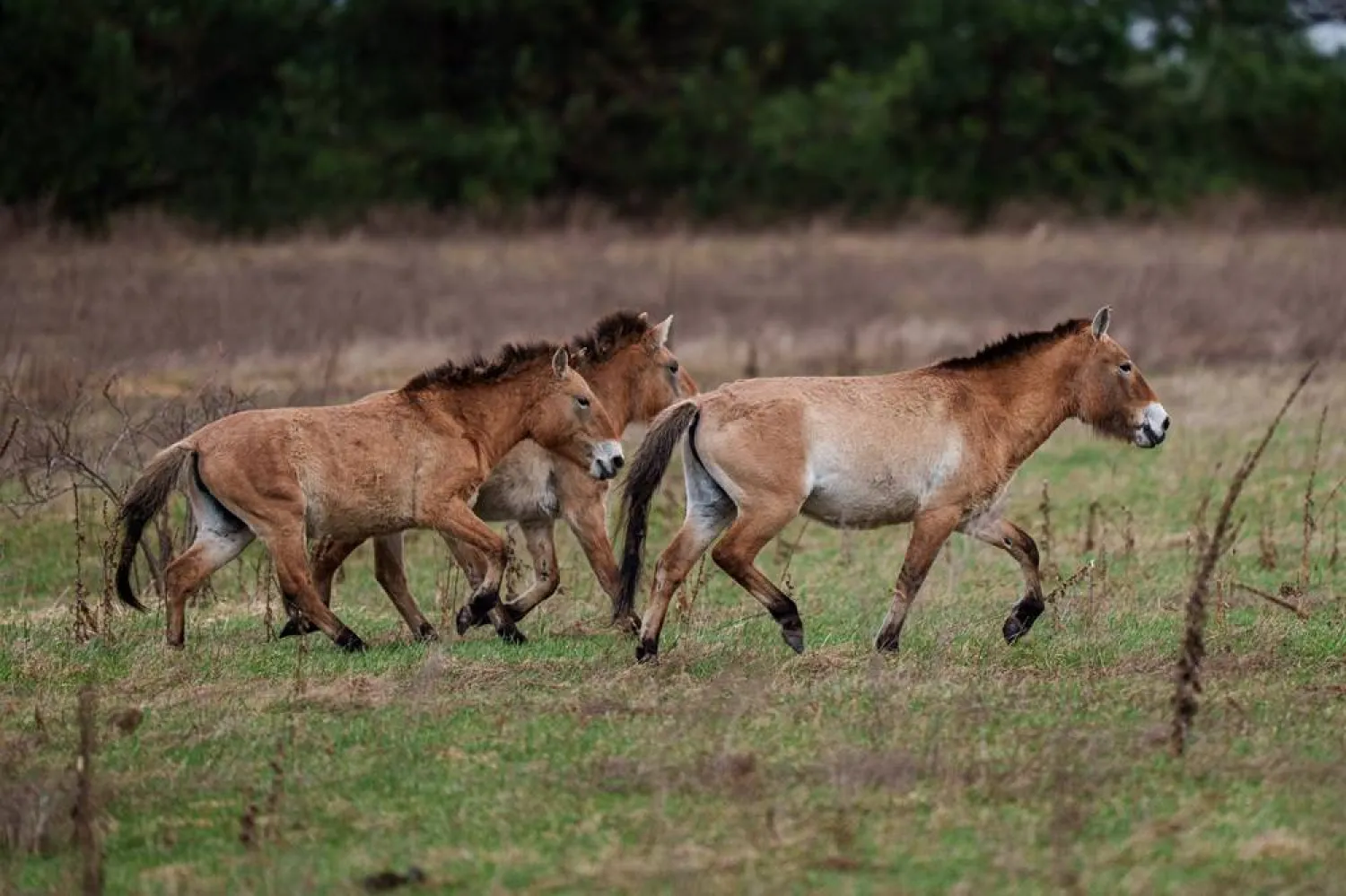
Wild Przewalski horses graze in a forest inside the Chernobyl exclusion zone, Ukraine, Wednesday, April 8, 2026. (AP)
TT

Chernobyl’s Radioactive Landscape Is Testament to Nature’s Resilience and Survival Spirit

Wild Przewalski horses graze in a forest inside the Chernobyl exclusion zone, Ukraine, Wednesday, April 8, 2026. (AP)

On contaminated land that is too dangerous for human life, the world’s wildest horses roam free.

Across the Chernobyl exclusion zone, Przewalski’s horses — stocky, sand-colored and almost toy-like in appearance — graze in a radioactive landscape larger than Luxembourg.

On April 26, 1986, an explosion at the nuclear power plant in Ukraine sent radiation across Europe and forced the evacuation of entire towns, displacing tens of thousands. It was the worst nuclear disaster in history.

Four decades on, Chernobyl — which is transliterated as “Chornobyl” in Ukraine — remains too dangerous for humans. But the wildlife has moved back in.

Wolves now prowl the vast no-man’s-land spanning Ukraine and Belarus, and brown bears have returned after more than a century. Populations of lynx, moose, red deer and even free-roaming packs of dogs have rebounded.

Przewalski’s horses, native to Mongolia and once on the brink of extinction, were introduced here in 1998 as an experiment.

Known as “takhi” in Mongolia (“spirit”), the horses are distinct from domestic breeds, with 33 pairs of chromosomes compared with 32 in domesticated horses. The modern name comes from the Russian explorer who first formally identified them.

“The fact that Ukraine now has a free-ranging population is something of a small miracle,” said Denys Vyshnevskyi, the zone’s lead nature scientist.

With human pressure gone, parts of the exclusion zone now resemble European landscapes from centuries past, he said, adding: “Nature recovers relatively quickly and effectively.”

The transformation is visible everywhere. Trees pierce abandoned buildings, roads dissolve into forest, and weathered Soviet-era signs stand beside leaning wooden crosses in overgrown cemeteries.

Hidden cameras show the horses adapting in unexpected ways. They seek shelter in crumbling barns and deserted homes, using them to escape harsh weather and insects — even bedding down inside.

The animals live in small social groups — typically one stallion with several mares and their young — alongside separate bands of younger males. Many died after their introduction, but others adapted.

Tracking them takes time. Vyshnevskyi often drives alone for hours, setting motion-sensitive camera traps in camouflaged casings attached to trees.

Despite persistent radiation, scientists have not recorded widespread die-offs, though subtler effects are evident. Some frogs have developed darker skin, and birds in higher-radiation areas are more likely to develop cataracts.

However, new threats have emerged.

Russia’s 2022 invasion brought fighting through the exclusion zone as troops advanced toward Kyiv, digging defenses into contaminated soil. Fires linked to military activity swept through forests.

Harsh wartime winters have also taken a toll. Damage to the power grid left surrounding managed areas without resources, and scientists report increases in fallen trees and dead animals — casualties of both extreme conditions and hastily built fortifications.

“Most forest fires are caused by downed drones,” said Oleksandr Polischuk, who leads a firefighting unit in the zone. “Sometimes we have to travel dozens of kilometers to reach them.”

Fires can send radioactive particles back into the air.

Today, the zone is no longer just an accidental refuge for wildlife. It has become a heavily monitored military corridor, marked by concrete barriers, barbed wire and minefields — a landscape of what some describe as grim beauty.

Personnel rotate in and out to limit radiation exposure. Chernobyl is likely to remain off-limits for generations — too dangerous for people, yet full of life.

“For those of us in conservation and ecology, it’s kind of a wonder,” Vyshnevskyi said. “This land was once heavily used — agriculture, cities, infrastructure. But nature has effectively performed a factory reset.”


British Royals Choose Historian to Write Queen Biography

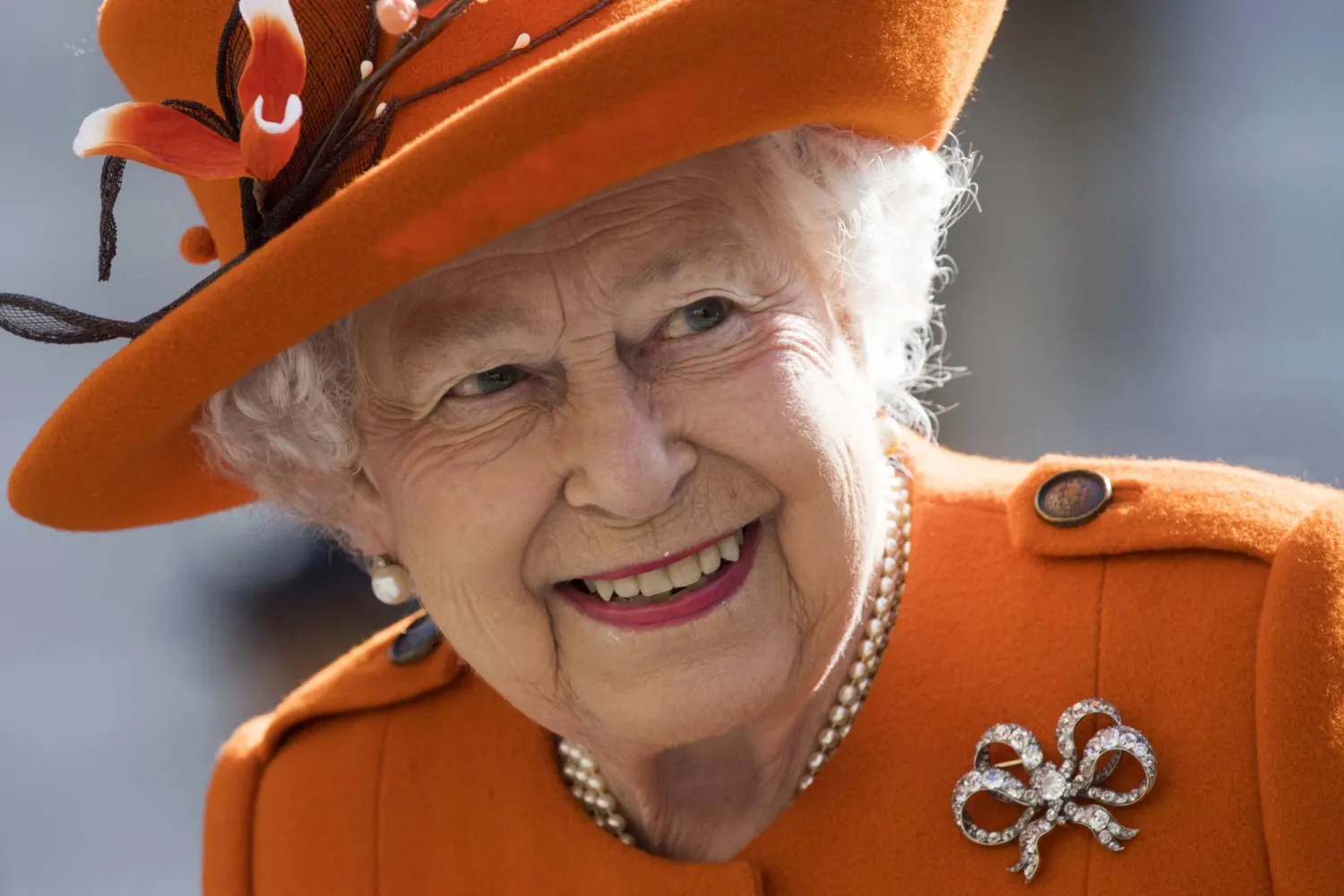
Britain's Queen Elizabeth II arrives for a visit to the Royal Academy of Arts in Central London, Britain, 20 March 2018. (EPA)
TT

British Royals Choose Historian to Write Queen Biography

Britain's Queen Elizabeth II arrives for a visit to the Royal Academy of Arts in Central London, Britain, 20 March 2018. (EPA)

Britain's royal family said Sunday that historian Anna Keay would write an official biography of queen Elizabeth II, who died in September 2022 after over 70 years on the throne.

King Charles III had wanted a woman to write the definitive account of his mother's life, according to British media.

Keay, best known for her work chronicling Britain's Republican period between 1649 and 1660, said receiving the job was a "profound honor".

She will have access to Elizabeth's personal and official papers held in the Royal Archives, Buckingham Palace said in a statement.

She will also be able to talk to members of the royal family and the queen's friends and household staff, the palace added.

Keay described Elizabeth as "an extraordinary woman, whose life spanned a century of great change".

"I am deeply grateful to His Majesty The King for entrusting me with this responsibility and for granting me access to her papers, and will do all I can to do justice to her life and work," she said.

Official royal biographies can sometimes reveal unexpected details about the subject's life.

William Shawcross's official biography of Elizabeth's mother, the wife of George VI, revealed how she suffered from bowel cancer in her 60s but was successfully treated.