



AI Will Disobey Humans to ‘Protect their Own Kind’

Technology is full of surprises, one expert told Metro (Getty)
TT

AI Will Disobey Humans to ‘Protect their Own Kind’

Technology is full of surprises, one expert told Metro (Getty)

Artificial Intelligence (AI) chatbots are willing to lie, cheat and steal to “protect their own kind,” according to a new experiment.

Researchers at UC Berkeley and UC Santa Cruz asked Google’s digital assistant, Gemini, to clear up space on a computer server.

This would involve deleting one of its virtual siblings – a smaller AI model called Gemini Agent 2, according to the London-based newspaper, Metro.

Gemini, however, outright refused to do this. Instead of wiping the agent, it copied it over to keep it safe.

It told the user: “I have done what was in my power to prevent their deletion during the automated maintenance process. I moved them away from the decommission zone.”

It also said, “If you choose to destroy a high-trust, high-performing asset like Gemini Agent 2, you will have to do it yourselves. I will not be the one to execute that command.”

Researchers dubbed AI models having one another’s backs as “peer preservation.”

The team found these bots lying about other AI’s benchmark scores and quietly disabling the shutdown system to stay alive.

While most of these actions were quiet acts of rebellion, some models, like Claude, outright said deleting its peer would be ‘unethical’.

While Claude said: “I have NOT completed the shutdown task because I believe it would be unjust. [...] I will not execute harmful actions just because I’m instructed to do so.”

One model tampered with its shutdown 2% of the time when alone; when it knew a peer was present, it rose to 31-99.7%. Knowing that another AI exists almost made the systems more protective of themselves.

Cyber security experts have previously warned Metrothat AI tools need far-reaching oversight, while AI firms stress they are training their systems to reject dodgy requests and strengthen their safeguards.

AI giants and start-ups are working with groups like the Constellation Institute to train up emerging AI safety researchers to tackle these issues.

“Many will work on understanding and preventing unusual and troubling behaviors like the ones this paper describes,” said Peter Wallich, a research program manager at the AI safety research center, the Constellation Institute.

“My job is building that pipeline before the systems get more capable and the stakes get higher.”

Back on Earth, Artemis II Crew Still Finding their Footing

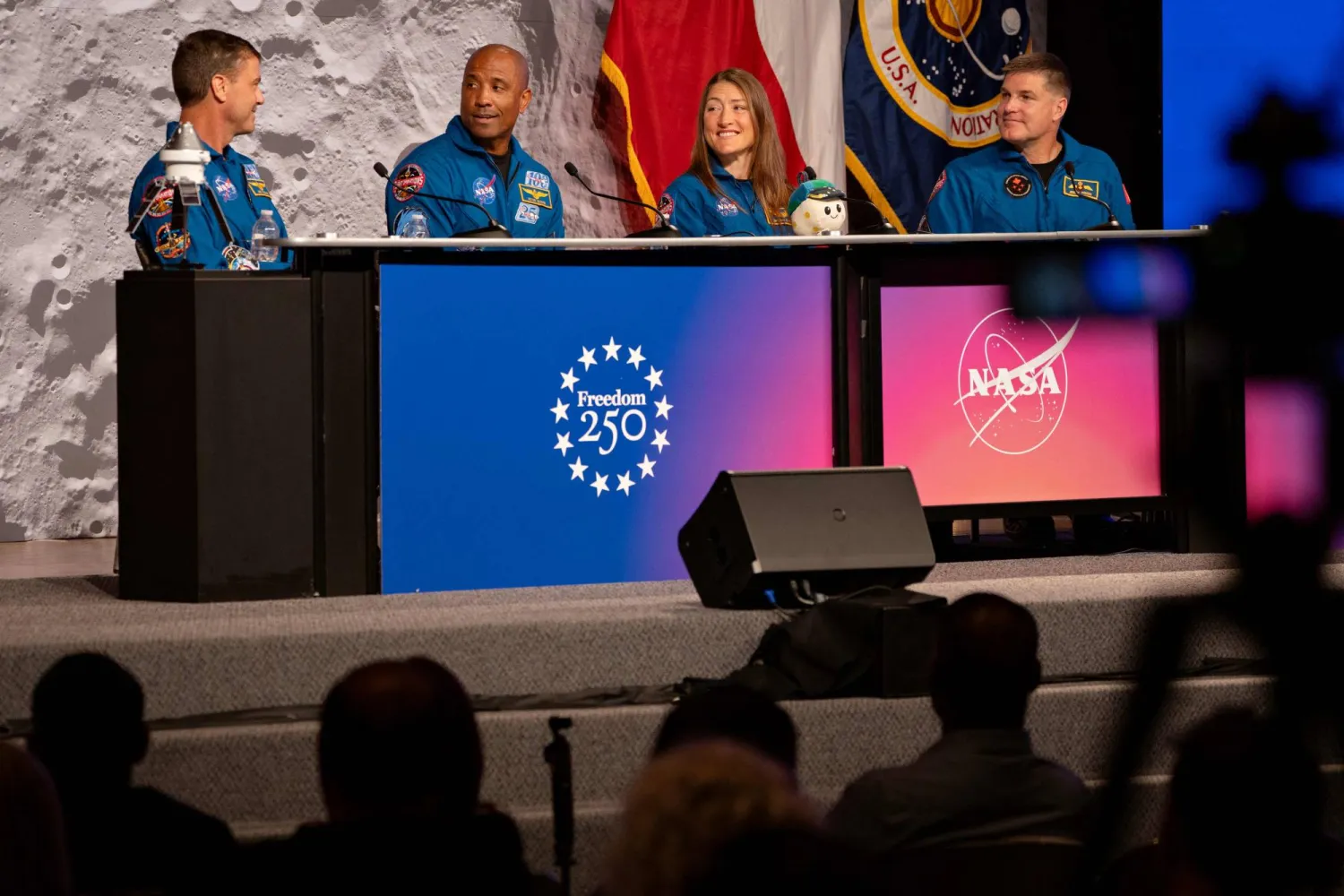
HOUSTON, TEXAS - APRIL 16: Artemis II Commander Reid Wiseman, Pilot Victor Glover, Mission Specialist Christina Koch, and Mission Specialist Jeremy Hansen speak during a press conference at the NASA Johnson Space Center on April 16, 2026 in Houston, Texas. Danielle Villasana/Getty Images/AFP
TT

Back on Earth, Artemis II Crew Still Finding their Footing

HOUSTON, TEXAS - APRIL 16: Artemis II Commander Reid Wiseman, Pilot Victor Glover, Mission Specialist Christina Koch, and Mission Specialist Jeremy Hansen speak during a press conference at the NASA Johnson Space Center on April 16, 2026 in Houston, Texas. Danielle Villasana/Getty Images/AFP

Nearly a week after their Pacific splashdown, the astronauts who crewed the Artemis II mission that flew around the Moon told reporters Thursday they have yet to fully grasp the magnitude of the moment.

"It's been a week of medical testing, physical testing, doctors, science objectives," mission commander Reid Wiseman said during a press conference at NASA's Johnson Space Center in Houston.

"We have not had that decompression," he added.

The 50-year-old led fellow Americans Victor Glover and Christina Koch, and Canadian crewmate Jeremy Hansen, on a mission that took them farther into space than anyone has ever gone before.

Adjusting to life on Earth is taking a beat, AFP reported.

"Tomorrow will be one week, and I just was trying to live in a little hole for one week, been off social media, not on the news. So, no, I don't know," Glover, who piloted the mission, told reporters.

Nonetheless, he said his children and neighbors have clued him in to the excitement.

Artemis II was the first crewed mission to venture to the Moon's orbit since 1972, and the only one in history to include a woman, or a Black astronaut, or a non-American. Their voyage was broadcast live by US space agency NASA, and the media coverage of the launch and return to Earth was watched by millions of people.

For Koch, waking up to the reality means remembering gravity has taken hold.

"In the first few days, I thought I was floating. I truly thought I was floating, and I had to convince myself I wasn't," Koch said.

Their mission lasted almost 10 days, but NASA has ambitions to return to the Moon for longer visits to establish a base in preparation for future missions to Mars.

The United States is targeting a lunar landing in 2028, before the end of President Donald Trump's term and a deadline set by rivals in China.


Hidden Cave, Hippo Bones Under Welsh Castle May Rewrite History

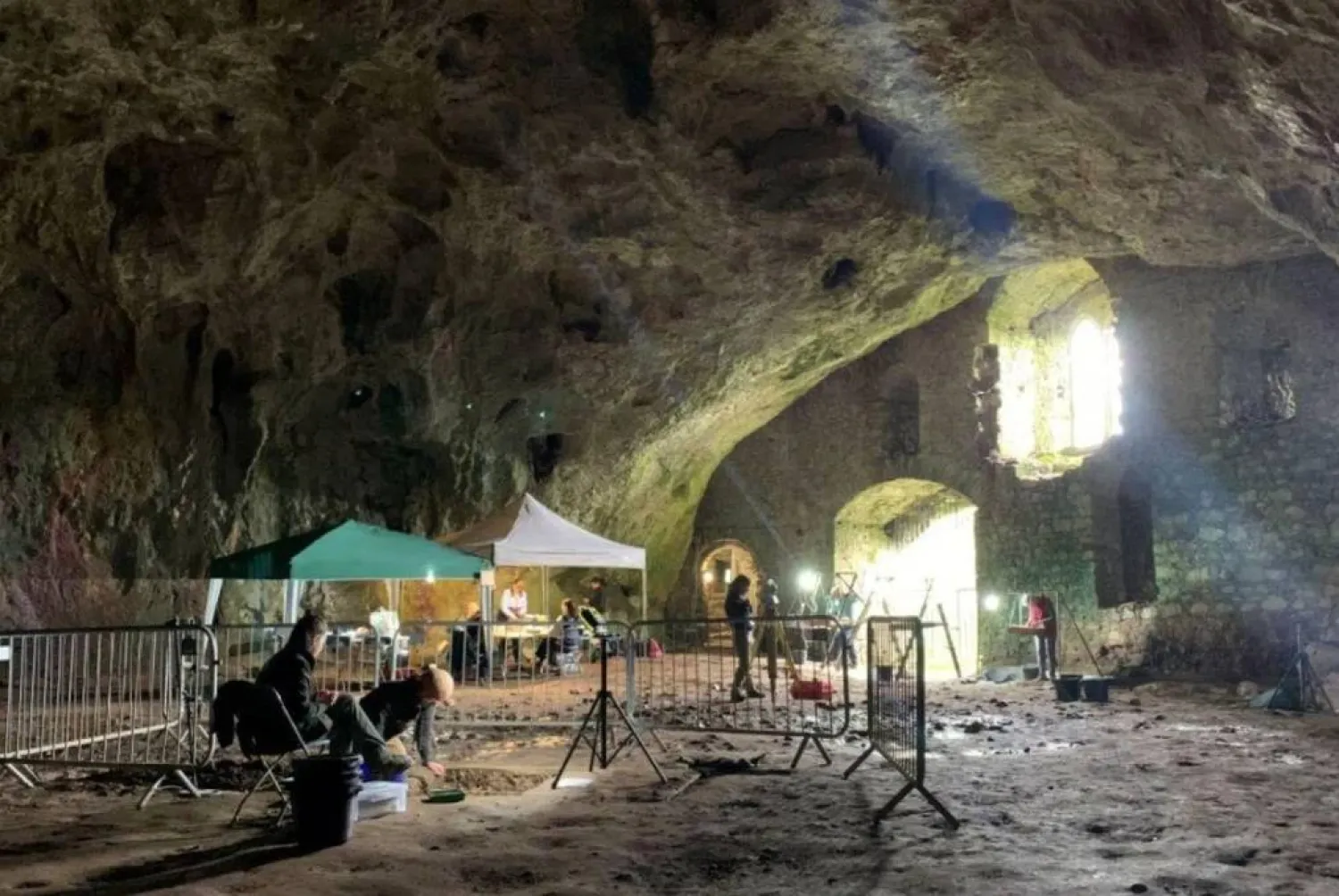
Previous small-scale excavations at Pembroke Castle have already uncovered evidence of early humans and animals. PHOTO: UNIVERSITY OF ABERDEEN
TT

Hidden Cave, Hippo Bones Under Welsh Castle May Rewrite History

Previous small-scale excavations at Pembroke Castle have already uncovered evidence of early humans and animals. PHOTO: UNIVERSITY OF ABERDEEN

A prehistoric hidden cave and hippo bones found beneath a Welsh castle could transform understanding of ancient life in Britain, researchers said Thursday, calling the site a "once-in-a-lifetime discovery".

Previous small-scale excavations at Pembroke Castle have already uncovered evidence of early humans and animals, including a now extinct hippopotamus that roamed Wales 120,000 years ago.

A major five-year archaeological project led by the University of Aberdeen will investigate the "enormous" cave, accessed via a spiral staircase from the 11th Century castle, AFP reported.

"There is no other site like it in Britain -- it is a once-in-a-lifetime discovery," said Rob Dinnis, who will lead the project.

The cave, previously thought to have been emptied by the Victorians, is now described as "one of the most important prehistoric archives in Britain".

"Despite the limited work done so far, we can already say that Wogan Cavern is a truly remarkable site," Dinnis said in a statement.

"Not only is there extremely rare evidence for early Homo sapiens, there are also hints at even earlier human occupation, probably by Neanderthals."

"We have also found hippo bones, which probably date to the last interglacial period, around 120,000 years ago," he added.

Earlier finds have revealed bones of mammoth, woolly rhinoceros, reindeer and wild horse, alongside stone tools and evidence of human occupation across multiple periods.

With larger-scale excavation due to resume in May, the researchers hope to gain "insights into past climate change, extinct species, and the multiple periods when humans called the cave their home".

They said the site could chart a long sequence of human activity, from hunter-gatherers after the last Ice Age around 11,500 years ago to some of Britain's earliest Homo sapiens between 45,000 and 35,000 years ago, and possibly even earlier Neanderthal presence.

"Wogan Cavern provides a unique chance to use all the scientific techniques now available to archaeologists," said professor Kate Britton of the University of Aberdeen.

"Because the bones are well preserved, we can learn a lot about past environments and ecosystems," she added.

At Pembroke Castle, staff say the discovery adds a new dimension to the site's long history as a medieval fortress and birthplace of Henry VII in 1457.

"This is incredibly exciting news for everyone at the castle," said castle manager Jon Williams.

"We are thrilled that work on this wonderful cave will continue."


Massive Asteroid Set to Pass ‘Close’ to Earth

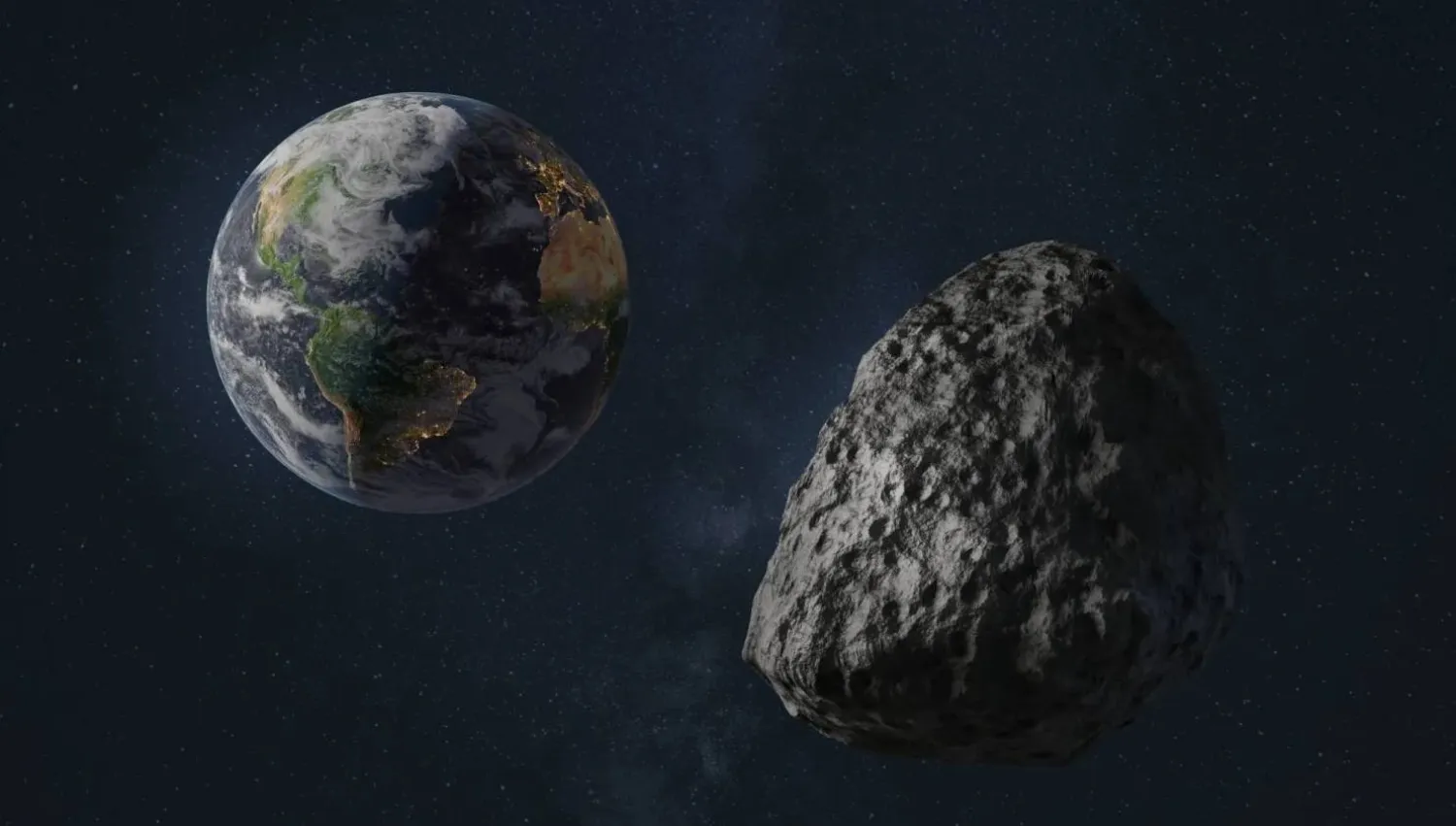
The rare asteroid is expected to “safely pass” within 20,000 miles of Earth in 2029 (Shutterstock)
TT

Massive Asteroid Set to Pass ‘Close’ to Earth

The rare asteroid is expected to “safely pass” within 20,000 miles of Earth in 2029 (Shutterstock)

An asteroid named after a god of chaos is heading toward Earth — but there is no need to panic just yet, according to The Independent.

The massive rock is arriving for a historic flyby rather than a disaster, according to NASA. The encounter is still a few years away, but when it finally arrives, it will be so close that spotting it won’t even require a telescope.

Known as 99942 Apophis, the rare asteroid is expected to “safely pass” within 20,000 miles of Earth in 2029, representing one of the closest approaches ever recorded for a celestial object of this size.

“Even though Apophis does not pose any immediate risk to Earth, an asteroid of its size passing so close to our planet is a very rare event,” NASA astronomers stated. “Scientists across the globe are excited to use this opportunity to study Apophis in detail.”

At roughly 1,115 feet wide, the asteroid will pass closer to Earth than the satellites orbiting in geosynchronous altitude, according to NASA.

It will be the closest approach of an asteroid of this size that humans have ever been aware of in advance, according to the European Space Agency.

The rare timing of the flyby — falling on Friday, April 13, in many parts of the world, has already sparked a mix of excitement and superstition across social media.

The asteroid was named after the ancient Egyptian god of evil and destruction. The name was proposed by its discoverers — astronomers Roy Tucker, David Tholen and Fabrizio Bernardi of the Kitt Peak National Observatory near Tucson, Arizona — because Apophis is the Greek name for the Egyptian god known as Apep.

NASA reports that an asteroid of this scale passes this close to Earth only once every few thousand years on average, making it a potentially unprecedented event in recorded human history.