Saudi Arabia: KAUST Study Reveals How Plants Protect Photosynthesis During Extreme Heathttps://english.aawsat.com/varieties/5272663-saudi-arabia-kaust-study-reveals-how-plants-protect-photosynthesis-during-extreme
Saudi Arabia: KAUST Study Reveals How Plants Protect Photosynthesis During Extreme Heat
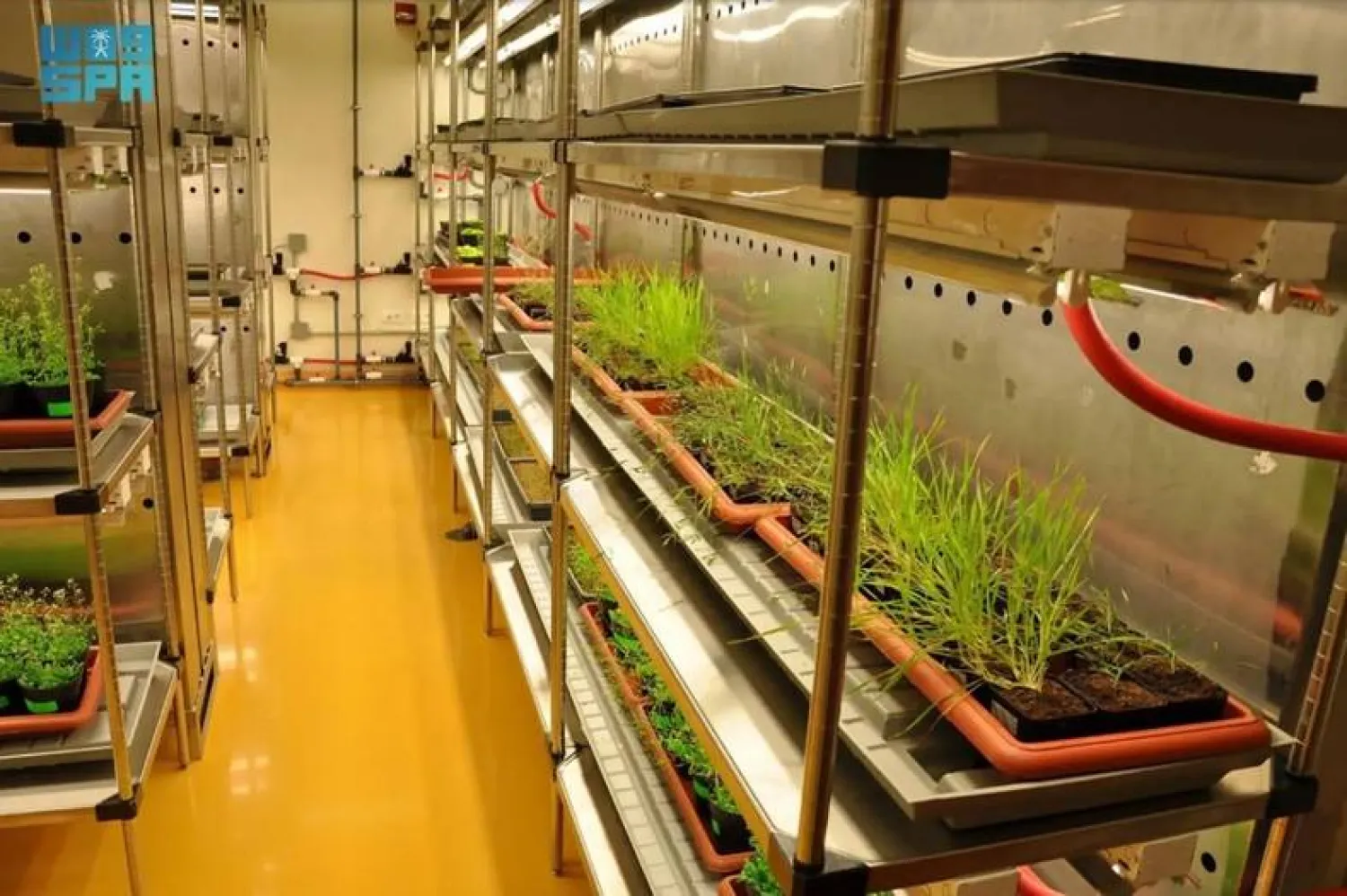
The research team identified a protective mechanism within chloroplasts. SPA
King Abdullah University of Science and Technology (KAUST) has completed a research study identifying how plants protect photosynthesis under high temperatures, an outcome that could support the development of more resilient crops in desert climates.
The research team identified a protective mechanism within chloroplasts, lead researcher Professor Monika Chodasiewicz said, noting that it helps preserve and restore the plant’s ability to convert sunlight into chemical energy.
The findings are particularly significant, as heat is one of the main threats to plant productivity, and protecting photosynthesis is essential for sustaining plant growth and crop yields, Chodasiewicz added.
She explained that the chlorophyll protein forms protective granules, revealing their previously unclear functional significance. The findings provide new insights that could be applied for future crop breeding and biotechnology, Chodasiewicz said.
The results also contribute to the emerging field of phase-separated biomolecular condensates in plant biology, while supporting broader priorities related to sustainable agriculture, climate adaptation, and food security.
With the Stroke of a Brush… Paint Could Cool Your Home, Harvest Water from Airhttps://english.aawsat.com/varieties/5272645-stroke-brush%E2%80%A6-paint-could-cool-your-home-harvest-water-air
The researchers tested four painted panels in black and white over three months, tracking temperature, atmospheric conditions, and other variables on a University of Syndey rooftop (Dewpoint Innovations)
With the Stroke of a Brush… Paint Could Cool Your Home, Harvest Water from Air
The researchers tested four painted panels in black and white over three months, tracking temperature, atmospheric conditions, and other variables on a University of Syndey rooftop (Dewpoint Innovations)
As global temperatures rise and water scarcity worsens, a nanoengineered paint developed by researchers in Australia aims to tackle both — with the stroke of a brush.
For University of Sydney scientists Chiara Neto and Ming Chiu, these growing pressures sparked an idea: a rooftop coating that could cool buildings and harvest water from the air, according to CNN.
That work evolved into startup Dewpoint Innovations, founded in 2022 with ambitions beyond cooling paint to a broader rethink of how infrastructure is designed: If rooftops across a city could reflect heat and collect water, they could become part of the climate solution.
In a warming world, cities are becoming heat traps. Concrete and rooftops absorb the sun’s energy, raising temperatures, leading to what’s known as the urban heat island effect — where cities experience higher temperatures.
That is the first challenge Dewpoint Innovations is targeting: “Our paint will significantly reduce the heat load the sun puts on cities,” said Chiu, co-inventor and chief technology officer at Dewpoint Innovations.
To achieve that effect, the specially engineered nanomaterials use a process called passive radiative cooling to reflect most of the sun’s energy and release heat back into the sky — allowing roof surfaces to stay cooler than the surrounding air without using energy.
Typical commercial white paint reflects around 70% to 80% of incoming sunlight, said Distinguished Professor Baohua Jia, a nanotech expert at RMIT University in Melbourne, Australia, who is unaffiliated with Dewpoint Innovations.
Dewpoint’s coating demonstrated solar reflectance of up to 96% in a six-month outdoor trial reported in 2025.
That higher reflectivity means less heat was absorbed, keeping roof surfaces up to 6 degrees Celsius cooler than the surrounding air and
UK: Driver Punished for Carrying Football Goal Net on Car Roofhttps://english.aawsat.com/varieties/5272643-uk-driver-punished-carrying-football-goal-net-car-roof
UK: Driver Punished for Carrying Football Goal Net on Car Roof
A photo shows the unsecured football net on top of the British driver’s car (Hertfordshire Police)
Hertfordshire Police shared a video on social media of a driver who could have caused a collision after placing an unsecured football net on top of his car.
The video showed the incident, where the driver pulls out of a junction with the goal fully assembled on top of the vehicle.
The car is seen pulling over quickly after the police approach, with the frame visibly not properly secured.
In the UK, driving with an insecure load is illegal and classed as dangerous, Hertfordshire Police noted on social media. Serious cases can lead to prison, according to Sky News.
The police said the driver was docked three points from their license and ordered to pay a £120 fine and a £48 victim surcharge.
A spokesperson for Hertfordshire Police told The Sun that the incident took place on May 12 last year, at around 6.08pm in Borehamwood.
They added that the driver “recently attended court” where they were given the penalty.
The police said on social media: “While this clip may have made you laugh (or gasp!), there's a serious side. The goal was not secured properly and could have easily caused a collision.”
Wild Peacocks Bring Delight, Despair to Italian Villagehttps://english.aawsat.com/varieties/5272626-wild-peacocks-bring-delight-despair-italian-village
This screen grab taken from an AFP Video on May 12, 2026, shows a wild peacock standing on a roof in Punta Marina, north-eastern Italy. (Photo by Francesco GILIOLI / AFP)
Wild Peacocks Bring Delight, Despair to Italian Village
This screen grab taken from an AFP Video on May 12, 2026, shows a wild peacock standing on a roof in Punta Marina, north-eastern Italy. (Photo by Francesco GILIOLI / AFP)
Dozens of preening peacocks looking for love have colonized a seaside village in Italy, strutting their stuff for the ladies but infuriating human residents with their spring mating season screams.
The birds, with their iridescent, sweeping trains, perch on rooftops and fences across Punta Marina, a village on the Adriatic Sea coast in the Emilia Romagna region, east of Bologna.
Their booming numbers have split the town in two -- one side thinks they should be left alone; the other wants them taken to more suitable pastures.
The once-revered creatures appear throughout nearby Ravenna's prized mosaics as a symbol of immortality -- but 81-year-old Marco Manzoli, a retired bus driver, said they were essentially delinquents who poo a lot.
"The population has boomed over 30 years and it's too big now: they disrupt sleep, disrupt traffic and dirty the ground with ice-cream-like excrement, which we then step in," AFP quoted Manzoli as saying.
Nearby, six peacocks saunter through a crossroads, gazing at their reflections in parked cars and shop windows.
"The peacocks climb onto the cars... and scratch them," Manzoli said, creating fears "tourists won't come on holiday anymore unless they have a garage to park their car in."
This screen grab taken from an AFP Video on May 12, 2026, shows wild peacocks in a street of Punta Marina, north-eastern Italy. (Photo by Francesco GILIOLI / AFP)
Though there has been no official head count, the birds are reported to number some 120.
Pastry chef Claudio Ianiero, 64, told AFP that peacocks have long lived in the pine forest behind the village, but began seeking safety from predators by nesting in the gardens of abandoned houses.
"Out there they have many natural enemies, such as wolves and foxes. Here however, they have none, and they are proliferating in a way that is difficult to control," he said.
As a peacock neared the window of the bakery, eyeing the buttery croissants displayed inside, Ianiero denied frenzied media reports of an invasion, a sanitary emergency, or locals being forced to move away.
The chef, who boasts peacock biscuits among his delicacies, says locals have lived in harmony with them for years.
The crested birds, in their myriad blues, are "something magic" for Punta Marina, he said.
But Mara Capasso, a 57-year-old supermarket cashier, said she had neighbors woken nightly by mating calls.
The peacock problem had "split the town into two factions", she said.
The birds should be "taken to pine forests, woods, places where they can be in their habitat, because they should never live on concrete.
"They need to be in their natural environment," she said.
Ravenna city council has toyed with various strategies to manage the population over the years.
But an attempt to relocate them in 2022 fell through largely due to opposition from animal rights groups.
It may have more success now, for "we are getting adoption offers from all over Italy," Ianiero said.
Though the council launched a campaign in 2024 to instruct locals and holidaymakers on how to live alongside the birds -- such as not feeding them -- local Emanuele Crescentini said more must be done.
Kitted out in a fluorescent orange jacket, 50-year-old Crescentini said he had appointed himself a peacock "ranger", walking the streets to protect the birds from irate locals.
"There's plenty of space in Punta Marina, they could spread out everywhere and cause no trouble at all," he said.
"We could set an example of intelligent and mature coexistence. It can be done."
لم تشترك بعد
انشئ حساباً خاصاً بك لتحصل على أخبار مخصصة لك ولتتمتع بخاصية حفظ المقالات وتتلقى نشراتنا البريدية المتنوعة