Wildlife Rescuers Help Birds Survive Pakistan’s Hotter Summers

This photograph taken on July 7, 2026 shows kites resting inside a cage at the Margallah Wildlife Rescue Center in Islamabad. (AFP)
TT

Wildlife Rescuers Help Birds Survive Pakistan’s Hotter Summers

This photograph taken on July 7, 2026 shows kites resting inside a cage at the Margallah Wildlife Rescue Center in Islamabad. (AFP)

Cradling an Asian koel in his hands, wildlife officer Zaheer Ahmed gently stretched its wings as part of a health checkup to rehabilitate birds hit with dehydration or heatstroke in Pakistan's capital.

Pakistan -- one of the most vulnerable countries to the effects of climate change -- experienced its second-warmest year since 1960 in 2025, according to government data.

Temperatures in Islamabad this summer have pushed past 40C.

"In the past, because of kite flying, the string used to damage their wings," said Sakhawat Ali, director of the Islamabad Wildlife Management Board which oversees the Margallah Wildlife Rescue Centre in Islamabad.

"But for the last one or two years, most of the cases we have been receiving involve birds that are dehydrated and suffering from heat stress."

The wildlife rescue center, located at the foot of the Margalla Hills, was once the site of the notorious Islamabad Zoo where neglected elephants and underfed lions were kept in cages.

The zoo was shuttered in 2020.

On the overgrown grounds where large dinosaur sculptures still stand, wild animals have been brought in for rehabilitation from across Pakistan, including bears and monkeys abused by their private owners.

Scientists warn that extreme weather events such as heatwaves are becoming more frequent and intense as a result of human-induced climate change.

Ahmed said the center can receive up to 30 calls a day in summer from locals about distressed wildlife, including birds, adding that their top priorities are to provide medical attention, food and water.

The feathered creatures are kept in quarantine, sometimes for several weeks, until they are fit to be released.

Birds face the heightened threat of forest fires, which can overlap with their breeding seasons, Ahmed said.

"Birds' nests also get burned. The birds themselves also get burned a little," says Ahmed. "So their entire habitat is being destroyed."

Ali encouraged residents to put out bowls of water for their friendly fowls to drink, bathe and keep cool.

The Islamabad Wildlife Management Board, a government agency, is looking into whether climate change is disrupting birds' breeding seasons and food sources, which could diminish their populations.


At ‘China’s Hollywood’, Visitors Become Stars as Consumers Spend More on Experiences

 Customers dressed in traditional Chinese costumes rehearse a scene from a classic Chinese drama during a mini-drama filming experience at Hengdian World Studios in Dongyang, Zhejiang province, China, October 29, 2026. (Reuters)
Customers dressed in traditional Chinese costumes rehearse a scene from a classic Chinese drama during a mini-drama filming experience at Hengdian World Studios in Dongyang, Zhejiang province, China, October 29, 2026. (Reuters)
TT

At ‘China’s Hollywood’, Visitors Become Stars as Consumers Spend More on Experiences

 Customers dressed in traditional Chinese costumes rehearse a scene from a classic Chinese drama during a mini-drama filming experience at Hengdian World Studios in Dongyang, Zhejiang province, China, October 29, 2026. (Reuters)
Customers dressed in traditional Chinese costumes rehearse a scene from a classic Chinese drama during a mini-drama filming experience at Hengdian World Studios in Dongyang, Zhejiang province, China, October 29, 2026. (Reuters)

Onlookers craned their necks outside an ornate palace chamber, peering through the doors at four women in silk robes and jade hairpins acting out a court intrigue. One consort slapped another across the face, the director called for another take, and the cast huddled over their phones. Then they started laughing.

But the scene was not for a television drama.

The women were friends who had traveled ‌more than ‌1,500 km (932 miles) to star in their own production ‌at ⁠Hengdian World Studios, the ⁠sprawling complex in eastern China known as "China's Hollywood" where many of the country's period dramas are filmed.

The studio has expanded into experiential tourism, allowing visitors to shoot their own scenes on sets ranging from a replica of Beijing's Forbidden City to old Shanghai streets used in professional productions.

Since the experience launched in August, Hengdian said more than 2,000 people had taken part, with bookings full on most days, particularly during weekends ⁠and holidays.

“During the National Day holiday, I shoot from ‌morning until dark, and there are still guests ‌we can't fit in,” said Wang Weili, a director who once filmed 20 groups in ‌a single day.

The attraction reflects a broader shift in Chinese consumer spending.

While a ‌slowing economy and prolonged property slump have weighed on purchases of everything from luxury goods to home furnishings, consumers have continued to spend on travel, entertainment and experiences, fueling demand for immersive attractions, such as live-action role-playing games, historical re-enactments and interactive film shoots.

“When I was ‌a kid, I loved playing director and getting the other children to act out scenes,” said Clare Huang, who was playing ⁠an empress in ⁠her group's palace drama.

“I've always enjoyed this kind of thing, so today a few of us girls get to see what it feels like.”

For 388 yuan ($55) each, Huang and her friends got their hair and makeup done, costumes, a 30-minute directed shoot and a 90-second edited video. Guests can choose from more than 20 scripts, most involving palace intrigue, romance or betrayal.

Another customer, Xie, a 28-year-old influencer who gave only her family name, travelled to Hengdian after seeing videos of the shoots on social media. She paid 498 yuan ($70) for a solo session based on an original script.

“We don't have proms in China, so now people go out in costume instead,” Xie said. “Everyone is willing to dress up a bit more boldly and show themselves in the best way they can.”


Woman Stuck on Tiny Pacific Island for 3 Years Can’t Get Transit Visa to Fly Home

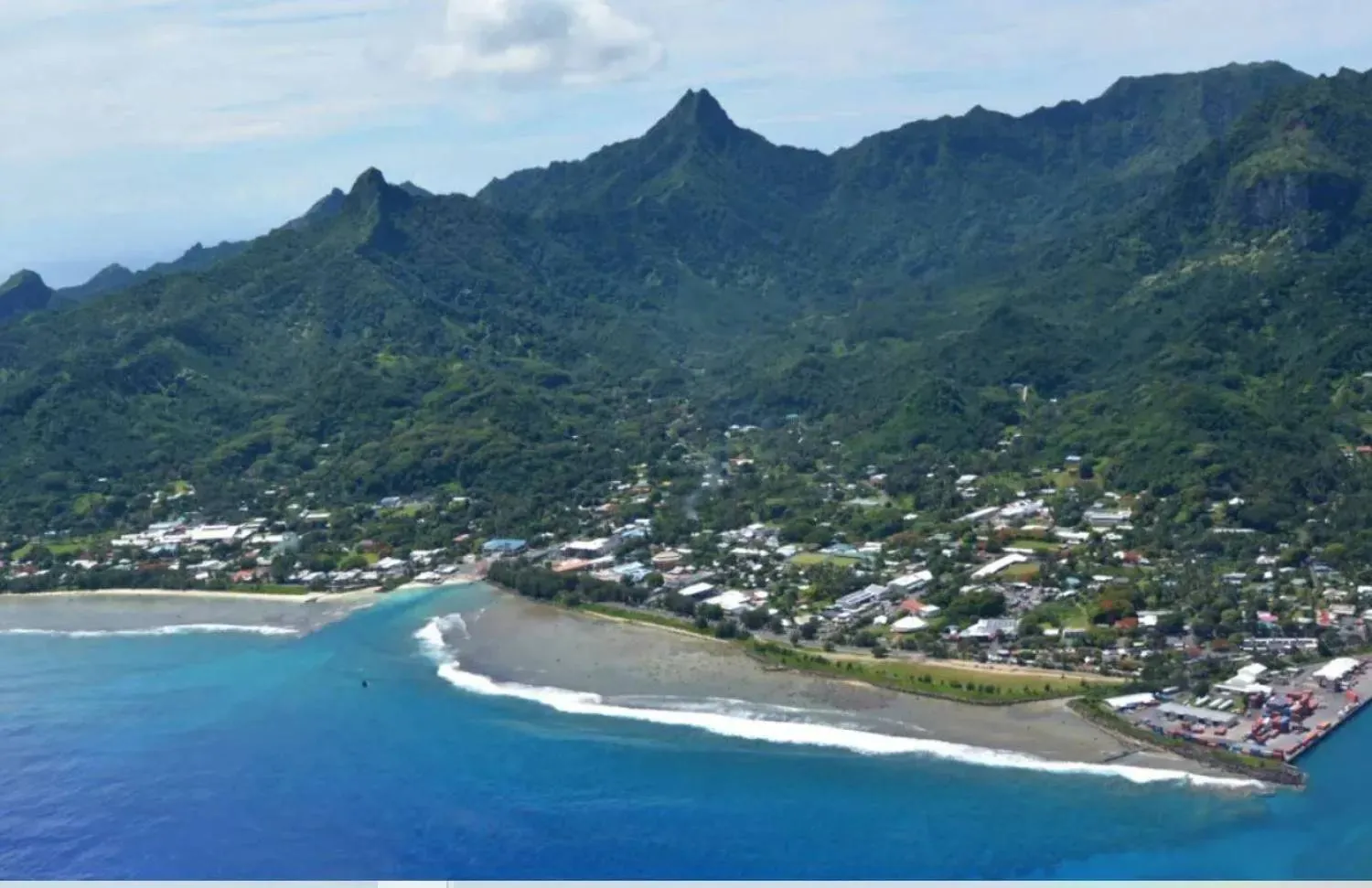
Cook Islands is known for its beaches and volcanic peaks - but Ruchira Ranasingha is an involuntary guest (AFP) 
TT

Woman Stuck on Tiny Pacific Island for 3 Years Can’t Get Transit Visa to Fly Home

Cook Islands is known for its beaches and volcanic peaks - but Ruchira Ranasingha is an involuntary guest (AFP) 

When Ruchira Ranasingha left Sri Lanka almost a decade ago, she could never have imagined she would end up stranded on a tiny archipelago in the South Pacific.

The 50-year-old has now been stuck in the Cook Islands for three years. She told the BBC she is desperate to go back to Sri Lanka and has even offered to go “handcuffed, bound and gagged.”

Ranasingha had been hoping to settle in New Zealand.

After seeking asylum there, she said she followed an immigration adviser’s recommendation to temporarily exit the country to apply for a work visa. But once in the Cook Islands, her application was rejected. And by leaving New Zealand, she had breached the terms of her existing asylum-linked visa.

Now New Zealand is refusing to issue her a transit visa that would allow her to fly home to Sri Lanka.

Australia is refusing too. The only other international destinations she can fly to from the Cook Islands - Tahiti and Hawaii - require her to give biometric information in New Zealand before any visa can be processed.

As a result, she has no feasible way of leaving.

“My son - my only child - is getting married in November and I really want to be there for his wedding. My mother is so worried about what has happened to me that she is constantly in and out of hospital,” she said through tears.

“I will do anything they ask of me - I just want to go home,” she added.

Ranasingha left Sri Lanka in 2018 after being forced to close her small T-shirt factory due to a loss of business. Struggling to repay loans, she moved to Hong Kong to work as a domestic caregiver looking after elderly people and children.

Her brother tells BBC Sinhala she had come under immense financial pressure. Her husband was a drug addict who died about seven years ago, he added.

In December 2022, Ranasingha headed to New Zealand, where she said she lived with a cousin on a two-month visit visa. As it came close to expiring, she said an immigration interpreter helped her apply for asylum on the grounds she was facing threats from lenders in Sri Lanka.

She was granted an asylum seeker “open work visa”, enabling her to work for almost any employer for a year.

She found a job at a restaurant, she says, which ultimately agreed to sponsor an employment visa, which she believed would give her longer-term stability.

But as asylum seekers generally cannot apply for other visas while their applications are processed in New Zealand, it was declined.

That’s when she got in touch with Immigration & Secretarial Services, a firm she claimed told her a fresh application for an employment visa could be made from overseas.

Email correspondence the BBC has seen shows its manager, Sylviane Gallant, saying she would initiate the process as soon as Ranasingha had left the country.

So she booked a short stay in the Cook Islands while the application was made.

It turned out to be a disastrous decision.

She was again refused the employment visa. And by leaving New Zealand, she had violated the terms of her existing visa. New Zealand authorities made it clear they would not grant her any future visas.

Gallant claimed to make various interventions on her behalf, including writing to politicians including Chris Penk, New Zealand’s then-immigration minister.

But ultimately, Ranasingha said Gallant admitted the situation was her fault and told her “there was nothing more she could do.”

“She told me I was better off going home. There was nothing holding me there so I agreed to go.”

But when she turned up at the airport with an Air New Zealand ticket to Sri Lanka in hand, she was told she couldn’t board the flight without a New Zealand transit visa.

Three applications for a New Zealand transit visa were rejected. Authorities said they weren’t convinced she would leave New Zealand. Four applications for Australian transit visas were rejected too.

In one of its rejections, New Zealand suggested she explore other routes. But both the US state of Hawaii and the French Polynesian island of Tahiti told her she would need to provide biometric information before any visa could be processed - and that could only be done in person in New Zealand.

Her latest application to New Zealand, which included all the details of the alternative routes she’d been trying, as well as her son’s upcoming wedding and mother’s failing health, was also rejected.

“I have lost so much money on tickets. For almost four years I have been just applying for visa after visa with nothing working out,” she said, breaking down.


Aviation Superfan Brings A380 Experience Into His Own Apartment

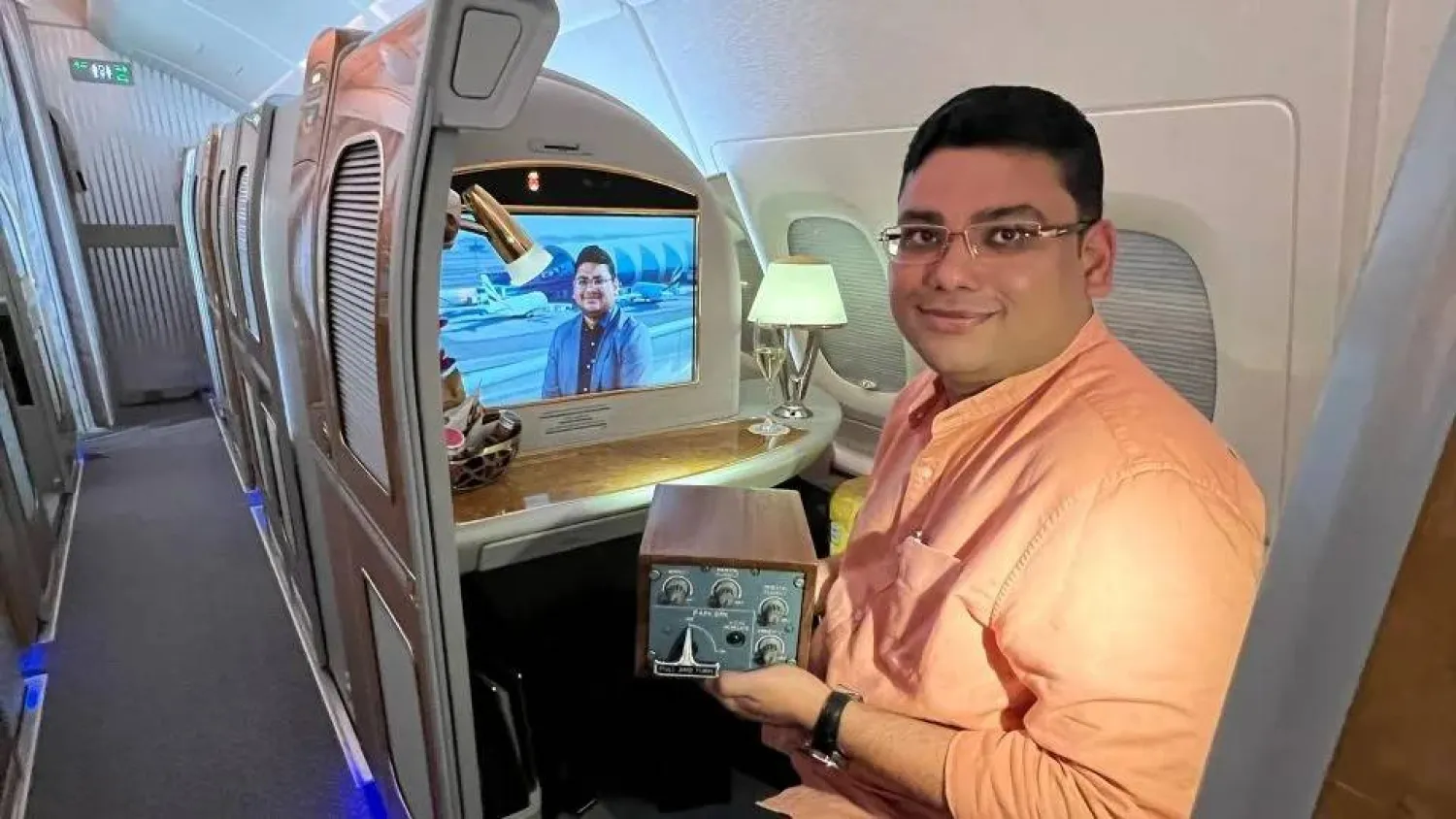
Arun Rajagopal, holding an Emirates A380 parking brake while a documentary featuring the A380 superfan plays in the background (Arun Rajagopal)
TT

Aviation Superfan Brings A380 Experience Into His Own Apartment

Arun Rajagopal, holding an Emirates A380 parking brake while a documentary featuring the A380 superfan plays in the background (Arun Rajagopal)

It wasn’t love at first flight for aviation superfan Arun Rajagopal and the Airbus A380. The turning point came on his fourth journey aboard the world’s largest passenger plane, flying business class to Singapore.

“The seats were huge, and you have a bar in the back of the plane,” he said. It gave him a “wow” feeling, like “experiencing comfort on another level.”

Soon, he was flying A380s as often as possible. So far he’s clocked 220 times and counting, covering roughly 715,000 miles across six continents, according to CNN.

In recent years, he has brought the A380 experience into his own Dubai apartment as well. He has two first-class seats from Emirates’ first A380, first-class cabin lamps, and an A380 wheel upcycled into a coffee table.

The pièce de résistance, however, is the meticulously restored and customized living-room from The Residence – Etihad Airways’ luxurious three-room private suite – which he spent a year constructing in his living room.

The Airbus A340-600 broke records as the world’s longest passenger plane when it was launched in 2002, but for most of the decades it’s been flying, it’s been a commercial flop.

Its four engines are thirsty and its 247-foot-long fuselage requires special runway clearance.

On top of this, its quirky design includes a downstairs lavatory tucked away in space usually reserved for cargo – which apparently has made it a tempting proposition for would-be members of the Mile-High Club.

While it never was a hit with the airline industry, the Airbus A340-600 has a strong cult following among aviation fans and aircrews, many of whom turned out at Washington Dulles International Airport this month to see the arrival of a flight that would mark the end of German carrier Lufthansa’s relationship with the aircraft.