Bardot Auction in Paris Fetches Nearly One Million Euros

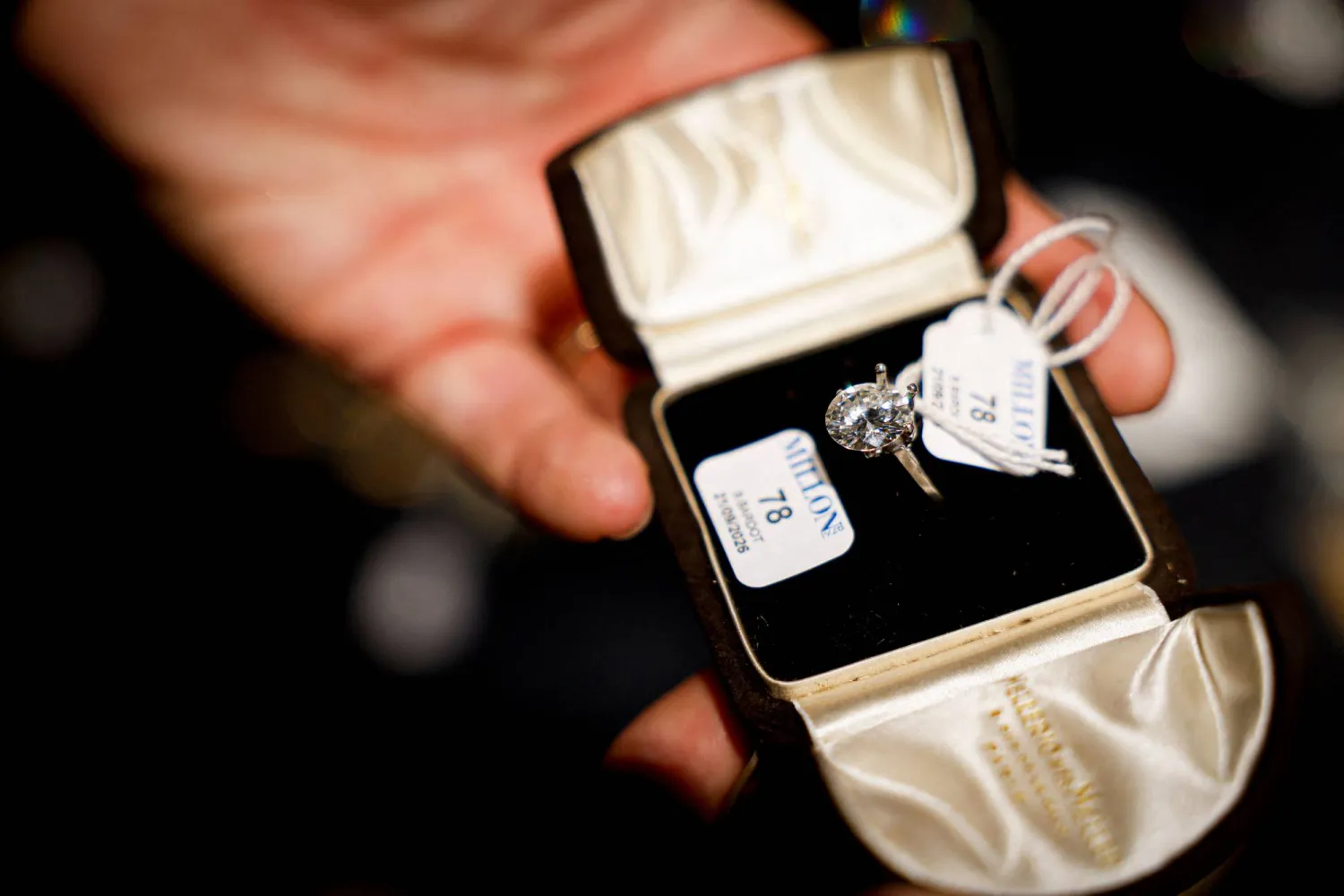
This photograph shows a family ring belonging to Brigitte Bardot a preview exhibition of personal belongings once owned by late French actress Brigitte Bardot at Hotel Drouot in Paris on September 15, 2026, ahead of an auction of her memorabilia and clothing. (AFP)
TT

Bardot Auction in Paris Fetches Nearly One Million Euros

This photograph shows a family ring belonging to Brigitte Bardot a preview exhibition of personal belongings once owned by late French actress Brigitte Bardot at Hotel Drouot in Paris on September 15, 2026, ahead of an auction of her memorabilia and clothing. (AFP)

An auction of French screen legend Brigitte Bardot's personal items fetched nearly one million euros in Paris on Monday, almost 20 times the estimate, the Millon auction house told AFP.

A total of 285 objects ranging from straw hats, sunglasses, nightgowns to tableware and furniture from La Madrague and La Garrigue, Bardot's homes in Saint-Tropez in southeastern France, and her Paris apartment generated tremendous enthusiasm, an AFP journalist said.

Bardot died in December aged 91. The proceeds will go to Bardot's animal welfare foundation and to Nicolas-Jacques Charrier, her only child.

Founded by the actor in 1986, the Brigitte Bardot Foundation says it has taken in 13,000 animals through four shelters and 150 partner facilities, supports 350 groups in France and operates in 70 countries.

Some 3,000 French and international bidders had registered for the auction.

"Brigitte Bardot has once again proved to be a remarkable alchemist: she transformed about 50,000 euros ($57,000) in estimates into nearly a million euros including fees," said auctioneer Alexandre Millon.

Two dog collars, with an ID tag bearing Bardot's name and the telephone number for La Madrague, estimated at 30 euros for the pair, were sold for 9,400 euros to a Russian buyer.

A self-portrait fetched nearly 40,000 euros, while the typewriter she used to write an autobiography sold for 4,634 euros.

Estimated at between 300 and 500 euros, two of her guitars soared to 8,600 and 11,900 euros while three stuffed toys representing baby seals sold for nearly 2,200 euros.

"This sale is the logical continuation of the one she herself organized in 1987 with her most precious belongings to create her foundation. Today, her fight continues through this auction," Ghyslaine Calmels, managing director of the Bardot Foundation, told AFP after the sale.

Two days before the auction, Bernard d'Ormale, Brigitte Bardot's last husband, slammed it as a "joke".

"These are personal items. Why hold this sale? For the animals? It's a joke," Bernard d'Ormale told AFP, adding it amounted to a "disrespect to Brigitte's memory".

Her belongings should have been preserved as part of her legacy rather than sold to raise funds for the foundation she created, d'Ormale argued, adding that Bardot "would not have agreed to this sale".

The Brigitte Bardot Foundation rejected the criticism, saying the auction was approved by the board in June, including Bardot's widower, who was then its president.

However, d'Ormale said he had not understood the auction would involve such personal items.

The dispute comes days after he was removed as head of the foundation, a role he had held since the star's death.

Study: Almost All Coral Reef Ecosystems Face Risk of Collapse in 50 Years

Schools of grunt fish (top) and other fish swim over a coral reef in the southern Caribbean Sea, off Palm Beach in the western coast of Aruba, on October 22, 2026. (Photo by Joseph Prezioso / AFP)
TT

Study: Almost All Coral Reef Ecosystems Face Risk of Collapse in 50 Years

Schools of grunt fish (top) and other fish swim over a coral reef in the southern Caribbean Sea, off Palm Beach in the western coast of Aruba, on October 22, 2026. (Photo by Joseph Prezioso / AFP)

The world’s coral reef ecosystems almost all face a high risk of collapse in the next 50 years, mostly due to warming oceans and heat waves, according to a global assessment released Thursday.

It's the latest dose of bad news for coral reefs, which are critical sources for seafood and tourism and often serve as buffers from coastal erosion and storms. Sometimes dubbed “rainforests of the sea,” they have some of the world’s richest biodiversity. They support a quarter of marine species as well as coastal communities and businesses.

Some 96% of shallow-water reef systems are already critically endangered and could disappear by 2075, the International Union for Conservation of Nature announced on the sidelines of a UN biodiversity conference in Armenia.

Most of the world’s famous reef systems — including the Great Barrier Reef in Australia, the Coral Triangle in the Western Pacific Ocean and Southeast Asia, the Mesoamerican Barrier Reef System and the Red Sea coral reefs — are all critically endangered, the highest level of threat.

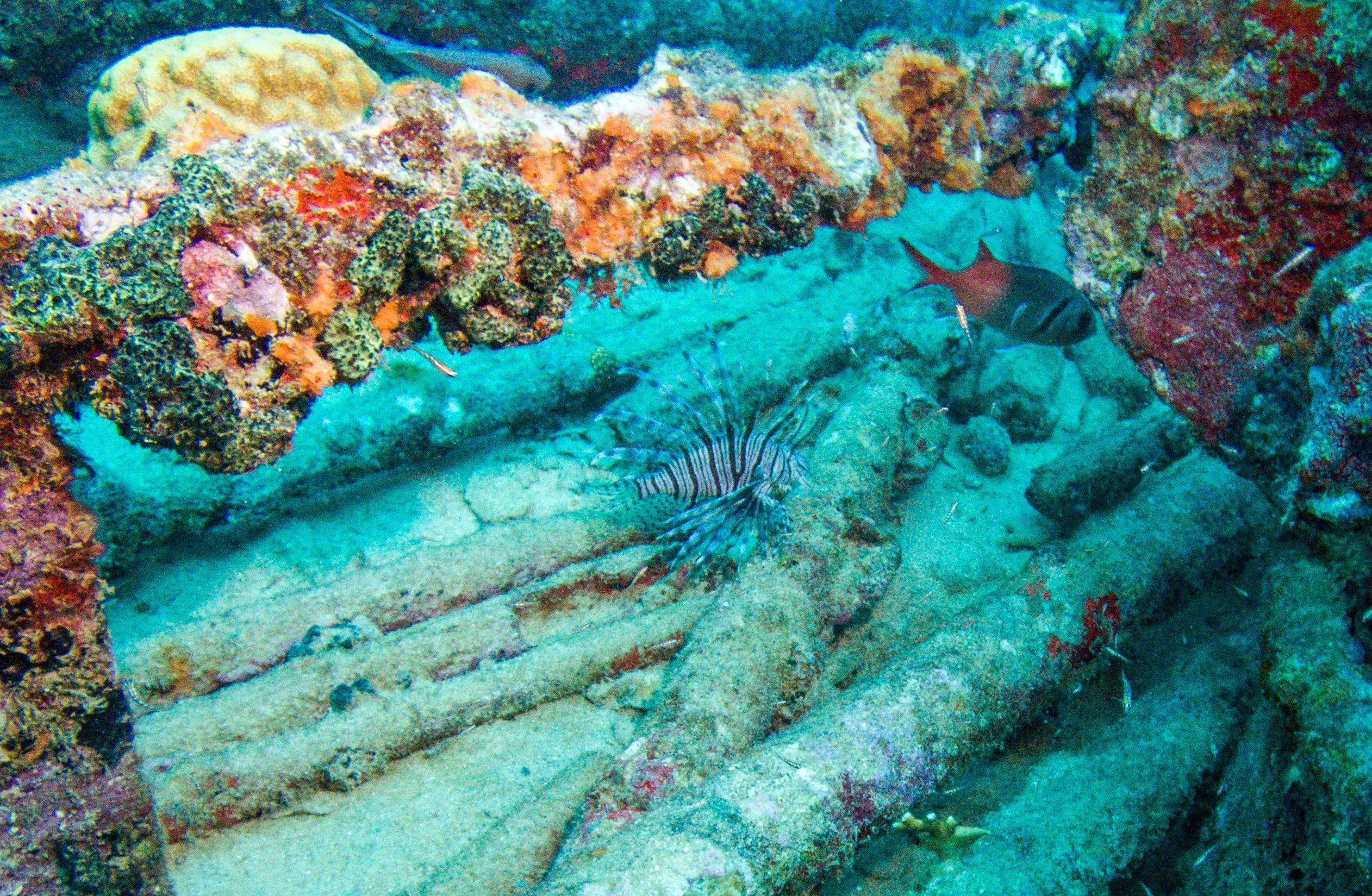
A lion fish lurks around the shipwreck of the oil tanker Debbie II and a coral reef in the southern Caribbean Sea, off Palm Beach in the western coast of Aruba, on October 22, 2026. (Photo by Joseph Prezioso / AFP)

“The risk of coral reef collapse is escalating, but this must be a wake-up call rather than a cause for despair,” said Mishal Gudka, the scientific lead of the global IUCN Red List of Coral Reef Ecosystems assessment, the first of its kind.

“Coral reefs have shown a remarkable ability to bounce back from devastating bleaching events,” AFP quoted him as saying. “Pockets of surviving, resilient coral reefs can still remain in the future, so we must do everything within our reach to set them up for success.”

When a reef collapses, hard corals disappear and are replaced by algae, rubble and sponges. As a result, the reef no longer supports a diverse ecosystem that can include everything from tiny invertebrates to reef fish like grouper.

“Coral reefs are one of the clearest vital signs of the ocean’s health,” Grethel Aguilar, the IUCN director general, said in a statement.

The assessment, spanning 127 tropical and subtropical ecoregions, and encompassing 72,726 square miles (188,362 square kilometers) of coral reefs globally, called climate change the “single most consistent threat driving coral reef decline worldwide.”

A week ago, another study in the journal Nature by the IUCN found that nearly 44% of reef-building coral species face an elevated risk of extinction due to climate change. A year ago, a survey found that harmful bleaching of the world’s coral has grown to include 84% of the ocean’s reefs — the most intense of its kind in recorded history.

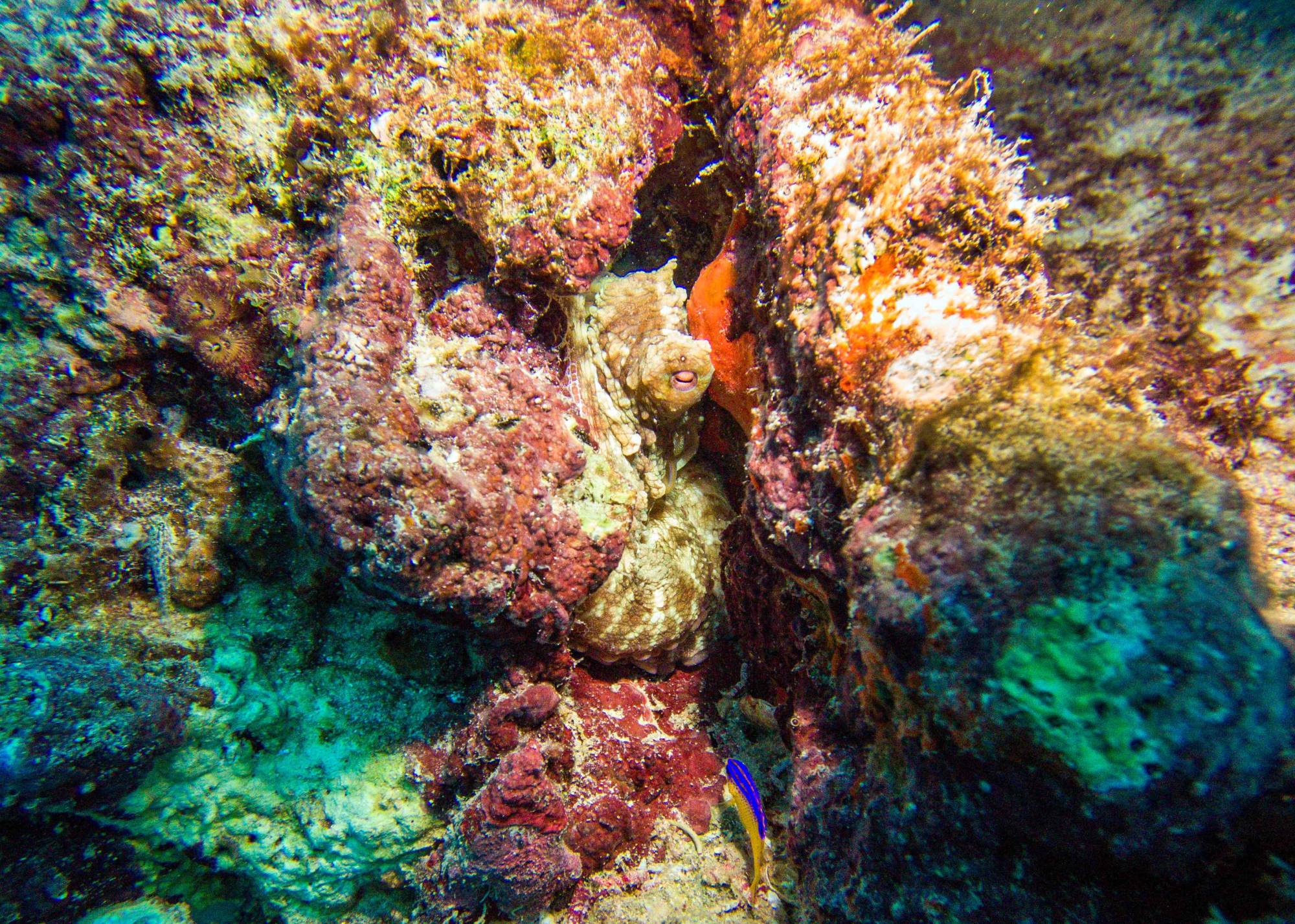
An octopus hides in the crevice of a coral reef in the southern Caribbean Sea, off Palm Beach in the western coast of Aruba, on October 22, 2026. (Photo by Joseph Prezioso / AFP)

The year 2024 was Earth’s hottest on record, and much of that is going into oceans. The average annual sea surface temperature of oceans away from the poles was a record 69.57 degrees Fahrenheit (20.87 degrees Celsius).

Beyond combating rising global emissions, experts said efforts to reduce pollution, overfishing and coastal development can help reefs survive.

“We know what is needed: ambitious emissions reductions, stronger protection and restoration efforts, and sustained investment in resilient coastal ecosystems and the communities that depend on them,” Aguilar said.

Andrew Baker, director of the Coral Reef Futures Lab at the University of Miami, sought to inject some hope after reviewing the assessment. He said stopping global warming and pollution isn't the only way to save corals.

“It means finding new ways to restore corals using emerging technology and innovative approaches,” he said, “that can throw a lifeline to struggling reefs and buy us critically needed time to make these transitions.”


Prehistoric 'Giant Rat' Found in Thailand from Fossil Teeth

Oarsmen row barges in the rain along the Chao Phraya River during the full dress rehearsal for the Royal Barge Procession in honor of Queen Suthida's 48th birthday, in Bangkok on October 28, 2026. (Photo by Lillian SUWANRUMPHA / AFP)
TT

Prehistoric 'Giant Rat' Found in Thailand from Fossil Teeth

Oarsmen row barges in the rain along the Chao Phraya River during the full dress rehearsal for the Royal Barge Procession in honor of Queen Suthida's 48th birthday, in Bangkok on October 28, 2026. (Photo by Lillian SUWANRUMPHA / AFP)

A giant rodent weighing around 30 kilograms roamed what is now southern Thailand 33 to 35 million years ago, scientists said, after identifying a previously unknown species from two fossilized teeth.

The ancient animal, which one geologist on the team called a "giant rat", was among the largest known from the Paleogene period, offering new clues about how early rodents evolved to enormous sizes.

The findings, published Wednesday in the journal Scientific Reports, were based on a molar and an incisor discovered in 2004 at a coal mine in southern Krabi province.

Pannipa Tian, a geologist with Thailand's Department of Mineral Resources who found the incisor, said she initially misidentified the fossil because of its "unusually large size".

"At first, I thought it was a bone. I showed it to my supervisor, who told me it was a giant rat's tooth," Pannipa, 51, told AFP on Thursday.

The cream-colored fossil stood out against the dark coal deposits, while another expedition member found the dark-colored molar the same day.

The Krabi basin has previously yielded fossils of ancient primates, carnivores and hoofed mammals.

But at the time of the discovery, the team lacked sufficient evidence and technology to identify the species.

More than two decades later, researchers from Thailand, France and Canada were able to do so through detailed analysis of the teeth.

The animal weighed around 30 kilograms -- an estimated half as much as a large capybara, the world's largest living rodent, they said.

Unlike the South American capybara, however, the prehistoric rodent belonged to the now-extinct Ischyromyidae family, one of the earliest major groups of rodents.

"It tells a lot about the diversity of life in the past," Pannipa said, suggesting that ancient rodents may have evolved in what is now Thailand before spreading to other parts of the world.

But with only two teeth recovered, the animal's appearance, diet and behavior remain unknown.

The species was named Yakamys sirindhornae in honor of Thailand's Princess Sirindhorn, a supporter of scientific and palaeontological research.


Endangered Hawaiian Bird Uses Beak and Body to Dig Out its Dinner

A close-up view of an 'akiapōlā'au bird showing its distinctive long, curved upper bill, in Pu'u Maka' Ala Natural Area Reserve, in Hawaii, US, September 3, 2022. Bret Nainoa Mossman/Handout via REUTERS
TT

Endangered Hawaiian Bird Uses Beak and Body to Dig Out its Dinner

A close-up view of an 'akiapōlā'au bird showing its distinctive long, curved upper bill, in Pu'u Maka' Ala Natural Area Reserve, in Hawaii, US, September 3, 2022. Bret Nainoa Mossman/Handout via REUTERS

The ʻakiapōlāʻau has no need for a toolbox. The endangered Hawaiian bird taps the wood of trees, hacks into it with the lower half of its unusual beak, then switches to its long, flexible upper bill to probe the hole for insect larvae to eat.

New research provides the most comprehensive look yet at this Hawaiian honeycreeper's unique anatomy, showing that when the bird strikes the wood, even its legs get involved in the action.

The ʻakiapōlāʻau (pronounced ah-key-ah-POLE-ah-ow) is found only on the island of Hawaii and feeds mainly on insects, including larvae hidden in branches. There are no native woodpeckers in Hawaii, but the ʻakiapōlāʻau has evolved its own way of getting at prey inside wood, filling a similar feeding niche despite the two birds not being closely related.

Scientists had long observed how the ʻakiapōlāʻau feeds, but knew much less about the anatomy that makes this behavior possible. To investigate, the researchers examined three ʻakiapōlāʻau skeletons from the Museum of Vertebrate Zoology at the University of California, Berkeley, and compared them with skeletons of related continental finches from other museum collections.

"The anatomy of an animal ⁠is like the ⁠book, whereas the in-life behavior is like the movie," said Alexander Clark, a University of Chicago doctoral candidate and scientific affiliate with the Field Museum in Chicago who was the lead author of the study published in the journal Ornithology.

In that "movie," the first step is finding where the prey may be hiding. The bird first assesses a branch and sometimes taps it gently with its upper bill to feel for hollow spaces, Reuters quoted Clark as saying.

Once it selects a spot, the bird switches tools. It opens its mouth widely and begins to vigorously gouge the woody substrate with the lower bill only, while the upper bill is held as far away as ⁠possible. After creating an opening, it inserts the slender upper bill and searches from side to side for its prey.

"With its mouth fully agape, it almost looks like the little bird is yelling at the wood it's gouging," Clark said.

The researchers found that the upper bill is unusual beneath the surface as well. Its underlying bony structure is about 38% shorter than its outer covering. The section without bone can flex as the bird moves its head from side to side while probing.

"When I've witnessed this behavior, I could've sworn it was going to snap its bill – and yet, it doesn't," Clark said.

Perhaps the biggest surprise came from the legs. The bird has a proportionally short femur, or the first bone of the leg that articulates with the hip.

"If you're constantly clinging to and needing to maintain awkward positions on perches, it helps to lower your center of gravity, particularly by reducing the leg length," Clark said.

Researchers also found a well-developed attachment for a muscle ⁠that flexes the ankle.

"This ⁠muscle, when contracted, flexes the ankle, bringing the lower part of the leg towards the body. It's essentially the same movement as if you were to stretch out your leg, and raise your foot towards your shin. You're working the muscle I'm talking about," Clark said.

When the ʻakiapōlāʻau gouges wood, that movement helps lift the body and then drive it forcefully downwards. That differs from woodpeckers, which primarily initiate their drilling movement using neck muscles to cock back and then lunge forward.

"In ʻakiapōlāʻau, it's a whole-body affair," Clark said. "Like effectively swinging an axe, you have to put your whole body into it."

Repeatedly striking wood may also carry a risk of injury, and scientists do not yet fully understand how the ʻakiapōlāʻau's skull copes with the forces involved. Woodpeckers have reinforced bone structures between the eyes that help cope with stresses from drilling. The ʻakiapōlāʻau has something similar, Clark said, but nothing to the same degree.

Mastering the technique also takes time. Young ʻakiapōlāʻau remain with adults for an unusually long period while learning to forage, Clark said.

"It takes practice to use that bill," Clark said.

With Hawaiian honeycreepers facing the risk of extinction, Clark added, "there will never again be a time in Earth's history when their songs will make up part of the dawn chorus."