
'Distressed' Family of UK Man Killed by Tiger Urge End to Online Posts

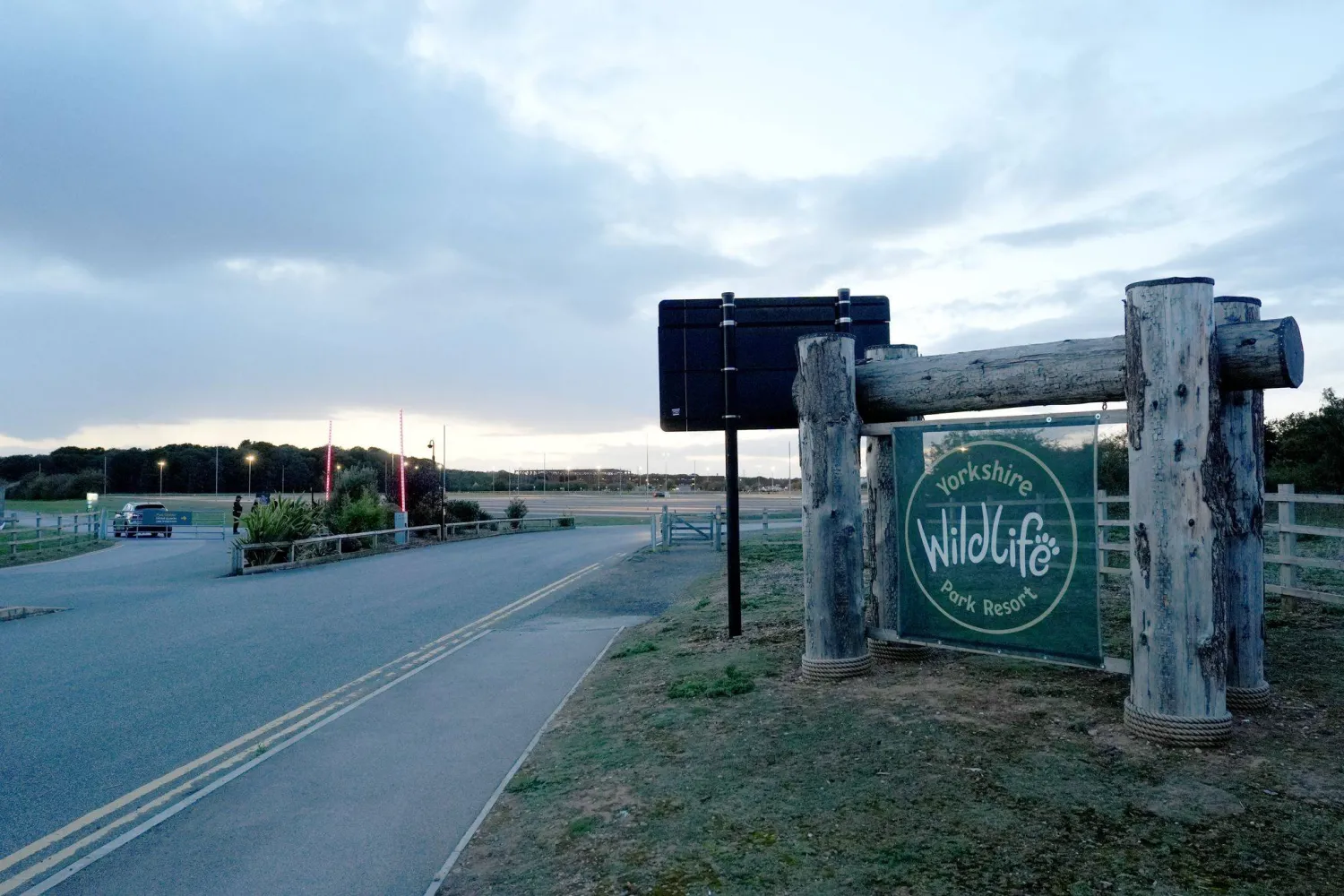
10 October 2026, United Kingdom, Doncaster: A view of the entrance to Yorkshire Wildlife Park in Doncaster, where a man has died after suffering serious injuries in a tiger enclosure at Yorkshire Wildlife Park. Photo: Annabel Lee-Ellis/PA Wire/dpa
TT

'Distressed' Family of UK Man Killed by Tiger Urge End to Online Posts

10 October 2026, United Kingdom, Doncaster: A view of the entrance to Yorkshire Wildlife Park in Doncaster, where a man has died after suffering serious injuries in a tiger enclosure at Yorkshire Wildlife Park. Photo: Annabel Lee-Ellis/PA Wire/dpa

The family of a mentally ill man killed by a tiger at a UK wildlife park have urged people to stop posting "deeply offensive media content" of the attack, as US President Donald Trump uploaded disturbing footage online.

William Chapman, 23, died from his injuries after being attacked by a tiger when he entered its enclosure on Saturday at the Yorkshire Wildlife Park, near the northern English city of Doncaster.

In an online tribute, his family late Tuesday described Chapman as a "bright, warm and engaging young man" who had been suffering from "significant mental illness over a number of years.”

And they questioned whether the strong medication he was prescribed may have played a role in the incident, while the park remained closed for a fifth day on Wednesday.

"The family are utterly devastated by their loss and are struggling to come to terms with what has happened," AFP quoted them as saying.

"The publication and circulation of deeply offensive media content is causing them severe distress at an exceptionally vulnerable time. We ask people to stop doing this."

Trump posted footage to his 13 million followers on his Truth Social account on Tuesday of Chapman being fatally mauled by the male Amur tiger, sparking a backlash on social media.

Trump, who regularly posts provocative material on social media, captioned his post "Don't ever mess with nature!.”

The 41-second clip was also later shared by the White House's "Rapid Response 47" account on X.

And Trump followed it with a video clip of apparently AI-generated visuals of individuals being mauled by big cats.

Later Tuesday, Trump doubled down and posted an AI-generated video of himself wrestling and befriending a smiling tiger, to the tune of "The Lion Sleeps Tonight.”

Users on X, where the "Rapid Response 47" account has 2.3 million followers, questioned the president's judgment, with one calling the post "sick.”

"I'm a big supporter but not a fan of this post. To each his own," wrote another.

An inquest into Chapman's death is due to open on Thursday in Doncaster.

He was visiting the zoo alone and it remains unclear how he entered the enclosure. He was pronounced dead at the scene after emergency services were called.

According to videos posted online, Chapman appeared to have filmed the inside of the enclosure with his mobile phone and the moment he approached the tiger.

Visitors to the park had also filmed the incident from a raised 300-meter (985-feet) long walkway which looks down on to the park's "Land of the Tigers" feature.

The walkway allows visitors to view the park's Amur tigers, also known as Siberian tigers, in their enclosure featuring woodland, grassland and a waterfall pool.

There are estimated to be only around 500 of the endangered subspecies left in the wild.

The park has said the tiger involved, called Atai, was safe and well, and would not be put down.


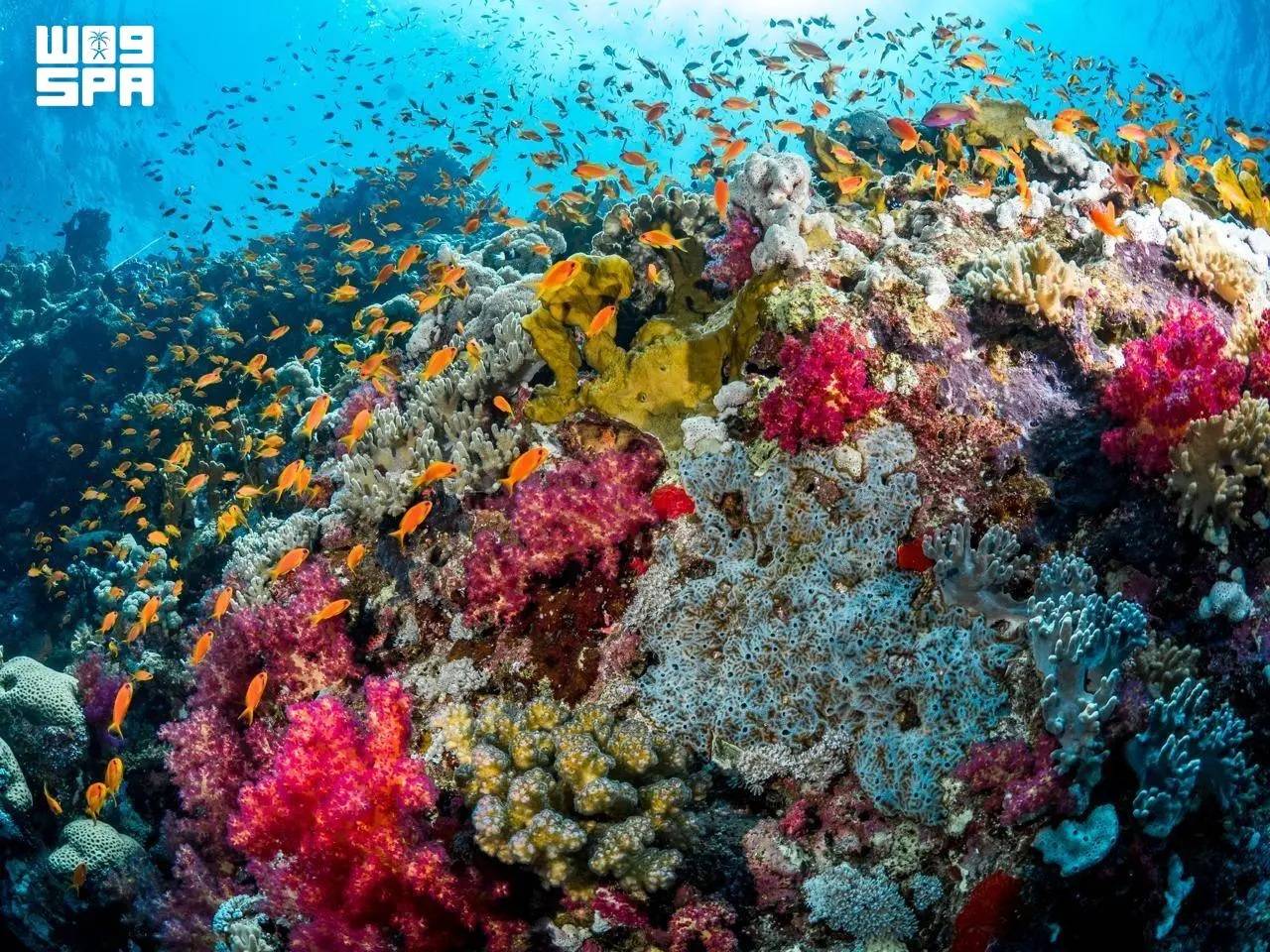
KAUST Unveils Landmark Coral Facility on Red Sea, Advancing Saudi Scientific Expertise and Marine Conservation

KCRI is designed to restore the Red Sea reefscape and offer a framework that coral restoration programs worldwide can adopt. (SPA)
TT

KAUST Unveils Landmark Coral Facility on Red Sea, Advancing Saudi Scientific Expertise and Marine Conservation

KCRI is designed to restore the Red Sea reefscape and offer a framework that coral restoration programs worldwide can adopt. (SPA)

The King Abdullah University of Science and Technology (KAUST) launched the KAUST Coral Restoration Initiative’s large-scale coral facility, restoring and advancing one of Saudi Arabia’s most precious natural assets, reported the Saudi Press Agency on Wednesday.

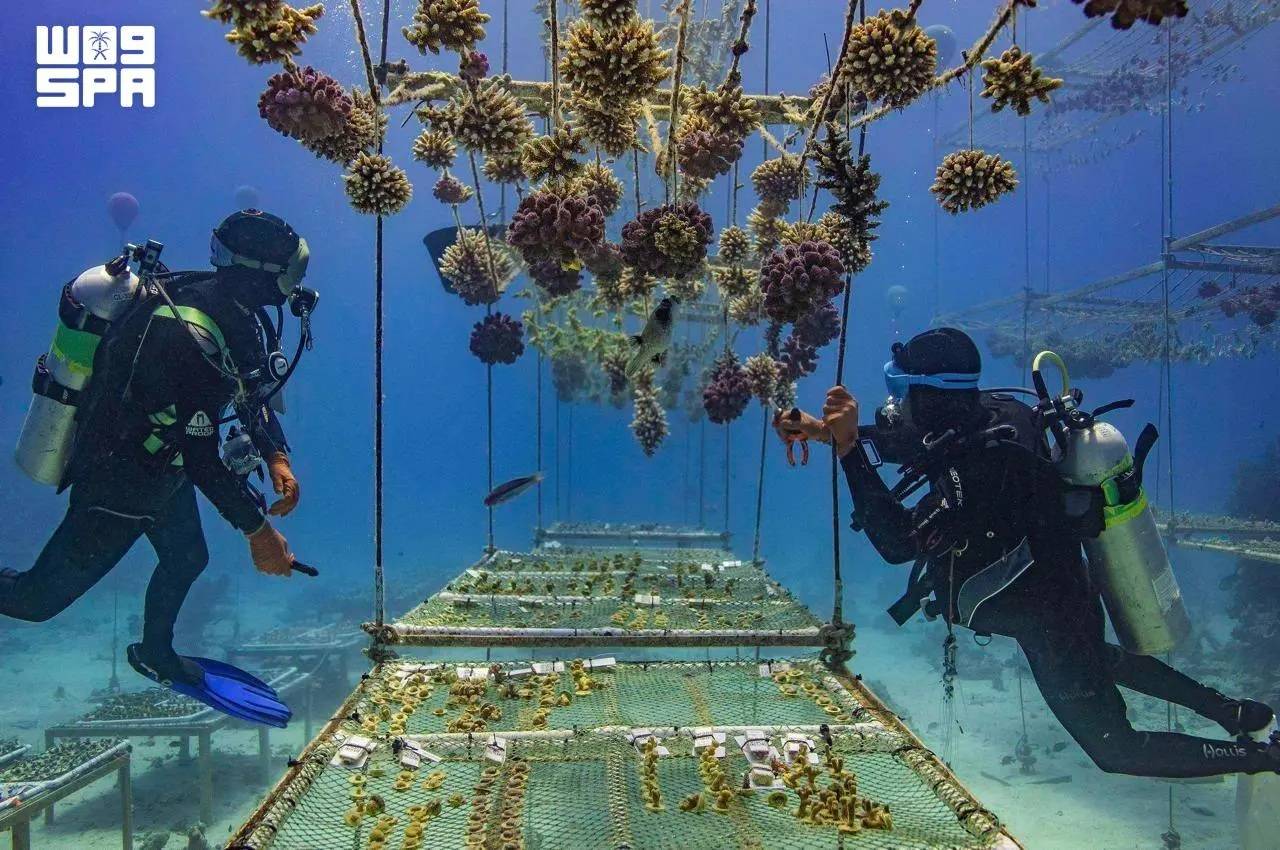
On Saudi Arabia’s Red Sea coast, the KAUST Coral Restoration Initiative (KCRI) land-based nursery and research campus is now growing corals at scale. It is designed to produce up to 360,000 corals a year, to outplant more than two million corals across 100 hectares of reef at Shushah Island by 2030, and to establish a resilient reef ecosystem by 2040.

This opening of the world’s largest coral restoration facility, announced at COP31 in Antalya, arrives at a moment of acute urgency for the world’s reefs. The fourth global coral bleaching event, confirmed by NOAA as the most severe in recorded history, affected more than 84% of the world’s reef area between 2023 and 2025.

Coral reefs support around a quarter of all marine species, protect coastlines from storms and sustain the livelihoods of more than 500 million people. (SPA)

The Red Sea is the right place to start. Its corals live in some of the warmest, saltiest waters on Earth, and they hold lessons about resilience that reefs everywhere will need. KCRI combines the Red Sea’s unique corals with KAUST’s world-class marine science to learn how corals can be grown at scale and conditioned to withstand warmer water before they return to the reef.

The initiative also draws on the expertise of the Coral Research and Development Accelerator Platform (CORDAP), which works internationally to accelerate scientific and technological solutions for coral reef conservation and restoration.

KCRI brings four components together in a single restoration system, including a large-scale land-based coral nursery, sea-based nurseries, more than 50 research programs spanning coral probiotics, heat-resilient corals, robotics and AI-driven modelling and eCoral, an AI-driven digital twin of the reefscape that guides where and how every coral is planted and monitored.

Saudi scientists, divers and aquarists are playing an important role in KCRI’s restoration efforts, developing specialist expertise in coral cultivation, marine science and reef restoration. (SPA)

Saudi scientists, divers and aquarists are playing an important role in KCRI’s restoration efforts, developing specialist expertise in coral cultivation, marine science and reef restoration. Beyond its restoration activities, KCRI represents a long-term investment in Saudi Arabia’s marine science capabilities.

Coral reefs support around a quarter of all marine species, protect coastlines from storms and sustain the livelihoods of more than 500 million people. KCRI is designed to restore the Red Sea reefscape and offer a framework that coral restoration programs worldwide can adopt.

KAUST is also working with international partners on how coral diversity can be safeguarded for future generations.


Portugal Closes All Schools and Non-Essential Services Ahead of a Major Atlantic Storm

Heavy machinery clears the debris from a landslide along the Marocos road in Machico municipality, on the Portuguese island of Madeira, due to severe weather caused by the passage of Storm Charles, 11 November 2026. (EPA)
TT

Portugal Closes All Schools and Non-Essential Services Ahead of a Major Atlantic Storm

Heavy machinery clears the debris from a landslide along the Marocos road in Machico municipality, on the Portuguese island of Madeira, due to severe weather caused by the passage of Storm Charles, 11 November 2026. (EPA)

Portugal closed all schools and shuttered non-essential public services on Wednesday as a major Atlantic storm headed for the country's mainland.

Streets remained largely deserted ahead of the arrival of Storm Charles after the government told people to stay at home as heavy rain and rough seas were expected to batter the Portuguese coast, with wind gusts of up to 140 kph (85 mph).

It was the first time in living memory that Portugal’s roughly 8,000 schools had canceled classes nationwide over a storm forecast.

Buses without passengers drove through the country's capital, Lisbon, where some streets flooded due to clogged drains. A national supermarket chain closed its stores, while an international technology conference in Lisbon attended by around 70,000 people called off the day's events.

In January, the country's center-right government faced harsh criticism for its weak response when Storm Kristin hit central Portugal, felling thousands of trees and causing widespread property damage that is still being repaired.

The brunt of Storm Charles was expected to hit the Atlantic coast on Wednesday afternoon and evening, coming from the southwest after it had struck the Portuguese island of Madeira on Tuesday with 130 kph (81 mph) winds.


Once the World's Fastest, Ocean Liner Will Become Largest Artificial Reef

The S.S. United States crossed the Atlantic more than 800 times. (Getty Images)
TT

Once the World's Fastest, Ocean Liner Will Become Largest Artificial Reef

The S.S. United States crossed the Atlantic more than 800 times. (Getty Images)

An ocean liner that is longer than the Titanic and was once the fastest on the seas is headed to a final home on the floor of the Gulf of Mexico as the world's largest artificial reef.

The S.S. United States is scheduled to be sunk Wednesday off the coast of the Florida Panhandle, fulfilling a long-planned $13.5 million project aimed at attracting more divers and fishing enthusiasts to the area while creating a home for tuna, marlin and swordfish.

The project will keep what had been a technological marvel when it made its maiden voyage in 1952 from becoming scrap metal.

The S.S. United States crossed the Atlantic more than 800 times, carrying old Hollywood stars like Grace Kelly and Elizabeth Taylor. Other passengers have included President John F. Kennedy and Britain’s former King Edward VIII. In 1968, a young Bill Clinton took it when he went to Oxford University, decades before he was elected president.

In preparation for the sinking, organizers removed the 65-foot smokestacks and plan to have them anchor a new museum that celebrates the ship. Once aboard, passengers were treated to dinners that included caviar, roast duckling, smoked ox tongue and Calf's Head en Tortue.

“It was our goal to make sure that she wasn’t lost forever,” said David Lawrence, a member of the board for the S.S. United States Conservancy, which is dedicated to preserving the ship.

The ship will be sunk without using explosives

Federal environmental and explosives rules prevent Okaloosa County, Florida, and its contractor from using explosives to scuttle the ship, said Nick Tomecek, the county's spokesperson. Concerns about inclement weather prompted officials to move up the sinking by a day.

The S.S. United States has pipes that pulled seawater into tanks as part of the system that cooled its boilers, he said, and those tanks have been removed so that once the valves are opened, water will flood the hull. Workers also have cut 10-foot by 10-foot holes in the decks, and more than 400 portholes have been removed.

The ship is to sink in about 180 feet (55 meters) of water, with its top deck about 60 feet (18 meters) below the surface — shallow enough that inexperienced divers can visit. It will settle on the floor of the waters about 25 miles (40 kilometers) southwest of Destin, between Panama City and Pensacola.

Larger than the Titanic, the ship's first voyage set a speed record

More than 3,000 workers helped build the S.S. United States in 1950 and 1951 in Virginia. An Associated Press reporter and President Harry Truman's daughter, Margaret, were among 1,700 passengers for the first voyage.

The ship's average speed for that trip was almost 41 miles (66 kilometers) per hour, besting a record set by Britain's R.M.S. Queen Mary in 1938 by 4.5 miles (7.2 kilometers) per hour, according to the AP's dispatch.

The S.S. United States set the record even though its journey ended in the face of a full gale that reached 69 miles (111 kilometers) per hour — “so strong it blew a ping pong table off the deck,” AP reported.

At 990 feet (302 meters), the ship is 108 feet (33 meters) longer than the ill-fated Titanic, which hit an iceberg and sank on its first voyage across the Atlantic.

“She really embodies and expresses this country’s best,” said Susan Gibbs, the granddaughter of the ship's designer. “She represents pride and resilience and strength and beauty.”

The ship's resting place has many artificial reefs

About 500 artificial reefs are located in the waters near where the S.S. United States will rest, Tomecek said.

Previously, the largest artificial reef came from the 2006 scuttling of an aircraft carrier, the USS Oriskany in the Gulf off of Pensacola — near enough to the S.S. United States site that an experienced diver could visit both in the same day, Tomecek said. The Oriskany, launched in 1950, was 911 feet (278 meters) in length.

“We're trying to be the best diving destination in the world,” Tomecek said.

The ship was decommissioned in 1969. Attempts by a hotel magnate and Norwegian Cruise Lines to use the ship never floated, and from 1996 until recently, it sat along a dock in Philadelphia.

“I’m just so happy that we are able to save parts of her,” Gibbs said.