Pakistan Signs Participation Contract for Expo 2030 Riyadh as Preparations Advance

Pakistan will next develop its pavilion in the Culture District at Expo 2030 Riyadh. (SPA)
TT

Pakistan Signs Participation Contract for Expo 2030 Riyadh as Preparations Advance

Pakistan will next develop its pavilion in the Culture District at Expo 2030 Riyadh. (SPA)

Pakistan officially signed its participation contract for Expo 2030 Riyadh, advancing preparations to develop its pavilion, programs, and experiences for millions of visitors from around the world, reported the Saudi Press Agency on Thursday. The signing reflects the continued momentum of international participation in the event.

Pakistan's participation reflects its deep historical ties with Saudi Arabia and builds on nearly seven decades of involvement in World Expos, demonstrating its continued commitment to the event as a platform for international cooperation and exchange among cultures and peoples.

Pakistan's pavilion at Expo 2025 Osaka received a bronze award in recognition of its unique design.

Pakistan will next develop its pavilion in the Culture District at Expo 2030 Riyadh, showcasing its rich heritage, creativity, and aspirations for the future.

The participation contract was signed by Pakistani Ambassador to Saudi Arabia and Commissioner General of the Pakistan Pavilion at Expo 2030 Riyadh Ahmad Farooq and Expo 2030 Riyadh CEO Talal Al-Marri.

Farooq said: "Pakistan's participation in Expo 2030 Riyadh will provide an excellent platform for showcasing our country's rich legacy in culture, trade, and tourism. Pakistan holds vast potential and extensive opportunities in trade and investment, while its close ties with Middle Eastern countries, particularly Saudi Arabia, will further strengthen its relations with brotherly countries.”

The participation contract was signed by Pakistani Ambassador to Saudi Arabia and Commissioner General of the Pakistan Pavilion at Expo 2030 Riyadh Ahmad Farooq and Expo 2030 Riyadh CEO Talal Al-Marri. (SPA)

“We look forward to working closely with the organizers of Expo 2030 Riyadh to ensure successful and impactful participation,” he added.

Al-Marri said: "We welcome Pakistan to the growing list of countries that have officially signed their participation contracts for Expo 2030 Riyadh. This reflects the continued progress of participating countries' preparations as they enter a new phase of developing their pavilions, programs, and visitor experiences for 2030.”

“Through its pavilion in the Culture District, Pakistan will offer an experience combining its rich cultural heritage with its vision for the future,” he stressed.

“Given the deep and enduring ties between our two countries, Pakistan's participation holds particular significance. We look forward to working closely with its team and seeing the creative contributions that embody Pakistan's cultural heritage and future aspirations, enriching the global experience Riyadh will host in 2030,” he remarked.

Pakistan's signing comes as preparations for Expo 2030 Riyadh accelerate across multiple areas. More than 185 official participants have confirmed their participation, while countries continue developing their pavilions and programs for 2030.

Construction is also advancing across the six-million-square-meter site, with infrastructure work progressing and key facilities and assets taking shape.

Held under the theme "Foresight for Tomorrow," Expo 2030 Riyadh will provide a global platform for countries to showcase their achievements and ambitions, explore solutions to shared challenges, and open new opportunities for the future. Across its five thematic areas - Technology, Planet, Humanity, Culture, and Collaboration - the event will invite participants and visitors to explore ideas and perspectives that will shape the coming decades.


Pakistan Signs Participation Contract for Expo 2030 Riyadh as Preparations Advance

Pakistan will next develop its pavilion in the Culture District at Expo 2030 Riyadh. (SPA)
TT

Pakistan Signs Participation Contract for Expo 2030 Riyadh as Preparations Advance

Pakistan will next develop its pavilion in the Culture District at Expo 2030 Riyadh. (SPA)

Pakistan officially signed its participation contract for Expo 2030 Riyadh, advancing preparations to develop its pavilion, programs, and experiences for millions of visitors from around the world, reported the Saudi Press Agency on Thursday. The signing reflects the continued momentum of international participation in the event.

Pakistan's participation reflects its deep historical ties with Saudi Arabia and builds on nearly seven decades of involvement in World Expos, demonstrating its continued commitment to the event as a platform for international cooperation and exchange among cultures and peoples.

Pakistan's pavilion at Expo 2025 Osaka received a bronze award in recognition of its unique design.

Pakistan will next develop its pavilion in the Culture District at Expo 2030 Riyadh, showcasing its rich heritage, creativity, and aspirations for the future.

The participation contract was signed by Pakistani Ambassador to Saudi Arabia and Commissioner General of the Pakistan Pavilion at Expo 2030 Riyadh Ahmad Farooq and Expo 2030 Riyadh CEO Talal Al-Marri.

Farooq said: "Pakistan's participation in Expo 2030 Riyadh will provide an excellent platform for showcasing our country's rich legacy in culture, trade, and tourism. Pakistan holds vast potential and extensive opportunities in trade and investment, while its close ties with Middle Eastern countries, particularly Saudi Arabia, will further strengthen its relations with brotherly countries.”

The participation contract was signed by Pakistani Ambassador to Saudi Arabia and Commissioner General of the Pakistan Pavilion at Expo 2030 Riyadh Ahmad Farooq and Expo 2030 Riyadh CEO Talal Al-Marri. (SPA)

“We look forward to working closely with the organizers of Expo 2030 Riyadh to ensure successful and impactful participation,” he added.

Al-Marri said: "We welcome Pakistan to the growing list of countries that have officially signed their participation contracts for Expo 2030 Riyadh. This reflects the continued progress of participating countries' preparations as they enter a new phase of developing their pavilions, programs, and visitor experiences for 2030.”

“Through its pavilion in the Culture District, Pakistan will offer an experience combining its rich cultural heritage with its vision for the future,” he stressed.

“Given the deep and enduring ties between our two countries, Pakistan's participation holds particular significance. We look forward to working closely with its team and seeing the creative contributions that embody Pakistan's cultural heritage and future aspirations, enriching the global experience Riyadh will host in 2030,” he remarked.

Pakistan's signing comes as preparations for Expo 2030 Riyadh accelerate across multiple areas. More than 185 official participants have confirmed their participation, while countries continue developing their pavilions and programs for 2030.

Construction is also advancing across the six-million-square-meter site, with infrastructure work progressing and key facilities and assets taking shape.

Held under the theme "Foresight for Tomorrow," Expo 2030 Riyadh will provide a global platform for countries to showcase their achievements and ambitions, explore solutions to shared challenges, and open new opportunities for the future. Across its five thematic areas - Technology, Planet, Humanity, Culture, and Collaboration - the event will invite participants and visitors to explore ideas and perspectives that will shape the coming decades.


Man Behind Extraordinary Photos of Sky Accused of Using AI

Brendan Larsen, 51, documented his creative process in a video, because he was expecting the accusations that he had used AI. (Brendan Larsen) 
TT

Man Behind Extraordinary Photos of Sky Accused of Using AI

Brendan Larsen, 51, documented his creative process in a video, because he was expecting the accusations that he had used AI. (Brendan Larsen) 

Brendan Larsen spent hours taking hundreds of photographs of the sky over a mountain in New Zealand.

His photograph showing thousands of satellites cross-hatching the night sky over New Zeeland appeared so extraordinary the astrophotographer is fighting accusations it was created by AI.

To create his spectacular image – now viewed millions of times online– Brendan Larsen spent two hours in September snapping hundreds of photographs of the night sky over Mount Taranaki in the North Island, according to The Guardian.

Larsen, 51, said he set his camera up to take an unlimited number of eight-second-long shots, with a two-second gap in between each photo. “I left her running for two hours and captured 578 photos ... That was the easy part.”

The hard part came next. Larsen spent about 45 hours layering the individual photos – each of which contained about 25 satellites – over one another, using Adobe Photoshop. Much of the time was spent painstakingly erasing stars, to reveal the satellites.

“I could start to see the pattern emerging and realized: ‘Wow, this looks really awesome.’ I knew if I carried on it would look even better and more impressive in terms of satellite numbers,” he said.

The resulting image shows the sky inundated with about 1,400 satellites and 14,000 trails forming a dense crisscrossing pattern above the mountain.

When Larsen uploaded the image to his social media channels in mid-October, it quickly went viral, gaining him 15,000 new followers, clocking up tens of millions of views and igniting thousands of comments.

Some viewers dismissed the photo as AI – but Larsen understands why. “AI generating software is becoming so good it is becoming difficult to tell AI images from real images ... especially if you’re not familiar with the location or with astrophotography,” he says. Still, it is “frustrating.”

It is also exasperating, he says, to see his image downloaded and recreated by AI, with obvious flaws.

In anticipation of the AI accusations and backlash, Larsen documented his creative process on video, which he hoped will also allow viewers to form an emotional connection to the landscape.

As a child Larsen was “absolutely blown away” by the number of stars over parts of rural New Zealand. But he has noticed an increase in light pollution and the number of satellites over the six years he has been photographing the sky.

“It’s interesting and fascinating seeing satellites, but it’s also disturbing,” he said.

“I’ve got about 10,000 comments on my Facebook page ... nine out of 10 of the comments are like: ‘Wow, beautiful photo, but horrifying, terrifying and really concerning about what’s happening to the night sky.’”

About 16,000 working satellites are circling the planet, alongside tens of thousands of defunct spacecrafts, rocket parts and debris from payloads breaking up.

Studies have warned that metal particles from space activities – such as rocket launches and satellite reentries – could affect atmospheric chemistry and the ozone layer, while the UN has warned increased space activity poses risks to ground safety, darkness and astronomy.

While satellites don’t yet overwhelm the sky to the naked eye, Larsen worries about the future state of the night sky.

He hopes his image will ignite debate and reflection over how satellites can be used responsibly.

“We can raise awareness, and through that get a groundswell of support for protecting the night sky,” Larsen said.


Study: Almost All Coral Reef Ecosystems Face Risk of Collapse in 50 Years

Schools of grunt fish (top) and other fish swim over a coral reef in the southern Caribbean Sea, off Palm Beach in the western coast of Aruba, on October 22, 2026. (Photo by Joseph Prezioso / AFP)
TT

Study: Almost All Coral Reef Ecosystems Face Risk of Collapse in 50 Years

Schools of grunt fish (top) and other fish swim over a coral reef in the southern Caribbean Sea, off Palm Beach in the western coast of Aruba, on October 22, 2026. (Photo by Joseph Prezioso / AFP)

The world’s coral reef ecosystems almost all face a high risk of collapse in the next 50 years, mostly due to warming oceans and heat waves, according to a global assessment released Thursday.

It's the latest dose of bad news for coral reefs, which are critical sources for seafood and tourism and often serve as buffers from coastal erosion and storms. Sometimes dubbed “rainforests of the sea,” they have some of the world’s richest biodiversity. They support a quarter of marine species as well as coastal communities and businesses.

Some 96% of shallow-water reef systems are already critically endangered and could disappear by 2075, the International Union for Conservation of Nature announced on the sidelines of a UN biodiversity conference in Armenia.

Most of the world’s famous reef systems — including the Great Barrier Reef in Australia, the Coral Triangle in the Western Pacific Ocean and Southeast Asia, the Mesoamerican Barrier Reef System and the Red Sea coral reefs — are all critically endangered, the highest level of threat.

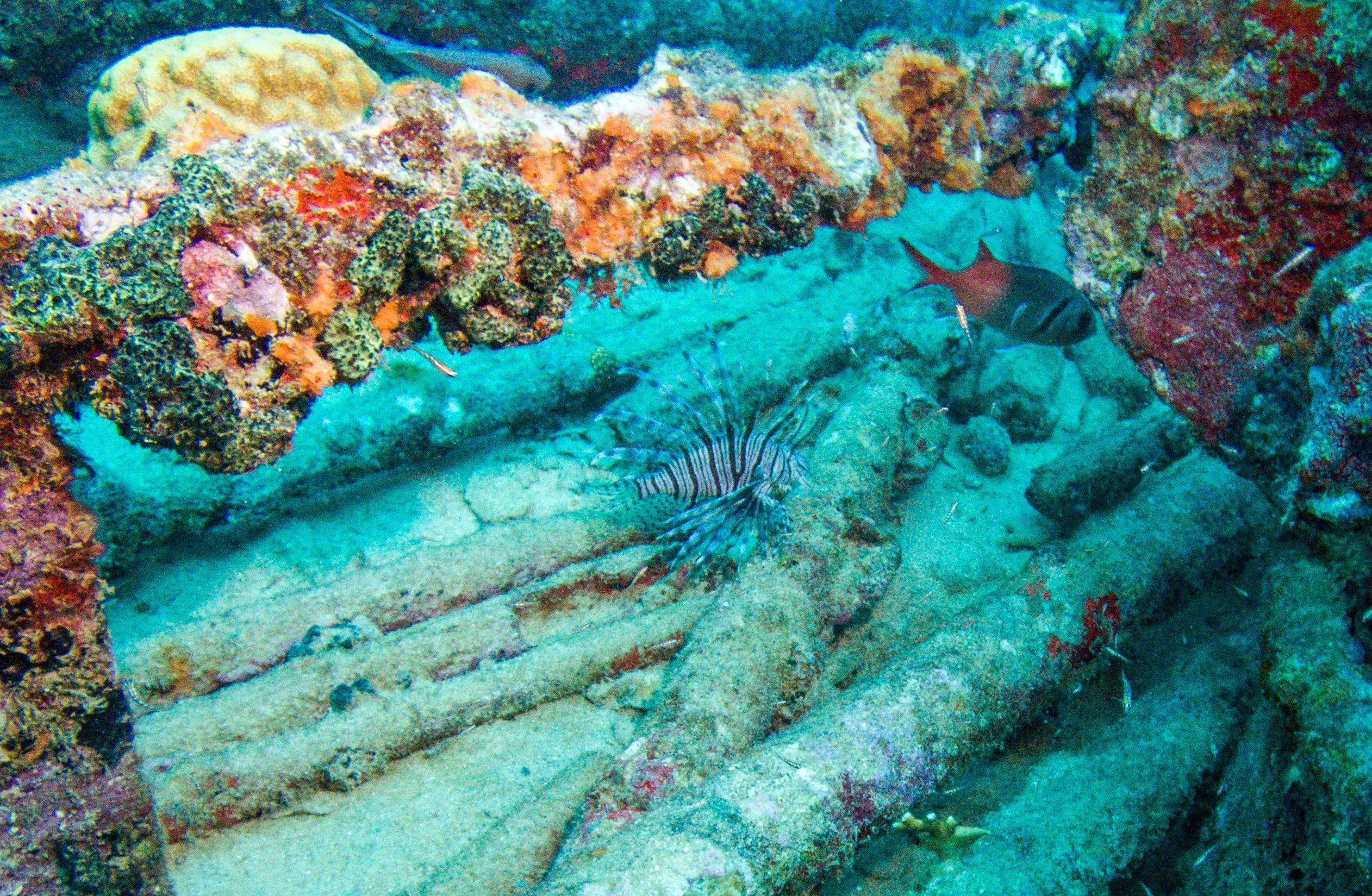
A lion fish lurks around the shipwreck of the oil tanker Debbie II and a coral reef in the southern Caribbean Sea, off Palm Beach in the western coast of Aruba, on October 22, 2026. (Photo by Joseph Prezioso / AFP)

“The risk of coral reef collapse is escalating, but this must be a wake-up call rather than a cause for despair,” said Mishal Gudka, the scientific lead of the global IUCN Red List of Coral Reef Ecosystems assessment, the first of its kind.

“Coral reefs have shown a remarkable ability to bounce back from devastating bleaching events,” AFP quoted him as saying. “Pockets of surviving, resilient coral reefs can still remain in the future, so we must do everything within our reach to set them up for success.”

When a reef collapses, hard corals disappear and are replaced by algae, rubble and sponges. As a result, the reef no longer supports a diverse ecosystem that can include everything from tiny invertebrates to reef fish like grouper.

“Coral reefs are one of the clearest vital signs of the ocean’s health,” Grethel Aguilar, the IUCN director general, said in a statement.

The assessment, spanning 127 tropical and subtropical ecoregions, and encompassing 72,726 square miles (188,362 square kilometers) of coral reefs globally, called climate change the “single most consistent threat driving coral reef decline worldwide.”

A week ago, another study in the journal Nature by the IUCN found that nearly 44% of reef-building coral species face an elevated risk of extinction due to climate change. A year ago, a survey found that harmful bleaching of the world’s coral has grown to include 84% of the ocean’s reefs — the most intense of its kind in recorded history.

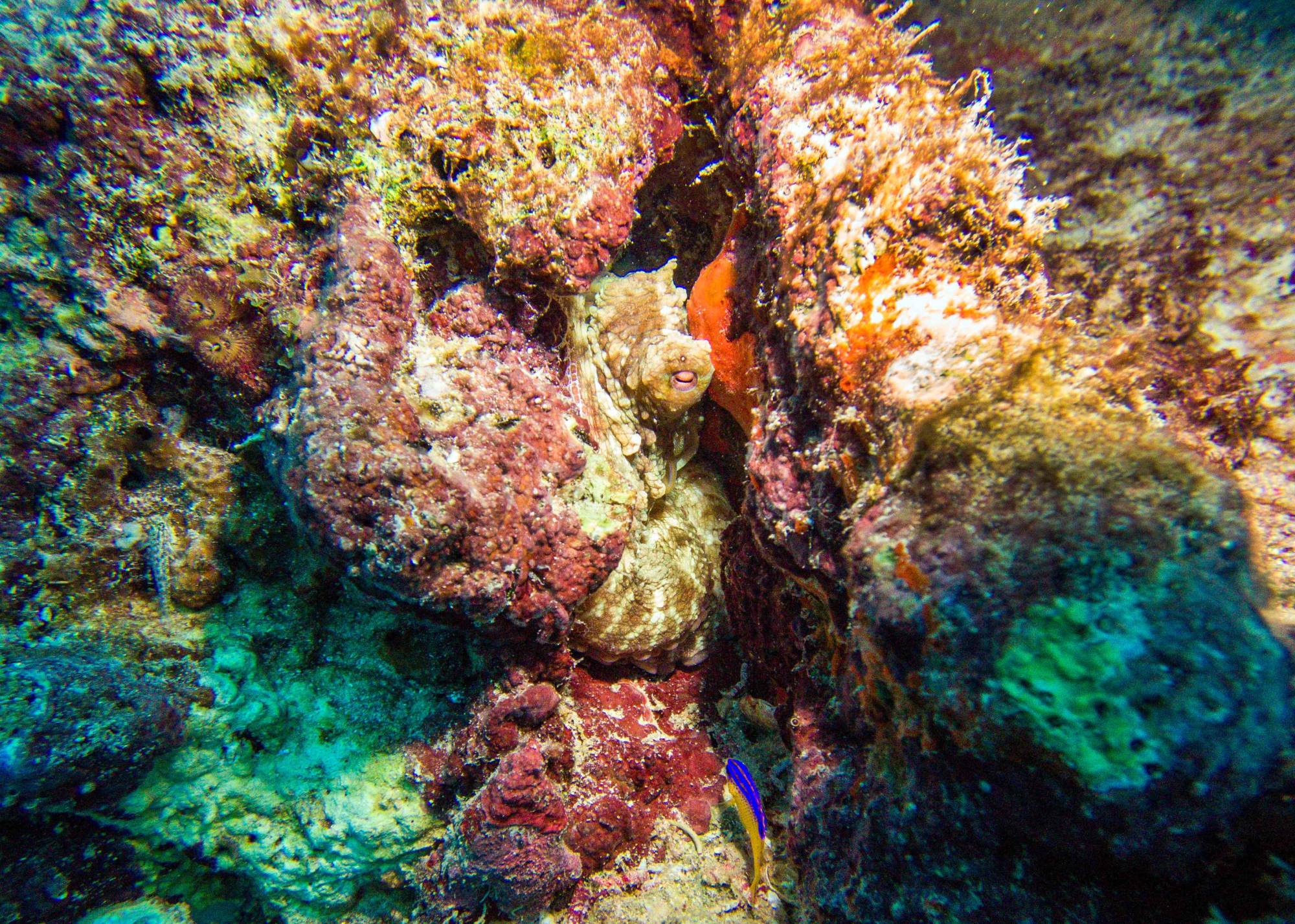
An octopus hides in the crevice of a coral reef in the southern Caribbean Sea, off Palm Beach in the western coast of Aruba, on October 22, 2026. (Photo by Joseph Prezioso / AFP)

The year 2024 was Earth’s hottest on record, and much of that is going into oceans. The average annual sea surface temperature of oceans away from the poles was a record 69.57 degrees Fahrenheit (20.87 degrees Celsius).

Beyond combating rising global emissions, experts said efforts to reduce pollution, overfishing and coastal development can help reefs survive.

“We know what is needed: ambitious emissions reductions, stronger protection and restoration efforts, and sustained investment in resilient coastal ecosystems and the communities that depend on them,” Aguilar said.

Andrew Baker, director of the Coral Reef Futures Lab at the University of Miami, sought to inject some hope after reviewing the assessment. He said stopping global warming and pollution isn't the only way to save corals.

“It means finding new ways to restore corals using emerging technology and innovative approaches,” he said, “that can throw a lifeline to struggling reefs and buy us critically needed time to make these transitions.”