


10 Unexpected Rules British Royals Must Follow When Interacting with the Public

Britain's King Charles III and Queen Camilla arrive to attend the annual Royal Variety Performance at the Royal Albert Hall in London, Friday, Nov. 20, 2026. (AP)
TT

10 Unexpected Rules British Royals Must Follow When Interacting with the Public

Britain's King Charles III and Queen Camilla arrive to attend the annual Royal Variety Performance at the Royal Albert Hall in London, Friday, Nov. 20, 2026. (AP)

Asharq Al-Awsat

London

Members of the British royal family have rules, precedents and guidelines they follow while interacting with members of the public.

Some, like King Charles, Prince William and Prince George, were born into the line of succession and have had the set procedures and policies ingrained in them since childhood. Meanwhile, others — such as Queen Camilla and Kate Middleton — married into the family and had to learn the guidelines.

PEOPLE magazine listed 10 rules the British royal family members follow when interacting with the public.

1. No autographs

Unlike celebrities, members of the royal family are not allowed to sign their autograph for the public, due to the risk of forgery. They are, though, allowed to write their names in guest books during royal engagements and on select other occasions.

“There are boundaries which shouldn’t be crossed. Royal signatures could be misused,” royal expert Richard Fitzwilliams told USA Today in November 2026.

2. Must be cautious about selfies

The royal family’s stance on selfies has changed in recent years. CNN Royal Commentator Victoria Arbiter told Business Insider in 2017 that the royals were “strongly discouraged” from taking casual photos.

However, more recently, some royals — like Prince William and Princess Kate — have been known to snap selfies with well-wishers and even on official visits.

3. Must keep PDA to a minimum

When royal couples are out and about, it’s fairly rare to catch them sneaking in a kiss or other affectionate moment. There is no official rule banning PDA, but Prince William and Princess Kate have mostly followed the example set by Queen Elizabeth and Prince Philip, who stayed away from being overly loving in public.

4. Avoid politics

The royals generally avoid making political statements to members of the public.

Royal scholar Walter Bagehot wrote in his 1867 book, “The English Constitution”, per Vanity Fair, that the monarch must remain neutral in order to maintain order and trust in the multi-party political system.

Instead, they lean toward short and light conversations.

5. Maintain good posture

Another unofficial rule the royal family members pay attention to is the way they sit and carry themselves.

For female royals in skirts and dresses, they generally sit with an upright posture and a slanted leg rather than a crossed leg. The term “Duchess Slant” has since been used to describe the position.

6. Accept certain gifts

At nearly every event with members of the public, it’s common to see people trying to give the royals flowers, cards, stuffed animals and more.

However, there are strict rules set in place for what they can and cannot accept. Royals can accept smaller gifts that include flowers, non-controversial books, food and “other consumable items (within reasonable quantities)” that cost less than £150, according to a gifting policy.

7. Follow dress codes

While many traditions and protocols have stayed the same, one that has slightly tweaked over the years is the dress code among royals.

There are a variety of clothing etiquette rules they follow for public engagements, which change depending on the formality of the event. Regardless, the royal family members will likely never be seen wearing ultra-casual clothing.

8. Travel with at Least one black outfit

During any tour or public outing, the royals carry a black outfit with them.

The protocol was established after Queen Elizabeth and Prince Philip were abroad and learned her father, King George, had unexpectedly died in February 1952. Elizabeth wasn’t carrying a black mourning outfit with her, “and as a result, she wasn’t allowed to be photographed until a suitable outfit had been brought to her,” according to the Mirror.

9. Follow the monarch’s lead in terms of etiquette

Although the royals approach greetings differently depending on their rank, they must follow the highest-ranking person’s lead in terms of eating and drinking etiquette.

“Just like when the King is done eating, everyone is. It’s the same for the most VIP person at the table — when they are done, so is everyone else,” Meier told PEOPLE, while adding that they should “mirror the host” with eating, pace and meal tone.

10. Avoid garlic and onions

It’s no secret that the royals are often speaking with members of the public and the most important political figures. In order to prevent bad breath, Queen Elizabeth banned garlic and the use of too many onions in the royal kitchens.

“I hate to say this, but garlic. Garlic is a no-no,” Queen Camilla said during a 2018 appearance on MasterChef Australia.

When asked if the no-garlic rule stemmed from “chatting,” Camilla replied, “Yes, exactly. So you always have to lay off the garlic.”


10 Unexpected Rules British Royals Must Follow When Interacting with the Public

Britain's King Charles III and Queen Camilla arrive to attend the annual Royal Variety Performance at the Royal Albert Hall in London, Friday, Nov. 20, 2026. (AP)
TT

10 Unexpected Rules British Royals Must Follow When Interacting with the Public

Britain's King Charles III and Queen Camilla arrive to attend the annual Royal Variety Performance at the Royal Albert Hall in London, Friday, Nov. 20, 2026. (AP)

Asharq Al-Awsat

London

Members of the British royal family have rules, precedents and guidelines they follow while interacting with members of the public.

Some, like King Charles, Prince William and Prince George, were born into the line of succession and have had the set procedures and policies ingrained in them since childhood. Meanwhile, others — such as Queen Camilla and Kate Middleton — married into the family and had to learn the guidelines.

PEOPLE magazine listed 10 rules the British royal family members follow when interacting with the public.

1. No autographs

Unlike celebrities, members of the royal family are not allowed to sign their autograph for the public, due to the risk of forgery. They are, though, allowed to write their names in guest books during royal engagements and on select other occasions.

“There are boundaries which shouldn’t be crossed. Royal signatures could be misused,” royal expert Richard Fitzwilliams told USA Today in November 2026.

2. Must be cautious about selfies

The royal family’s stance on selfies has changed in recent years. CNN Royal Commentator Victoria Arbiter told Business Insider in 2017 that the royals were “strongly discouraged” from taking casual photos.

However, more recently, some royals — like Prince William and Princess Kate — have been known to snap selfies with well-wishers and even on official visits.

3. Must keep PDA to a minimum

When royal couples are out and about, it’s fairly rare to catch them sneaking in a kiss or other affectionate moment. There is no official rule banning PDA, but Prince William and Princess Kate have mostly followed the example set by Queen Elizabeth and Prince Philip, who stayed away from being overly loving in public.

4. Avoid politics

The royals generally avoid making political statements to members of the public.

Royal scholar Walter Bagehot wrote in his 1867 book, “The English Constitution”, per Vanity Fair, that the monarch must remain neutral in order to maintain order and trust in the multi-party political system.

Instead, they lean toward short and light conversations.

5. Maintain good posture

Another unofficial rule the royal family members pay attention to is the way they sit and carry themselves.

For female royals in skirts and dresses, they generally sit with an upright posture and a slanted leg rather than a crossed leg. The term “Duchess Slant” has since been used to describe the position.

6. Accept certain gifts

At nearly every event with members of the public, it’s common to see people trying to give the royals flowers, cards, stuffed animals and more.

However, there are strict rules set in place for what they can and cannot accept. Royals can accept smaller gifts that include flowers, non-controversial books, food and “other consumable items (within reasonable quantities)” that cost less than £150, according to a gifting policy.

7. Follow dress codes

While many traditions and protocols have stayed the same, one that has slightly tweaked over the years is the dress code among royals.

There are a variety of clothing etiquette rules they follow for public engagements, which change depending on the formality of the event. Regardless, the royal family members will likely never be seen wearing ultra-casual clothing.

8. Travel with at Least one black outfit

During any tour or public outing, the royals carry a black outfit with them.

The protocol was established after Queen Elizabeth and Prince Philip were abroad and learned her father, King George, had unexpectedly died in February 1952. Elizabeth wasn’t carrying a black mourning outfit with her, “and as a result, she wasn’t allowed to be photographed until a suitable outfit had been brought to her,” according to the Mirror.

9. Follow the monarch’s lead in terms of etiquette

Although the royals approach greetings differently depending on their rank, they must follow the highest-ranking person’s lead in terms of eating and drinking etiquette.

“Just like when the King is done eating, everyone is. It’s the same for the most VIP person at the table — when they are done, so is everyone else,” Meier told PEOPLE, while adding that they should “mirror the host” with eating, pace and meal tone.

10. Avoid garlic and onions

It’s no secret that the royals are often speaking with members of the public and the most important political figures. In order to prevent bad breath, Queen Elizabeth banned garlic and the use of too many onions in the royal kitchens.

“I hate to say this, but garlic. Garlic is a no-no,” Queen Camilla said during a 2018 appearance on MasterChef Australia.

When asked if the no-garlic rule stemmed from “chatting,” Camilla replied, “Yes, exactly. So you always have to lay off the garlic.”


Turkish Authorities Say Animal Spotted in Istanbul Woodland Was Not a Lion

Turkish gendarmerie officers block a road as police and animal welfare teams search for an alleged lioness spotted roaming in Sariyer district in Istanbul, Türkiye, Monday, Nov. 23, 2026. (Ahmet Faruk Sarikoc/IHA via AP)
TT

Turkish Authorities Say Animal Spotted in Istanbul Woodland Was Not a Lion

Turkish gendarmerie officers block a road as police and animal welfare teams search for an alleged lioness spotted roaming in Sariyer district in Istanbul, Türkiye, Monday, Nov. 23, 2026. (Ahmet Faruk Sarikoc/IHA via AP)

A major operation in woodland north of Istanbul to track down a suspected lion found the animal was neither a lion nor any other type of big cat, the Istanbul governor's office said.

On Sunday evening, a sighting on surveillance cameras of "an animal resembling a lion" ‌by personnel ‌at a police station ‌in the ⁠Zekeriyakoy area, north of ⁠the European side of Istanbul, sparked a search by Turkish security and wildlife personnel.

Turkish television broadcast surveillance and thermal camera footage showing what appeared to be a large cat walking ⁠through undergrowth and teams searching through ‌woodland in outer Istanbul's ‌Sariyer district, which borders the Bosphorus strait and ‌the Black Sea.

The Istanbul governor's office ‌said late on Monday that the area was scanned from the air with drones equipped with thermal cameras and on the ground ‌by search teams. Additionally, bait was placed, and motion-activated camera traps ⁠were deployed, ⁠it said.

"No concrete evidence indicating the presence of a lion was found during the field operations," the Istanbul governor's office said.

It said that based on new footage, captured from various angles, "it has been determined that the animal in the footage is neither a lion nor any other species of big cat."


Egypt Recovers Remains of Napoleon's Sunken Fleet Off Alexandria

Tableware from Napoleon's sunken fleet (Egyptian Ministry of Tourism and Antiquities)
TT

Egypt Recovers Remains of Napoleon's Sunken Fleet Off Alexandria

Tableware from Napoleon's sunken fleet (Egyptian Ministry of Tourism and Antiquities)

Egypt marked World Underwater Cultural Heritage Day with an exhibition titled "Napoleon's Fleet: Tales Told by the Sea" at the National Museum of Egyptian Civilization (NMEC), highlighting one of the most significant historical events associated with the country's underwater archaeological heritage.

The exhibition tells the story of the French fleet that sank off the coast of Alexandria during Napoleon Bonaparte's campaign in Egypt. Through a collection of archaeological artifacts, it sheds light on the events surrounding the fleet's sinking while offering insights into the daily lives and activities of sailors aboard the ships.

The exhibition features approximately 235 artifacts displayed for the first time, including objects recovered from the wrecks of Napoleon's fleet and selected from the collections of the Department of Underwater Antiquities.

Some artifacts from the sunken fleet (Ministry of Tourism and Antiquities)

Other exhibits come from several museums, including the Maritime Museum, the Alexandria National Museum and the National Museum of Egyptian Civilization, according to a statement issued Monday by Egypt's Ministry of Tourism and Antiquities.

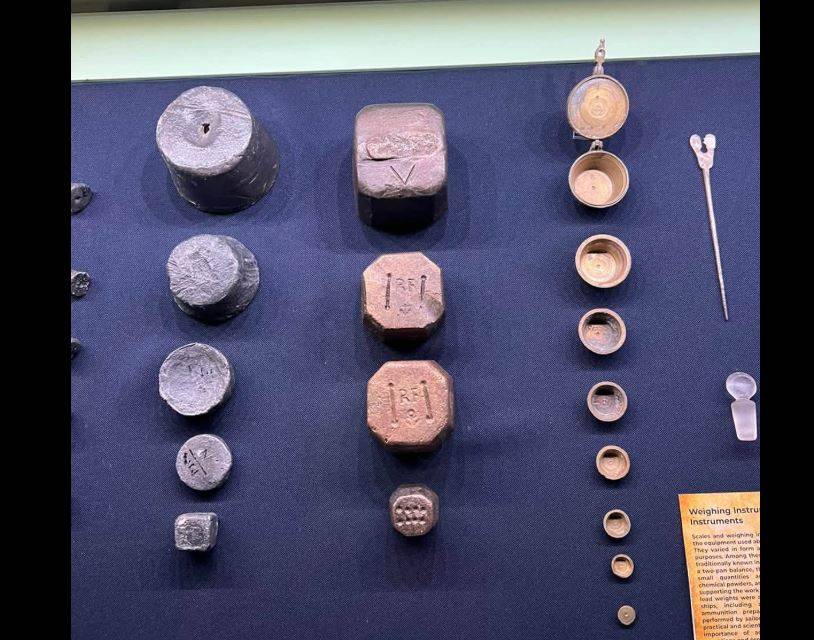
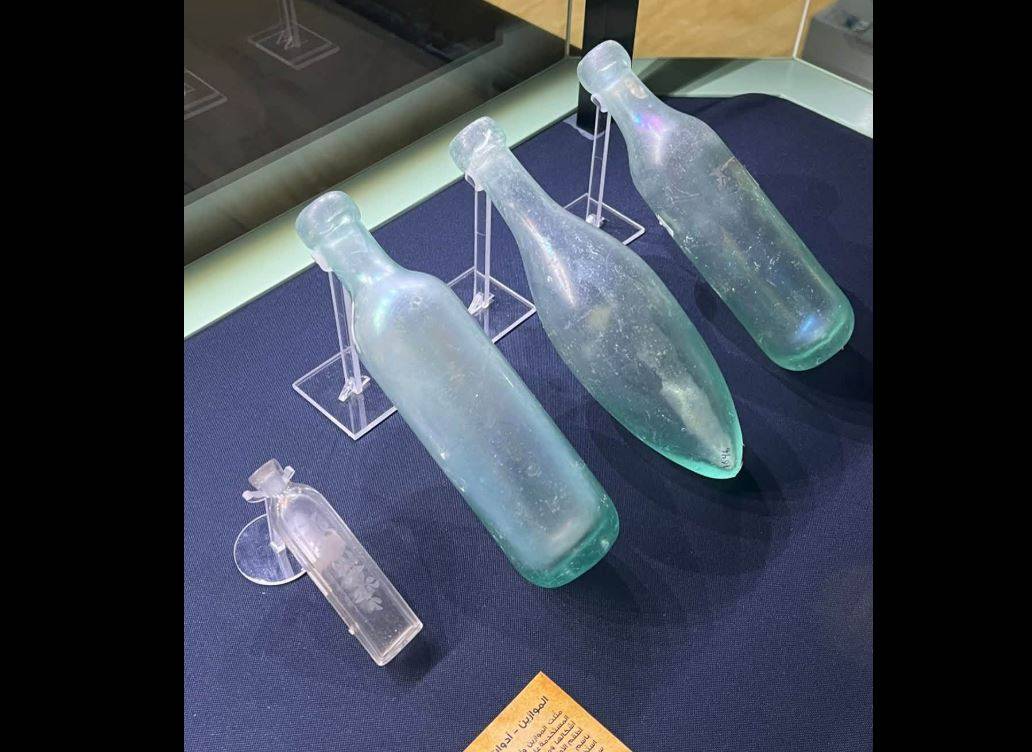
Among the exhibits are gold coins, navigation and writing instruments, cooking utensils used by crew members, and weapons recovered from the shipwreck sites. Together, the objects provide a comprehensive picture of maritime and military life during that period.

The exhibition will run for three months in the Egyptian Textile Hall at the National Museum of Egyptian Civilization.

It forms part of the ministry's efforts to highlight the importance of underwater cultural heritage as a rich source of physical evidence documenting historical events, figures and civilizations.

Such discoveries also contribute to archaeological research and scholarship, allowing historians to reexamine aspects of the past through evidence recovered from the sea.

The exhibition offers visitors an opportunity to explore a distinctive part of Egypt's heritage through original artifacts preserved underwater for centuries, each providing evidence of a significant historical period and revealing stories of maritime life at the time.

Archaeologist Dr. Hussein Abdel-Bassir, director of the Antiquities Museum at the Bibliotheca Alexandrina, said the exhibition's significance lies in its ability to bring back an entire world that disappeared beneath the water, leaving behind details waiting to be rediscovered and interpreted.

Some of the weighing scales used aboard the fleet (Ministry of Tourism and Antiquities)

"On August 1, 1798, Abu Qir Bay witnessed one of the most important naval battles in modern history," Abdel-Bassir explained.

"Napoleon's French expedition had arrived in Egypt just weeks earlier, pursuing an ambitious military, political and scientific project. But the French fleet suffered a devastating blow at the hands of the British fleet under Admiral Horatio Nelson in the Battle of the Nile."

He said the French ships were reduced to wreckage, shattering France's ambitions to dominate the Mediterranean, while the waters off Alexandria preserved the remains of that historic moment.

"What is fascinating is that the sea, which witnessed the struggle between empires, preserved not only the remains of ships and cannons but also details of the everyday lives of the men aboard them," he said.

"A small artifact can sometimes tell history more effectively than a grand monument. A coin, a personal belonging, a piece of tableware or part of a ship's equipment allows us to see history from a human perspective, rather than through the eyes of rulers and generals."

Abdel-Bassir said perhaps the most important lesson offered by Napoleon's sunken ships is that history never truly disappears.

"Sometimes history simply changes its location. It may leave the pages of books for the seabed, or transform from a written account into a silent artifact. But it remains there, waiting for someone to discover it, understand it and bring it to life for new generations," he said.

The archaeologist also described the celebration of World Underwater Cultural Heritage Day, coinciding with the 30th anniversary of Egypt's General Department of Underwater Antiquities, as an important opportunity to reconsider the future of the field.

Three decades of archaeological work, he said, provide an opportunity to assess what has been accomplished and develop an ambitious vision for what should be achieved in the decades ahead.