Eight Dead in Second Mass Shooting in Serbia, Police Hunt Killerhttps://english.aawsat.com/world/4311721-eight-dead-second-mass-shooting-serbia-police-hunt-killer
Eight Dead in Second Mass Shooting in Serbia, Police Hunt Killer
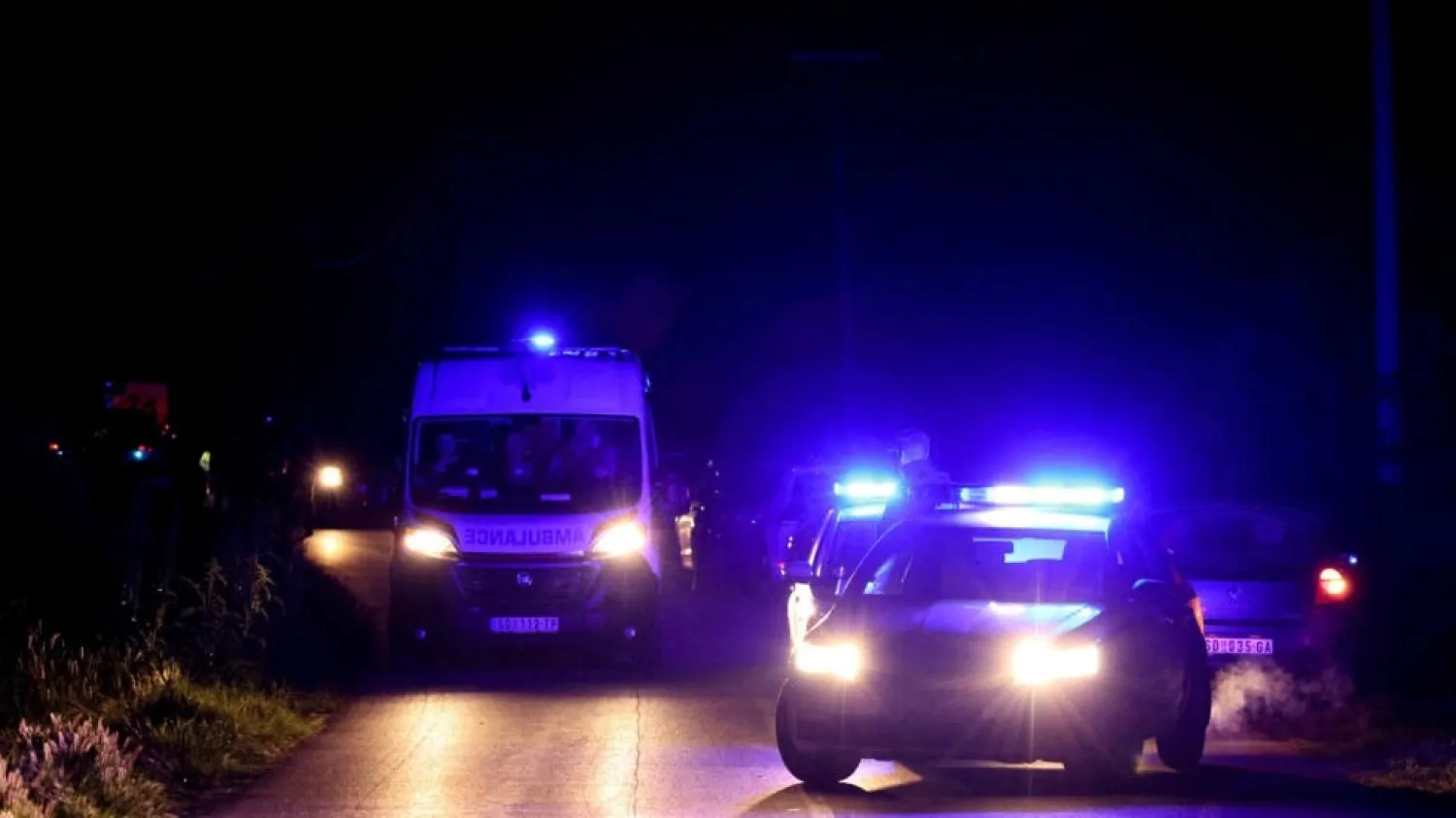
A gunman was on the loose on Friday after killing eight people and wounding 13 others near Belgrade, local media reported, the second deadly mass shooting around the Serbian capital in two days.
Heavily armed police set up roadblocks near the town of Mladenovac, 42 km (26 miles) south of Belgrade, and were searching for a 21-year-old suspect.
The shooting comes less than 48 hours after a 13-year old boy shot dead nine and injured seven at a school in Belgrade before turning himself in, Reuters said.
Interior Ministry officials could not immediately be reached for comment.
According to local media, the suspect was involved in an altercation in a school yard late on Thursday and left but returned with an assault rifle and a handgun. He opened fire and continued to shoot at people at random through three villages from a moving car.
State broadcaster RTS reported an off-duty policeman and his sister were among those killed.
Around 600 Serbian police, including elite Special Antiterrorist Unit (SAJ) and Gendarmerie launched a manhunt, dubbed Operation Whirlwind, RTS reported.
Inside the village of Dubona near Mladenovac, a Reuters witness saw heavily armed police establishing a checkpoint and searching incoming traffic. Armored police SUVs and black vans circled the area.
"This is sad, the young policeman is my daughter's age, born in 1998," said Danijela, a middle-aged woman in Dubona. "My daughter is taking sedatives, we could not sleep all night, they grew up together."
The wounded had been transported to several local hospitals, Belgrade's Pink TV reported.
A helicopter, drones and multiple police patrols were searching for the suspect among the rolling hills around Dubona and nearby villages, scouring abandoned houses and wooded areas.
"This is terrible for our state, this is a huge defeat. In two days so many ... killed," said Ivan, a Dubona resident.
NATION IN MOURNING
The Balkan nation begins three days of official mourning on Friday following its first mass school shooting on Wednesday.
The suspected shooter took two of his father's handguns to kill eight pupils and a security guard in a hallway and history class at their school in the capital Belgrade.
Hundreds of school children with candles and flowers gathered for a vigil on Thursday evening in streets around the school, while churches planned memorial prayers.
Dozens of high school teachers rallied in front of the Education Ministry in downtown Belgrade on Thursday, demanding improvements to school security and the education system.
Serbia has an entrenched gun culture, especially in rural areas, but also strict gun control laws. Automatic weapons are illegal and over the years authorities have offered several amnesties to those who surrender them.
After the school shooting in Belgrade, the Serbian government introduced a two-year ban on the issuing of new gun permits, a revision of existing permits and checks on how gun owners store their arms.
Still, the country, and the rest of Western Balkans, are awash with military-grade weapons and ordnance that remained in private hands after the wars of the 1990s.
Israeli Soldiers Share Rare Accounts from Gaza: Killings Never Stoppedhttps://english.aawsat.com/arab-world/5279038-israeli-soldiers-share-rare-accounts-gaza-killings-never-stopped
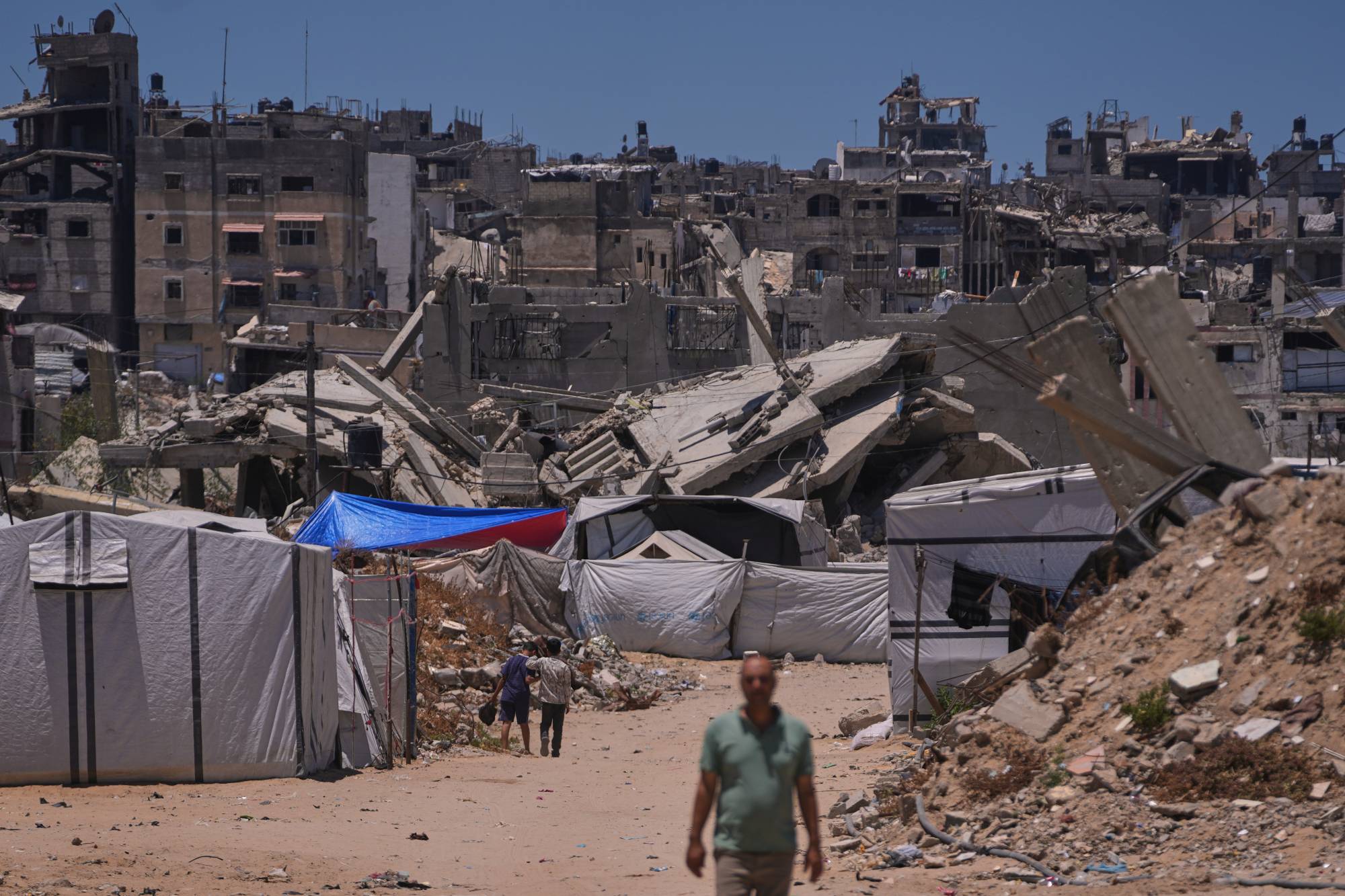
Palestinians inspect the rubble of a building destroyed in an Israeli strike in Deir al-Balah, in the central Gaza Strip, Friday, May 29, 2026. (AP Photo/Abdel Kareem Hana)
Israeli Soldiers Share Rare Accounts from Gaza: Killings Never Stopped
Palestinians inspect the rubble of a building destroyed in an Israeli strike in Deir al-Balah, in the central Gaza Strip, Friday, May 29, 2026. (AP Photo/Abdel Kareem Hana)
The Israeli combat soldier saw his teammates yelling in celebration, congratulating one another. They had just struck a vehicle of Palestinians driving near the Israeli-controlled part of the Gaza Strip, killing everyone inside.
The reservist said scenes like this had become common after a fragile ceasefire took effect in October. In the weeks he was stationed in Gaza, he said, he saw soldiers relishing the chance to go after those who crossed — or came close to crossing — the so-called yellow line that divides the strip into Israeli-controlled and Palestinian areas.
“It was a jungle,” the soldier, in his 20s, told The Associated Press. “After the ceasefire, the order was: If someone crosses the line, you shoot them.”
As diplomatic efforts to strengthen the deal have stalled, three soldiers described to AP a sense of confusion in the embattled territory, with a lack of clarity on rules of engagement around the yellow line. Some commanders paid lip service to the agreement, the soldiers said, while privately voicing desire for the war in Gaza to continue.
Sometimes, troops were too far away or acted too quickly to recognize who they were shooting, one soldier said — a concern echoed in comments from a whistleblower group of veterans.
Palestinians walk along a street surrounded by buildings destroyed by Israeli military strikes during the Israel-Hamas war in Khan Younis, southern Gaza Strip, Friday, May 29, 2026. (AP Photo/Abdel Kareem Hana)
The soldiers' accounts are a rare glimpse into what’s happened in the Israeli-controlled part of Gaza since the deal went into effect seven months ago. The soldiers — reservists deployed throughout Gaza between October and January who've since returned — spoke on condition of anonymity because they feared being ostracized over their comments. They said they were speaking out because they were angered and saddened by what they saw.
AP has documented shootings of Palestinian civilians, including children playing, close to the yellow line. And the soldiers said it felt like the killings never stopped amid the tenuous deal.
“To call it a ceasefire is a joke,” one soldier told AP.
Gaza's yellow line has been ambiguous, and Israel has taken control of more land When the ceasefire went into effect, Israel withdrew troops to a buffer zone demarcated by a yellow line, giving it control of just over half the strip.
Under the agreement, Israeli forces are meant to complete a fuller withdrawal, though there's no timeline for that. The US-backed diplomat overseeing the truce says progress is deadlocked over the central sticking point of disarming Hamas, upon which all other issues — including Israeli withdrawals and reconstruction — hinge.
In the meantime, Israel has expanded control over additional territory in Gaza. Both sides have accused the other of violating the ceasefire.
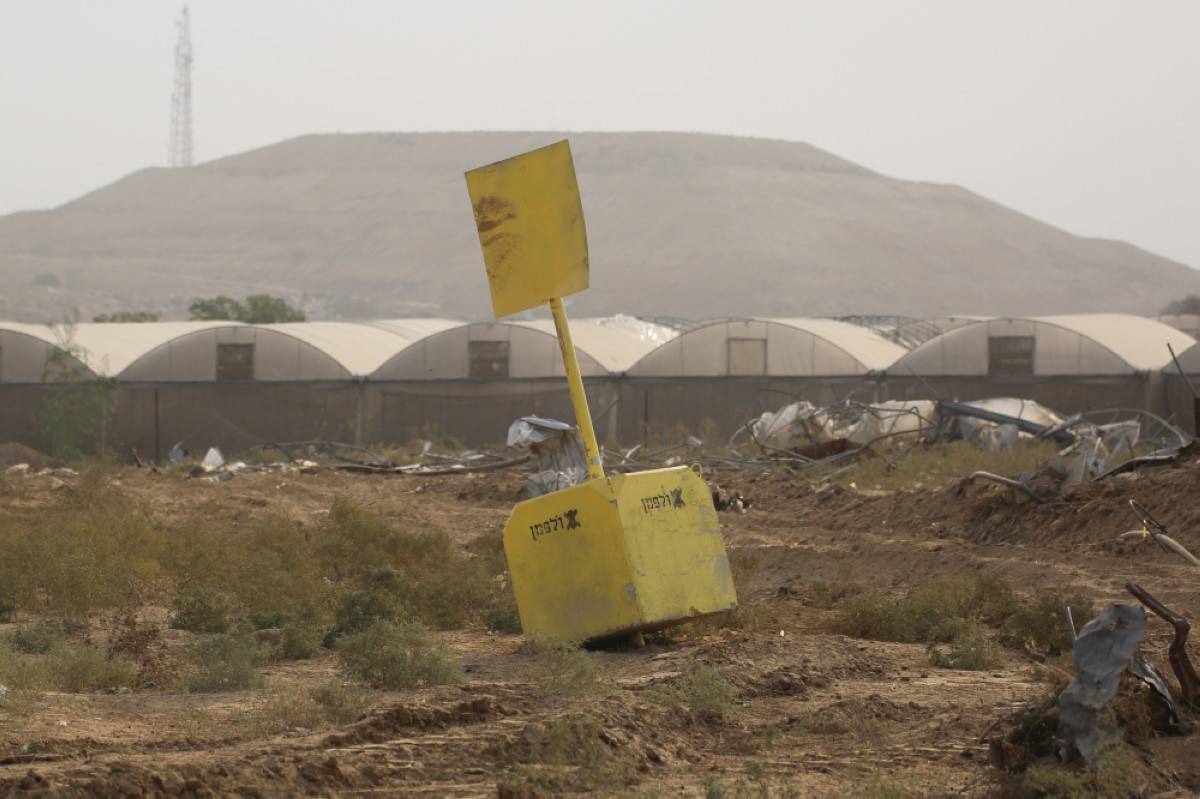
The line’s exact location has been ambiguous and sometimes invisible. In some places, it’s marked with yellow blocks and barrels; in others, it at times hasn't been indicated at all.
A concrete block marks the "Yellow Line" drawn by the Israeli military in Bureij, in the central Gaza Strip, on Nov. 4., 2025. AFP
The Israeli military invited AP this week to see a section of the yellow line in central Gaza, near the Maghazi refugee camp. The line there was visible, demarcated by a wide dirt path and small yellow markings. To the east was a desolate stretch of open space leading to a heavily fortified Israeli military post about 500 meters away.
An Israeli military commander said Hamas is active on the other side of the line and frequently sends people — militants and civilians — toward the line and even across it to test the army’s readiness and responses.
“There is no reason for anyone to come near the line,” he said, speaking on condition of anonymity under military rules. “There’s nothing here.”
The army says the entire line, which stretches the length of Gaza, is now clearly marked.
Since the ceasefire went into effect, more than 900 people have been killed in Gaza — dozens of those close to or over the yellow line, according to Gaza’s Health Ministry. The ministry doesn't say how many are militants, but unarmed men and children have been among the dead.
Israel's military has said most of the people killed crossing the line posed a threat to troops. But soldiers who spoke to AP and Breaking the Silence — the whistleblower group that has collected troops' testimonies throughout the war — say that at times soldiers were too far away, acting too quickly and under too much pressure to tell.
Israel's army told AP that the area adjacent to the yellow line is a “sensitive operational environment” with signs saying approaching is prohibited. It said the army doesn't target civilians solely for approaching the line and that its rules of engagement require the use of warnings before using force. In situations involving an immediate threat, forces are authorized to act, it said.
One soldier says troops must act fast, with information sometimes based on a hunch It was the combat soldier's second tour in Gaza when the ceasefire began. He said he was posted several hundred meters from the yellow line and saw several people trying to cross it killed by soldiers.
Soldiers shooting or ordering drone strikes don't always know who's crossing the line, he said. Although soldiers must provide coordinates and get approval from superiors before striking, it's hard to give exact information as people are moving, he said. He described soldiers calling in coordinates based on a hunch or the last place they saw someone.
Breaking the Silence says the general rules of engagement are extremely permissive, especially for those crossing the line, with orders in many areas being “shoot to kill.”
Executive director Nadav Weiman, a veteran who served in Gaza but not in this war, said distance from the target and some trigger-happy soldiers can be problematic.
He said orders and policies from the military’s high commanders “have created a reality where countless civilians have and are being killed for crossing invisible lines.”
In one account to Breaking the Silence, in interview notes seen by AP, a soldier describes instructions for troops about anyone crossing the yellow line: “eliminate him no matter what."
Another soldier stationed in Gaza for weeks after the ceasefire said the message from commanders was to hold the line at all costs.
“There was a general feeling that human lives are not valuable,” he said.
When it came to demarcating the yellow line, the soldier said his superiors told him it was “too much work," not their job and that Palestinians should know where it was.
Being in Gaza took an emotional toll, he said.
Sometimes snipers fired warning shots at people close to the line, he said, but commanders told troops to do more to protect themselves. The soldier understood that to mean firing more lethal shots.
He and the other soldiers who spoke to AP said troops generally understood, based on leaders and fellow soldiers' actions, that Israel was in Gaza for the long run, not an eventual withdrawal.
An internal report circulated among aid groups last month and seen by AP said that across Gaza, Israel has become “increasingly proactive” with its strikes.
Separate data from the Armed Conflict Location and Event Data Project, a US-based nonprofit, said April was the deadliest month in Gaza this year and that recorded deaths near the yellow line or of people who crossed it increased by more than 25% from January to April, to 73 from 58.
This week, Israeli Prime Minister Benjamin Netanyahu said Israel controls 60% of Gaza and the next step was to move to 70% control.
The soldiers told AP that on the ground, the ceasefire is elusive.
“We need to stop using this term," one said of the word, ceasefire. "It’s not serving people that want to stop the war.”
WHO Chief Reports 5 Ebola Recoveries, New Treatment Center Opens in Eastern Congohttps://english.aawsat.com/world/5279034-who-chief-reports-5-ebola-recoveries-new-treatment-center-opens-eastern-congo
Director-General of the World Health Organisation (WHO) Tedros Adhanom Ghebreyesus has his temperature checked as he tours the Evangelical Medical Center (CEM), in Bunia, Ituri province, Democratic Republic of Congo, May 31, 2026. REUTERS/Gradel Muyisa Mumbere
WHO Chief Reports 5 Ebola Recoveries, New Treatment Center Opens in Eastern Congo
Director-General of the World Health Organisation (WHO) Tedros Adhanom Ghebreyesus has his temperature checked as he tours the Evangelical Medical Center (CEM), in Bunia, Ituri province, Democratic Republic of Congo, May 31, 2026. REUTERS/Gradel Muyisa Mumbere
Five patients have recovered from a rare type of Ebola virus, the head of the World Health Organization said Sunday during a visit to Bunia in eastern Congo, a city at the heart of an outbreak.
“Four people will be discharged today and there was one that was discharged the day before yesterday,” WHO Director-General Tedros Adhanom Ghebreyesus said during the opening of a new Ebola treatment center in Bunia, the capital of Ituri province.
“Of course, we’re still working on vaccines and treatments but that doesn’t mean that people cannot recover from Ebola,” he added.
The WHO said Friday a patient had recovered from the Bundibugyo virus, the current species of Ebola, which has no approved treatment or vaccine. It was the first documented recovery of a confirmed Bundibugyo patient during the current outbreak.
The health organization said authorities have reported 134 confirmed cases in Congo and neighboring Uganda, including 18 confirmed deaths as of May 29.
Recovered patients describe their experience Baraka Bulambulu, one of those who recovered, told The Associated Press on Sunday that community members feared contracting an unknown illness from them, keeping their distance while delivering food and medicine.
He said the uncertainty was overwhelming, as he and other patients believed they might die without knowing what disease they had, though testing eventually confirmed Ebola.
“Being able to come out of this alive is an immense source of happiness,” Bulambulu said. ”Many people who were in the same situation died.”
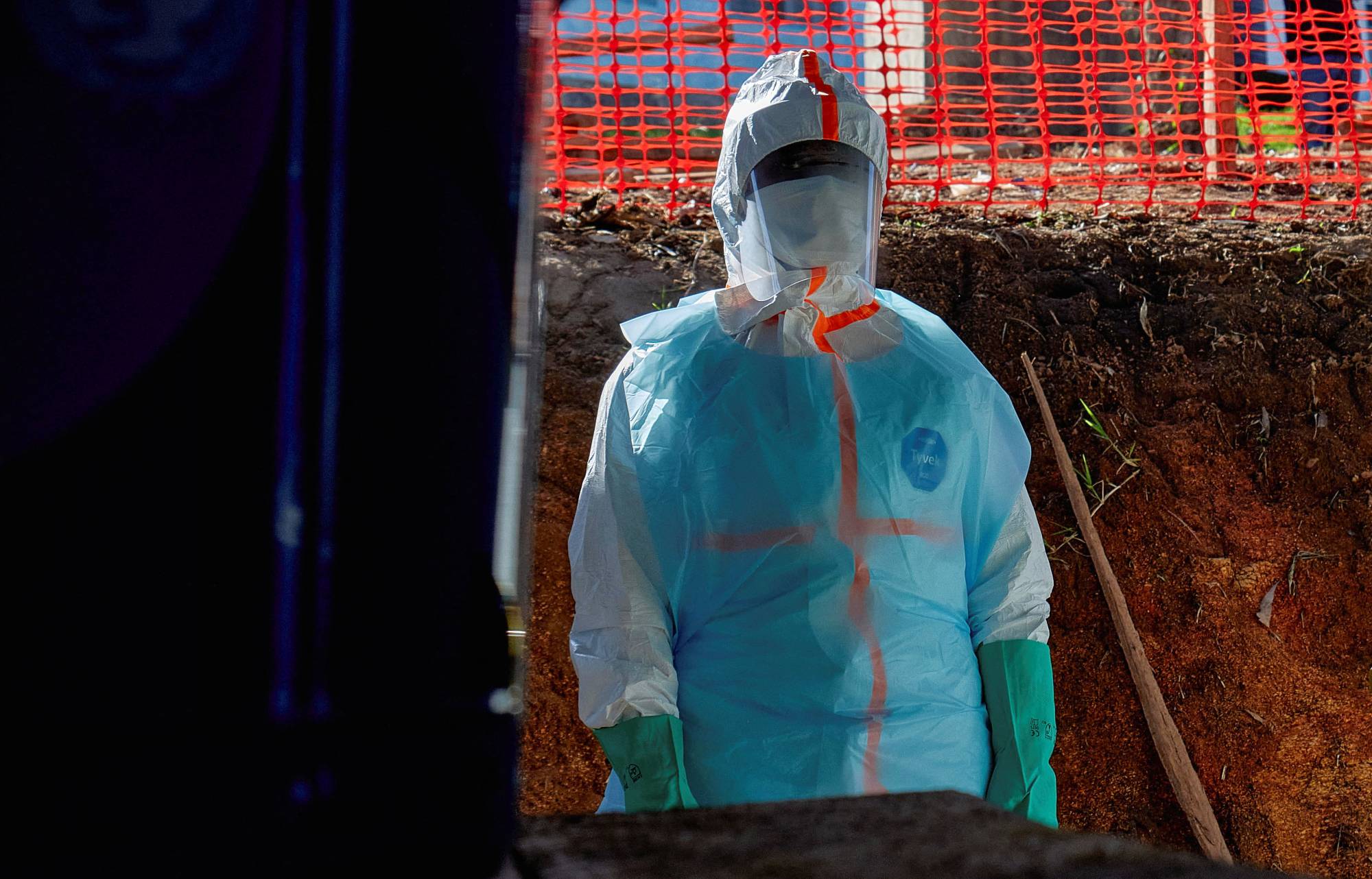
A health worker dresses up in personal protective equipment (PPE) at the Evangelical Medical Center, one of the facilities at the forefront of the response to the Ebola outbreak, as agencies intensify efforts to contain a new Ebola outbreak caused by the Bundibugyo virus strain, in Bunia, Ituri province, Democratic Republic of Congo, May 31, 2026. REUTERS/Gradel Muyisa Mumbere
Ezo Étienne, a nurse, said his symptoms began during ward rounds when he suddenly felt dizzy, then rapidly deteriorated into vomiting, intense itching, severe diarrhea and extreme weakness. He was tested seven times before Ebola was confirmed.
His treatment remained purely to treat the symptoms: medications to control vomiting, fluids to prevent dehydration and pain relievers. “That was all they could provide,” he said.
He urged the public and healthcare workers not to dismiss early symptoms such as vomiting and headaches, warning that misinformation leads many people to believe they have been poisoned rather than seeking hospital care.
Doctors Without Borders, or MSF, said Saturday the virus continues to spread faster than the response despite better-organized health facilities and new aid arrivals. It called for the immediate expansion of testing, faster deployment of aid workers and sustained access for medical supplies.
The dangers faced by health workers have been heightened by anger among residents over the stringent medical protocols for handling the victims’ bodies, which clash with local burial rites. Residents have launched at least three attacks against health centers.
Tedros stressed the importance of involving the community in the outbreak response during the opening of the new treatment center on Sunday.
“If you come to health facilities when you have symptoms, you can get the support and recover, so the key is to come forward as early as possible and to get the necessary support," the WHO chief said.
“We can stop this Ebola and anyone who has it can also recover. But the rule ... is this thing is everybody’s business and every citizen should be involved,” he added.
Attacks in the region by the Allied Democratic Forces, a rebel group allied with ISIS, and a coalition of ethnic militias have also hindered the response.
ADF fighters killed seven people Saturday in Beni, North Kivu province, an area also affected by the outbreak, the Congolese army and civil society groups said.
The illness also has been reported in both North Kivu and South Kivu, south of Ituri, where the Rwanda-backed M23 rebel group controls many key cities, including Goma and Bukavu.
“The final message we would like to share with the Ituri community is that there is hope,” Pierre Akilimali, incident manager at Congo's National Institute of Public Health, said during the inauguration on Sunday.
“With the symptomatic treatment that we are currently providing, we are seeing patients recover,” Akilimali added.
“We truly have hope. The virus here is not as complicated as those we have dealt with in the past, and with the support of all our partners, we believe we will be able to bring this outbreak under control as quickly as possible,” said Davin Ambitapio, another doctor at the treatment center.
Kostyuk Stuns 4-time Champion Swiatek on Big Day for Ukraine at French Openhttps://english.aawsat.com/sports/5279029-kostyuk-stuns-4-time-champion-swiatek-big-day-ukraine-french-open
31 May 2026, France, Paris: Ukrainian tennis player Marta Kostyuk celebrates a point against Poland's Iga Swiatek during their Women's Singles Match on Day 8 of the French Open tennis tournament on Court Philippe-Chatrier at the Roland-Garros Complex. Photo: Matthieu Mirville/ZUMA Press Wire/dpa
Kostyuk Stuns 4-time Champion Swiatek on Big Day for Ukraine at French Open
31 May 2026, France, Paris: Ukrainian tennis player Marta Kostyuk celebrates a point against Poland's Iga Swiatek during their Women's Singles Match on Day 8 of the French Open tennis tournament on Court Philippe-Chatrier at the Roland-Garros Complex. Photo: Matthieu Mirville/ZUMA Press Wire/dpa
There will be a first-time women’s champion at the French Open this year, and two Ukrainian players are among the strongest contenders.
Undefeated this season on clay, 15th-seeded Marta Kostyuk showed her strong credentials as she reached the quarterfinals in Paris for the first time on Sunday by taking out four-time champion Iga Swiatek 7-5, 6-1 and ruining her birthday.
She will be up against her compatriot Elina Svitolina next, ensuring there will be an Ukrainian woman semifinalist at Roland Garros for the first time in the professional era (1968). The seventh-seeded Svitolina rallied past Belinda Bencic 4-6, 6-4, 6-0.
“There’s going to be Ukraine in the semifinals, so it’s already amazing,” said Svitolina, whose country is in a 4-year-old war with Russia.
“I think it couldn’t be a better, amazing achievement for Ukrainian tennis. I think in such a difficult situation right now in the war, with the invasion, it’s really, really difficult, and I think it’s really inspiring for the next generation to really believe that it is possible one day to play on this court and win.”
None of the players still in the draw have yet lifted the trophy in Paris, following Coco Gauff’s elimination on Saturday and Swiatek's exit. It's the same in the men’s draw, after the defeats of Jannik Sinner and Novak Djokovic and with Carlos Alcaraz absent because of an injury.
Kostyuk had lost her three previous matches against Swiatek and never taken a set against the former top-ranked player, who turned 25 on Sunday.
“I’m still in shock. To beat such an unbelievable player, who won four times here," The Associated Press quoted her as saying.
Kostyuk has been the best player of the clay-court season. She defended extremely well, chasing Swiatek’s shots all over the court, and also produced some stunning groundstroke winners while her rival was also undone by her own mistakes.
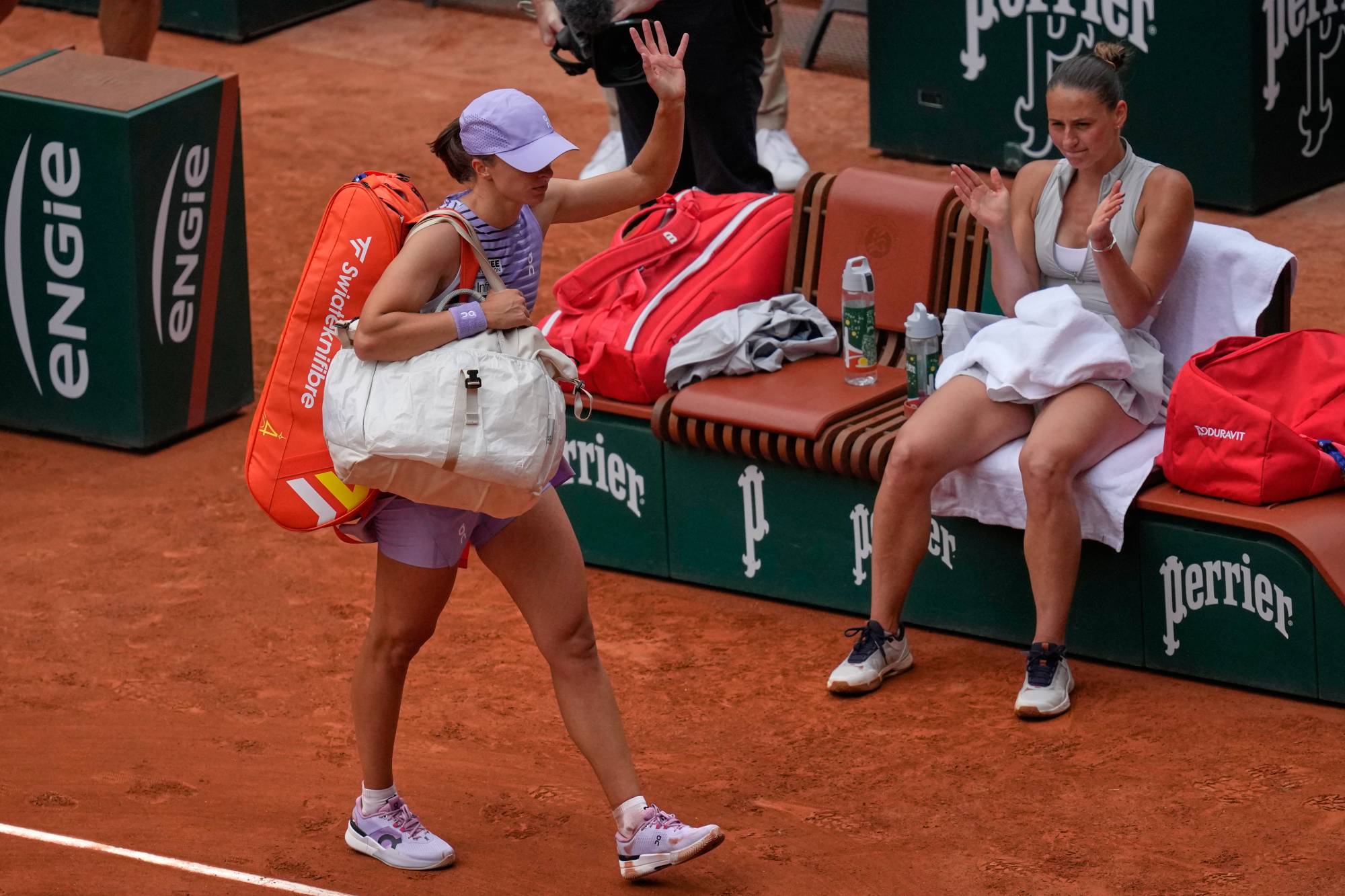
Poland's Iga Swiatek leaves the court after losing to Ukraine's Marta Kostyuk in the fourth-round tennis match at the French Open in Paris, Sunday, May 31, 2026. (AP Photo/Christophe Ena)
An intense baseline battle unfolded from the outset. Swiatek showed signs of nerves as she double-faulted, shanked a forehand wide and then missed a volley at the net, allowing Kostyuk to level at 5-5 in the opener. Swiatek hit two more double faults in the 12th game and the 15th-seeded Ukrainian player sealed the set with a backhand passing shot.
Swiatek then briefly left the court. Meanwhile, Kostyuk kept herself warm by stretching and hopping beside her chair, then received some applause as she did a few dance moves to the music playing in the stadium.
Following a first week marked by a suffocating heatwave, relief finally arrived in Paris on Sunday, with temperatures dropping to 21 degrees C (70 F) around midday. When play resumed, Swiatek broke but another double fault coupled with more unforced errors brought her opponent back at 1-1. Kostyuk then won the last five games.
Kostyuk, who had reached the fourth round at Roland Garros in 2021 when she lost to Swiatek, extended her winning streak on clay to 16 matches. Ahead of the French Open, she won in Madrid, the biggest title of her career, after she claimed another clay-court title in Rouen, France.
“The most important thing that I’ve been doing this whole time is really just trying to enjoy,” she said. “It’s helping. I want to keep enjoying. I try not to focus at all on winning or losing because I’m not playing tennis to win, I’m playing tennis because I love it."
17 years later Romanian veteran Sorana Cirstea, who is planning to retire at the end of the season, beat Chinese qualifier Wang Xiyu 6-3, 7-6 (4) to reach her second Roland Garros quarterfinal, 17 years after first making it to the last eight.
The gap between Cirstea’s first and second Grand Slam quarterfinal appearances in Paris is the longest at a single major by any woman in the Open Era.
“There is no expiration date for ambition and for dreams,” Cirstea said. “I think back then I was a kid, just started on tour. Now I have so many years behind me. I have so much experience, maturity. I feel I’m a completely different player.”
لم تشترك بعد
انشئ حساباً خاصاً بك لتحصل على أخبار مخصصة لك ولتتمتع بخاصية حفظ المقالات وتتلقى نشراتنا البريدية المتنوعة