


Hackers Announce Major Breach of Iranian Foreign Ministry Websites

N/A
N/A
TT

Hackers Announce Major Breach of Iranian Foreign Ministry Websites

N/A
N/A

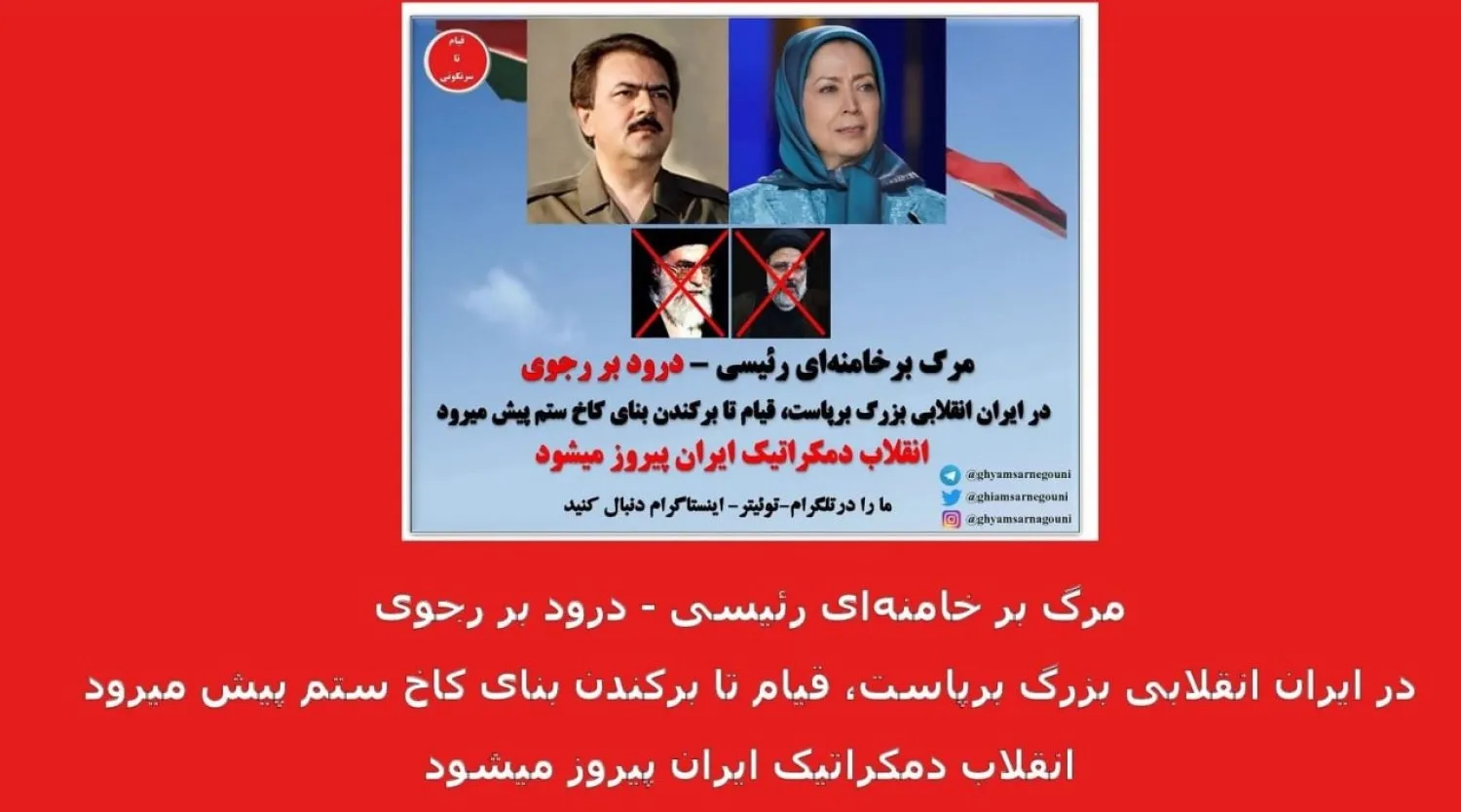
A group of hackers closely linked to the Iranian opposition organization Mujahideen-e Khalq (MEK) have claimed responsibility for a major breach of 75 electronic servers associated with numerous websites linked to the Iranian Foreign Ministry.

This breach marks the most recent in a series of cyberattacks aimed at Iranian government institutions and facilities.

The hacktivist group ‘Uprising till Overthrow', according to its Telegram account, released hundreds of identification documents, minutes of meetings, the ministry’s correspondence, phone numbers of ministry officials, and the names of 11,000 employees of the foreign ministry, among others.

Iranian authorities have not commented on the documents and information leaked by the group. However, the website of the Iranian Foreign Ministry experienced an outage for several hours following the announcement of the cyberattack.

Since Sunday morning, the Iranian Foreign Ministry's website has displayed a message indicating that it is undergoing routine maintenance and updates that are expected to be completed in a few minutes.

The hackers have revealed that they obtained the documents by breaching 75 servers belonging to the Iranian Foreign Ministry’s e-network.

They indicated that the ministry’s main server, which has a capacity of 50 terabytes, was also breached.

The documents expose the “internal workflow” and “infrastructure” of the ministry.

Through their Twitter account, the hackers claimed to have infiltrated 210 websites within the Iranian Foreign Ministry’s system.

Among the documents released is a list of members of the diplomatic corps abroad, most of whom are due to end their missions before the current Foreign Minister Hossein Amir-Abdollahian took office.

One document includes the names of diplomats representing the Basij forces affiliated with the Revolutionary Guard.

A picture of Amir-Abdollahian’s membership card in the Basij forces, the paramilitary arm of the Revolutionary Guard, surfaced in the leaked documents.

A Twitter account affiliated with the hackers wrote that “Amir-Abdollahian is a former member of the Revolutionary Guard and Quds Force, and currently an active member of the Basij forces.”

In addition, the hackers leaked a picture of the passport of Ali Shamkhani, who is the Secretary-General of the Iranian National Security Council, along with several of his assistants and security team.

The leaked documents provide extensive information about various departments and units within the Iranian Foreign Ministry, including communication channels with other agencies and decision-making centers. Additionally, the documents reveal details such as the types of vehicles used by diplomats and their mobile phone numbers.



Washington Proposes Exchanging AI Safety Alerts with Beijing

US Treasury Secretary Scott Bessent stands next to US Trade Representative Jamieson Greer, speaking to the media, after meeting with China's Vice Premier He Lifeng (AFP) 
TT

Washington Proposes Exchanging AI Safety Alerts with Beijing

US Treasury Secretary Scott Bessent stands next to US Trade Representative Jamieson Greer, speaking to the media, after meeting with China's Vice Premier He Lifeng (AFP) 

US Treasury Secretary Scott Bessent said Sunday Washington has proposed a new “notification mechanism” for artificial intelligence incidents that could affect national security, part of weekend discussions ahead of talks at the White House this week between US President Donald Trump and China’s Xi Jinping.

“We want a shared vision of common goals and common threats,” Bessent told reporters after talks with Chinese Vice Premier He Lifeng in New York.

“We think that just like any cross-border activity, that moving from opaque to more transparency between the No 1 and the No 2 AI powers in the world is very important,” he added.

Trump has resisted calls to slow down AI development, saying that would help China catch up to US companies.

Standing together in the soaring lobby of the JPMorgan Chase headquarters late Sunday, Bessent and US Trade Representative Jamieson Greer said the groundwork had been laid for talks between Xi and Trump set to take place on Thursday.

They said the two sides had agreed to operationalize a new “Board of Trade” that the two leaders had discussed when they met in Beijing in May.

“Today those notions have become reality,” Greer said.

Greer said the countries were still discussing what “nonsensitive” items could be considered for lower tariffs, but that the list could potentially include consumer and agricultural goods, energy products and medical devices.


Russian Document Reveals How Moscow Sought to Deepen Ties with Iran to Evade US Sanctions

Russian President Vladimir Putin with Iran's President Masoud Pezeshkian during a session held on the sidelines of the BRICS summit (EPA) 
TT

Russian Document Reveals How Moscow Sought to Deepen Ties with Iran to Evade US Sanctions

Russian President Vladimir Putin with Iran's President Masoud Pezeshkian during a session held on the sidelines of the BRICS summit (EPA) 

An official Russian document obtained and reviewed by Fox News reveals how Moscow sought to deepen its relationship with Iran to bypass US sanctions, laying out plans for alternative financial channels, nuclear cooperation, Iranian production of Russian aircraft components, well as open new financial avenues.

The 44-page Russian-language document was approved on the Russian side on Sept. 2, 2024. It indicated that Russia had drawn up a comprehensive plan for the period 2024-2026, which included the creation of alternative financial channels, the use of national currencies in transactions, strengthening nuclear cooperation, projects in the oil and gas sectors, the production of spare parts for Russian aircraft in Iran, and the continuation of the operation of the Bushehr nuclear power plant by Rosatom.

The roadmap also calls for Russia to help establish production in Iran of individual parts and assemblies for Russian aircraft.

Russian authorities were instructed to determine which aircraft parts could be repaired or manufactured in Iran, identify Iranian companies capable of producing them, certify selected sites through Russia’s aviation regulator Rosaviatsiya and conclude a localization agreement, according to Fox News.

The document also proposed building a railway line from the Iranian border with Azerbaijan to ports on the Arabian Gulf. However, it remains unclear which of these projects are still being implemented, given the changes brought about by the current war.

Russia has maintained close ties with Iran for years, but those relations have intensified since Russia's invasion of Ukraine. US reports say Iran has provided drone support to Russia, but Tehran has categorically denied them.

This cooperation was further strengthened as the US exerted pressure on Iran through economic sanctions, amid reports that Moscow had offered Tehran assistance in the production of cruise missiles.

Keti Korkiya, a research analyst with the Foundation for Defense of Democracies’ Russia program, reviewed the document for Fox News Digital and said its significance lies less in any single project than in the architecture Moscow was trying to build around the relationship.

“The roadmap is not revelatory: people paying close attention to the relationship between Russia and Iran will see many collaborations between the two countries that have been public for years,” Korkiya said in written analysis provided to Fox News Digital.

“What is more revealing is the architecture of the relationship Moscow is trying to build,” she said, pointing to financial mechanisms, transportation routes, energy investment and aviation cooperation as different ways of reducing vulnerabilities created by sanctions and Western economic pressure.


Trump Administration Prepares Sanctions against International Criminal Court

(FILES) This general view shows the exterior of the International Criminal Court (ICC) in The Hague on March 28, 2026. (Photo by JOHN THYS / AFP)
TT

Trump Administration Prepares Sanctions against International Criminal Court

(FILES) This general view shows the exterior of the International Criminal Court (ICC) in The Hague on March 28, 2026. (Photo by JOHN THYS / AFP)

President Donald Trump's administration has prepared sanctions against the entire International Criminal Court and plans to announce them soon, two sources familiar with the matter said, a move that would step up its attack on the global tribunal that prosecutes war crimes and genocide worldwide.

The Trump administration has made no secret of its disdain for the court and has worked to undermine it. US officials want the ‌court to drop ‌its arrest warrants against Israeli leaders as well as ‌a ⁠past probe into American ⁠troops in Afghanistan, Reuters said.

US Secretary of State Marco Rubio in July announced a campaign to isolate the court, calling on other countries to withdraw from the tribunal. Washington has imposed sanctions on a number of ICC judges and prosecutors but has so far held off from imposing sanctions on the court itself, although the move has long been considered as one of the options.

The State Department did not immediately respond to a request ⁠for comment.

Sanctions against the court have been prepared, the sources said, ‌even though the exact timing of an ‌announcement remained unclear. The Wall Street Journal cited officials who said the decision could be finalized ‌as soon as this week during the United Nations General Assembly meeting.

Targeting the ‌entire organization directly, as well as entities that cooperate with it, could severely undermine the court's work.

Any entity-wide sanctions imposed by the US Treasury would prohibit US citizens and companies from providing funds, goods, or services to the court without a license from the US Treasury's Office ‌of Foreign Assets Control (OFAC). Banks often over-comply with such US sanctions because they depend on access to the American financial system.

Among ⁠the court's operations ⁠that could be affected by sanctions against the entire organization are the purchasing of IT services and insurance, the hiring of investigators and conducting everyday financial transactions, such as paying dozens of American employees, the ICC's registrar and president have warned.

Trump's opposition to the court goes back to his first term. It surfaced again with a plan to penalize ICC officials, an idea developed in November 2024 when Trump was reelected and the ICC issued an arrest warrant for Netanyahu for alleged war crimes and crimes against humanity in the Gaza conflict.

The ICC was established in 2002 by the international community to prosecute war crimes, genocide and crimes against humanity. It asserts jurisdiction only if a member state is unable or unwilling to prosecute atrocities itself.

The United States has never been a member.