


China Sentences 78-Year-Old US Citizen to Life in Prison on Spying Charges 

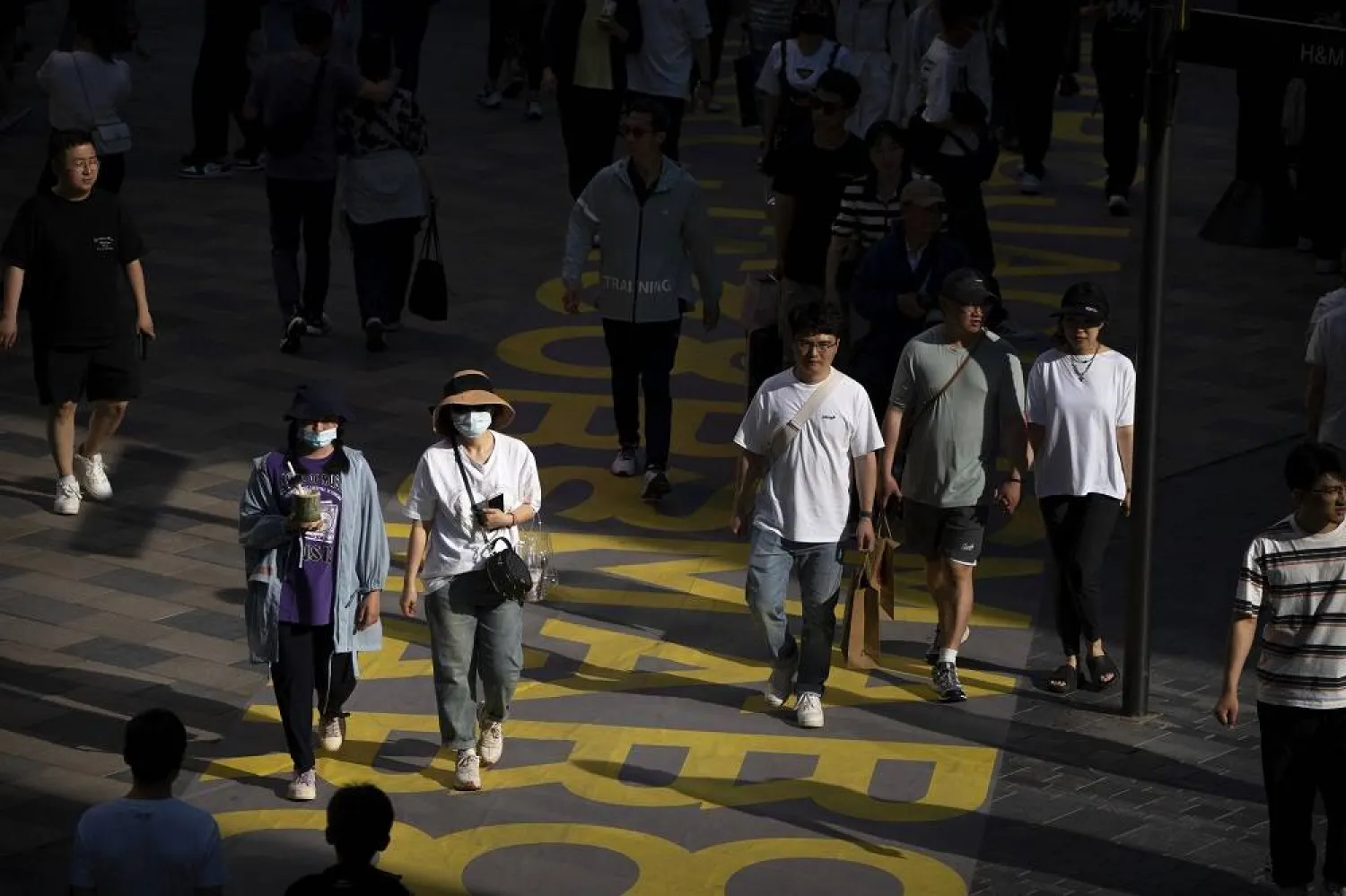
People wearing face masks walk at an outdoor shopping center in Beijing, Saturday, May 13, 2023. (AP)
TT

China Sentences 78-Year-Old US Citizen to Life in Prison on Spying Charges 

People wearing face masks walk at an outdoor shopping center in Beijing, Saturday, May 13, 2023. (AP)

China sentenced a 78-year-old United States citizen to life in prison Monday on spying charges, in a case that reflects the deterioration in ties between Beijing and Washington over recent years.

Details of the charges against John Shing-Wan Leung, who holds permanent residency in Hong Kong, have not been publicly released.

Leung was detained April 15, 2021, by the local bureau of China's counterintelligence agency in the southeastern city of Suzhou, according to a news release posted by the city’s intermediate court on its social media site. His detention came after China had closed its borders and imposed tight domestic travel restrictions and social controls to fight the spread of COVID-19.

Such investigations and trials are held behind closed doors and little information is released other than vague accusations of infiltration, gathering secrets and threatening state security.

Relations between Washington and Beijing are at their lowest in decades amid disputes over trade, technology, human rights and China’s increasingly aggressive approach toward its territorial claims involving self-governing Taiwan and the South China Sea. High-level government visits have been on hold and US companies are delaying major investments amid mixed messaging from Beijing.

The sentencing comes as President Joe Biden is traveling to Hiroshima, Japan, for the Group of Seven major industrial nations summit, followed by a visit to Papua New Guinea, a Pacific island nation in a region where China has sought to increase its economic, military and diplomatic influence. After Beijing's gains in the area, the US and its Asia-Pacific partners stepped up their regional presence, offering investments and financial support rivaling those furnished by China.

Now the world's second-largest economy, China is expanding its footprint in ports, railways and other infrastructure from Europe to Southeast Asia and beyond.

While the Suzhou court offered no indication of a tie to overall China-US relations, spying charges are highly selective and evidence backing them up is not released. That is standard practice among most countries, who wish to secure their personal connections, networks and access to information.

However, China’s authoritarian political system and the ruling Communist Party’s absolute control over legal matters, civil society and freedom of information forestalls demands for further information, as well as court appeals.

The US Embassy in Beijing said it was aware of the case, but could not comment further due to privacy concerns. “The Department of State has no greater priority than the safety and security of US citizens overseas,” the embassy said in the emailed statement.

The government of Hong Kong, a former British colony that reverted to Chinese control in 1997, had no immediate word on Leung's sentencing.

When it was returned to China, Hong Kong was promised it would retain its financial, social and political liberties, but Beijing has essentially scuttled that commitment since cracking down on pro-democracy protesters and imposing a sweeping national security law in 2020.

Chinese national security agencies have also raided the offices of foreign business consulting firms in Beijing and other cities as part of a crackdown on foreign businesses that provide sensitive economic data.

Foreign companies operating in China have come under increasing pressure as Xi Jinping’s government tightens control over the economy. That stands in stark contrast to efforts to lure back foreign investors after draconian COVID-19 pandemic restrictions were lifted at the beginning of the year.

Long pretrial detentions are not unusual in China and prosecutors have broad powers to hold people charged in national security cases, regardless of their citizenship status.

Two Chinese-Australians, Cheng Lei, who formerly worked for China’s state broadcaster, and writer Yang Jun, have been held since 2020 and 2019 respectively without word on their sentencing.

Government suspicion is particularly focused on Chinese-born foreign citizens and people from Taiwan and Hong Kong, especially if they have political contacts or work in academia or publishing.

Under Xi, the party has launched multiple campaigns against what it calls foreign efforts to sabotage its rule, without showing evidence. Universities have been ordered to censor discussions of human rights, modern Chinese history and ideas that could prompt questions about total Communist Party control.

Xi's government has also taken a hard line on foreign relations, most recently ordering out a Canadian diplomat in retaliation for Ottawa's expulsion of a staffer at the Chinese embassy accused of threatening a member of the Canadian parliament and his family members living in Hong Kong.

That meshes with Xi's confrontational global stance that has seen China partner with Russia in accusing the West of provoking Moscow's invasion of Ukraine and seeking to overthrow the US-led liberal dominance of global affairs.



Rubio Doubtful of Diplomacy with Cuba as Trump Raises New Threat of Military Action

(FILES) US Secretary of State Marco Rubio speaks during a press briefing in the Brady Briefing Room of the White House in Washington, DC, on May 5, 2026. (Photo by Kent NISHIMURA / AFP)
TT

Rubio Doubtful of Diplomacy with Cuba as Trump Raises New Threat of Military Action

(FILES) US Secretary of State Marco Rubio speaks during a press briefing in the Brady Briefing Room of the White House in Washington, DC, on May 5, 2026. (Photo by Kent NISHIMURA / AFP)

President Donald Trump and America's top diplomat on Thursday again raised the specter of US military intervention in Cuba, a renewed threat that takes on greater weight a day after the administration announced criminal charges against the island's former leader, Raúl Castro.

Trump said previous US presidents have considered intervening in Cuba for decades but that “it looks like I’ll be the one that does it.”

“Other presidents have looked at this for 50, 60 years, doing something,” Trump told reporters when asked about Cuba during an environmental event in the Oval Office. “And, it looks like I’ll be the one that does it. So, I would be happy to do it.”

Secretary of State Marco Rubio told reporters separately that Cuba has been a national security threat for years because of its ties to US adversaries and that Trump is intent on addressing it, The Associated Press said.

Rubio says the US prefers a negotiated agreement with Cuba

Rubio, the son of Cuban immigrants who has long taken a hard-line against Cuba’s socialist leadership, said the Trump administration wants to resolve differences with Cuba peacefully but is doubtful the US can reach a diplomatic resolution with the island's current government.

Trump's “preference is always a negotiated agreement that’s peaceful. That’s always our preference. That remains our preference with Cuba,” Rubio said in Miami before boarding a plane to attend a NATO meeting in Sweden and then visit India.

“I’m just being honest with you, you know, the likelihood of that happening, given who we’re dealing with right now, is not high,” he said.

Top Trump aides — including Rubio, CIA chief John Ratcliffe and other senior national security officials — have met with Cuban officials in recent months to explore possible improvements in relations. But the US side has come away unimpressed from those talks, leading to even more sanctions imposed on the Cuban government in the past week.

Over the years, Cuba has gotten used to “buying time and waiting us out,” Rubio said. “They’re not going to be able to wait us out or buy time. We’re very serious, we’re very focused.”

When asked whether the US would use force in Cuba to change the island's political system, Rubio repeated that a diplomatic settlement was preferred but noted that “the president always has the option to do whatever it takes to support and protect the national interest.”

He pushed back on a reporter’s suggestion that it sounded like “nation-building,” insisting it was about addressing a national security risk.

New threats follow US announcement of charges against Castro Federal prosecutors on Wednesday unveiled an indictment that accuses Castro of ordering the shootdown in 1996 of civilian planes flown by Miami-based exiles. The charges, which were secretly filed by a grand jury in April, included murder and destruction of an airplane.

Cuban President Miguel Díaz-Canel has condemned the indictment as a political stunt that sought only to “justify the folly of a military aggression against Cuba.”

The Castro indictment has led many to believe that the Trump administration is following the same playbook it did when it captured then-Venezuelan President Nicolás Maduro in a military operation in early January. Maduro, who has been imprisoned in the US since his seizure, faces federal drug trafficking charges and has pleaded not guilty.

The US military touted the arrival of the USS Nimitz aircraft carrier and accompanying ships to the Caribbean Sea on the same day the charges against Castro were announced. US Southern Command said the ships are taking part in maritime exercises with partners in Latin America that began in March.

Rubio would not discuss how the US might move to implement the indictment against Castro, who turns 95 next month.

Trump has been threatening military action in Cuba ever since ousting Maduro and then ordering an energy blockade that choked off fuel shipments to Cuba. That has led to severe blackouts, food shortages and an economic collapse across the island.

The Trump administration this month also has slapped new sanctions on Cuba, the largest of which is against Grupo de Administración Empresarial S.A., a business conglomerate operated by the Cuban Revolutionary Armed Forces.

On Thursday, Rubio announced that the sister of the GAESA's executive president, who was living in the US, has had her green card revoked and been arrested, and is now in US Immigration and Customs Enforcement custody.

“Past Administrations have permitted the families of Cuban military elites, Iranian terrorists and other reprehensible organizations to enjoy lavish lifestyles in our country funded by stolen blood-money, while the people they repress at home suffer in increasingly dire circumstances. No longer,” Rubio said in a statement.

Trump has ratcheted up talk of regime change in Cuba after pledging to conduct a “friendly takeover” of the country if its leadership did not open its economy to American investment and kick out US adversaries.

On Thursday, Rubio said Cuba poses a serious national security threat to America because of its security and intelligence ties with China and Russia and friendly relations with US foes in Latin America.

China opposes US sanctions and pressure on Cuba, a Chinese Foreign Ministry spokesperson, Guo Jiakun, said Thursday.

“China firmly supports Cuba in safeguarding its national sovereignty and national dignity and opposes external interference,” Guo added.


Pakistan Seeks Breakthrough in US-Iran Peace Talks

FILE PHOTO: People walk past a billboard about the Strait of Hormuz, in Tehran, Iran, May 17, 2026. Majid Asgaripour/WANA (West Asia News Agency) via REUTERS
TT

Pakistan Seeks Breakthrough in US-Iran Peace Talks

FILE PHOTO: People walk past a billboard about the Strait of Hormuz, in Tehran, Iran, May 17, 2026. Majid Asgaripour/WANA (West Asia News Agency) via REUTERS

Iran's foreign minister met his Pakistani counterpart on Friday to discuss proposals to end the US-Israeli war, Iranian media reported, with Tehran and Washington still at odds over Tehran's uranium stockpile and controls on the Strait of Hormuz.

Two days after presenting the Iranians with the latest US message in the negotiations, Pakistani Interior Minister Syed Mohsin Naqvi held another round of talks with Iranian Foreign Minister Abbas Araqchi in Tehran, the semi-official Tasnim news agency reported.

US Secretary of State Marco Rubio told reporters on Thursday there had been "some good signs" in the talks, but there could be no solution if Tehran enforced a tolling system in the Strait of Hormuz, which it effectively closed to most shipping after the war began on February 28.

"There's some good signs," Rubio said. "I don't want to be overly optimistic ... So, let's see what happens over the next few days."

A senior Iranian source told Reuters on Thursday that gaps had been narrowed, although uranium enrichment and the Strait of Hormuz remained among the sticking points.

The war has wreaked havoc on ⁠the global economy, ⁠with the surge in oil prices stoking fears of rampant inflation. About a fifth of the world's oil and liquefied natural gas shipments travelled through the Strait of Hormuz before the war.

The US dollar was near its highest level in six weeks on Friday amid the uncertainty over the peace talks, while oil prices climbed as investors doubted the prospects of a breakthrough.

"We're coming to the end of week 12, we're six weeks in the ceasefire, and I'm just not really that convinced we're any closer to a resolution between the US and Iran," Tony Sycamore, a market analyst at IG, said of the Middle East war.

US ⁠President Donald Trump said the US would eventually recover Iran's stockpile of highly enriched uranium - which Washington believes is destined for a nuclear weapon though Tehran says it is intended purely for peaceful purposes.

"We will get it. We don't need it, we don't want it. We'll probably destroy it after we get it, but we're not going to let them have it," Trump told reporters at the White House on Thursday.

Two senior Iranian sources told Reuters before Trump's comments that Iranian Supreme Leader Mojtaba Khamenei had issued a directive that the uranium should not be sent abroad.

The US president also railed against Tehran's intentions to charge fees on ships using the strait.

"We want it open, we want it free. We don't want tolls," Trump said. "It's an international waterway."

Trump faces domestic pressure ahead of November midterm elections, with Americans angry over the surge in fuel prices and his approval rating near its lowest level since he returned to the White House last year. Tehran submitted its latest offer to ⁠the US earlier this ⁠week.

Tehran's descriptions suggest it largely repeats terms Trump previously rejected, including demands for control of the Strait of Hormuz, compensation for war damage, lifting of sanctions, release of frozen assets and the withdrawal of US troops.

Traffic through the strait has fallen to a trickle compared with 125 to 140 daily passages before the war. Iran has said it aims to reopen the strait to friendly countries that abide by its terms that could potentially include fees.

"It would make a diplomatic deal unfeasible if they were to continue to pursue that. So it's a threat to the world if they were trying to do that, and it's completely illegal," Rubio said.


NATO's Rutte Welcomes Trump Sending Troops to Poland

FILED - 25 June 2025, Netherlands, The Hague: NATO Secretary General Mark Rutte and US President Donald Trump give remarks to the press on the sidelines of the 2025 NATO Summit. Photo: Martijn Beekman/NATO/dpa
TT

NATO's Rutte Welcomes Trump Sending Troops to Poland

FILED - 25 June 2025, Netherlands, The Hague: NATO Secretary General Mark Rutte and US President Donald Trump give remarks to the press on the sidelines of the 2025 NATO Summit. Photo: Martijn Beekman/NATO/dpa

NATO's chief Mark Rutte said on Friday he welcomed US President Donald Trump's announcement to send 5,000 troops to Poland, through ‌he added the ‌trend is ‌still ⁠towards a stronger ⁠Europe less reliant on the United States for its defense.

"Let's be clear: ⁠the trajectory we ‌are ‌on - which is ‌a stronger Europe and ‌a stronger NATO, making sure we will over time, step ‌by step, be less reliant ⁠on ⁠one ally only ... will continue", Rutte told reporters ahead of a NATO meeting in Sweden's Helsingborg.