


Fate of Israel’s Judicial Plan May Hang on June Parliament Vote

Israeli Prime Minister Benjamin Netanyahu attends a weekly cabinet meeting in the prime minister's office in Jerusalem, Sunday June 4, 2023. (AP)
TT

Fate of Israel’s Judicial Plan May Hang on June Parliament Vote

Israeli Prime Minister Benjamin Netanyahu attends a weekly cabinet meeting in the prime minister's office in Jerusalem, Sunday June 4, 2023. (AP)

Israel's Knesset will hold a vote next week that could tip the scales against a drive by Prime Minister Benjamin Netanyahu's hard-right coalition to curb the Supreme Court, a move that set off one of the country's worst political crises in years.

Parliament on June 14 is set to elect two lawmakers to join a panel that will select judges, including to the Supreme Court, one of the few checks and balances in Israel's political system.

The make up of the nine-member panel of lawmakers, senior judges, ministers and lawyers has been at the heart of a battle over the nature of Israel's democracy, which began in January when the government announced a plan to overhaul the judiciary.

This touched off protests and Western powers voiced concern about what it meant for Israel's democratic health.

If one of the two lawmakers chosen is from the opposition - keeping the status quo - it would be a sign of compromise by Netanyahu after weeks of talks with his opponents and a setback for hardliners in his religious-nationalist government who want more control over judicial appointments.

It could affect the Supreme Court, which must replace the chief justice and another judge, in coming months.

"There are no guarantees with someone you don't trust," opposition head Yair Lapid told Army Radio, although he and other lawmakers have indicated over the past week that agreements on candidates for the panel have been reached.

But Netanyahu's Likud party has kept the opposition guessing, saying on Monday a decision would be made next week.

The possibility that an opposition lawmaker would be named to the panel has pushed the shekel up some 3% this week, with a 1.1% gain to a two-week high of 3.644 per dollar.

Critics denounce the judicial plan pushed by Netanyahu, who is on trial on graft charges that he denies. They say the move to let parliament override many Supreme Court decisions threatens the independence of the courts and endangers democracy.

The court acts as a check in Israel's political system which has few other balances, given it has just one chamber of parliament.

Washington wants consensus

Until now, Netanyahu's talks with the opposition to defuse the crisis have yielded little. He has also sent mixed messages about the overhaul's fate, compounding uncertainty that has hit the economy and the shekel.

The vote on the panel makeup could provide clarity for Israelis and Western allies, including Washington which has urged Netanyahu to reach a consensus over legal reforms.

If parliament adheres to a custom in the confidential vote by electing an opposition member, it would signal to opponents that Netanyahu was serious about a compromise and was ready to adjust his judicial plan.

Facing dissension from within his party, Netanyahu told Likud on May 29: "The reform is not dead, but we are making every effort in talks in order to reach broad agreements."

Likud Justice Minister Yariv Levin, a driving force behind the overhaul plan, says he and his allies want to give elected politicians more sway over what they see as a left-leaning and over-reaching Supreme Court.

Critics say it will politicize the judiciary.

Lawmaker Keti Shitrit, who is on the Likud team that is in negotiations with the opposition, said: "The reform will happen, just not in its original form."

The Prime Minister's Office Director-General Yossi Shelly played down questions about the judicial discussion. "I think that ultimately it will end positively," he told Kan radio.


Venezuela: Amnesty Law Excludes those who Promoted Military Action

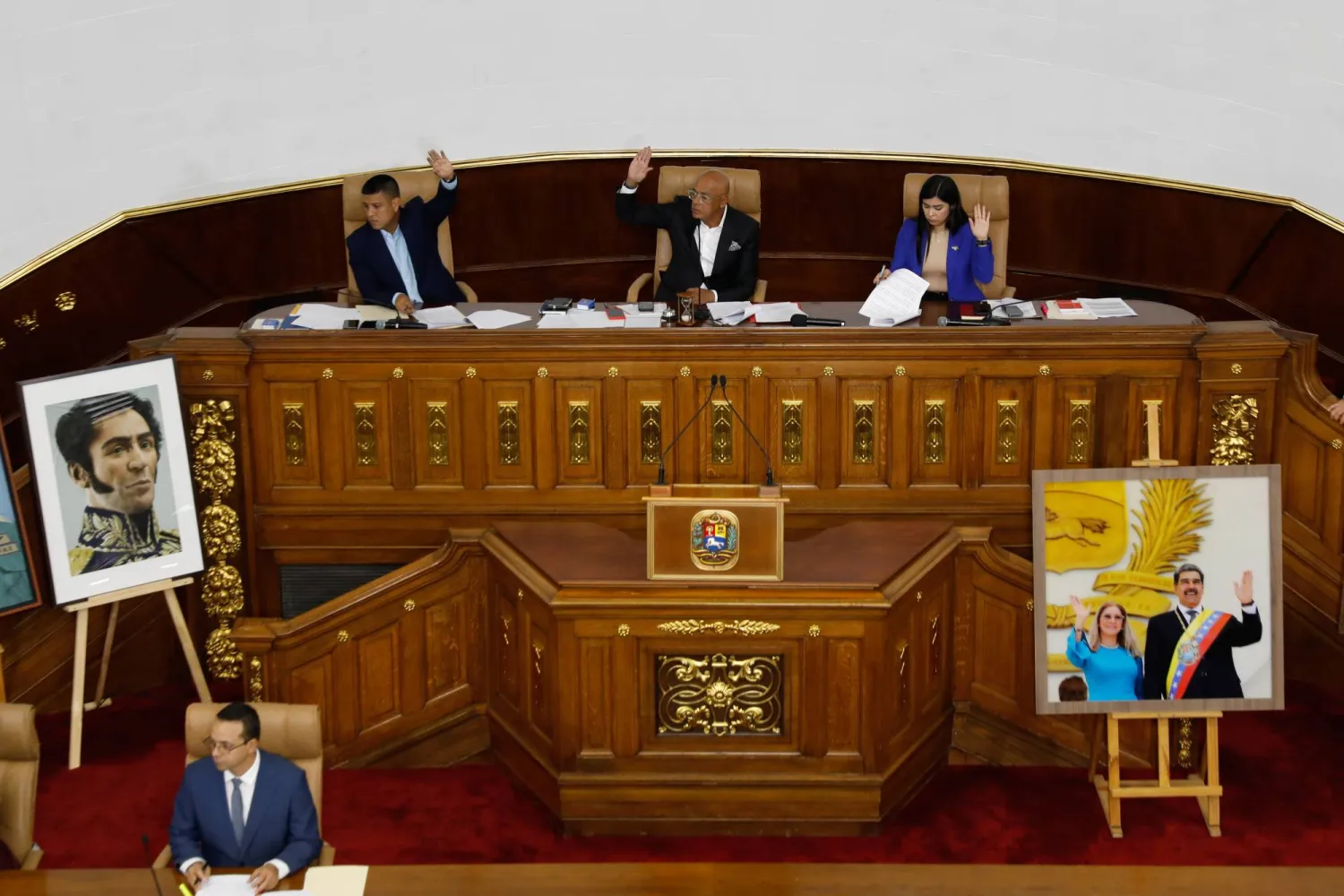
National Assembly President Jorge Rodriguez, center, presides over a session debating an amnesty bill in Caracas, Venezuela, Thursday, Feb. 19, 2026. (AP Photo/Crisitian Hernandez)
TT

Venezuela: Amnesty Law Excludes those who Promoted Military Action

National Assembly President Jorge Rodriguez, center, presides over a session debating an amnesty bill in Caracas, Venezuela, Thursday, Feb. 19, 2026. (AP Photo/Crisitian Hernandez)

Venezuela's parliament unanimously approved an amnesty law on Thursday that could free political prisoners, almost two months after President Nicolas Maduro was captured by US forces.

“The law on democratic coexistence has been approved. It has been forwarded to acting president Delcy Rodriguez for announcement,” said National Assembly President, Jorge Rodriguez, before parliament.

Acting president Delcy Rodriguez signed the legislation after it was handed to her by Jorge Rodrigez, her brother.

The passage of the law led to the end of a hunger strike by relatives of political prisoners.

Ten women have participated in a hunger strike outside the Zona 7 police facility in the capital Caracas last Saturday, setting up camps outside the prison and demanding the release of their relatives, according to AFP.

Because they experienced health problems, nine of them stopped the protest on Wednesday evening. Only one woman continued until Thursday, ending “136 hours,” or more than five days, of strike.

But the amnesty law excludes those who have been prosecuted or convicted of promoting military action against the country – which could include opposition leaders like Nobel Peace Prize winner Maria Corina Machado, who has been accused by the ruling party of calling for international intervention like the one that ousted Maduro.

Article 9 of the bill lists those excluded from amnesty as “persons who are being prosecuted or may be convicted for promoting, instigating, soliciting, invoking, favoring, facilitating, financing or participating in armed actions or the use of force against the people, sovereignty, and territorial integrity” of Venezuela “by foreign states, corporations or individuals.”


Türkiye’s Approval of Peace Roadmap is Important Step, PKK Source Says

A Turkish parliamentary commission’s approval of a report setting out a roadmap for legal reforms alongside the disbandment of the Kurdistan Workers Party (PKK) group is an important step and the beginning of a fundamental change in Turkish policy, a PKK source said Thursday. (AFP/File)
TT

Türkiye’s Approval of Peace Roadmap is Important Step, PKK Source Says

A Turkish parliamentary commission’s approval of a report setting out a roadmap for legal reforms alongside the disbandment of the Kurdistan Workers Party (PKK) group is an important step and the beginning of a fundamental change in Turkish policy, a PKK source said Thursday. (AFP/File)

A Turkish parliamentary commission's approval of a report setting out a roadmap for legal reforms alongside the disbandment of the Kurdistan Workers Party (PKK) group is an important step and the beginning of a fundamental change in Turkish policy, a PKK source told Reuters on Thursday.

The commission voted overwhelmingly on Wednesday to approve the report, advancing a peace process designed to end decades of conflict.

"The vote is considered an achievement and an important ‌step toward consolidating democracy ‌in Türkiye," said the PKK source.

The PKK - designated a ‌terrorist ⁠organization by Türkiye, ⁠the United States and the European Union - halted attacks last year and said in May it had decided to disband and end its armed struggle.

The parliamentary vote shifts the peace process to the legislative theatre, as President Tayyip Erdogan, Türkiye’s leader of more than two decades, bids to end a conflict focused in mainly Kurdish southeast Türkiye.

The insurgency began in 1984 and has killed more than 40,000 people, sowing deep discord at home and ⁠spreading violence across borders into Iraq and Syria.

IMPORTANT ISSUES OUTSTANDING

The PKK ‌source said there were foundations for resolving ‌the Kurdish issue, but there was a lack of clarity on the issue in the report.

"There also ‌remain other important issues, such as initiating constitutional amendments, especially in aspects related to ‌the Kurdish language as well as amendments to the anti-terrorism law," the source said.

Another issue was legislation concerning the return of PKK militants to Türkiye and their integration into society, the source said.

A key element of Wednesday's report recommended strengthening mechanisms to ensure compliance with decisions by the ‌European Court of Human Rights (ECHR) and the Constitutional Court.

Among key ECHR decisions related to Türkiye are rulings that the rights of ⁠jailed former pro-Kurdish ⁠party leader Selahattin Demirtas had been violated and that he should be released immediately.

Ankara's final appeal against that was rejected in November.

SIGN OF INTENT

Demirtas' lawyer Mahsuni Karaman told Reuters the report's comments on the ECHR were important as a sign of intent.

"We hope this will be reflected in judicial practice—that is our wish and expectation,” Karaman said.

Demirtas was detained in November 2016 on terrorism-related charges, which he denies. In May 2024, a court convicted him in connection with deadly 2014 protests and sentenced him to more than 40 years in prison.

Turkish nationalist leader Devlet Bahceli, a key Erdogan ally whose call in 2024 triggered the current PKK peace process, said in November that it "would be beneficial" to release Demirtas from prison.

The opposition pro-Kurdish DEM Party — the successor party of Demirtas' HDP — remains parliament's third-largest bloc and has cooperated closely with the parliamentary commission.


US Renews Threat to Leave IEA

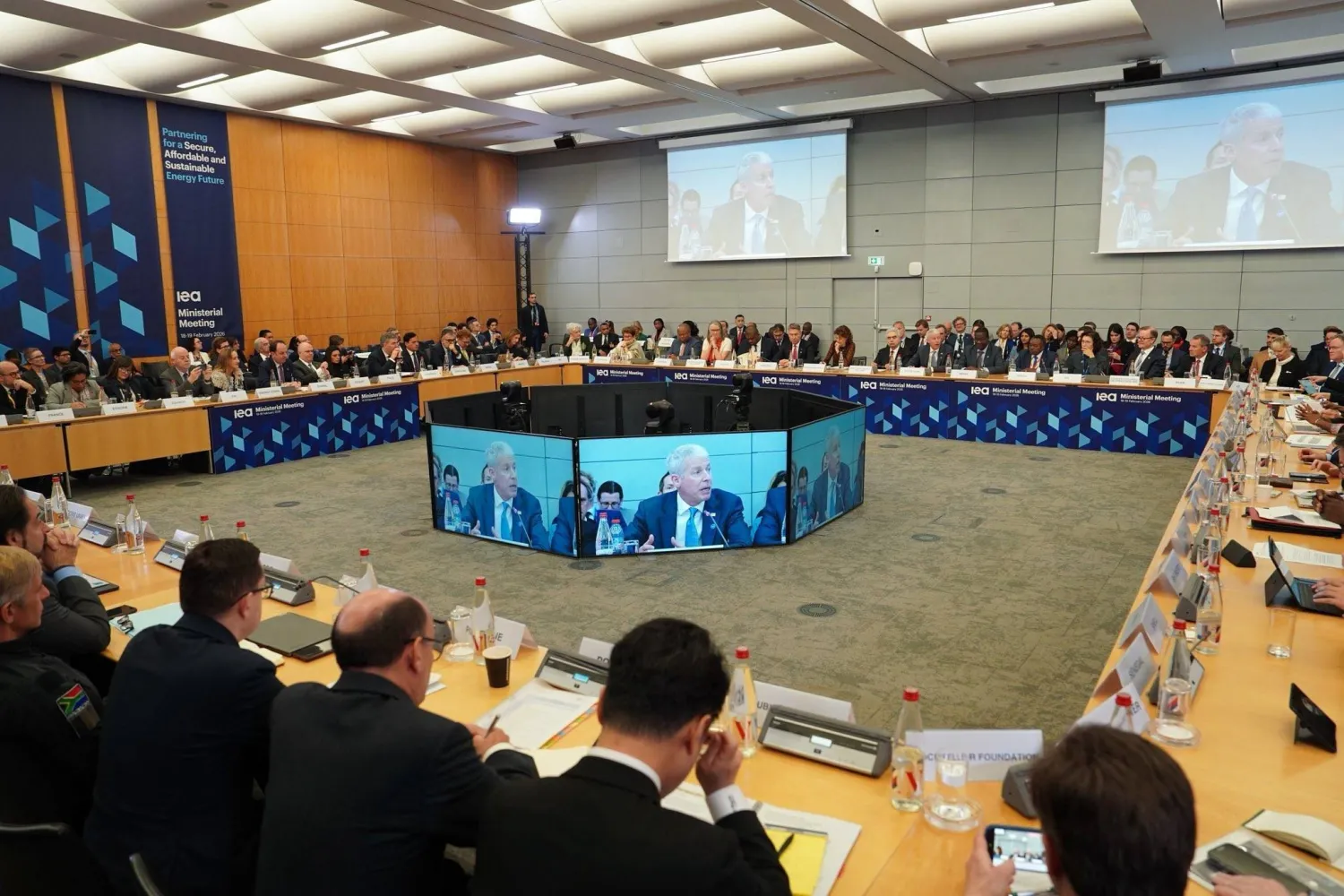
US Energy Secretary Chris Wright speaks at an IEA ministerial meeting in Paris (X)
TT

US Renews Threat to Leave IEA

US Energy Secretary Chris Wright speaks at an IEA ministerial meeting in Paris (X)

US Energy Secretary Chris Wright renewed his threat Thursday to pull out of the International Energy Agency, saying Washington would press the organization to abandon a net-zero agenda “in the next year or so.”

Speaking on the last day of an IEA ministerial meeting in Paris, Wright said the 52-year-old agency should return to its founding mission of ensuring energy security.

“The US will use all the pressure we have to get the IEA to eventually, in the next year or so, move away from this agenda,” Wright said in a news conference.

“But if the IEA is not able to bring itself back to focusing on the mission of energy honesty, energy access and energy security, then sadly we would become an ex-member of the IEA,” he added.

Meaning of Wright’s Warning

A US exit means a deep cut to IEA’s budget undermining the agency’s global influence.

Washington is not just a member of the agency but its largest funder. It alone contributes to 25% of the IEA core budget (equivalent to between $25 and $30 million annually) and therefore its exit would “dry up” a quarter of the agency’s financial resources.

Also, Washington is the world's largest oil and gas producer, meaning the US exit will affect the agency's reports and their credibility in markets.

The IEA was created to coordinate responses to major disruptions of supplies after the 1973 oil crisis. But in recent years, it became the main advocate of green transition policies, which the US considers as “politicized.”

The IEA produces monthly reports on oil demand and supply as well as annual world energy outlooks that include data on the growth of solar and wind energy, among other analyses.

Wright praised IEA Executive Director Fatih Birol for reinserting in November 2025’s annual outlook a Current Policies Scenario in which oil and gas demand would grow in the next decades. That scenario had been dropped for the past five years.

But the report still included a scenario where the world reaches net zero emissions by mid-century.

Birol’s current four-year term ends in 2027, but Wright demurred when asked who he would like to head the IEA, which has over 30 member nations.

“We remain today undecided or neutral on who the leadership is. We care about the mission much more than the individual leaders,” the US energy chief said.

If Birol can make the agency “get out the politics and get out the anti-energy part of it, that's great by us,” said Wright, who first warned last year that the US could leave the IEA if it did not reform.

For his part, Birol insisted that the Paris-based agency was “data-driven.” He said, “We are a non-political organization.”

The IEA was created “to focus on energy security,” Wright said on Wednesday at a ministerial meeting of the agency in Paris.

“That mission is beyond critical and I'm here to plead to all the members (of the IEA) that we need to keep the focus of the IEA on this absolutely life-changing, world-changing mission of energy security,” he said.

The Energy Secretary said he wanted to get support from “all the nations in this noble organization to work with us, to push the IEA to drop the climate. That's political stuff.”

His comments come just a day after he publicly threatened to quit the organization unless it abandoned its focus on the energy transition— a call that several countries rejected, including the UK, Austria and France.