


Xi Urges Shanghai Alliance Solidarity, Putin Praises Support

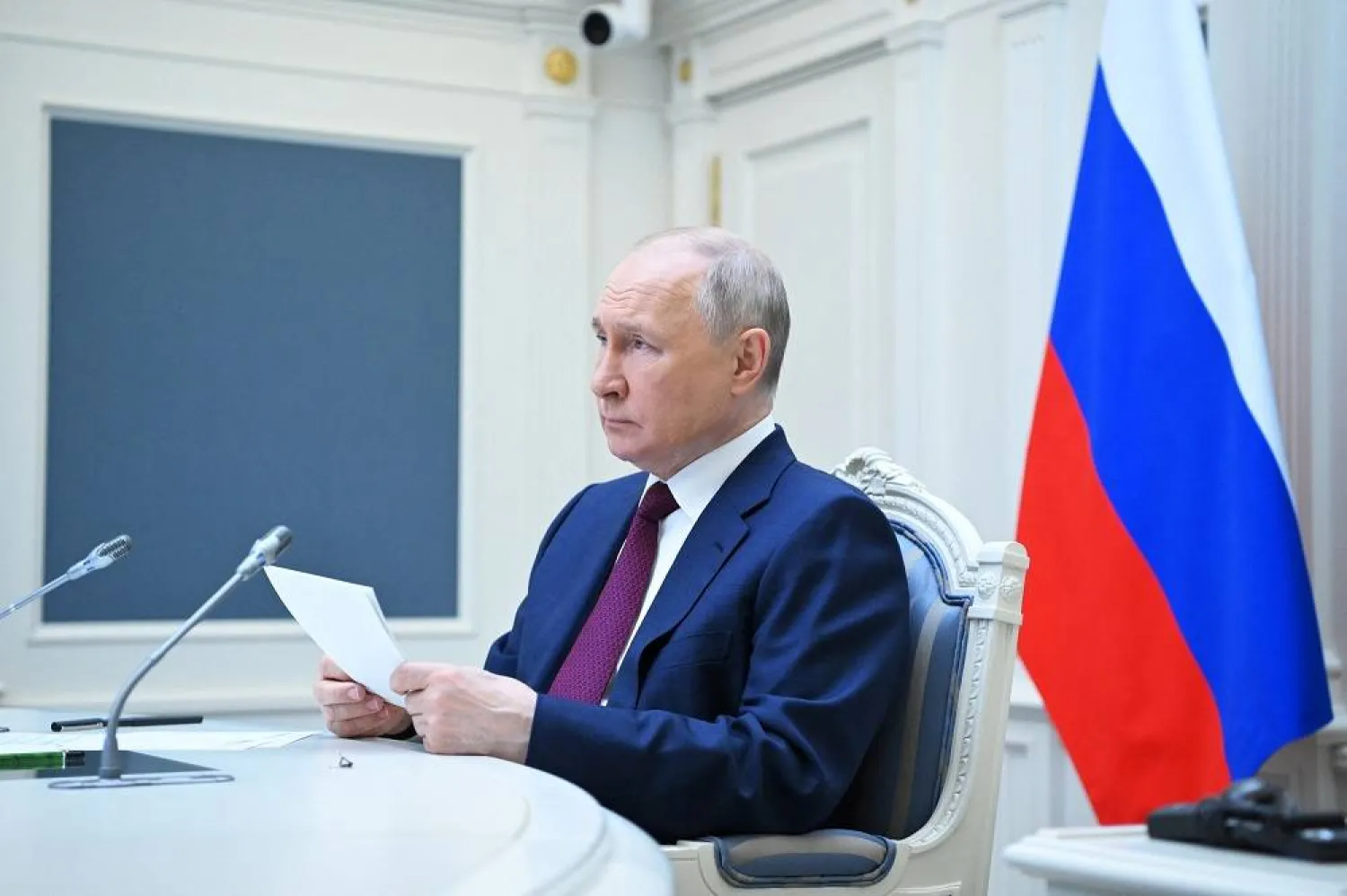
Russian President Vladimir Putin attends a summit of leaders of the Shanghai Cooperation Organization (SCO) via a video conference call at the Kremlin in Moscow, Russia, July 4, 2023. (Sputnik/Kremlin via Reuters)
TT

Xi Urges Shanghai Alliance Solidarity, Putin Praises Support

Russian President Vladimir Putin attends a summit of leaders of the Shanghai Cooperation Organization (SCO) via a video conference call at the Kremlin in Moscow, Russia, July 4, 2023. (Sputnik/Kremlin via Reuters)

China's Xi Jinping urged the leaders of Russia, Iran and other Shanghai alliance states on Tuesday to boost ties and resist sanctions, as Vladimir Putin thanked the bloc for support during a failed rebellion.  

China and Russia have in recent years ramped up economic cooperation and diplomatic contacts, with their strategic partnership having only grown closer since Moscow's invasion of Ukraine last year.  

The Shanghai Cooperation Organization -- which on Tuesday welcomed Iran as its ninth member -- encompasses a vast stretch of the globe from Moscow to Beijing and includes around half the world's population when observer and "dialogue partner" nations are included.

During the virtual meeting, Xi "called for efforts to safeguard regional peace and ensure common security", state news agency Xinhua said, adding that he urged SCO member states to "enhance their solidarity".

While China says it is a neutral party to the Ukraine conflict, it has been criticized by Western nations for refusing to condemn Moscow's offensive.

Putin, speaking via video link at the meeting, his first summit since a short-lived mutiny last month by Wagner mercenary group chief Yevgeny Prigozhin, thanked the Beijing-headquartered SCO for its support.  

"Russia is confidently resisting and will continue to resist external pressure, sanctions and provocations," Putin said.  

"I would like to thank my colleagues from the SCO countries who expressed support for the actions of the Russian leadership to protect the constitutional order and the life and security of citizens," he added.  

Iran joins, Belarus next

Iran joined as a full member of the grouping on Tuesday, with Tehran having intensified its diplomacy in recent months, seeking to reduce its isolation, improve its economy and project strength.

Tehran's membership will support "collective security... expanding ties and communications (and) strengthening unity", Iranian President Ebrahim Raisi said.  

Alongside summit host India, other full members are Kazakhstan, Kyrgyzstan, Pakistan, Tajikistan and Uzbekistan.  

Russian ally Belarus, which holds observer status, was also told it would become a member at the next SCO summit.  

On Tuesday, China's Xi warned against "color revolutions" and a "new Cold War", according to a state media readout of his speech to the SCO summit.  

"We must be highly vigilant against external forces fomenting a 'new Cold War' and creating confrontation in the region, and resolutely oppose any country interfering in internal affairs and staging a 'color revolution' for any reason," he said.  

Afghanistan concerns  

During the summit, the leaders of rivals India and Pakistan said Afghanistan remained a key concern.

India's Prime Minister Narendra Modi warned of the risk Afghanistan was a base to "spread instability", while his Pakistani counterpart Shehbaz Sharif called for an "urgent reset" in international engagement with Afghanistan's Taliban rulers.  

India, which also hosts the G20 summit in September, is walking a diplomatic tightrope.  

Uniquely, it is a member of both the Shanghai Cooperation Organization and the Quad, set up with the United States, Japan and Australia to counter Beijing's growing assertiveness.  

Modi was last month hosted in Washington with the full pomp of a state visit, where US President Joe Biden spoke of "two great friends and two great powers".  

At the same time, Moscow remains by far India's biggest arms supplier -- they have been allies for decades -- and New Delhi has been an enthusiastic buyer of cut-price Russian oil during the war in Ukraine.



Iran Threatens US with New 'Economic Warfare'

Vessels transit the Hormuz Strait off the coast of Iran's southern port city of Bandar Abbas on September 7, 2026. (Photo by ATTA KENARE / AFP) /
TT

Iran Threatens US with New 'Economic Warfare'

Vessels transit the Hormuz Strait off the coast of Iran's southern port city of Bandar Abbas on September 7, 2026. (Photo by ATTA KENARE / AFP) /

Iran threatened the United States with "economic warfare" on Tuesday and said it had fired an advanced missile at US warships, underscoring the risks of further escalation in the war only days after both sides traded blows again.

The six-month-old war has been marked by a cycle of pauses followed by periodic flare-ups, with the US last reporting attacks on Iranian targets on Saturday, when US forces struck three Iranian oil tankers. Iranian state media on Sunday reported that Iran fired the Qassem Basir missile in its attacks on several US vessels.

Despite US attempts to open up the Strait of Hormuz, Iran has continued to disrupt shipping through the critical artery ⁠for global oil ⁠and gas supplies, with commodity vessel traffic slowing again this week.

Tehran has vowed to announce a new restricted zone in the coming days, along with maps of a new shipping corridor through the Strait of Hormuz, though it was unclear when details would emerge.

The new restricted zone would begin from where the US blockade of Iran begins and extend into areas of the Gulf, Mohsen Rezaei, the secretary of Iran's Supreme National Security Council, told state television on Sunday, adding that any vessel entering the area would be placed on an Iranian sanctions list.

On Tuesday, Rezaei reissued dual economic and military threats on ⁠X.

"In recent days, Washington has received a clear warning from Iran’s new missiles,” he said, adding “economic warfare will be met by a maritime exclusion zone” across the Arabian Gulf to the blockade perimeter.

“The operational posture toward US warships and bases has been fundamentally recalibrated," Rezaei said.

He was likely referring to the Qassem Basir ballistic missile that Iranian media reported was fired at US warships near the Strait of Hormuz. The US military said its warships evaded any missile attacks.


Far-Right Triumph in Eastern Germany Leaves Migrants Questioning Their Future

A general view taken on September 7, 2026 in Magdeburg, eastern Germany, shows Saxony-Anhalt's State Parliament, the day after the state election. (AFP)
TT

Far-Right Triumph in Eastern Germany Leaves Migrants Questioning Their Future

A general view taken on September 7, 2026 in Magdeburg, eastern Germany, shows Saxony-Anhalt's State Parliament, the day after the state election. (AFP)

Mamad Mohamad watched with mixed emotions as the far-right Alternative for Germany (AfD) swept to a historic victory on Sunday evening in the eastern state of Saxony-Anhalt.

A member of the Greens, the 46-year-old is set to become one of the first lawmakers with an immigrant background to enter the state parliament, alongside Mustafa Groener of the Left (Die Linke) party.

For Mohamad, who arrived in Germany from Syria as a 16-year-old Yazidi Kurd in 1996, it was a milestone that should have been a moment of celebration. Instead, he described it as a "poisoned victory".

"My heart was split," Mohamad said, recalling the first projections that showed the AfD outperforming expectations ‌while Chancellor Friedrich Merz's ‌governing conservatives slumped to a historic low.

'CULTURALLY ALIEN'

The AfD has long ‌campaigned ⁠for tighter immigration ⁠and asylum policies, arguing that Germany has lost control of its borders and that migration is putting heavy pressure on public services, security and social cohesion.

According to its election manifesto, an AfD-led Saxony-Anhalt would launch a state-level campaign to deport rejected asylum seekers.

The party also proposes encouraging businesses to adopt artificial intelligence and automation rather than rely on skilled migration from what it describes as "culturally alien" backgrounds.

The AfD rejects accusations that its rhetoric contributes to a hostile climate for migrants, insisting it opposes only illegal and uncontrolled ⁠migration.

"Everyone is warmly welcome who contributes positively to our society, who ‌wants to work here, who is qualified, who pays taxes, ‌and who abides by the law," AfD co-leader Alice Weidel said on Monday.

PACKED BAGS

The mood in Mohamad's ‌family was somber on Monday.

His daughter, he said, was reluctant to attend school, one of ‌several criticized by the AfD over projects that examine threats to democracy.

Though anxiety is running high in many immigrant communities, the result has prompted unease rather than surprise, said Undra Dressler, managing director of the State Network of Migrant Organizations in Saxony-Anhalt.

People with migrant backgrounds have long faced discrimination and structural barriers in access ‌to work, education, healthcare and public services, Dressler said.

"All of this is our reality," she told Reuters.

Sunday's result nevertheless marks a turning ⁠point, she said. "There are ⁠many people in our communities who say: 'We've already packed our bags and have concrete plans, and we'll be leaving soon,' or, in some cases, have already left."

Pascal Begrich, managing director of democracy advocacy group Miteinander, said he did not expect a large-scale exodus, partly because of economic realities, but agreed that many migrants but also employers were reassessing their future in Saxony-Anhalt.

"There are companies asking themselves whether they really want to locate here and whether they can ensure their workers will be safe," Begrich told Reuters.

CONSTITUTIONAL LIMITS

Mohamad said he feared the political shift could make it harder to attract newcomers to a state already grappling with demographic decline.

"Skilled workers and families will look elsewhere," he said.

Despite concerns about the state's political direction, both Dressler and Begrich stressed that any future government would remain bound by Germany's constitutional order and protections for minorities.

"Every government is bound by this," Dressler said. "And the 15 other federal states have a duty to monitor this and, if necessary, to intervene."


Russia Announces the Closure of the German Consulate in St. Petersburg

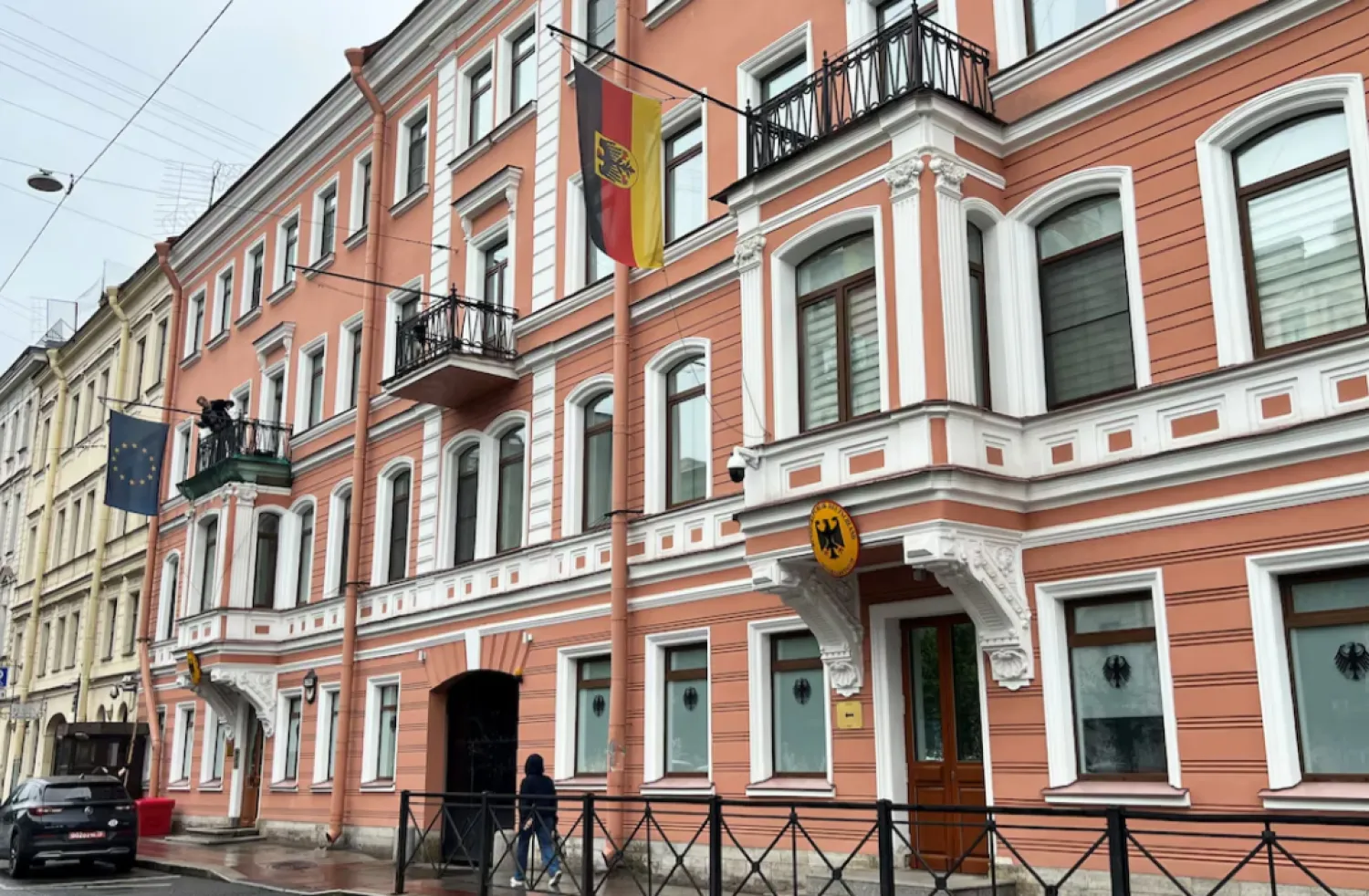
A person walks past the German Consulate General in Saint Petersburg, Russia September 2, 2026. Picture taken with a mobile phone. REUTERS/Dmitry Vasilyev
TT

Russia Announces the Closure of the German Consulate in St. Petersburg

A person walks past the German Consulate General in Saint Petersburg, Russia September 2, 2026. Picture taken with a mobile phone. REUTERS/Dmitry Vasilyev

Russia’s Foreign Ministry said Monday that the German consulate in St. Petersburg will have to close, a tit-for-tat move that reflected the simmering tensions between the two countries.

Russia’s Foreign Ministry said the German consulate must stop operations by Sept. 18, following an earlier move by Moscow to close German cultural centers on its territory.

The ministry said the closure was in retaliation for Germany’s decision Wednesday to close both the Russian consulate in Bonn and the Russian House cultural center in the German capital, Berlin.

Germany blamed Russia for an attempted drone attack at Leipzig/Halle Airport on Aug. 4, when an explosives-laden drone was found near a Ukrainian plane.

The airport is a major international freight hub used for providing support to Ukraine. The drone was later defused.

Moscow has denied involvement.