



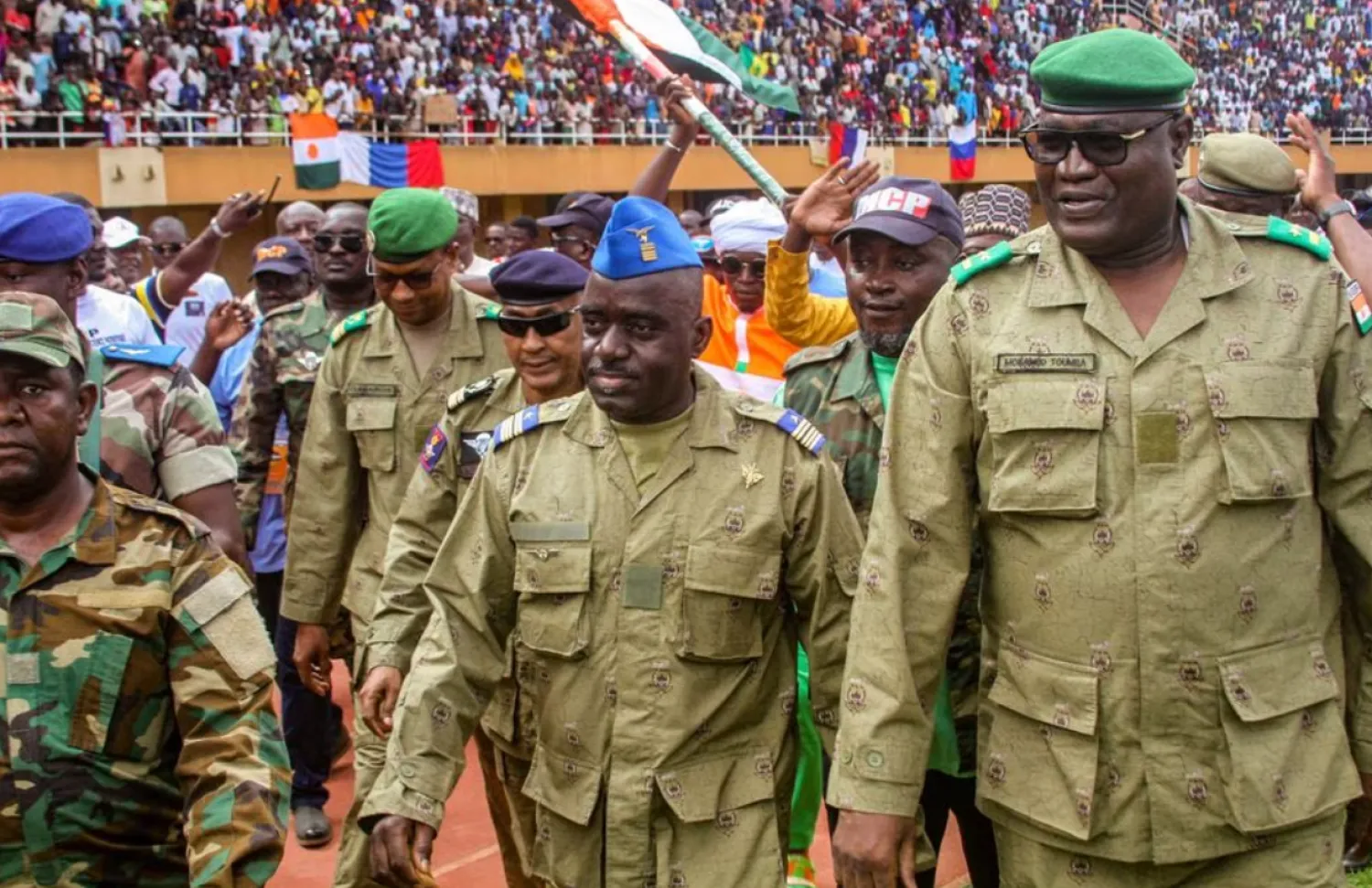

Niger's junta on Tuesday rejected the latest diplomatic mission from West African countries aimed at restoring constitutional order after a July 26 coup, resisting pressure from the United States and the United Nations to come to the negotiating table.
Heads of state from the Economic Community of West African States (ECOWAS) are preparing for a summit on Thursday to discuss their standoff with the junta, which defied an Aug. 6 deadline to reinstate ousted President Mohamed Bazoum.
ECOWAS defense chiefs agreed on Friday on a possible military action plan, which heads of state are expected to consider at their summit in the Nigerian capital, Abuja.
The junta denied permission to enter Niger to a joint delegation from ECOWAS, the African Union (AU) and the UN, according to a letter circulated on social media whose authenticity was confirmed by a Niger army spokesman, Reuters reported.
The letter said popular anger among Niger's citizens over sanctions imposed by ECOWAS in response to the coup made it impossible to host the envoys safely and denounced "a climate of threatened aggression against Niger".
An AU spokesperson confirmed that a mission had been denied access, while ECOWAS declined to comment.
The junta had already snubbed meetings with a senior US envoy and another ECOWAS delegation.
Under Bazoum, Niger was relatively successful in containing an insurgency devastating the Sahel region and was an important ally for the West after two of its neighbours rejected former colonial power France and turned towards Russia instead.
Niger is the world's seventh-biggest producer of uranium, the most widely used fuel for nuclear energy, adding to its strategic importance.
The United Nations said Secretary General Antonio Guterres strongly supported mediation efforts by ECOWAS, while US Secretary of State Antony Blinken told French radio station RFI diplomacy was the best way to resolve the situation.
He declined to comment on the future of some 1,100 US troops in Niger, where French, German and Italian troops are also stationed.
Blinken later told the BBC he was worried that Russia's Wagner mercenaries were taking advantage of the instability in Niger to strengthen their presence in the Sahel.
"I think what happened and what continues to happen in Niger was not instigated by Russia or by Wagner, but ... they tried to take advantage of it," he was quoted as saying by the BBC.
Western allies fear that Niger could go the way of Mali, which threw out French troops and UN peacekeepers and invited in mercenaries from Wagner group after a 2021 coup.
"Every single place that this Wagner group has gone, death, destruction and exploitation have followed," Blinken told the BBC.


