


UN Chief Says People Are Looking to Leaders for Way Out of Current Global ‘Mess’ 

18 September 2023, US, New York: UN Secretary-General Antonio Guterres speaks at the conference on the status of the United Nations Sustainable Development Goals Summit ahead of the General Debate of the UN General Assembly. (dpa)
TT

UN Chief Says People Are Looking to Leaders for Way Out of Current Global ‘Mess’ 

18 September 2023, US, New York: UN Secretary-General Antonio Guterres speaks at the conference on the status of the United Nations Sustainable Development Goals Summit ahead of the General Debate of the UN General Assembly. (dpa)

Leaders of a world fractured by war, climate change and persisting inequality gather under one roof Tuesday to hear the UN chief summon them to take united action on humanity’s huge challenges – and to start delivering their own assessments on the most global of stages.

“People are looking to their leaders for a way out of this mess,” Secretary-General Antonio Guterres said ahead of the annual gathering of presidents and premiers, ministers and monarchs at the General Assembly.

He said the world needs action now – not merely more words – to deal with the worsening climate emergency, escalating conflicts, “dramatic technological disruptions” and a global cost-of-living crisis that is increasing hunger and poverty.

“Yet in the face of all this and more,” Guterres said, “geopolitical divisions are undermining our capacity to respond.”

This year’s week-long session, the first full-on meeting of world leaders since the COVID-19 pandemic disrupted travel, has 145 leaders scheduled to speak. It’s a large number that reflects the multitude of crises and conflicts.

But for the first time in years, US President Joe Biden, who will speak soon after the UN chief, will be the only leader from the five powerful veto-wielding nations on the UN Security Council to address the 193-member assembly.

China’s Xi Jinping, Russia’s Vladimir Putin, France’s Emmanuel Macron and Britain’s Rishi Sunak are all skipping the UN this year. That should put the spotlight on Ukraine’s President Volodymyr Zelenskyy, who will be making his first appearance at the assembly’s podium later Tuesday, and on Biden, who will be watched especially for his views on China, Russia and Ukraine.

The absence of leaders from the four Security Council powers has sparked grumbling from developing countries who want major global players to listen to their demands – including for money to start closing the growing gap between the world’s haves and have-nots.

The G77, the major UN group of developing countries that now has 134 members including China, lobbied hard to make this year’s global gathering focus on the 17 UN goals adopted by world leaders in 2015. Those are badly lagging at the halfway point to their 2030 due date.

At a two-day summit to kick-start action to achieve the goals, Guterres pointed to grim findings in a UN report in July. He said 15% of some 140 specific targets to achieve the 17 goals are on track. Many are going in the wrong direction, and not a single one is expected to be achieved in the next seven years.

The wide-ranging goals include ending extreme poverty and hunger, ensuring every child gets a quality secondary education, achieving gender equality and making significant inroads in tackling climate change — all by 2030.

At the current rate, the report said, 575 million people will still be living in extreme poverty and 84 million children won’t even be going to elementary school in 2030 – and it will take 286 years to reach equality between men and women.

Guterres told leaders at Monday’s opening of the summit he called to rescue the 17 sustainable development goals, or SDGs, that they promised in 2015 to build “a world of health, progress and opportunity” for all people – and to pay for it.

Soon after he spoke, leaders from the 193 UN member nations adopted a 10-page political declaration by consensus which recognizes that the goals are “in peril.” But it reaffirms more than a dozen times, in different ways, leaders’ commitment to achieve the SDGs, reiterating their individual importance.

The declaration is short on specifics, but Guterres said he was “deeply encouraged” especially by its commitment to improving developing countries’ access to “the fuel required for SDG progress: finance.” He pointed to its support for an SDG stimulus of at least $500 billion a year, aimed at offsetting challenging market conditions faced by developing countries.

At the summit, leaders were then supposed to make pledges to meet the SDGs.

As an example, Nepal’s Prime Minister Pushpa Kamal Dahal, who chairs the UN group of least developed countries, said they need “massive scaling up of affordable finance” including through the SDG stimulus. He said foreign investment to the least developed countries fell about 30% in 2022 compared to 2021, and he urged developed countries to be more generous in helping the world’s poorest countries.

There are also hundreds of side events during high-level week.

The European Union’s top diplomat Josep Borrell told reporters after a closed meeting to try to revive the decades-old peace process between Israel and the Palestinians that there was “a strong commitment to the two-state solution.”

He said there were 60 participants at the meeting organized by the EU, the Arab League and several other countries, and called it “a good starting point.”

There was “an injection of new political will,” Borrell said, and three senior-level working groups were established to examine what Israeli-Palestinian peace would look like. He said they will start work in a month in Brussels.


Venezuela: Amnesty Law Excludes those who Promoted Military Action

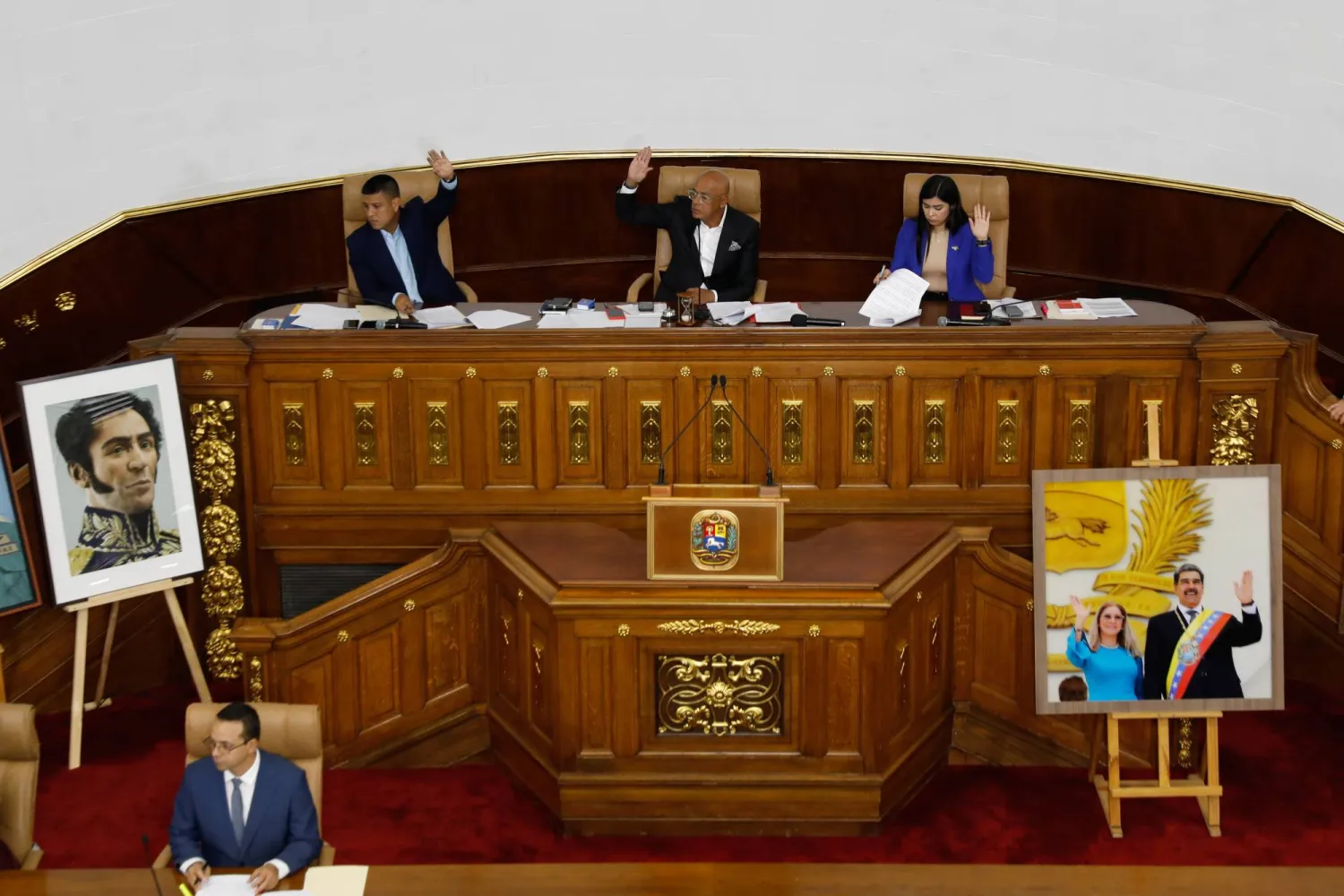
National Assembly President Jorge Rodriguez, center, presides over a session debating an amnesty bill in Caracas, Venezuela, Thursday, Feb. 19, 2026. (AP Photo/Crisitian Hernandez)
TT

Venezuela: Amnesty Law Excludes those who Promoted Military Action

National Assembly President Jorge Rodriguez, center, presides over a session debating an amnesty bill in Caracas, Venezuela, Thursday, Feb. 19, 2026. (AP Photo/Crisitian Hernandez)

Venezuela's parliament unanimously approved an amnesty law on Thursday that could free political prisoners, almost two months after President Nicolas Maduro was captured by US forces.

“The law on democratic coexistence has been approved. It has been forwarded to acting president Delcy Rodriguez for announcement,” said National Assembly President, Jorge Rodriguez, before parliament.

Acting president Delcy Rodriguez signed the legislation after it was handed to her by Jorge Rodrigez, her brother.

The passage of the law led to the end of a hunger strike by relatives of political prisoners.

Ten women have participated in a hunger strike outside the Zona 7 police facility in the capital Caracas last Saturday, setting up camps outside the prison and demanding the release of their relatives, according to AFP.

Because they experienced health problems, nine of them stopped the protest on Wednesday evening. Only one woman continued until Thursday, ending “136 hours,” or more than five days, of strike.

But the amnesty law excludes those who have been prosecuted or convicted of promoting military action against the country – which could include opposition leaders like Nobel Peace Prize winner Maria Corina Machado, who has been accused by the ruling party of calling for international intervention like the one that ousted Maduro.

Article 9 of the bill lists those excluded from amnesty as “persons who are being prosecuted or may be convicted for promoting, instigating, soliciting, invoking, favoring, facilitating, financing or participating in armed actions or the use of force against the people, sovereignty, and territorial integrity” of Venezuela “by foreign states, corporations or individuals.”


Türkiye’s Approval of Peace Roadmap is Important Step, PKK Source Says

A Turkish parliamentary commission’s approval of a report setting out a roadmap for legal reforms alongside the disbandment of the Kurdistan Workers Party (PKK) group is an important step and the beginning of a fundamental change in Turkish policy, a PKK source said Thursday. (AFP/File)
TT

Türkiye’s Approval of Peace Roadmap is Important Step, PKK Source Says

A Turkish parliamentary commission’s approval of a report setting out a roadmap for legal reforms alongside the disbandment of the Kurdistan Workers Party (PKK) group is an important step and the beginning of a fundamental change in Turkish policy, a PKK source said Thursday. (AFP/File)

A Turkish parliamentary commission's approval of a report setting out a roadmap for legal reforms alongside the disbandment of the Kurdistan Workers Party (PKK) group is an important step and the beginning of a fundamental change in Turkish policy, a PKK source told Reuters on Thursday.

The commission voted overwhelmingly on Wednesday to approve the report, advancing a peace process designed to end decades of conflict.

"The vote is considered an achievement and an important ‌step toward consolidating democracy ‌in Türkiye," said the PKK source.

The PKK - designated a ‌terrorist ⁠organization by Türkiye, ⁠the United States and the European Union - halted attacks last year and said in May it had decided to disband and end its armed struggle.

The parliamentary vote shifts the peace process to the legislative theatre, as President Tayyip Erdogan, Türkiye’s leader of more than two decades, bids to end a conflict focused in mainly Kurdish southeast Türkiye.

The insurgency began in 1984 and has killed more than 40,000 people, sowing deep discord at home and ⁠spreading violence across borders into Iraq and Syria.

IMPORTANT ISSUES OUTSTANDING

The PKK ‌source said there were foundations for resolving ‌the Kurdish issue, but there was a lack of clarity on the issue in the report.

"There also ‌remain other important issues, such as initiating constitutional amendments, especially in aspects related to ‌the Kurdish language as well as amendments to the anti-terrorism law," the source said.

Another issue was legislation concerning the return of PKK militants to Türkiye and their integration into society, the source said.

A key element of Wednesday's report recommended strengthening mechanisms to ensure compliance with decisions by the ‌European Court of Human Rights (ECHR) and the Constitutional Court.

Among key ECHR decisions related to Türkiye are rulings that the rights of ⁠jailed former pro-Kurdish ⁠party leader Selahattin Demirtas had been violated and that he should be released immediately.

Ankara's final appeal against that was rejected in November.

SIGN OF INTENT

Demirtas' lawyer Mahsuni Karaman told Reuters the report's comments on the ECHR were important as a sign of intent.

"We hope this will be reflected in judicial practice—that is our wish and expectation,” Karaman said.

Demirtas was detained in November 2016 on terrorism-related charges, which he denies. In May 2024, a court convicted him in connection with deadly 2014 protests and sentenced him to more than 40 years in prison.

Turkish nationalist leader Devlet Bahceli, a key Erdogan ally whose call in 2024 triggered the current PKK peace process, said in November that it "would be beneficial" to release Demirtas from prison.

The opposition pro-Kurdish DEM Party — the successor party of Demirtas' HDP — remains parliament's third-largest bloc and has cooperated closely with the parliamentary commission.


US Renews Threat to Leave IEA

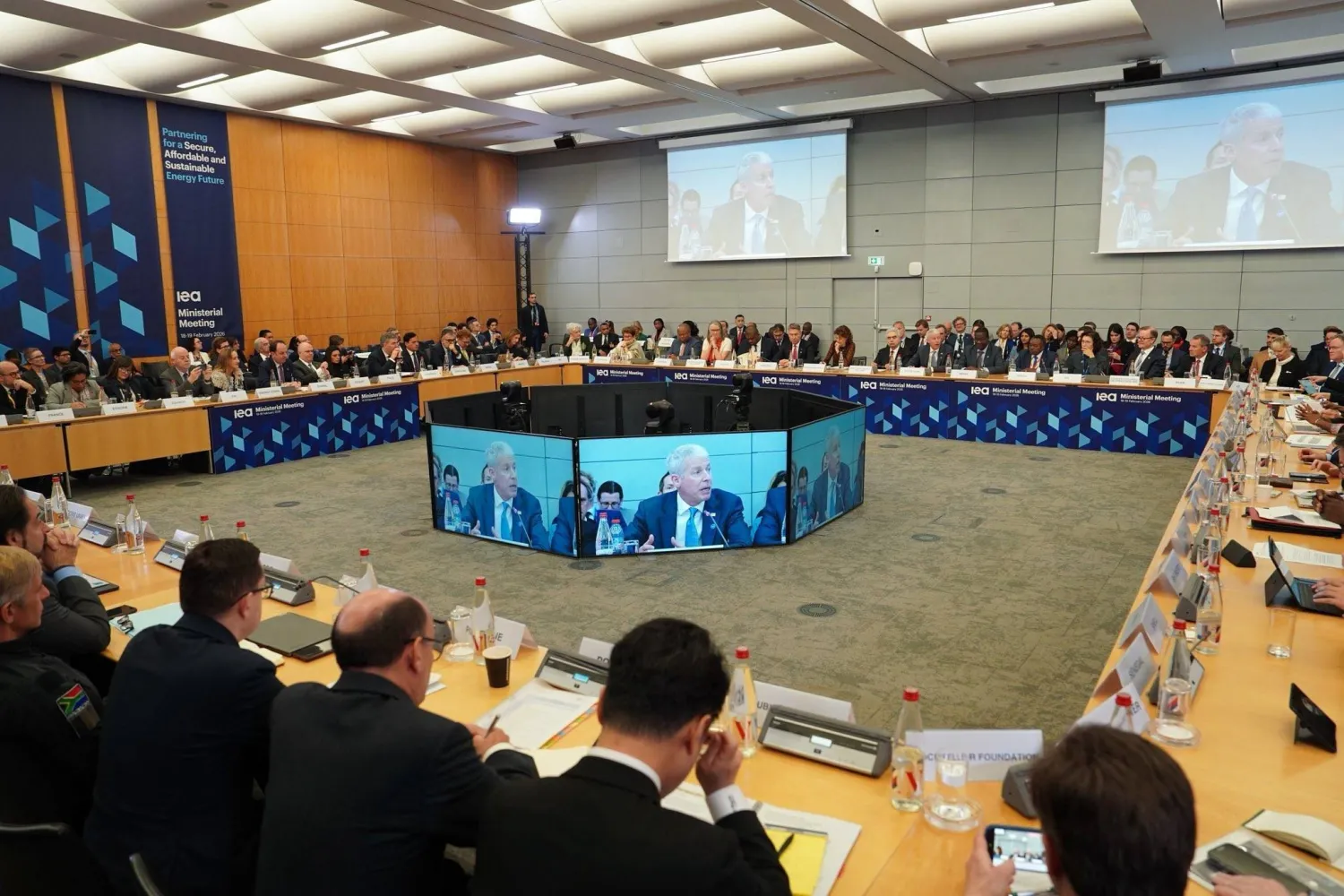
US Energy Secretary Chris Wright speaks at an IEA ministerial meeting in Paris (X)
TT

US Renews Threat to Leave IEA

US Energy Secretary Chris Wright speaks at an IEA ministerial meeting in Paris (X)

US Energy Secretary Chris Wright renewed his threat Thursday to pull out of the International Energy Agency, saying Washington would press the organization to abandon a net-zero agenda “in the next year or so.”

Speaking on the last day of an IEA ministerial meeting in Paris, Wright said the 52-year-old agency should return to its founding mission of ensuring energy security.

“The US will use all the pressure we have to get the IEA to eventually, in the next year or so, move away from this agenda,” Wright said in a news conference.

“But if the IEA is not able to bring itself back to focusing on the mission of energy honesty, energy access and energy security, then sadly we would become an ex-member of the IEA,” he added.

Meaning of Wright’s Warning

A US exit means a deep cut to IEA’s budget undermining the agency’s global influence.

Washington is not just a member of the agency but its largest funder. It alone contributes to 25% of the IEA core budget (equivalent to between $25 and $30 million annually) and therefore its exit would “dry up” a quarter of the agency’s financial resources.

Also, Washington is the world's largest oil and gas producer, meaning the US exit will affect the agency's reports and their credibility in markets.

The IEA was created to coordinate responses to major disruptions of supplies after the 1973 oil crisis. But in recent years, it became the main advocate of green transition policies, which the US considers as “politicized.”

The IEA produces monthly reports on oil demand and supply as well as annual world energy outlooks that include data on the growth of solar and wind energy, among other analyses.

Wright praised IEA Executive Director Fatih Birol for reinserting in November 2025’s annual outlook a Current Policies Scenario in which oil and gas demand would grow in the next decades. That scenario had been dropped for the past five years.

But the report still included a scenario where the world reaches net zero emissions by mid-century.

Birol’s current four-year term ends in 2027, but Wright demurred when asked who he would like to head the IEA, which has over 30 member nations.

“We remain today undecided or neutral on who the leadership is. We care about the mission much more than the individual leaders,” the US energy chief said.

If Birol can make the agency “get out the politics and get out the anti-energy part of it, that's great by us,” said Wright, who first warned last year that the US could leave the IEA if it did not reform.

For his part, Birol insisted that the Paris-based agency was “data-driven.” He said, “We are a non-political organization.”

The IEA was created “to focus on energy security,” Wright said on Wednesday at a ministerial meeting of the agency in Paris.

“That mission is beyond critical and I'm here to plead to all the members (of the IEA) that we need to keep the focus of the IEA on this absolutely life-changing, world-changing mission of energy security,” he said.

The Energy Secretary said he wanted to get support from “all the nations in this noble organization to work with us, to push the IEA to drop the climate. That's political stuff.”

His comments come just a day after he publicly threatened to quit the organization unless it abandoned its focus on the energy transition— a call that several countries rejected, including the UK, Austria and France.