


EU Lays Out Economic Security Plans, with Mind on China

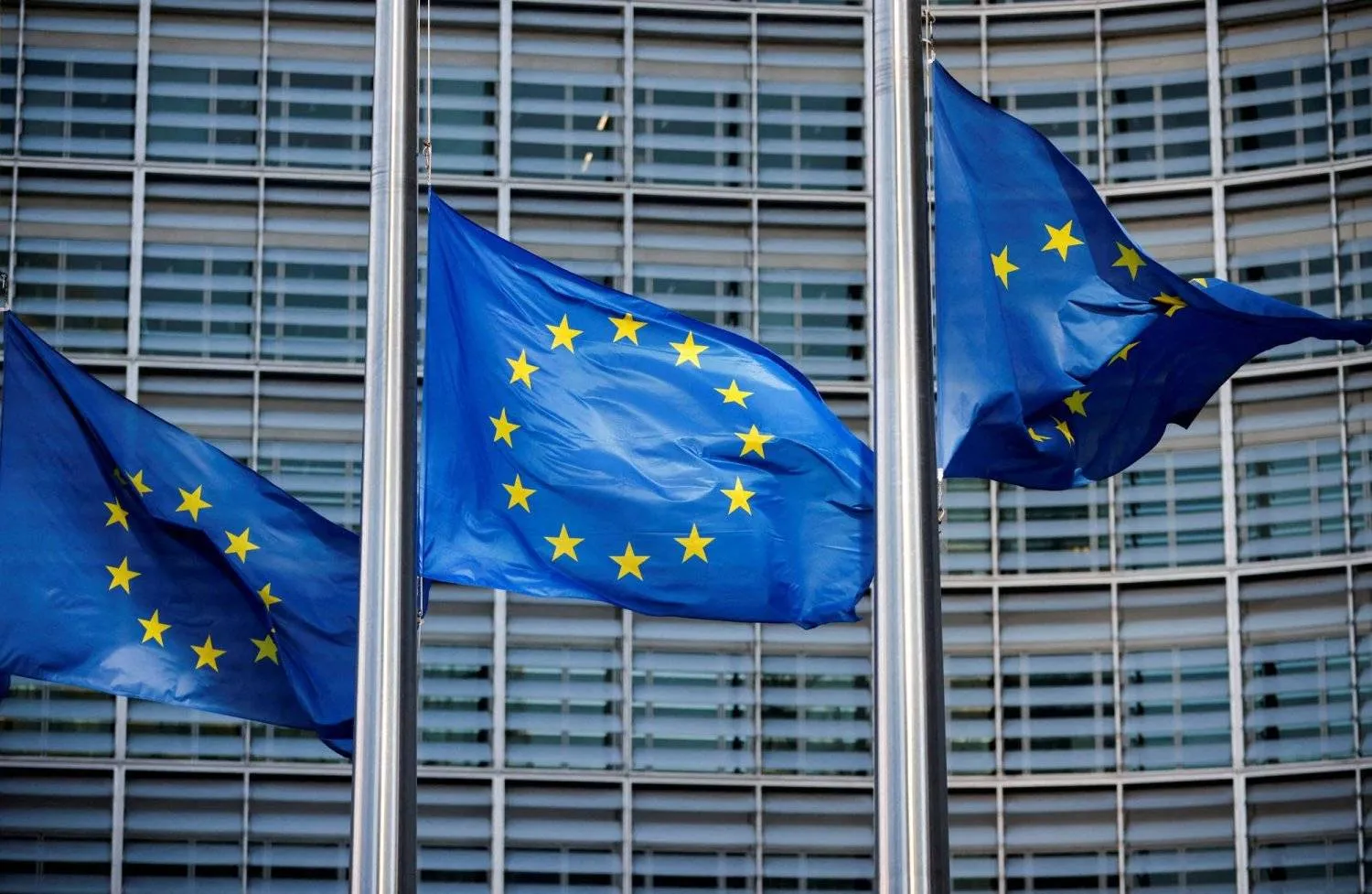
The EU executive proposed a revision to its law on foreign direct investment screening - Reuters File Photo
TT

EU Lays Out Economic Security Plans, with Mind on China

The EU executive proposed a revision to its law on foreign direct investment screening - Reuters File Photo

The European Commission set out plans on Wednesday to bolster the European Union's economic security through closer scrutiny of foreign investments and more coordinated controls on exports and outflows of technologies to rivals such as China.

The EU executive's package is a response to the multiple risks exposed by the COVID pandemic, Russia's invasion of Ukraine, cyber and infrastructure attacks and increased geopolitical tensions.

The EU executive proposed a revision to its law on foreign direct investment screening that will require all EU countries to screen and possibly block investments in the bloc if they pose a security risk.

Screening will also extend to investments within the EU if the investor is controlled by a foreign company.

The changes could take three years to enter force.

The plans do not name any country, but the EU contrasts "reliable partners" with "countries of concern" and highlights "de-risking", the bloc's policy of reducing economic reliance on China, which the bloc regards with more suspicion due to its close ties to Russia, according to Reuters.

China's Chamber of Commerce to the EU said it was concerned about the package, adding that about half of the members it surveyed were worried about its negative impact.

BusinessEurope said the package brought much-needed clarity.

The Commission pushed for greater EU coordination of separate national export controls on products that can be put to use by foreign military or intelligence services.

Research institutes should be more aware of the need for security in their work on key technologies, especially if third countries are involved.

The Commission also proposed a 12-month period of monitoring to assess whether outbound investments risk harmful leakage of sensitive technologies such as artificial intelligence, semiconductors, quantum computing and biotechnology.

EU measures and coordination will prove tricky because EU members guard decisions on export and investment controls as their own. There is, though, a growing appreciation that the bloc needs to combine its economic weight to compete with the likes of China and the United States.

"It's a hot potato that could take some time to go forward. Implementation will be difficult... but there is a new geopolitical reality," one EU diplomat said.

EU trade chief Valdis Dombrovskis said the Commission was aware it needed to navigate very carefully.

"But the context is clear. We are getting into more (conflict-related) geopolitical situations with increasing security risks... and certainly we are stronger if we act together or at least in a coordinated way."

Part of the strategy involves bolstering EU competitiveness, diversifying supply and export markets, boosting research and investment in key technologies and closer partnerships with allies.



Trump Postpones Signing Order on AI Oversight

US President Donald Trump speaks during an event with Environmental Protection Agency Administrator Lee Zeldin in the Oval Office at the White House in Washington, DC, USA, 21 May 2026. EPA/AL DRAGO / POOL NEWS SERVICE OK
TT

Trump Postpones Signing Order on AI Oversight

US President Donald Trump speaks during an event with Environmental Protection Agency Administrator Lee Zeldin in the Oval Office at the White House in Washington, DC, USA, 21 May 2026. EPA/AL DRAGO / POOL NEWS SERVICE OK

US President Donald Trump on Thursday said he had postponed signing an executive order on AI because he "didn't like certain aspects of it."

Trump had planned to sign the order at a ceremony on Thursday afternoon attended by CEOs of AI companies.

The order would create a voluntary framework for AI developers to ⁠engage with the ⁠US government before the public release of covered models, two sources told Reuters on Wednesday.

The president also had planned to direct the US government to use the advanced models to improve the cybersecurity defenses of ⁠government systems, along with networks owned by sectors that are vital to the nation's economy, such as banks and hospitals, according to another source.

Concerns are growing across the US government and in the private sector about the cybersecurity risks posed by powerful new AI systems, including Anthropic’s Mythos.

Anthropic has warned that Mythos could supercharge complex cyberattacks, though cybersecurity experts ⁠told ⁠Reuters that fears of unfettered hacking are overstated.

The president's executive order, if implemented, could hurt the industry's profits if it slows the rollout of new models or prompts companies to change how they perform to address security concerns.

Trump, who spoke to reporters on Thursday in the Oval Office, did not say which parts of the order he didn't like.


Teen Among 3 Dead in Türkiye after Floods, Landslides Hit Southern Province

FILE - A Navy officer helps a woman cross a flooded street after heavy rain in Poza Rica, Veracruz state, Mexico, Oct. 12, 2025. (AP Photo/Felix Marquez, File)
TT

Teen Among 3 Dead in Türkiye after Floods, Landslides Hit Southern Province

FILE - A Navy officer helps a woman cross a flooded street after heavy rain in Poza Rica, Veracruz state, Mexico, Oct. 12, 2025. (AP Photo/Felix Marquez, File)

Three people have died during flooding in southern Türkiye on Thursday, officials said, as the Interior Ministry issued weather warnings for 15 of the country's 81 provinces.

Heavy rainfall in Hatay, the province most affected by a devastating earthquake in 2023, caused the Asi river, also known as the Orontes, to break its banks, submerging fields and villages. Roads and bridges were also washed away, The Associated Press reported.

Among the victims was a 15-year-old boy who died in a house that collapsed during a landslide in Antakya, the provincial capital, Hatay Gov. Mustafa Masatli said.

A 66-year-old man died when his car rolled into a ditch in Defne, while and another man, aged 62, was swept away in floodwaters in the Samandag district.

Masatli said the flooding had caused significant damage to agriculture across 2,900 hectares (7,166 acres) as disaster teams continued to assess the impact. Firefighters rescued many people by boat as residents bailed out their homes and tried to hold the waters at bay with makeshift barriers.


Sweden Sentences Teen over Plot to Kill Iranian Researcher

Swedish police are on the scene after a shooting during Friday prayers outside a mosque in Orebro, Sweden - File photo/EPA
TT

Sweden Sentences Teen over Plot to Kill Iranian Researcher

Swedish police are on the scene after a shooting during Friday prayers outside a mosque in Orebro, Sweden - File photo/EPA

A teenager who turned up on the doorstep of an Iranian researcher in southern Sweden armed with a knife was sentenced Thursday to almost four years in a young offenders institution.

The teenager was convicted along with two others of a plot to kill Arvin Khoshnood, a high-profile academic who maintains that the Iranian government was ultimately behind the attack.

The youngster was recruited through messaging apps by the other defendants and promised a payment to kill Khoshnood.

He showed up at Khoshnood's house in the city of Malmo in September last year and spoke to the researcher's wife.

The researcher stayed inside and called the police. He has since been living in hiding at another address, his lawyer told AFP during the trial.

"The court considers it established that A.N. armed himself with a knife and went to the victim's home with the intention of killing him," the Uddevalla court wrote in its ruling.

The court found there was not enough evidence for a charge of attempted murder and reclassified the offence as preparatory acts to commit murder.

The main defendant was handed three years and nine months in a juvenile detention center.

Khoshnood regularly appears in Swedish media as an expert on Iran.

On social media, he supports Reza Pahlavi, the son of the last Shah, who lives in exile in the United States and leads one of many opposition movements based abroad.