


Iran Election Turnout Hits Record Low, Hardliners Maintain Grip on Parliament

Iranians walk in a street in Tehran, Iran March 3, 2024. Majid Asgaripour/WANA (West Asia News Agency) via Reuters
TT

Iran Election Turnout Hits Record Low, Hardliners Maintain Grip on Parliament

Iranians walk in a street in Tehran, Iran March 3, 2024. Majid Asgaripour/WANA (West Asia News Agency) via Reuters

Turnout in Iran's parliamentary election was around 41%, the country's interior minister said on Monday, the lowest participation since Iran's 1979 revolution that swept the clerical rulers into power.

Friday's election was seen as a test of the clerical establishment's legitimacy amid mounting economic struggles and a lack of electoral options for a mostly young population chafing at political and social restrictions.

"Some 25 million people out of over 61 million eligible Iranians voted in the March 1 election for the 290-seat legislature," Interior Minister Ahmad Vahidi told a televised news conference.

In the 2020 parliamentary election, turnout was 42.5%. About 62% of voters participated in 2016.

Authorities said the turnout "indicated the people's trust in the sacred system of the Islamic Republic".

Vahidi said invalid votes made up 5% of the total vote count. Some Iranian media reported that number to be as high as 30%, suggesting signs of disillusionment even among core supporters of the country.

"Authorities should listen to the silent majority ... and reform the governance method ... I hope they realize before it's too late to reverse the damage and harm this path will cause," state media quoted reformist politician Azar Mansouri as saying.

In some constituencies, where candidates failed to get the required minimum 20% of the votes cast, a run-off will be held in April, Vahidi said.

In Tehran, which accounts for 30 seats in parliament, a second round will be held for 16 seats.

The election was the first since anti-government protests in 2022-23 that spiraled into one of Iran's worst political turmoil since the revolution and quelled by a violent crackdown involving mass detentions and even executions.

With heavyweight moderates and conservatives staying out and reformists calling the election not free and unfair, the contest was essentially among hardliners and low-key conservatives, all proclaiming loyalty to revolutionary ideals.

Iran's parliament, dominated by hardliners for more than two decades, has little impact on foreign policy or Tehran's disputed nuclear program. These issues are determined by the country's top authority, Supreme Leader Ali Khamenei.

Activists and opposition groups, arguing that a high turnout would legitimize the Islamic Republic, had called for a boycott by widely distributing the hashtags #VOTENoVote and #ElectionCircus on the social media platform X.

Former president Mohammad Khatami, considered the spiritual leader of Iran's reformists, was among critics who did not vote on Friday.

Opposition critics say the ruling clerics are no longer capable of solving an economic crisis caused by a mix of mismanagement, corruption and US sanctions reimposed since 2018 when Washington ditched Tehran's nuclear pact with major powers.

The parliamentary election was twinned with a vote for the 88-seat Assembly of Experts, an influential body that has the task of choosing the 84-year-old Khamenei's successor.



N. Korea Flexes Nuclear-capable Rocket Launcher Ahead of Key Congress

A photo released by the official Korean Central News Agency (KCNA) shows North Korean leader Kim Jong Un (C), accompanied by his daughter Kim Ju Ae (R), overseeing a test-fire of a large-caliber multiple-rocket launcher system at an unknown location in North Korea, 27 January 2026 (issued 28 January 2026). EPA/KCNA  EDITORIAL USE ONLY
A photo released by the official Korean Central News Agency (KCNA) shows North Korean leader Kim Jong Un (C), accompanied by his daughter Kim Ju Ae (R), overseeing a test-fire of a large-caliber multiple-rocket launcher system at an unknown location in North Korea, 27 January 2026 (issued 28 January 2026). EPA/KCNA EDITORIAL USE ONLY
TT

N. Korea Flexes Nuclear-capable Rocket Launcher Ahead of Key Congress

A photo released by the official Korean Central News Agency (KCNA) shows North Korean leader Kim Jong Un (C), accompanied by his daughter Kim Ju Ae (R), overseeing a test-fire of a large-caliber multiple-rocket launcher system at an unknown location in North Korea, 27 January 2026 (issued 28 January 2026). EPA/KCNA  EDITORIAL USE ONLY
A photo released by the official Korean Central News Agency (KCNA) shows North Korean leader Kim Jong Un (C), accompanied by his daughter Kim Ju Ae (R), overseeing a test-fire of a large-caliber multiple-rocket launcher system at an unknown location in North Korea, 27 January 2026 (issued 28 January 2026). EPA/KCNA EDITORIAL USE ONLY

North Korean leader Kim Jong Un has unveiled a battery of huge nuclear-capable rocket launchers ahead of a key congress of the nation's ruling party, state media said Thursday.

Kim is expected to detail the next phase in North Korea's nuclear weapons program when he opens a rare congress of the ruling Workers' Party in coming days.

The 600-mm multiple launch rocket system was front and center as preparations ramped up for the once-in-five-years gathering, widely viewed as North Korea's most important political event.

"When this weapon is used actually, no force would be able to expect God's protection," Kim said, according to the Korean Central News Agency.

"It is really a wonderful and attractive weapon."

Photos released by state media showed dozens of launch vehicles parked in neat rows on the plaza of Pyongyang's House of Culture, which will host the congress.

The weapon was "appropriate for a special attack, that is, for accomplishing a strategic mission", Kim told a ceremony on Wednesday, using a common euphemism for nuclear weapons.

He said the weapons system -- which was presented to the congress as a gift from munitions workers -- would deter unnamed enemies.

"There is no need to further explain about its destructive power and military value," AFP quoted Kim as saying.

"This is because it can reduce the aimed target to ashes through surprise and simultaneous attack by focusing its destructive energy."

The launch system could fire rockets with an estimated range of 400 kilometers (250 miles), covering all of South Korea, said analyst Hong Min from the Korea Institute for National Unification.

"Its primary purpose is to neutralize the combined air power of South Korea and the United States," he told AFP.

"If equipped with tactical nuclear warheads, a single battery firing four to five rounds could devastate an entire airbase."

South Korea's capital Seoul is less than 50 kilometers (30 miles) from the border at its nearest point.

Analysts believe North Korea would use its vast artillery arsenal to launch saturation strikes on the South should fighting break out.

Kim ordered the expansion and modernization of missile production in the months leading up to the Workers' Party congress.

Pyongyang has also significantly stepped up missile testing.


Iran Says No Country Can Deprive it of Enrichment Rights

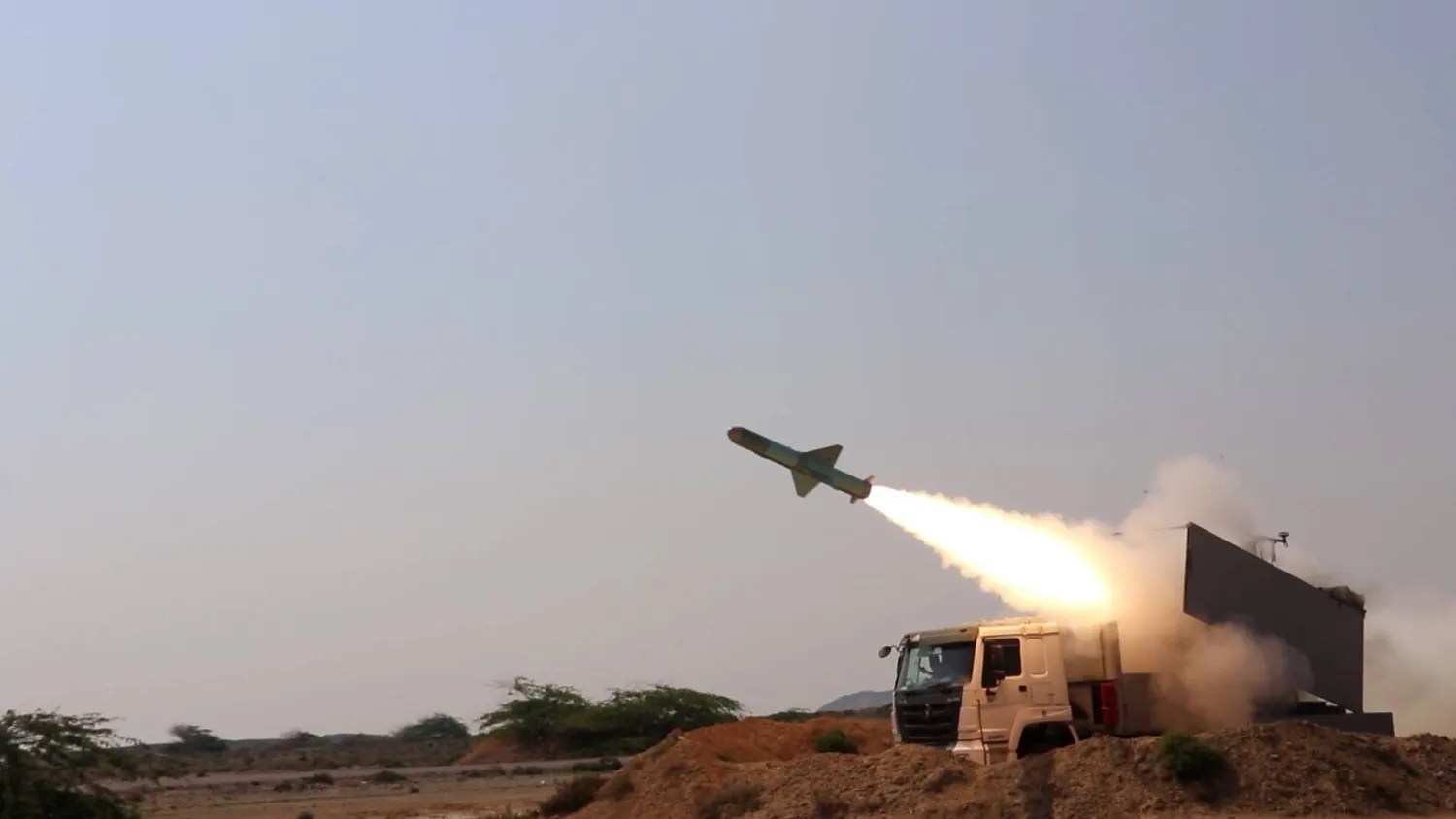
A handout photo made available by Iran's Revolutionary Guard Corps (IRGC)'s official website Sepahnews on 17 February 2026 shows IRGC conducting a military drill in the Strait of Hormuz, in the Arabian gulf, southern Iran. EPA/SEPAHNEWS HANDOUT
TT

Iran Says No Country Can Deprive it of Enrichment Rights

A handout photo made available by Iran's Revolutionary Guard Corps (IRGC)'s official website Sepahnews on 17 February 2026 shows IRGC conducting a military drill in the Strait of Hormuz, in the Arabian gulf, southern Iran. EPA/SEPAHNEWS HANDOUT

Iran's atomic energy chief Mohammad Eslami said no country can deprive the Iranian republic of its right to nuclear enrichment, after US President Donald Trump again hinted at military action following talks in Geneva.

"The basis of the nuclear industry is enrichment. Whatever you want to do in the nuclear process, you need nuclear fuel," said Eslami, according to a video published by Etemad daily on Thursday.

"Iran's nuclear program is proceeding according to the rules of the International Atomic Energy Agency, and no country can deprive Iran of the right to peacefully benefit from this technology."

The comments follow the second round of Oman-mediated talks between Tehran and Washington in Geneva on Tuesday.

The two foes had held an initial round of discussions on February 6 in Oman, the first since previous talks collapsed during the 12-day Iran-Israel war in June.

The United States briefly joined the war alongside Israel, striking Iranian nuclear facilities.

On Wednesday, Trump again suggested the United States might strike Iran in a post on his Truth Social site.

He warned Britain against giving up sovereignty over the Chagos Islands in the Indian Ocean, saying that the archipelago's Diego Garcia airbase might be needed were Iran not to agree a deal, "in order to eradicate a potential attack by a highly unstable and dangerous regime".

Washington has repeatedly called for zero enrichment, but has also sought to address Iran's ballistic missile program and its support for militant groups in the region -- issues which Israel has pushed to include in the talks.

Western countries accuse the Iranian republic of seeking to acquire nuclear weapons.

Tehran denies having such military ambitions but insists on its right to this technology for civilian purposes.

Trump, who has ratcheted up pressure on Iran to reach an agreement, has deployed a significant naval force to the region, which he has described as an "armada".

After sending the aircraft carrier USS Abraham Lincoln and escort battleships to the Gulf in January, he recently indicated that a second aircraft carrier, the Gerald Ford, would depart "very soon" for the Middle East.

Separately, the Iranian and Russian navies were conducting joint drills in the Sea of Oman and the northern Indian Ocean on Thursday.


Karachi Building Collapse after Blast Kills 16

Rescue workers and people gather at the site of a residential compound following a suspected gas leakage blast in Karachi, Pakistan, 19 February 2026. EPA/REHAN KHAN
TT

Karachi Building Collapse after Blast Kills 16

Rescue workers and people gather at the site of a residential compound following a suspected gas leakage blast in Karachi, Pakistan, 19 February 2026. EPA/REHAN KHAN

A building collapse caused by an explosion in Pakistan's southern megacity of Karachi killed at least 16 people on Thursday, including children, officials said.

More than a dozen people were injured in the incident in the Soldier Bazaar neighborhood of Karachi at around 4:00 am, when Muslim families start preparing Sehri, the pre-sunrise meal eaten during Ramadan.