Gunmen Kill 15 Police Officers and Several Civilians in Russia's Dagestan

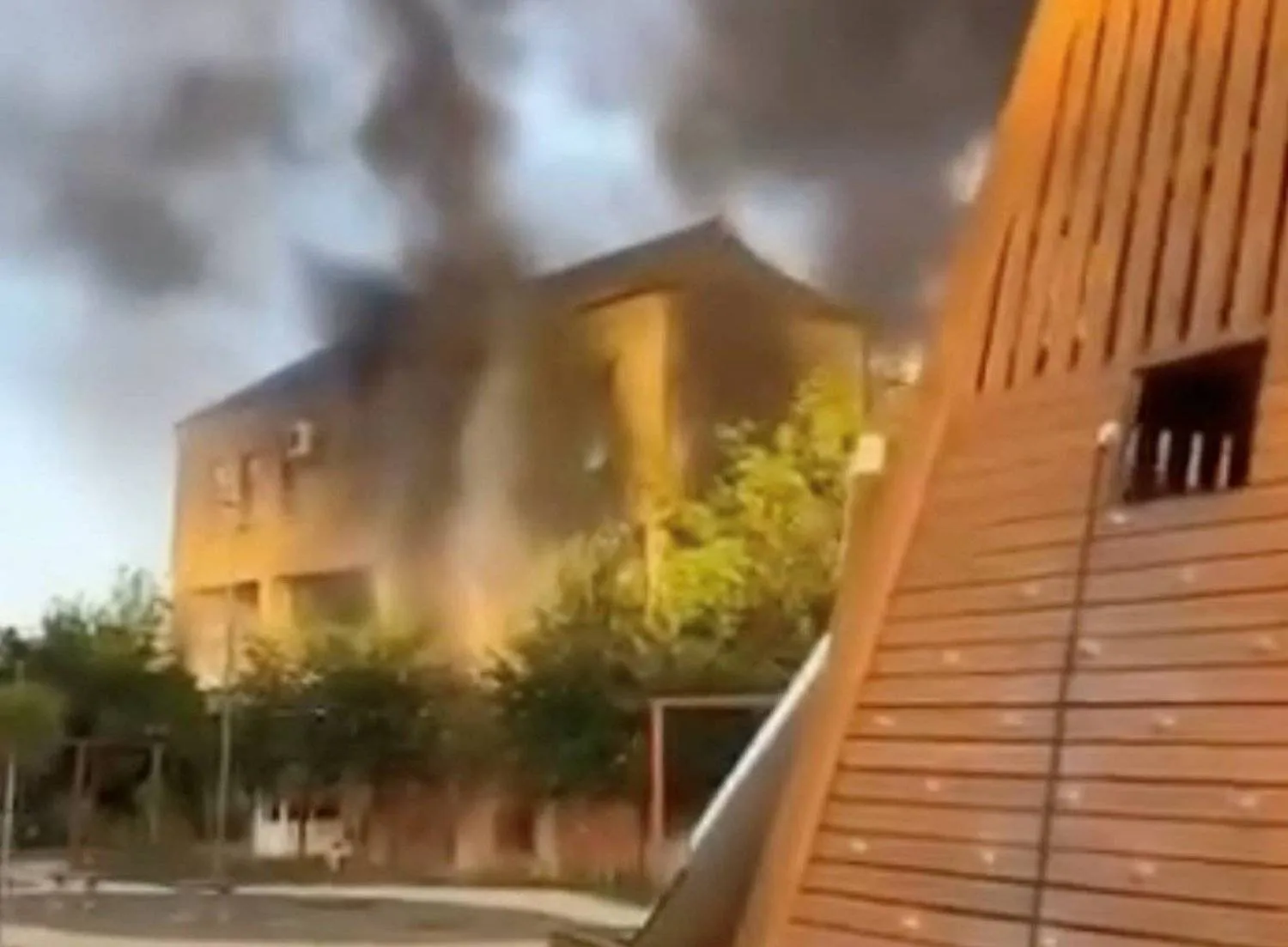
A view shows plumes of smoke rising from building, in Derbent, Russia, June 23, 2024, in this still image obtained from a video. VIDEO OBTAINED BY REUTERS/via REUTERS
TT

Gunmen Kill 15 Police Officers and Several Civilians in Russia's Dagestan

A view shows plumes of smoke rising from building, in Derbent, Russia, June 23, 2024, in this still image obtained from a video. VIDEO OBTAINED BY REUTERS/via REUTERS

More than 15 police officers and several civilians, including an Orthodox priest, were killed by armed militants in Russia’s southern republic of Dagestan on Sunday, its governor Sergei Melikov said in a video statement early Monday.
The gunmen opened fire on two Orthodox churches, a synagogue and a police post in two cities, according to the authorities.
Russia’s National Anti-Terrorist Committee described the attacks as terrorist acts.
Monday, Tuesday and Wednesday were declared days of mourning in the region.
Dagestan's Interior Ministry said a group of armed men shot at a synagogue and a church in the city of Derbent, located on the Caspian Sea. Both the church and the synagogue caught fire, according to state media. Almost simultaneously, reports appeared about an attack on a church and a traffic police post in the Dagestan capital, Makhachkala.
Authorities announced a counter-terrorist operation in the region. The Anti-Terrorist Committee said five gunmen were “eliminated.” The governor said six “bandits” had been “liquidated.” The conflicting numbers couldn't be immediately reconciled and it wasn't clear how many militants were involved in the attacks.
There was no immediate claim of responsibility for the attacks. The authorities launched a criminal investigation on the charge of a terrorist act.
Russian state news agency Tass cited law enforcement sources as saying that a Dagestani official was detained over his sons' involvement in the attacks.
Melikov said in the video statement that the situation in the region was under control of the law enforcement and local authorities, and vowed that the investigation of the attacks will continue until “all the sleeping cells” of the militants are uncovered.
He claimed, without providing evidence, that the attacks might have been prepared from abroad, and referenced what the Kremlin calls “the special military operation” in Ukraine in an apparent attempt to link the attacks to it.



Israel Military Says ‘No Interceptor Shortage’ After Reports of Scarcity

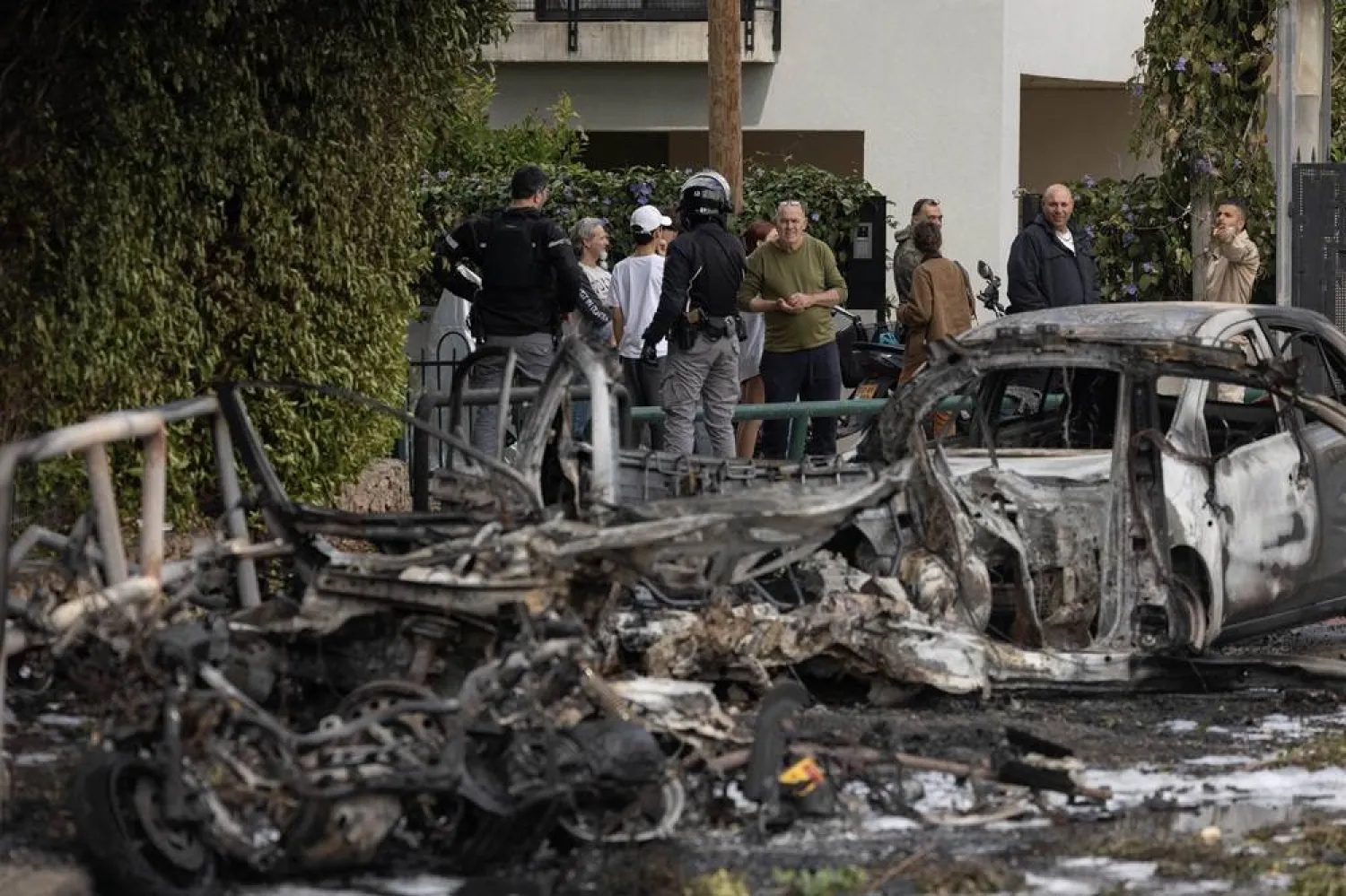
15 March 2027, Israel, Tel Aviv: People watch the site of a projectile impact following an Iranian strike on Tel Aviv. (dpa)
TT

Israel Military Says ‘No Interceptor Shortage’ After Reports of Scarcity

15 March 2027, Israel, Tel Aviv: People watch the site of a projectile impact following an Iranian strike on Tel Aviv. (dpa)

An Israeli military source on Sunday denied media reports that Israel was running low on missile interceptors crucial to its air defenses, adding that the army was "continuously monitoring the situation".

Citing US officials, news outlet Semafor had reported that Israel had informed the United States that it was "running critically low on ballistic missile interceptors", as the US-Israeli war against Iran entered its third week.

"As of now, there is no interceptor shortage. The Israeli army is prepared for prolonged combat. We are continuously monitoring the situation," the military source said, in response to media queries.

Israeli Foreign Minister Gideon Saar also dismissed the reports when questioned by journalists earlier on Sunday.


Iran FM Sees No Reason for Talks After Trump Says It Wants Deal

09 September 2025, Egypt, Cairo: Iranian Foreign Minister Abbas Araghchi attends a joint press conference in Cairo. (dpa)
TT

Iran FM Sees No Reason for Talks After Trump Says It Wants Deal

09 September 2025, Egypt, Cairo: Iranian Foreign Minister Abbas Araghchi attends a joint press conference in Cairo. (dpa)

Foreign Minister Abbas Araghchi said Iran was not interested in talks with the United States, pushing back on President Donald Trump's stance that Tehran wants a deal to end the war.

"We are stable and strong enough. We are only defending our people," Araghchi told CBS's "Face The Nation," in an interview aired Sunday.

"We don't see any reason why we should talk with Americans, because we were talking with them when they decided to attack us.

"There is no good experience talking with Americans."

Trump on Saturday said Iran wanted a deal, but that he was not prepared to make one on current terms, without giving further details.

"We never asked for a ceasefire, and we have never asked even for negotiation," Araghchi said.

He added that Iran was ready to talk to countries who want to negotiate for selected oil tankers to pass through the key Strait of Hormuz export route.

"I cannot mention any country in particular, but we have been approached by a number of countries who want to have a safe passage for their vessels," he said.


Israeli Military Claims Brother of Man Who Attacked Michigan Synagogue Was Hezbollah Commander

Oakland County Sheriff Deputies prepare to enter Temple Israel synagogue in West Bloomfield, Michigan, on March 13, 2026, after a person drove a vehicle into the synagogue a day earlier. (AFP)
TT

Israeli Military Claims Brother of Man Who Attacked Michigan Synagogue Was Hezbollah Commander

Oakland County Sheriff Deputies prepare to enter Temple Israel synagogue in West Bloomfield, Michigan, on March 13, 2026, after a person drove a vehicle into the synagogue a day earlier. (AFP)

The brother of a man who attacked a Michigan synagogue last week, who was killed earlier this month in an Israeli airstrike, was a Hezbollah commander, Israel’s military claimed Sunday.

Ibrahim Ghazali was killed in Lebanon along with three other of the attacker’s relatives on March 5 — a week before authorities allege Ayman Mohamad Ghazali drove his car into a major synagogue outside Detroit and killed himself after security fired at him.

The FBI's Detroit office, which is investigating the attack, declined to comment on the claims by Israel's military about Ibrahim Ghazali.

“Out of respect for the ongoing investigation, we will continue to refrain from commenting on its substance,” FBI spokesman Jordan Hall said in an email Sunday.

The AP was not immediately able to verify the claim that Ibrahim Ghazali was a militant.

The Israeli military alleges Ibrahim Ghazali was a Hezbollah commander who managed weapons for a unit that fired rockets at Israel.

A Lebanese official, who requested anonymity because he could not publicly discuss details of the airstrike, has confirmed Ibrahim Ghazali’s death, telling the AP that Ghazali’s children, Ali and Fatima, and brother, Kassim, were also killed in the strike that hit their home just after sunset.

Authorities have said that Ayman Ghazali, 41, carried out the synagogue attack after learning that four of his family members were killed in the Israeli strike.

Israel has stepped up attacks on the Iranian-backed Hezbollah party in Lebanon as the war with Iran has spread violence across the Middle East.

On Thursday, Ayman Ghazali waited in his car outside Temple Israel, near Detroit, for about two hours with a rifle, commercial grade fireworks and jugs of liquid believed to be gasoline, before crashing into the building full of dozens of children, according to authorities.

He started firing his gun through the windshield, exchanging fire with an armed security guard. Ghazali fatally shot himself after he got stuck in his vehicle and the engine caught fire, said Jennifer Runyan, the special agent in charge of the FBI’s Detroit field office. No staffers or children inside the synagogue were hurt, likely due to beefed up security in recent months.

The FBI, which is leading the investigation, described the attack on one of the nation’s largest Reform synagogues as an act of violence targeting the Jewish community, but said that they didn’t have enough evidence yet to call it an act of terror.

Ghazali came to the US in 2011 on an immediate relative visa as the spouse of a US citizen and was granted US citizenship in 2016, according to the Department of Homeland Security.

He lived in a single-story brick home in the Detroit suburb of Dearborn Heights about 38 miles (61 kilometers) south of the synagogue.

The attack on the Michigan synagogue took place on the same day as a former Army National Guard member who served years in prison for attempting to aid the ISIS opened fire on a classroom at Old Dominion University in Virginia, killing one person and wounding two others.