Iran Defense Nominee Vows Weapon Production for Effective Deterrence

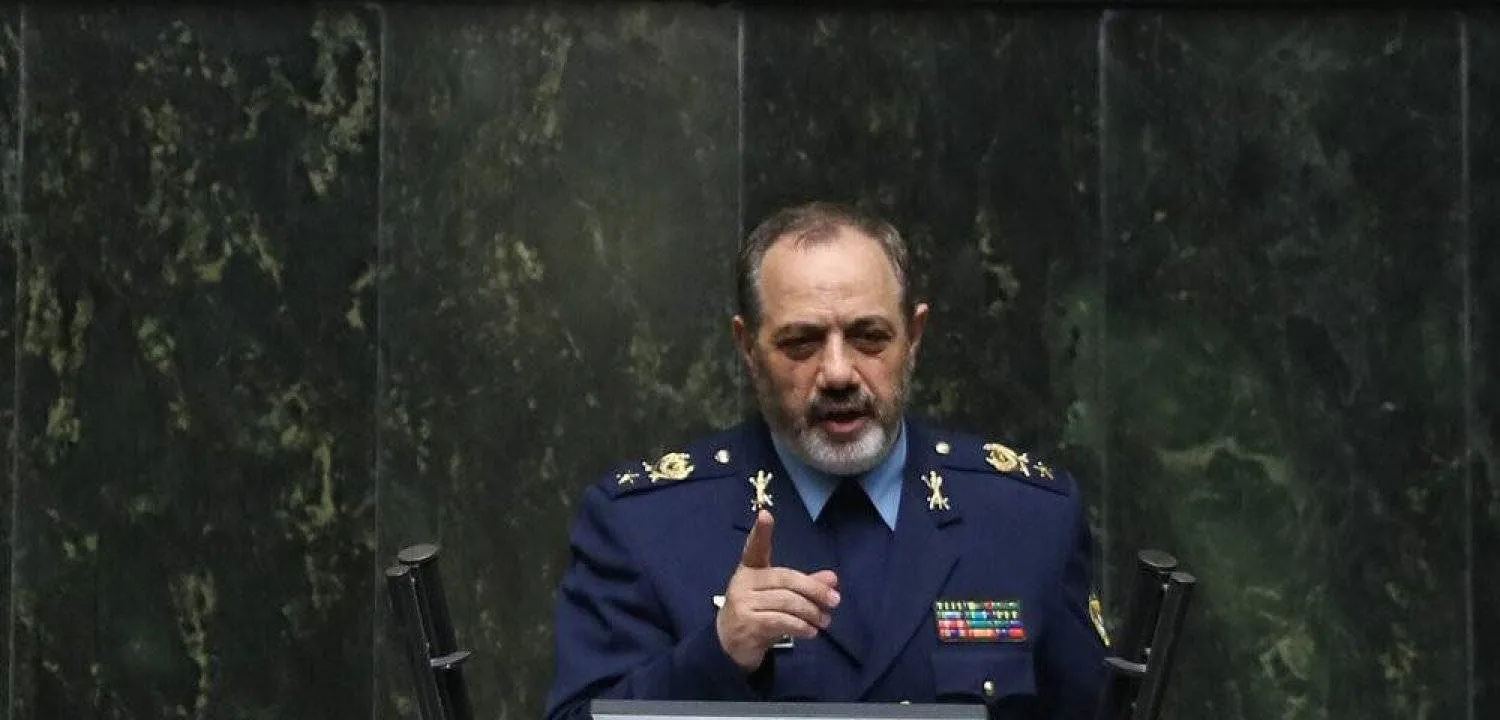
 Gen. Aziz Nasirzadeh (ISNA)
Gen. Aziz Nasirzadeh (ISNA)
TT

Iran Defense Nominee Vows Weapon Production for Effective Deterrence

 Gen. Aziz Nasirzadeh (ISNA)
Gen. Aziz Nasirzadeh (ISNA)

On the third day of discussions in Iran’s parliament about Masoud Pezeshkian’s proposed cabinet, Gen. Aziz Nasirzadeh, the nominee for Defense Minister, defended the importance of producing weapons during peacetime to ensure strong defense capabilities.
He also reiterated Iran’s commitment to supporting “the Resistance Axis” groups in the region, calling them a part of Iran’s armed forces.
Nasirzadeh criticized the US in his speech, portraying Iran as a rising power in a changing global order.
He claimed that both the region and the world are moving away from a US-dominated system and towards a new order, with powers like Iran playing a key role.
The proposed defense minister also noted that rapid changes in security and defense, especially with new technologies, are making regional security more complex.
Nasirzadeh, a previous head of the Iranian Air Force, was appointed Deputy Chief of Staff by Supreme Leader Ali Khamenei.
He warned that global and regional pressures on Iran and its allies, known as the “Resistance Axis,” are increasing across military, political, and economic fronts.
It is worth noting that the Axis refers to groups that align with Iran’s ideology, such as the Palestinian group Hamas.
Outlining his ministry’s primary focus, Nasirzadeh said: “Maximizing power production will be our main special task as a symbol of power and authority.”
He highlighted two key pillars for achieving this: “soft and hard power, including the use of software and artificial intelligence.”
Nasirzadeh described these efforts as crucial for reaching “the ultimate goal of effective deterrence.”
“Without effective deterrence, there’s no doubt that our enemies would have already attacked our country.”
He added that it is deterrence and power that prevent the enemy from daring to act against Iran.
Nasirzadeh also pledged to revitalize regional diplomacy and enhance cooperation with BRICS and Shanghai Cooperation Organization countries over the next four years, while “preserving sovereignty and utilizing available capabilities.”



Italian PM Condemns ‘Unacceptable’ Trump Criticism of Pope

Italian Prime Minister Giorgia Meloni gestures in the Senate chamber during the briefing to Parliament on the government's activities in Rome, Italy, 09 April 2026. (EPA)
TT

Italian PM Condemns ‘Unacceptable’ Trump Criticism of Pope

Italian Prime Minister Giorgia Meloni gestures in the Senate chamber during the briefing to Parliament on the government's activities in Rome, Italy, 09 April 2026. (EPA)

Italian Prime Minister Giorgia Meloni on Monday condemned US President Donald Trump's criticism of Pope Leo XIV as "unacceptable", after the US pontiff spoke out against the Middle East war.

"The Pope is the head of the Catholic Church, and it is right and normal for him to call for peace and to condemn all forms of war," she said in a statement.

It represents a rare rebuke of Trump by Meloni, a far-right leader who has sought to be a bridge between the conservative US president and European leaders.

Meloni earlier put out a statement supporting Pope Leo's efforts at peace and reconciliation in a trip to Africa, which began Monday, just hours after Trump launched a scathing criticism of the first US pontiff.

"I thought the meaning of my statement this morning was clear, but I will restate it more explicitly. I find President Trump's words about the Holy Father unacceptable," she said.

Speaking to reporters late Sunday, Trump said he was "not a big fan of Pope Leo", accusing the pontiff of "toying with a country (Iran) that wants a nuclear weapon".

The president later doubled down on his comments with a post on Truth Social, saying: "I don't want a Pope who thinks it's OK for Iran to have a Nuclear Weapon."

"Pope Leo is WEAK on Crime, and terrible for Foreign Policy," he said.

His comments drew outrage from many Italian politicians, while Catholic bishops from the United States and Italy were quick to defend the pontiff.

Leo himself told reporters on the plane to Algeria -- the first stop on a four-nation tour that also takes in Cameroon, Angola and Equatorial Guinea -- that he had a "moral duty" to speak out against war.

"I have no fear, neither of the Trump administration, nor speaking out loudly about the message of the Gospel," he said.


Middle East Ceasefire a ‘Priority’, China’s FM Tells Pakistan

Chinese Foreign Minister Wang Yi waves after a press conference on the sidelines of the National People's Congress (NPC), in Beijing, China, March 8, 2026. (Reuters)
TT

Middle East Ceasefire a ‘Priority’, China’s FM Tells Pakistan

Chinese Foreign Minister Wang Yi waves after a press conference on the sidelines of the National People's Congress (NPC), in Beijing, China, March 8, 2026. (Reuters)

Maintaining a ceasefire in the Middle East war is an "immediate priority" for resolving the conflict, China's top diplomat told his Pakistan counterpart in a phone call on Monday.

Pakistan's Prime Minister Shehbaz Sharif also said on Monday that the ceasefire between the United States and Iran was "holding" and that efforts were underway to reach an agreement after talks in Islamabad at the weekend failed to do so.

"The immediate priority is to make every effort toward preventing the resumption of hostilities and to maintain the hard-won ceasefire momentum," Wang Yi told Pakistan's Ishaq Dar, according to a Chinese foreign ministry statement.

Wang said a joint peace plan by China and Pakistan announced last month as the two officials met in Beijing "still can serve as a direction for efforts toward a resolution".


UN Maritime Chief Says No Country Has Right to Close Hormuz

FILE PHOTO: Cargo ships in the Gulf, near the Strait of Hormuz, as seen from northern Ras al-Khaimah, near the border with Oman’s Musandam governance, March 11, 2026. REUTERS/Stringer/File Photo
TT

UN Maritime Chief Says No Country Has Right to Close Hormuz

FILE PHOTO: Cargo ships in the Gulf, near the Strait of Hormuz, as seen from northern Ras al-Khaimah, near the border with Oman’s Musandam governance, March 11, 2026. REUTERS/Stringer/File Photo

The head of the UN maritime agency said Monday no country had a legal right to block shipping in the Strait of Hormuz, a trade passage paralysed by the US-Iran war.

The International Maritime Organization's Secretary General Arsenio Dominguez addressed a news conference as access to the strait remained blocked six weeks after the war erupted with US and Israeli strikes against Iran.

The United States had threatened to begin a blockade on Monday of Iranian ports in and around the strait, which Tehran's forces have been controlling access to since after the war broke out on February 28.

"In accordance to international law, no countries have the right to prohibit the right of innocent passage or the freedom of navigation through international straits that are used for international transit," Dominguez said.

Iranian authorities have been allowing a trickle of vetted vessels to pass the strait through a route close to their coast and in some cases have reportedly levied a payment to let vessels through.

"This principle of introducing a toll on an international strait for international navigation is against the international law of the sea and the customary law," Dominguez said.

"It will create a very dangerous precedent."

The US vow to blockade Iranian ports meanwhile "doesn't make it any easier", he added.

"De-escalation is what is going to start helping us to address the crisis and to bring shipping back to the way that we used to operate."

He predicted that the extra impact of a US blockade on shipping would be negligible, however.

"With the very few number of ships that have managed to transit, an additional blockade is not going to exacerbate the situation in a level that it could be perceived."